Quick Verdict: The 2024 Ioniq 5 Limited at a Glance
The 2024 Hyundai Ioniq 5 Limited AWD remains one of the most well-rounded electric crossovers on the used and certified-pre-owned market heading into 2026. Built on Hyundai's E-GMP 800-volt architecture, it delivers genuinely fast DC charging, a usable 260-mile EPA range, and a premium cabin that punches above its price class. For buyers evaluating a slightly used 2024 model or comparing it against newer 2025–2026 competitors, the Limited trim's feature set — including the augmented-reality HUD, vehicle-to-load (V2L) capability, and Highway Driving Assist 2 — holds up remarkably well.
This review covers the 2024 Ioniq 5 Limited AWD with real numbers: what you'll actually see on the road, what charging looks like at home and on the highway, and whether the math works after incentives. Let's get into the specs.
| Spec | Value |
|---|---|
| EPA Range | 260 miles (AWD); 303 mi (RWD Long Range) |
| Battery (usable) | 77.4 kWh (NMC chemistry) |
| Max DC Fast Charge | ~240 kW peak (800V architecture) |
| 10–80% DC Charge Time | ~18 minutes (optimal conditions) |
| Level 2 Home Charging | 10.9 kW onboard charger (~37 mi/hr) |
| MPGe (combined) | 110 MPGe (AWD); 114 MPGe (RWD) |
| Efficiency | 30 kWh/100 mi (AWD) |
| 0–60 mph | 4.5 seconds (AWD dual-motor) |
| Horsepower / Torque | 320 hp / 446 lb-ft (AWD) |
| Drivetrain | Dual-motor AWD (Limited standard) |
| Cargo Volume | 27.2 cu ft (rear seats up); 59.3 cu ft (folded) |
| Rear Legroom | 39.4 inches |
| Base MSRP (Limited AWD) | $52,600 (2024 launch MSRP) |
| Battery/Powertrain Warranty | 10 years / 100,000 miles |
| Basic Warranty | 5 years / 60,000 miles |
Range and Efficiency: EPA Numbers vs. Real-World Driving
The 2024 Ioniq 5 Limited comes exclusively with the dual-motor AWD powertrain and the 77.4 kWh (usable) battery pack. The EPA rates it at 260 miles of combined range. The RWD Long Range version (available on lower trims) achieves 303 miles, but that's not an option at the Limited level.
- EPA Sticker: 260 miles combined
- Highway driving (70–75 mph, 65°F): Expect ~225–240 miles. The Ioniq 5's boxy shape creates aerodynamic drag at sustained highway speed, reducing efficiency to roughly 33–35 kWh/100 mi.
- City/suburban mixed driving: ~260–275 miles. Regenerative braking recovers more energy in stop-and-go conditions.
- Cold weather (below 32°F): ~195–220 miles. The Ioniq 5 uses a heat pump (standard on the Limited) which mitigates cabin-heating losses, but battery chemistry still loses 15–25% of usable capacity in deep cold.
- Towing (1,650-lb max): ~150–175 miles. Towing any trailer dramatically increases consumption.
The 77.4 kWh battery uses nickel-manganese-cobalt (NMC) chemistry, which prioritizes energy density over cycle life compared to LFP. In practical terms, NMC delivers more range per pound but benefits from staying between 20–80% state of charge for daily driving. The Ioniq 5's battery management system includes a buffer that protects the cells, and Hyundai's 10-year/100,000-mile battery warranty covers capacity below 70% of original — a reasonable threshold.
Efficiency lands at 110 MPGe combined (30 kWh/100 miles) for the AWD Limited, per fueleconomy.gov. That's competitive with the Ford Mustang Mach-E AWD (101 MPGe) but trails the Tesla Model Y Long Range AWD (117 MPGe). In real-world mixed driving, owners typically report 28–32 kWh/100 mi depending on climate and terrain.
Charging Speed: 800-Volt Architecture Makes a Real Difference
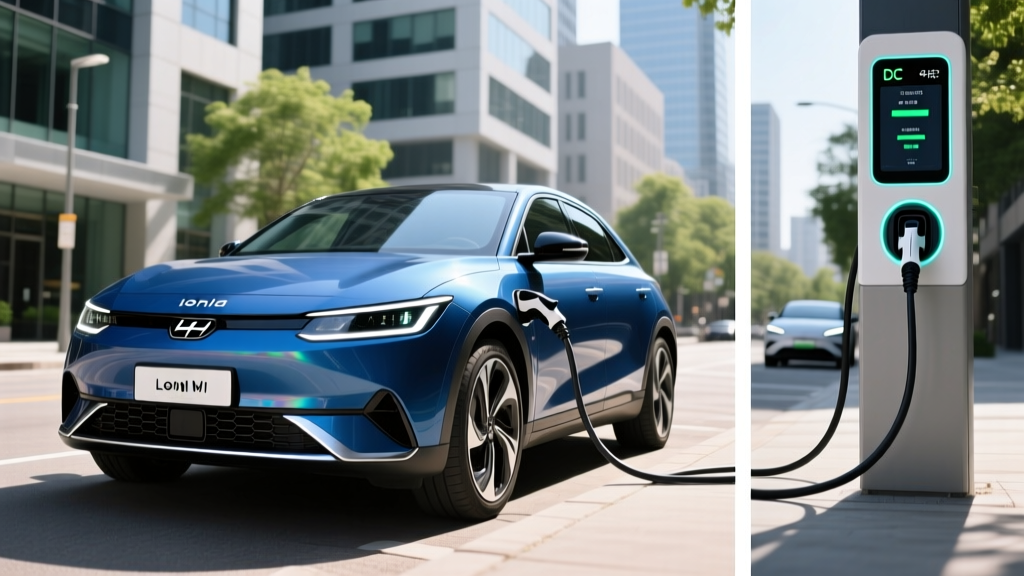
This is where the Ioniq 5 separates itself from most competitors in its price range. The E-GMP platform supports 800-volt DC fast charging, allowing peak rates up to ~240 kW at compatible chargers (Electrify America 350 kW stalls, Ionity in Europe, and an expanding network of 800V-capable stations in the US).
| Charging Level | Power (kW) | Speed (miles/hr) | Notes |
|---|---|---|---|
| Level 1 (120V household) | ~1.4 kW | ~4–5 mi/hr | Emergency/top-up only; full charge in ~55+ hours |
| Level 2 (240V, 48A) | 10.9 kW | ~37 mi/hr | Full charge in ~7.5 hours; ideal for overnight home charging |
| DC Fast Charge (800V capable) | Peak ~240 kW | ~800+ mi/hr (peak) | 10–80% in ~18 min; tapers significantly above 80% |
| DC Fast Charge (400V station) | ~150 kW (capped) | ~500 mi/hr (peak) | Ioniq 5 auto-adapts to 400V; still fast but not peak speed |
Understanding the charge curve: The 240 kW peak is not sustained across the entire session. The Ioniq 5 holds close to peak power from roughly 10% to 55% state of charge, then progressively tapers. From 80% to 100%, charging slows dramatically to protect battery health — this is normal for all lithium-ion packs but particularly pronounced on NMC chemistry. For road trips, plan your stops around 10–80% charges to minimize time at the station.
Connector note for 2026 buyers: The 2024 Ioniq 5 was built with a CCS1 (Combined Charging System) port. Hyundai switched to the NACS (Tesla-style) connector starting with the 2025 model year. If you're buying a 2024 model in 2026, you'll either need a CCS-to-NACS adapter for Tesla Supercharger access or rely on Electrify America, EVgo, and other CCS-native networks. Hyundai has offered adapter programs for existing owners — check with your dealer for current availability.
Home Level 2 charging: The 10.9 kW onboard charger is among the best in its class. On a 48-amp Level 2 circuit (hardwired, 60-amp breaker), you'll add roughly 37 miles of range per hour, meaning a full overnight charge easily replenishes any daily driving. Budget $800–$2,000 for a quality Level 2 home charger installation (equipment plus licensed electrician), depending on your panel capacity and run length. A 200-amp electrical panel is usually sufficient; older homes with 100-amp service may need a panel upgrade ($1,500–$3,000+).
Performance and Driving Dynamics
The Limited AWD pairs a front and rear permanent-magnet synchronous motor for a combined 320 horsepower and 446 lb-ft of torque. The result is a 0–60 mph time of 4.5 seconds — genuinely quick for a family crossover and more than adequate for highway merging and passing.
Driving modes (Eco, Normal, Sport, Snow) adjust throttle mapping, steering weight, and AWD torque distribution. Sport mode sharpens the throttle response noticeably, while Eco mode increases regenerative braking aggressiveness. The Ioniq 5 also offers adjustable regen via steering-wheel paddles, from level 0 (coasting) to level 3 (strong one-pedal-style deceleration). Level 3 won't bring you to a complete stop in all conditions, so it's not true one-pedal driving like some competitors, but it handles most city deceleration without touching the brake pedal.
Ride quality is a strong point. The multi-link rear suspension absorbs bumps with composure, and the cabin remains quiet at highway speeds — road noise is well-suppressed compared to the Tesla Model Y. The steering is light and precise, if not particularly communicative. This is a comfortable cruiser, not a sports car, and that's the right calibration for the segment.
Interior, Tech, and the Limited Trim Experience
The Limited trim is the top of the 2024 Ioniq 5 lineup, and it shows. Key standard features on the Limited include:
- Dual 12.3-inch displays — a digital instrument cluster and infotainment touchscreen with wireless Apple CarPlay and Android Auto
- Augmented-reality head-up display (AR HUD) — projects navigation arrows and speed onto the windshield in your sight line; one of the best implementations in any vehicle at this price
- Highway Driving Assist 2 (HDA2) — SAE Level 2 driver assistance with adaptive cruise control, lane-centering, and automatic lane-change assist. This is a driver-supervision system, not autonomous driving; hands must remain on the wheel.
- Vehicle-to-Load (V2L) — the Ioniq 5 can output up to 3.6 kW of AC power via an interior outlet and an external V2L adapter. You can run a laptop, power a campsite, or even trickle-charge another EV in an emergency.
- Premium seating — heated and ventilated front seats with leather-trimmed upholstery, heated rear seats, and a power-adjustable sliding rear bench (adds cargo flexibility)
- Panoramic sunroof with a power retractable shade
- Bose premium audio — 8-speaker system
- Digital side mirrors (camera-based, market-dependent; not available in all US states for 2024)
Cargo and passenger space: The Ioniq 5's flat floor and long 118.1-inch wheelbase create exceptional interior volume. Rear legroom measures 39.4 inches — more than the Model Y and rivaling midsize SUVs. Cargo space is 27.2 cubic feet behind the rear seats and 59.3 cu ft with them folded. The front trunk (frunk) on AWD models is small — roughly 0.85 cu ft — enough for charging cables but not much more. The RWD version has a larger frunk since there's no front motor.
Notable drawbacks: The rear wiper is absent (Hyundai omitted it to preserve the clean rear design; owners in rainy climates find this frustrating). The infotainment system uses a mix of touch-capacitive and physical buttons that can be distracting while driving. And the CCS port on the 2024 model limits Supercharger access without an adapter — a growing concern as Tesla's network becomes the de facto US charging standard.
Pricing, Tax Credits, and Total Cost
The 2024 Ioniq 5 Limited AWD launched with an MSRP of $52,600 (including destination). With options like the $1,200 Ecotronic Gray Matte paint and dealer-installed accessories, as-tested prices typically landed between $53,800 and $55,000.
| Item | Amount |
|---|---|
| Base MSRP (Limited AWD) | $52,600 |
| Typical as-tested | $53,500–$55,000 |
| Federal §30D EV Tax Credit (if eligible) | Up to $7,500 |
| Effective price after max credit | ~$45,100–$47,500 |
| Estimated 5-yr fuel savings vs. gas SUV (25 MPG, $3.50/gal) | ~$4,500–$6,000 |
Federal tax credit eligibility (§30D): The 2024 Ioniq 5's credit eligibility depends on battery-component and critical-mineral sourcing requirements that evolved throughout 2024. Per the IRS clean vehicle credit rules, the maximum $7,500 credit requires meeting both the battery component (≥60% North American manufacturing/assembly for 2024) and critical minerals thresholds. Hyundai's battery sourcing shifted during the 2024 model year as the Georgia Metaplant came online — some 2024 Ioniq 5 vehicles qualify for the full $7,500, others for $3,750, and some may not qualify depending on build date and battery lot.
- Vehicle MSRP must not exceed $80,000 (SUVs/crossovers) — Ioniq 5 qualifies ✓
- Buyer modified AGI must be ≤ $300,000 (married filing jointly), $225,000 (head of household), or $150,000 (single)
- Battery components must meet North American manufacturing thresholds (varies by build date)
- Critical minerals must meet US/free-trade-agreement sourcing thresholds
- Credit is non-refundable — you must have sufficient tax liability to claim it (or use point-of-sale transfer if available)
- Always verify the specific VIN on fueleconomy.gov and consult a tax professional
For 2026 buyers purchasing a used 2024 Ioniq 5: The used EV tax credit (§25E) offers up to $4,000 or 30% of the sale price (whichever is lower) on vehicles priced at $25,000 or less, purchased from a dealer. Given the Ioniq 5 Limited's strong resale values, finding a 2024 Limited under $25,000 is unlikely — expect used Limited prices in the $35,000–$42,000 range depending on mileage. The used credit is more realistic on lower-trim SE and SEL models.
How It Stacks Up Against Key Competitors
The 2024 Ioniq 5 Limited competes in the hotly contested midsize electric crossover segment. Here's how it compares to three rivals buyers most frequently cross-shop:
| Spec | Ioniq 5 Limited AWD | Tesla Model Y LR AWD | Ford Mach-E Premium AWD | VW ID.4 AWD Pro S |
|---|---|---|---|---|
| EPA Range | 260 mi | 308 mi | 290 mi (ext. battery) | 263 mi |
| Battery | 77.4 kWh (NMC) | ~75 kWh (NMC) | 91 kWh usable (NMC) | 77 kWh (NMC) |
| Peak DC Charge | ~240 kW | ~250 kW | ~150 kW | ~175 kW |
| 10–80% DC Time | ~18 min | ~25 min | ~38 min | ~29 min |
| 0–60 mph | 4.5 sec | 4.8 sec | 4.8 sec (GT: 3.5 sec) | 5.7 sec |
| MPGe (combined) | 110 | 117 | 100 | 104 |
| Base MSRP (comparable trim) | $52,600 | ~$48,990 | ~$52,995 | ~$49,995 |
| Warranty (battery) | 10yr/100k mi | 8yr/120k mi | 8yr/100k mi | 8yr/100k mi |
- Choose the Ioniq 5 Limited if: You prioritize fast DC charging (road-trip friendly), want the longest warranty in the segment, value ride comfort and cabin quietness, and V2L capability matters to you for camping or backup power.
- Choose the Tesla Model Y if: Maximum range, Supercharger network access, and software/OTA features are your top priorities — and you accept the firmer ride and minimalist interior.
- Choose the Ford Mach-E if: You want a sportier driving feel, prefer the Mach-E's styling, or need the extended-range battery for longer EPA range without going Tesla.
- Choose the VW ID.4 if: You want the lowest entry price, prioritize a car-like driving feel, and don't need the fastest charging speeds.
Pros and Cons
- Best-in-class DC fast charging (~18 min, 10–80%) thanks to 800V architecture
- 10-year/100,000-mile battery warranty — longest in the segment
- Excellent ride comfort and cabin isolation for daily and highway driving
- V2L capability (3.6 kW output) for camping, job sites, or emergency backup
- AR head-up display and HDA2 are premium features that work well
- Spacious rear seat (39.4" legroom) and flat floor architecture
- 260-mile EPA range (AWD Limited) is shorter than Model Y and Mach-E extended-range
- CCS1 port on 2024 model requires adapter for Tesla Supercharger access
- No rear wiper — a real annoyance in rain and snow
- Small frunk on AWD models (0.85 cu ft)
- Infotainment touch-capacitive controls can distract while driving
- Federal tax credit eligibility varies by VIN/build date — verify before purchase
Who the 2024 Ioniq 5 Limited Suits Best
The 2024 Ioniq 5 Limited AWD is best suited for daily commuters and small families who want a comfortable, well-equipped electric crossover and have access to home Level 2 charging. The 260-mile EPA range covers most commutes easily, and the fast DC charging makes road trips practical with 15–20 minute stops every 200 miles or so.
It's also a strong pick for outdoor enthusiasts who value V2L for campsite power, and for tech-forward buyers who appreciate the AR HUD and HDA2 without paying luxury-brand premiums. If your priority is maximum range above all else, the Model Y Long Range or the Ioniq 5's own RWD Long Range trim (on lower trims) serve better. If you need three rows or heavy towing (5,000+ lbs), look at the Kia EV9 or Rivian R1S instead.
Frequently Asked Questions
What is the real-world range of the 2024 Ioniq 5 Limited AWD?
The EPA rates it at 260 miles combined. In real-world driving, expect approximately 225–240 miles at sustained highway speeds (70–75 mph), 260–275 miles in city/suburban mixed driving, and 195–220 miles in cold weather below freezing. The standard heat pump helps limit cold-weather losses compared to EVs without one.
How fast does the 2024 Ioniq 5 charge at home and on the road?
At home on a Level 2 (240V, 48A) charger, the 10.9 kW onboard charger adds about 37 miles of range per hour, fully replenishing the battery in roughly 7.5 hours. On a DC fast charger, it peaks at approximately 240 kW and charges from 10% to 80% in about 18 minutes under optimal conditions — one of the fastest in its class.
Does the 2024 Ioniq 5 qualify for the federal EV tax credit?
It depends on the specific vehicle's build date and battery sourcing. Under IRS §30D rules, the Ioniq 5 may qualify for up to $7,500 if battery component and critical mineral sourcing requirements are met. The buyer must also meet income caps ($150K single, $300K joint). Always verify the specific VIN on fueleconomy.gov and consult a tax professional before relying on the credit.
Is the 2024 Ioniq 5 Limited worth buying in 2026 vs. newer models?
Yes, if you find one at a competitive price. The 2024 Limited's feature set — AR HUD, HDA2, V2L, 800V charging — remains competitive with 2025–2026 offerings. The main trade-off is the CCS1 port (newer models use NACS) and the 260-mile AWD range vs. longer-range newer options. If used pricing is $35,000–$40,000, it represents strong value for the equipment and warranty coverage remaining.
What's the biggest drawback of the 2024 Ioniq 5 Limited?
The combination of 260-mile EPA range (AWD) and the CCS1 charging port. The range is adequate for most drivers but trails the Model Y by nearly 50 miles, and the CCS port means you'll need an adapter for Tesla Supercharger access as the network transitions to NACS. The missing rear wiper is a smaller but frequently cited annoyance.
How long will the Ioniq 5 battery last?
Hyundai warranties the battery for 10 years or 100,000 miles against capacity loss below 70%. NMC batteries in vehicles with active thermal management (like the Ioniq 5) typically retain 85–90% capacity after 100,000 miles based on industry data. Keeping daily charges between 20–80% and using DC fast charging sparingly will maximize longevity.