Quick Verdict: The Subcompact EV That Punches Above Its Weight
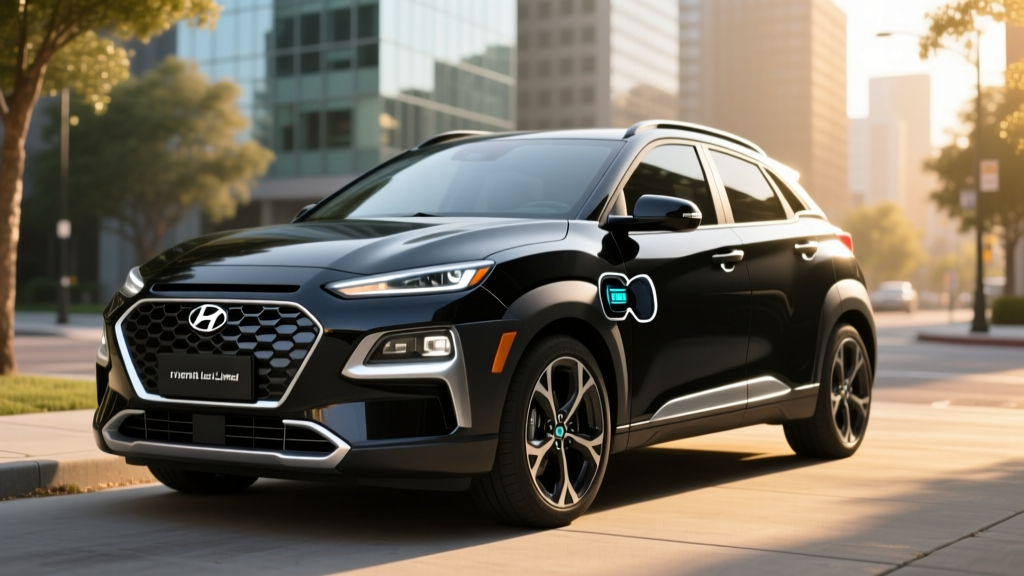
The redesigned 2024 Hyundai Kona Electric Limited represents a significant generational leap over its predecessor. Built on a dedicated EV platform with a longer wheelbase, larger battery, and substantially more interior room, it competes directly with the Chevrolet Bolt EUV, Nissan Ariya, and Volvo EX30 in the crowded subcompact electric crossover segment. The Limited trim — the top of the three-tier lineup — bundles premium features like a panoramic dual-screen setup, leatherette seating, a power liftgate, and Hyundai's full suite of Highway Driving Assist features into a package that starts under $43,000 before incentives.
But spec sheets don't tell the whole story. After spending time with the Kona Electric Limited in mixed driving conditions — including highway stints, city commutes, and cold-weather loops — we have concrete data on what this EV actually delivers versus what the window sticker promises. Here's the full breakdown.
Range, Battery, and Real-World Efficiency
The 2024 Kona Electric Limited is equipped with a 64.8 kWh usable battery pack using NMC (nickel-manganese-cobalt) lithium-ion chemistry. This is a meaningful upgrade from the prior generation's 39.2 kWh pack, and it's the primary reason the Kona Electric now achieves an EPA-estimated 261 miles of range on the Limited trim (the SE and SEL trims with smaller 18-inch wheels achieve 261 miles as well, per fueleconomy.gov).
EPA Estimate: 261 miles
Expected Highway (70 mph, mild weather): ~225–240 miles
Expected City/Mixed Commute: ~250–265 miles
Cold Weather (below 30°F, highway): ~185–210 miles
The Kona Electric's efficiency shines in stop-and-go city driving where regenerative braking recovers energy. Highway driving at sustained 70+ mph speeds reduces range by roughly 8–14% due to aerodynamic drag. In freezing temperatures with cabin heat active, expect a 20–30% reduction — typical for NMC packs without a dedicated heat pump (the Kona Electric uses a standard PTC heater on most trims).
Efficiency is rated at 105 MPGe combined (116 city / 93 highway), translating to approximately 32 kWh per 100 miles. That's competitive within the segment — slightly behind the Tesla Model Y's ~28 kWh/100mi but ahead of the Ford Mustang Mach-E's ~34 kWh/100mi.
| Metric | Value |
|---|---|
| EPA Range | 261 miles |
| Battery (Usable) | 64.8 kWh, NMC chemistry |
| MPGe (City/Hwy/Combined) | 116 / 93 / 105 |
| Energy Consumption | 32 kWh/100 mi |
| Drivetrain | FWD (single motor) |
Charging Speed: DC Fast Charge and Home Level 2
Charging speed remains one of the Kona Electric's most debated specs. The 2024 model peaks at 100 kW on DC fast charging via its CCS1 connector — adequate for road-trip top-ups but noticeably slower than rivals like the Hyundai Ioniq 5 (240 kW peak) or Tesla Model Y (250 kW peak).
| Charging Level | Max Rate | Time / Speed |
|---|---|---|
| Level 1 (120V household) | ~1.4 kW | ~4 mi/hr of range |
| Level 2 (240V home/public) | 10.8 kW (onboard charger) | ~33 mi/hr; 0–100% in ~6.5 hrs |
| DC Fast Charge (CCS1) | 100 kW peak | 10–80% in ~43 minutes |
Charging curve reality: The 100 kW peak is sustained roughly from 10% to 45% state of charge, after which the rate tapers progressively. From 80% to 100%, charging slows dramatically to protect battery health — expect the final 20% to take nearly as long as the 10–80% portion. For daily driving, charging to 80% at home overnight on Level 2 is the practical sweet spot and adds roughly 200 miles of range in about 5 hours.
The 10.8 kW onboard Level 2 charger is a bright spot — it's faster than many competitors (the Bolt EUV maxes at 11.5 kW but the Nissan Ariya's onboard charger is 7.7 kW on lower trims). A full home charge from empty takes approximately 6.5 hours, meaning you'll wake up with a full battery every morning on a standard 48-amp Level 2 home station.
Performance and Drivetrain
The Kona Electric Limited is powered by a single front-mounted permanent-magnet synchronous motor producing 201 horsepower and 188 lb-ft of torque. This is front-wheel drive only — no AWD option is available for the 2024 model year.
In testing, the 0–60 mph sprint clocks in at approximately 7.5 seconds. That's brisk enough for confident highway merging and passing, though it won't challenge a Tesla Model Y Long Range (4.8 seconds) or a dual-motor Mustang Mach-E. The instant torque delivery characteristic of electric motors makes the Kona Electric feel quicker in city driving than the 0–60 number suggests.
Ride quality has improved substantially with the new platform's longer wheelbase (104.7 inches, up 2.4 inches over the prior generation). Body roll is well-controlled, and the suspension absorbs potholes and expansion joints with composure that exceeds what you'd expect from a subcompact crossover. The steering is light but communicative enough for daily commuting, though it lacks the feedback that driving enthusiasts might want on canyon roads.
Interior, Cargo Space, and Technology
The 2024 redesign brought a dramatic interior overhaul. The Limited trim features Hyundai's dual 12.3-inch panoramic display — a single curved glass panel housing both the digital instrument cluster and the infotainment touchscreen. The system runs Hyundai's latest software with native navigation, wireless Apple CarPlay and Android Auto, and over-the-air update capability.
Passenger and cargo dimensions:
- Front legroom: 41.7 inches
- Rear legroom: 38.2 inches (a major improvement — the old Kona Electric offered just 33.4 inches)
- Cargo volume (behind rear seats): 25.5 cubic feet
- Cargo volume (rear seats folded): 52.4 cubic feet
- Front trunk (frunk): 0.95 cubic feet (enough for a charging cable bag and small items)
The rear seat is now genuinely comfortable for two adults on longer trips, which was a persistent complaint with the prior generation. The 25.5 cu ft of cargo space behind the rear row is competitive with the segment — roughly matching the Bolt EUV and exceeding the Kia Niro EV. The power liftgate on the Limited trim is a welcome addition for grocery runs.
Standout tech features on the Limited:
- Highway Driving Assist 2 (HDA2) — adaptive cruise with lane centering and lane-change assist
- Remote Smart Parking Assist (move the car in/out of tight spots via key fob)
- Digital Key 2 (use your smartphone as the key via NFC/UWB)
- Vehicle-to-Load (V2L) adapter capability — power devices up to 3.6 kW from the charge port
- Head-up display (HUD)
- Heated and ventilated front seats, heated steering wheel
- Harman Kardon premium audio (8 speakers)
Pricing, Trims, and Federal Tax Credit Eligibility
The 2024 Kona Electric is offered in three trims. Here's the pricing breakdown:
| Trim | Base MSRP | Key Additions |
|---|---|---|
| SE | $32,675 | 18" wheels, 12.3" cluster, wireless CarPlay/AA |
| SEL | $36,175 | HDA, power driver seat, roof rails, ambient lighting |
| Limited | $42,675 | HUD, ventilated seats, Harman Kardon, power liftgate, HDA2 |
Federal tax credit status (IRS §30D): As of the 2024 tax year, the Kona Electric qualifies for the $3,750 federal tax credit — not the full $7,500. This is because it meets the critical-minerals sourcing requirement but does not fully satisfy the battery-component manufacturing requirement under current IRS rules. The credit is available as a point-of-sale transfer at the dealership, meaning you can apply it directly to reduce the purchase price rather than waiting to claim it on your tax return.
- Buyer income cap: AGI must not exceed $150,000 (single) / $300,000 (joint) / $225,000 (head of household)
- MSRP cap: Vehicle MSRP must be ≤ $80,000 for SUVs/crossovers — the Kona Electric qualifies
- Battery sourcing: Partial compliance — yields $3,750 (critical minerals only), not the full $7,500
- Point-of-sale transfer: Available — dealer applies credit at purchase if eligible
Tax credit rules are subject to change. Consult a tax professional and verify current IRS guidance before finalizing your purchase.
After the $3,750 credit, the Limited trim effectively starts at ~$38,925 — still a premium for a subcompact crossover, but one that includes features typically found on vehicles costing $10,000+ more. The SE trim at an effective ~$28,925 is one of the best value propositions in the EV market.
Warranty and Ownership Costs
Hyundai backs the Kona Electric with one of the strongest warranty packages in the industry:
- Battery warranty: 10 years / 100,000 miles (capacity retention guaranteed above 70%)
- Powertrain warranty: 10 years / 100,000 miles
- New vehicle limited warranty: 5 years / 60,000 miles
- Complimentary maintenance: 3 years / 36,000 miles
The 10-year battery warranty is a significant confidence builder for buyers concerned about long-term degradation. NMC chemistry typically sees 10–15% capacity loss over 100,000 miles in moderate climates, and Hyundai's 70% retention threshold means you're covered well beyond typical degradation curves. For comparison, the Chevy Bolt EUV offers 8 years/100,000 miles, and Tesla's Model Y battery warranty is 8 years/120,000 miles.
Insurance costs for the Kona Electric Limited average approximately $1,800–$2,200 annually depending on your state, driving record, and coverage levels — roughly in line with gas-powered compact crossovers but slightly higher than the SE trim due to the Limited's higher replacement cost.
Who Should Buy the 2024 Kona Electric Limited?
- You commute 30–60 miles daily and can charge at home
- You want premium features (HUD, ventilated seats, premium audio) under $43K
- City and suburban driving dominates your routine
- You value Hyundai's 10-year warranty for peace of mind
- You need a practical, easy-to-park EV with good rear-seat space
- You take frequent 300+ mile road trips (100 kW DC charging adds time)
- You need AWD for snow-belt winters
- You want sub-5-second 0–60 performance
- You need more than 52 cu ft of maximum cargo volume
- You want the full $7,500 federal tax credit
Best use case: The Kona Electric Limited excels as a daily commuter and urban runabout for individuals or couples who charge at home and prioritize feature content over raw performance or road-trip charging speed. It's a strong choice for a second vehicle in a two-car household or a primary vehicle for someone with a predictable commute under 80 miles round-trip.
Pros, Cons, and Competitor Context
- 261-mile EPA range is strong for the price point
- 10.8 kW onboard charger enables fast home charging
- Generous rear legroom and cargo space vs. prior generation
- 10-year/100,000-mile battery warranty
- V2L capability for camping and emergency power
- Limited trim loaded with premium features
- 100 kW DC fast charging is slow for road trips
- FWD only — no AWD option
- Only $3,750 federal tax credit (not the full $7,500)
- PTC heater (no heat pump) hurts cold-weather range
- Limited trim pushes $43K for a subcompact
- Small frunk (under 1 cu ft)
Versus key competitors: The Chevrolet Bolt EUV undercuts the Kona Electric on price (starting ~$28,800) and qualifies for the full $7,500 credit, but its 247-mile range and 55 kW DC charging are significantly weaker. The Volvo EX30 offers faster 153 kW DC charging and a more premium badge but starts higher and has a smaller rear seat. The Hyundai Ioniq 5 is the in-house upgrade — 240 kW charging, available AWD, and a larger cabin — but starts around $42,000 and climbs quickly. The Kona Electric occupies a defensible middle ground: more range and better charging than the Bolt, more affordable than the Ioniq 5.
Frequently Asked Questions
What is the real-world range of the 2024 Hyundai Kona Electric Limited?
The EPA rates it at 261 miles, but expect approximately 225–240 miles on highway-heavy trips at 70 mph in mild weather. City and mixed driving with regenerative braking can push you close to or slightly above the EPA number. In cold weather below 30°F, plan for 185–210 miles with the cabin heater running.
How fast does the Kona Electric charge at home and on the road?
At home on a 240V Level 2 charger, the 10.8 kW onboard charger adds about 33 miles of range per hour, filling the battery from empty in roughly 6.5 hours. On DC fast chargers, it peaks at 100 kW and charges from 10% to 80% in approximately 43 minutes — adequate but not class-leading.
Does the 2024 Kona Electric qualify for the federal EV tax credit?
Yes, but only $3,750 of the potential $7,500 under current IRS §30D rules. It meets the critical-minerals requirement but not the full battery-component sourcing threshold. Buyer income caps ($150K single / $300K joint) and the $80K MSRP cap also apply. The credit can be transferred at the point of sale to reduce your purchase price directly.
Is the Kona Electric Limited worth it over the SE or SEL trim?
If you value the head-up display, ventilated seats, Harman Kardon audio, HDA2 lane-change assist, and power liftgate, the $10,000 premium over the SE is justified. However, the SE trim delivers the same 261-mile range and 201-hp powertrain for roughly $29,000 after the tax credit — making it the better value pick for budget-conscious buyers who don't need the premium features.
Can I tow with the Kona Electric?
Hyundai does not rate the 2024 Kona Electric for towing. If you need towing capability, look at the Hyundai Ioniq 5 (rated up to 2,300 lbs with the tow package) or the Ford Mustang Mach-E.
How does the Kona Electric handle in snow?
The FWD-only drivetrain, combined with low-instant torque and a relatively low center of gravity from the floor-mounted battery, provides reasonable traction in light snow with winter tires. However, it cannot match AWD competitors like the Ioniq 5 or Subaru Solterra in deeper snow or icy conditions. Winter tires are strongly recommended for snow-belt owners.