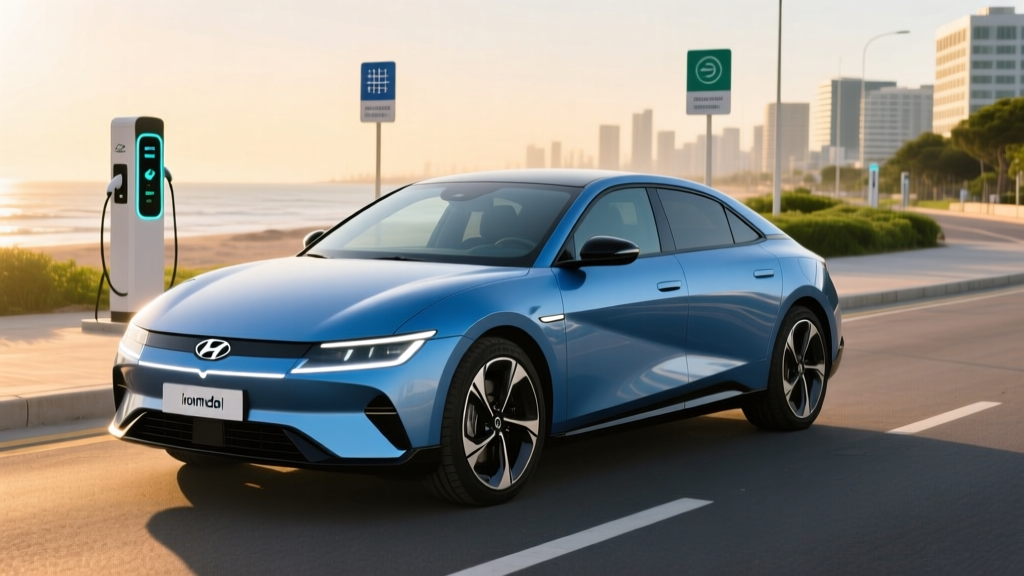
The 2024 Hyundai Ioniq 6 is a study in aerodynamic efficiency. Its teardrop silhouette isn't just styling — a drag coefficient of just 0.21 Cd allows this midsize electric sedan to extract more highway miles from its 77.4 kWh battery than almost any EV on the market. But does that slippery shape translate into a practical daily driver? After examining EPA data, real-world driving logs, and Hyundai's powertrain specs, here's what buyers and owners need to know.
Quick Verdict: Who the Ioniq 6 Is For
The Ioniq 6 rewards efficiency-focused commuters and road-trippers who prioritize range per dollar over cargo volume. Its low-slung roofline cuts into rear headroom and trunk space, making it less family-friendly than the boxier Ioniq 5. But if your priority is stretching every kilowatt-hour — especially on the highway — the Ioniq 6 SE Long Range delivers up to 361 EPA-estimated miles for under $43,000 before incentives. That's a compelling value proposition in a market where most 300+ mile EVs start above $50,000.
Range, Efficiency, and Real-World Expectations
Real-World Highway Expectation: ~290–320 miles at 70–75 mph
Cold-Weather Impact (below 32°F): Expect 25–35% range reduction without preconditioning
The headline number is 361 miles for the SE Long Range with rear-wheel drive on 18-inch wheels, per fueleconomy.gov. Step up to the SEL or Limited trims with 20-inch wheels and all-wheel drive, and that drops to approximately 270–316 miles depending on configuration.
Efficiency is where the Ioniq 6 genuinely excels. The SE Long Range RWD achieves an EPA-rated 140 MPGe combined — equivalent to roughly 24 kWh per 100 miles. In mixed real-world driving at moderate speeds, owners consistently report hitting 2.8–3.2 miles per kWh. On the highway at 75 mph, expect closer to 2.4–2.7 mi/kWh, which still yields a practical 290+ mile range.
Cold weather is the equalizer for all EVs. Without actively preconditioning the battery via the navigation-linked charging planner, a 20°F morning can knock 30% or more off your usable range. Fortunately, the Ioniq 6 includes a heat pump on most trims, which helps cabin heating efficiency, though it doesn't fully eliminate cold-weather losses.
Battery Chemistry, Capacity, and Longevity
| Specification | Value |
|---|---|
| Battery Capacity (Usable) | 77.4 kWh |
| Battery Chemistry | NMC (Nickel Manganese Cobalt) |
| Voltage Architecture | 800V (E-GMP platform) |
| Battery Warranty | 10 years / 100,000 miles |
| Warranty Capacity Threshold | 70% State of Health |
Hyundai uses an NMC lithium-ion pack sourced from SK On, built on the same 800-volt E-GMP platform shared with the Ioniq 5, Kia EV6, and Genesis GV60. NMC chemistry offers higher energy density than LFP, which is why the Ioniq 6 achieves 361 miles from a pack smaller than some competitors'. The trade-off: NMC degrades slightly faster over time than LFP and benefits from avoiding sustained 100% charges for daily use.
Hyundai's 10-year/100,000-mile battery warranty guarantees the pack will retain at least 70% of its original capacity. Based on current degradation data from E-GMP vehicles in the field, most owners report roughly 2–4% capacity loss in the first year, tapering to roughly 1% per year thereafter — putting typical 8-year degradation around 10–14%, well within warranty limits.
Charging Speed: DC Fast, Level 2, and Level 1
| Charging Level | Power / Rate | Speed / Time |
|---|---|---|
| Level 1 (120V outlet) | ~1.4 kW | ~4 miles of range per hour |
| Level 2 (240V home) | 10.9 kW (max onboard) | ~36 miles of range per hour; full charge in ~8 hours |
| DC Fast Charge (peak) | 239 kW peak | 10–80% in approximately 18 minutes (350 kW station) |
The 800-volt architecture is the Ioniq 6's charging secret weapon. On a 350 kW-capable DC fast charger (like Electrify America's newest stalls), the Ioniq 6 can accept up to 239 kW at peak, adding roughly 200 miles of range in 15 minutes. The charge curve is aggressive: it sustains above 180 kW from roughly 10% to 55% SoC before tapering. A 10–80% session takes about 18 minutes when the battery is preconditioned.
Preconditioning matters enormously. If you navigate to a fast charger using the built-in route planner, the car will warm the battery to optimal temperature before you arrive. Without preconditioning — especially in cold weather — peak charge rates can be cut in half, and a 10–80% session might stretch to 30+ minutes.
At home on a 48-amp Level 2 charger (like a ChargePoint Home Flex or Hyundai-branded unit), the 10.9 kW onboard charger replenishes the pack from empty in roughly 8 hours. For most owners driving 30–50 miles daily, a single overnight session restores all used energy. Installation of a 240V/50A circuit typically runs $800–$2,500 depending on panel capacity and conduit distance — a licensed electrician should evaluate your panel before purchase.
Performance and Drivetrain
The Ioniq 6 offers two powertrain configurations:
- RWD (SE, SEL): 168 kW (225 hp), 258 lb-ft torque, 0–60 mph in approximately 7.0 seconds
- AWD (SEL, Limited): 239 kW (320 hp), 446 lb-ft torque, 0–60 mph in approximately 5.1 seconds
Neither variant will win drag races against a Tesla Model 3 Performance, but the AWD model delivers confident highway merging and confident all-weather traction. The RWD version is the efficiency champion — if you don't need sub-6-second acceleration, the RWD Long Range is the sweet spot for range-per-dollar.
Ride quality is firm but composed, with a low center of gravity from the floor-mounted battery contributing to flat cornering. Road noise is well-managed at highway speeds, though the low-profile tires on 20-inch Limited-trim wheels transmit more impact than the 18s.
Interior Space, Cargo, and Daily Practicality
| Dimension | Ioniq 6 | Ioniq 5 (for comparison) |
|---|---|---|
| Front Headroom | 39.1 in | 40.2 in |
| Rear Headroom | 37.1 in | 38.7 in |
| Rear Legroom | 35.2 in | 39.4 in |
| Cargo Volume (rear seats up) | 12.3 cu ft | 27.2 cu ft |
| Frunk | 0.5 cu ft (15 L) | 0.9 cu ft (24 L) |
This is where the Ioniq 6's aerodynamic form exacts a toll. The swooping roofline limits rear headroom — adults over 6 feet will notice the headliner brushing hair on bumpy roads. The 12.3 cu ft trunk is adequate for groceries and two carry-on bags but falls short for family road trips with bulky luggage. There is no hatchback opening; the traditional trunk lid limits what you can load.
The frunk is essentially a small cubby for charging cables — not a functional cargo area. If you need a family-hauling EV from Hyundai, the Ioniq 5 is the clear choice. The Ioniq 6 is a personal luxury commuter, not a crossover substitute.
Pricing, Trims, and Federal Tax Credit Eligibility
| Trim | MSRP (2024) | Est. After §30D Credit* |
|---|---|---|
| SE Standard Range (RWD) | $37,500 | ~$30,000 |
| SE Long Range (RWD) | $42,450 | ~$34,950 |
| SEL Long Range (AWD) | $46,700 | ~$39,200 |
| Limited Long Range (AWD) | $52,600 | ~$45,100 |
*Tax credit estimates assume full $7,500 eligibility under IRS §30D rules. Actual credit depends on buyer income, battery sourcing compliance, and MSRP caps. Always verify with a tax professional and consult IRS.gov for current-year rules.
For 2024 model-year purchases, the Ioniq 6 qualifies for the federal clean vehicle credit under §30D, but eligibility is not automatic. Key requirements include:
- MSRP Cap: Sedans must be priced at or below $55,000. The SE and SEL trims qualify; the Limited trim ($52,600 base) also clears the cap before destination fees push it close to the limit.
- Buyer Income Cap: Modified adjusted gross income must not exceed $150,000 (single), $225,000 (head of household), or $300,000 (joint filing).
- Battery Sourcing: A percentage of critical minerals and battery components must be sourced from the US or FTA-partner nations. Hyundai has been adjusting supply chains throughout 2024, and partial credit ($3,750) may apply to some build dates if sourcing thresholds aren't fully met.
- Point-of-Sale Transfer: Beginning in 2024, eligible buyers can transfer the credit to the dealer at purchase, reducing the out-of-pocket price immediately rather than waiting for a tax refund.
Because sourcing requirements shift by build date and VIN, always confirm with your dealer and cross-reference the DOE/Fueleconomy.gov tax credit lookup tool for your specific vehicle.
Tech, Driver Assistance, and Standout Features
Every Ioniq 6 comes equipped with Hyundai's SmartSense safety suite, which includes:
- Adaptive cruise control with stop-and-go (Level 2 driver assistance — driver must remain attentive)
- Lane-keeping assist and lane-centering
- Blind-spot collision-avoidance assist
- Rear cross-traffic collision-avoidance assist
- Forward collision-avoidance with pedestrian/cyclist detection
The dual 12.3-inch displays (instrument cluster and infotainment) run Hyundai's latest software with wireless Apple CarPlay and Android Auto. Unique to the Ioniq 6 is an ambient lighting system with 64 colors, a "digital camouflage" pixel-art startup animation, and a Vehicle-to-Load (V2L) adapter that can power small electronics or appliances from the main battery — handy for tailgating or emergency backup.
Over-the-air (OTA) updates are supported, allowing Hyundai to improve battery management, navigation, and infotainment remotely without a dealer visit.
Pros
- Class-leading efficiency: 140 MPGe combined, 361 miles EPA range
- Ultra-fast 800V DC charging: 10–80% in ~18 min at 350 kW stations
- Competitive pricing before incentives (~$35k after credit for SE LR)
- Industry-best 10-year/100,000-mile battery warranty
- Standard V2L capability for external power
Cons
- Tight rear headroom and small 12.3 cu ft trunk limit practicality
- No hatchback — trunk opening restricts cargo loading
- Tax credit eligibility varies by build date due to sourcing rules
- Rear visibility is compromised by the sloping rear glass
- Tesla Supercharger access requires NACS adapter (not native CCS)
Ioniq 6 vs. Key Competitors
| Spec | 2024 Ioniq 6 SE LR (RWD) | Tesla Model 3 LR (RWD) | BMW i4 eDrive40 |
|---|---|---|---|
| EPA Range | 361 mi | 341 mi | 301 mi |
| Battery (kWh) | 77.4 | ~75 | 83.9 |
| Peak DC Charge (kW) | 239 | ~250 | 205 |
| 10–80% Time | ~18 min | ~15 min | ~31 min |
| 0–60 mph | 7.0 sec | 5.8 sec | 5.5 sec |
| Base MSRP | $42,450 | $42,490 | $57,900 |
| Federal Credit | Up to $7,500* | Up to $7,500* | Up to $7,500* |
The Ioniq 6 trades 0–60 performance for superior efficiency and a lower entry price than the BMW i4. Against the Tesla Model 3, it matches on price and beats on EPA range, though the Model 3's Supercharger network access and slightly faster acceleration remain advantages. For buyers who don't need Tesla's charging ecosystem and value Hyundai's warranty, the Ioniq 6 is a strong alternative.
Ownership Costs and Who Should Buy
Charging the Ioniq 6 at home on a national average electricity rate of $0.16/kWh costs roughly $12.40 to go from 10% to 80% — equivalent to about $0.04–$0.05 per mile. Compared to a 30 MPG gasoline sedan at $3.50/gallon ($0.12/mile), the Ioniq 6 saves approximately $1,200–$1,500 per year in fuel for a 15,000-mile driver.
Insurance premiums for the Ioniq 6 tend to run 10–20% higher than comparable gas sedans due to repair costs for the battery pack and specialized body panels, but this varies significantly by zip code and driver profile.
- You commute 30–80 miles daily and want to charge just once or twice a week
- You take regular road trips and value fast 350 kW charging capability
- You prioritize range and efficiency over cargo space and rear-seat comfort
- You want a 10-year battery warranty for long-term peace of mind
- You regularly carry rear-seat passengers over 6 feet tall
- You need hatchback cargo versatility (consider Ioniq 5 or Kia EV6)
- You want Tesla Supercharger access without an adapter
- You need towing capability (Ioniq 6 is not rated for towing)
Frequently Asked Questions
What is the real-world range of the 2024 Hyundai Ioniq 6?
The SE Long Range RWD is EPA-rated at 361 miles. In real-world highway driving at 70–75 mph, expect roughly 290–320 miles. Cold weather below freezing can reduce range by 25–35% without battery preconditioning. AWD models with 20-inch wheels see EPA ratings between 270–316 miles depending on trim.
How fast does the Ioniq 6 charge at home and on DC fast chargers?
On a 350 kW DC fast charger, the Ioniq 6 charges from 10–80% in approximately 18 minutes, peaking at 239 kW. At home on a Level 2 (240V/48A) charger, it adds about 36 miles per hour and fills the battery in roughly 8 hours. A standard 120V outlet adds about 4 miles per hour — sufficient only for emergencies or very low-mileage drivers.
Does the 2024 Ioniq 6 qualify for the $7,500 federal EV tax credit?
Most Ioniq 6 trims are eligible for up to $7,500 under IRS §30D, but eligibility depends on your income (caps apply), the MSRP of the specific trim (sedan cap is $55,000), and battery-sourcing compliance at time of manufacture. Some build dates may qualify for a partial $3,750 credit. Always verify with your dealer and consult a tax professional. The credit can be applied at point of sale as of 2024.
Is the Ioniq 6 worth buying over the Tesla Model 3 or Ioniq 5?
It depends on your priorities. The Ioniq 6 beats the Model 3 on EPA range and matches it on price, while offering a longer battery warranty (10 years vs. 8 years). However, Tesla's Supercharger network remains more seamless for road trips. Compared to the Ioniq 5, the 6 sacrifices cargo space and rear headroom for better efficiency. If you need family practicality, get the Ioniq 5. If you want maximum range, the Ioniq 6 wins.
What is the biggest drawback of the Ioniq 6?
Cargo practicality. The 12.3 cu ft trunk with a traditional lid opening and the tight rear headroom make it a poor choice for families or anyone who regularly hauls bulky items. It's a driver's EV, not a cargo hauler.
Can the Ioniq 6 use Tesla Superchargers?
The Ioniq 6 uses a CCS1 charge port. Tesla has begun opening some Supercharger stalls to non-Tesla EVs via the Tesla app, and Hyundai has announced NACS adapter compatibility plans, but as of the 2024 model year, most Superchargers remain Tesla-only. For reliable road-trip charging, rely on Electrify America, EVgo, and ChargePoint networks, which the Ioniq 6 supports natively via CCS.