Quick Verdict: The Efficiency King With a Controversial Shape
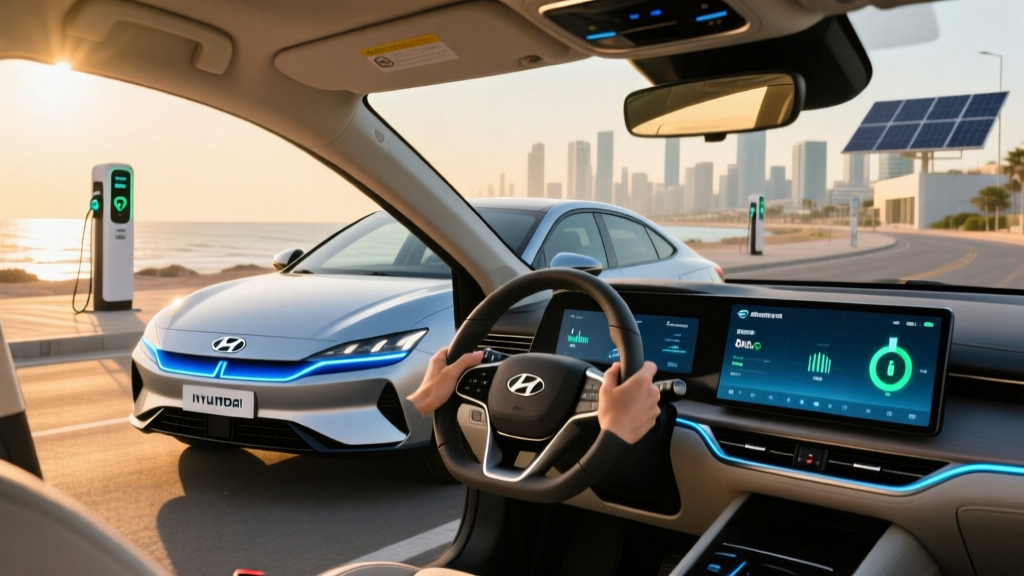
The 2024 Hyundai Ioniq 6 Limited is the flagship trim of Hyundai's aerodynamic electric sedan, and it remains one of the most energy-efficient EVs on the market. With an EPA-estimated 316 miles of range on the Long Range RWD configuration and a drag coefficient of just 0.21, it sips electrons like few competitors. But the swoopy "Electrified Streamliner" design exacts a toll on rear headroom and cargo practicality, making this a driver-focused commuter rather than a family hauler.
For buyers who prioritize range, charging speed, and highway refinement over SUV-style utility, the Ioniq 6 Limited is a compelling choice. For those needing versatile cargo space or a back seat that easily fits tall adults, the Ioniq 5 or a Tesla Model Y may serve better. Here's every number you need to make the call.
Range, Efficiency, and Real-World Expectations
The Ioniq 6 achieves its efficiency advantage through aerodynamics and a well-managed powertrain. The RWD Long Range model returns an EPA-estimated 140 MPGe combined (140 city / 132 highway), which translates to roughly 24 kWh per 100 miles. The AWD Limited comes in at 111 MPGe combined (111 city / 111 highway), or approximately 30 kWh/100 mi.
Why does real-world range fall short of the EPA sticker? The EPA test cycle includes significant city and low-speed driving, where regenerative braking recovers energy and aerodynamic drag is minimal. At sustained highway speeds, drag dominates, and the Ioniq 6's slippery shape helps but can't fully overcome physics. Cold weather compounds this: battery chemistry slows, cabin heating draws power (though the Limited's heat pump helps mitigate the loss compared to resistive heating), and air density increases drag.
Battery, Powertrain, and Performance Specs
| Specification | Ioniq 6 Limited RWD (Long Range) | Ioniq 6 Limited AWD (Long Range) |
|---|---|---|
| Battery Capacity (Usable) | 77.4 kWh | 77.4 kWh |
| Battery Chemistry | NMC (Nickel Manganese Cobalt) | NMC (Nickel Manganese Cobalt) |
| Drivetrain | Rear-Wheel Drive, single motor | Dual-Motor AWD |
| Horsepower | 225 hp | 320 hp |
| Torque | 258 lb-ft | 446 lb-ft |
| 0-60 mph | 6.2 seconds | 4.5 seconds |
| EPA Range | 316 miles | 270 miles |
| MPGe (Combined) | 140 MPGe | 111 MPGe |
| Top Speed | 115 mph (electronically limited) | 115 mph (electronically limited) |
The 77.4 kWh NMC battery pack sits low in the skateboard platform, contributing to the Ioniq 6's composed ride and low center of gravity. Hyundai's E-GMP (Electric Global Modular Platform) supports 800-volt architecture, which is the key to its standout charging speeds.
The RWD model's 225 hp and 6.2-second 0-60 time are adequate for confident merging and passing, but this is not a performance sedan. The AWD's 320 hp and 4.5-second sprint are genuinely quick and make highway overtakes effortless. Both models are electronically limited to 115 mph.
Charging Speed: DC Fast, Level 2, and Level 1
| Charging Level | Power / Voltage | Charge Time / Rate | Notes |
|---|---|---|---|
| DC Fast Charge (Peak) | Up to 239 kW (800V) | 10-80% in ~18 minutes | Requires 350 kW-class charger; peak rate tapers above 60% SoC |
| DC Fast Charge (150 kW station) | Up to ~150 kW | 10-80% in ~25 minutes | More common public charger speed |
| Level 2 (Home / Public AC) | 10.9 kW (48A, 240V) | ~0-100% in 7 hours 20 min; ~25 mi/hr | Requires 60A dedicated circuit |
| Level 1 (120V outlet) | ~1.4 kW (12A) | ~3-4 miles per hour | Emergency/top-up only |
The Ioniq 6's 800-volt architecture is its charging superpower. On a 350 kW DC fast charger (like Electrify America's newest stalls), the pack can accept up to 239 kW peak, enabling a 10-80% charge in approximately 18 minutes under ideal conditions. That's among the fastest in its class.
However, a critical reality of DC fast charging: peak kW is not sustained kW. The Ioniq 6 hits its maximum charge rate between roughly 10-55% State of Charge, then the curve tapers to protect battery health. From 80-100%, charging slows dramatically — expect that final 20% to take nearly as long as the first 70%. For road trips, plan your stops around 10-80% charges for the best time efficiency.
At home on a Level 2 charger delivering 10.9 kW, you'll add about 25 miles of range per hour of charging. A full overnight charge easily replenishes the battery. Installation of a home Level 2 charger typically requires a 60-amp dedicated circuit on a 240V line — budget $800-$2,000 for professional installation depending on your electrical panel's proximity to the garage and whether a panel upgrade is needed. According to fueleconomy.gov, consistent home Level 2 charging is both the most convenient and cheapest way to fuel an EV.
The Ioniq 6 uses a CCS1 (Combined Charging System) connector for DC fast charging and a J1772 inlet for Level 1/2 AC charging. Hyundai has confirmed future models will adopt the Tesla NACS standard, but the 2024 Ioniq 6 ships with CCS. Adapters for Tesla Supercharger access are available from Hyundai for qualified owners, though compatibility and availability vary by region and network.
Pricing, Trims, and Federal Tax Credit Eligibility
| Trim | MSRP | Destination | Total Before Incentives | Est. After §30D Credit* |
|---|---|---|---|---|
| Ioniq 6 SE (Long Range RWD) | $42,450 | $1,150 | $43,600 | ~$36,100 |
| Ioniq 6 SEL (Long Range RWD) | $45,100 | $1,150 | $46,250 | ~$38,750 |
| Ioniq 6 Limited (Long Range RWD) | $52,600 | $1,150 | $53,750 | ~$46,250 |
| Ioniq 6 Limited (Long Range AWD) | $56,100 | $1,150 | $57,250 | ~$49,750 |
*Tax credit estimates assume full $7,500 eligibility under IRS §30D. Actual credit depends on individual tax situation, battery sourcing compliance, and income limits. Consult a tax professional.
The 2024 Ioniq 6 Limited RWD starts at $52,600 before destination. With the $1,150 destination charge, you're looking at $53,750 out the door before incentives. The AWD Limited pushes that to $57,250.
- MSRP Cap: Sedans must be under $55,000. The Ioniq 6 Limited RWD ($52,600) qualifies. The AWD Limited ($56,100) exceeds the sedan cap and does NOT qualify.
- Buyer Income Limits: Modified AGI must not exceed $150,000 (single), $225,000 (head of household), or $300,000 (joint filing).
- Battery Sourcing: Critical minerals and battery component requirements phase in annually. As of 2024, vehicles must meet increasing thresholds for North American-sourced minerals and components. Hyundai has worked to localize supply chains, but eligibility can shift — always verify on the official DOE/fueleconomy.gov list before purchasing.
- Point-of-Sale Transfer: Starting January 1, 2024, buyers can transfer the credit to the dealer at purchase, receiving the $7,500 as a down payment reduction rather than waiting for a tax refund.
This is a critical distinction for the Limited buyer: only the RWD version qualifies for the full federal credit because the AWD's MSRP exceeds the $55,000 sedan cap. If the $7,500 credit is a priority, the RWD Limited (or stepping down to the SEL trim) is the path. Always verify current eligibility on IRS.gov before finalizing a purchase, as battery sourcing rules can change a vehicle's qualification status.
Interior, Cargo, and Technology
The Ioniq 6 Limited's cabin is a minimalist, tech-forward environment with dual 12.3-inch displays (one for the instrument cluster, one for infotainment), ambient lighting with 64 colors, and Hyundai's Digital Key 2 capability. The Limited trim adds premium features:
- V-Tex leatherette and H-Tex eco-friendly seating surfaces (heated and ventilated front seats)
- Heated steering wheel
- Bose 8-speaker premium audio system
- Wireless Apple CarPlay and Android Auto (note: only on trims with standard display; the Limited's dual-screen setup may require USB connection — verify at the dealer)
- Hyundai's Bluelink connected services with remote charging management
- Vehicle-to-Load (V2L) capability — power laptops, camping gear, or appliances at up to 1.9 kW via an interior outlet or exterior adapter
The Limited's interior materials and build quality punch above their price class, with tight panel gaps and thoughtful details like the bridge-style center console and customizable ambient lighting modes that shift with drive mode.
| Dimension | Measurement |
|---|---|
| Front Headroom | 40.2 inches |
| Rear Headroom | 37.1 inches |
| Front Legroom | 41.7 inches |
| Rear Legroom | 35.1 inches |
| Cargo Volume (Trunk) | 12.3 cu ft |
| Frunk (Front Trunk) | 1.6 cu ft (AWD) / 4.1 cu ft (RWD) |
Here's where the Ioniq 6's design compromises surface. The 12.3 cu ft trunk is modest for a midsize sedan — the Tesla Model 3 offers 23 cu ft of combined cargo space with its hatchback design. The Ioniq 6's traditional trunk lid opening limits what you can load, and the RWD frunk (4.1 cu ft) is useful for charging cables but won't hold much else. The AWD frunk shrinks to 1.6 cu ft due to the front motor.
Rear headroom at 37.1 inches is tight for taller passengers, a direct consequence of the fastback roofline. Rear legroom at 35.1 inches is acceptable but not generous. If you regularly carry adults in back, test-sit before buying.
Driver Assistance and Safety
The Ioniq 6 Limited comes equipped with Hyundai's SmartSense suite, which includes:
- Highway Driving Assist 2 (HDA 2) — adaptive cruise with lane centering and lane-change assist
- Navigation-based Smart Cruise Control (curves, speed zones)
- Forward Collision-Avoidance Assist with pedestrian, cyclist, and junction turning detection
- Blind-Spot Collision-Avoidance Assist
- Rear Cross-Traffic Collision-Avoidance Assist
- Safe Exit Assist
- Surround View Monitor (360° camera)
- Remote Smart Parking Assist (on Limited — the car can park itself while you stand outside)
The 2024 Ioniq 6 earned an IIHS Top Safety Pick+ rating and a 5-Star overall safety rating from NHTSA, making it one of the safest EVs in its segment. The structural rigidity of the E-GMP platform and the low-mounted battery contribute to excellent crash performance.
Warranty and Long-Term Ownership
| Coverage | Term |
|---|---|
| New Vehicle Limited Warranty | 5 years / 60,000 miles |
| EV Battery Warranty | 10 years / 100,000 miles |
| Powertrain Warranty | 10 years / 100,000 miles |
| Battery Capacity Retention Threshold | 70% of original capacity during warranty period |
| Roadside Assistance | 5 years / unlimited miles |
| Complimentary Maintenance | 3 years / 36,000 miles |
Hyundai's 10-year/100,000-mile battery warranty is among the best in the industry. The guarantee that the pack will retain at least 70% of its original capacity during that period provides meaningful long-term reassurance. Based on data from Hyundai's Kona Electric and Ioniq 5, NMC battery degradation has been modest in practice — most owners report 90%+ State of Health after 2-3 years and 30,000+ miles.
The 3 years of complimentary maintenance covers tire rotation, multi-point inspections, and software updates. Since EVs don't need oil changes, spark plugs, or transmission fluid, ongoing maintenance costs are significantly lower than ICE vehicles — primarily tires, cabin air filter, brake fluid checks, and wiper blades.
Who Should Buy the 2024 Ioniq 6 Limited?
- You want maximum range (316 mi EPA) and qualify for the $7,500 federal credit (MSRP under $55K sedan cap)
- Your daily commute is under 80 miles round-trip and you have home charging
- You prioritize charging speed for occasional road trips (18-min 10-80% on 350 kW chargers)
- You value a quiet, refined highway cruiser with premium features
- You rarely carry more than one rear-seat passenger
- You need all-weather traction for snow/rain-heavy climates
- You want the 4.5-second 0-60 performance and don't mind losing $7,500 in tax credits
- 270 miles of EPA range (220-235 real-world highway) is sufficient for your routes
- You need maximum cargo versatility (hatchback/SUV)
- You regularly seat three adults in the back row
- You want access to the Tesla Supercharger network without an adapter
- Class-leading efficiency: 140 MPGe combined (RWD)
- 800V architecture enables 18-min 10-80% DC fast charging
- 316-mile EPA range (RWD Long Range) reduces charging frequency
- IIHS Top Safety Pick+ and NHTSA 5-Star ratings
- 10-year/100,000-mile battery warranty
- Vehicle-to-Load (V2L) capability
- Limited trim loaded with premium features at a competitive price
- Small 12.3 cu ft trunk; no hatchback opening
- Tight rear headroom (37.1 in) from fastback roofline
- AWD Limited exceeds $55K sedan MSRP cap — no federal credit
- CCS connector (not native NACS) — Supercharger access requires adapter
- Infotainment learning curve; no physical volume knob
- Low ground clearance (5.5 in) limits rough-road capability
Frequently Asked Questions
What is the real-world range of the 2024 Hyundai Ioniq 6 Limited?
The EPA rates the RWD Limited at 316 miles and the AWD at 270 miles. In real-world highway driving at 70-75 mph, expect 255-275 miles from the RWD and 220-235 miles from the AWD. Cold weather (below freezing) can reduce these figures by an additional 15-25%. City driving with regenerative braking tends to yield results closer to or occasionally above the EPA estimate.
How fast does the Ioniq 6 charge at home and on the road?
On a 350 kW DC fast charger, the Ioniq 6 peaks at 239 kW and charges from 10-80% in approximately 18 minutes. On a typical 150 kW public charger, expect 10-80% in about 25 minutes. At home on Level 2 (10.9 kW / 48A), you'll add roughly 25 miles of range per hour, and a full charge takes about 7 hours and 20 minutes. Level 1 (120V) adds just 3-4 miles per hour and is suitable only for overnight top-ups.
Does the 2024 Ioniq 6 Limited qualify for the $7,500 federal EV tax credit?
The RWD Limited (MSRP $52,600) qualifies for the federal credit because it's under the $55,000 sedan MSRP cap — assuming you meet the income limits ($150K single / $300K joint) and the vehicle's battery sourcing meets the 2024 critical minerals and component thresholds. The AWD Limited (MSRP $56,100) exceeds the cap and does not qualify. Always verify current eligibility on the IRS clean vehicle credits page and fueleconomy.gov before purchasing.
Is the Ioniq 6 Limited worth buying over the Tesla Model 3 or Hyundai Ioniq 5?
It depends on your priorities. The Ioniq 6 beats the Model 3 Long Range RWD (341 mi EPA) on price but loses on range, Supercharger access, and cargo space (23 cu ft hatchback vs. 12.3 cu ft trunk). Against the Ioniq 5, the Ioniq 6 offers more range (316 vs. 303 mi EPA for RWD) and better highway efficiency, but the Ioniq 5 wins decisively on cargo room (27.2 cu ft behind rear seats), rear headroom, and hatchback versatility. If you commute solo or with one passenger and want maximum miles per kWh, the Ioniq 6 is the better pick. If you need family utility, the Ioniq 5 or Model Y is more practical.
What are the biggest drawbacks of the Ioniq 6 Limited?
The fastback design sacrifices cargo space (12.3 cu ft trunk with a sedan-style opening, not a hatchback) and rear headroom (37.1 in). The AWD model exceeds the federal tax credit MSRP cap. The CCS connector means you'll need an adapter for Tesla Supercharger access. The infotainment system lacks a physical volume knob and has a steeper learning curve than some competitors. And ground clearance of just 5.5 inches means you'll want to be cautious on steep driveways and rough roads.
How does the Ioniq 6's warranty compare to competitors?
Hyundai's 10-year/100,000-mile battery and powertrain warranty is one of the longest in the EV market. Tesla covers its battery for 8 years/120,000 miles (Model 3 Long Range). BMW covers the i4 battery for 8 years/100,000 miles. Hyundai's extra two years of coverage and strong track record with NMC battery health in the Kona Electric and Ioniq 5 provide solid long-term peace of mind.