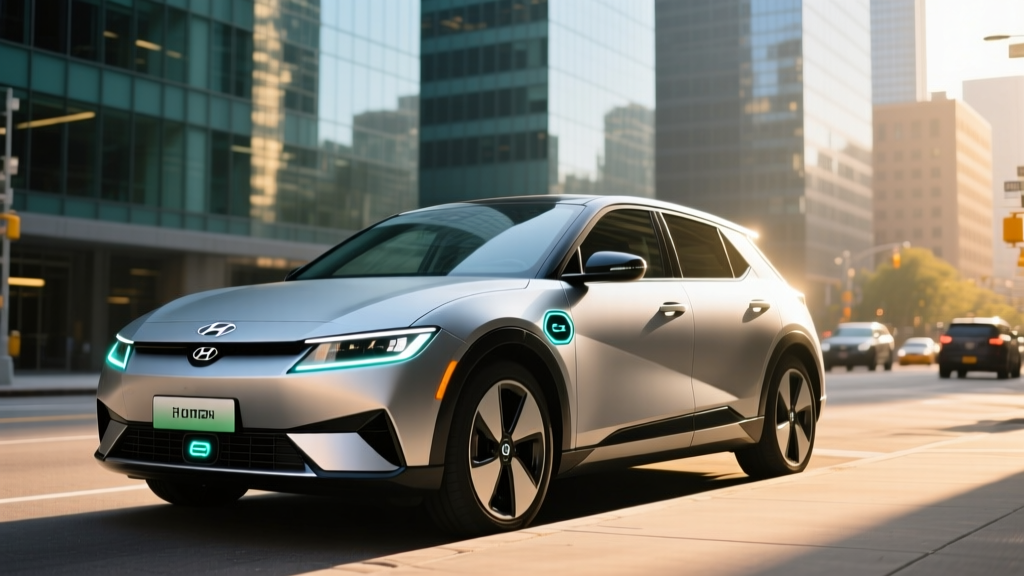
The 2024 Hyundai Ioniq 5 SEL occupies a narrow but compelling position in the midsize electric crossover segment: it pairs an 800-volt architecture capable of ultra-fast DC charging with a price point that undercuts many rivals, even before federal incentives. As a used or leftover-new model in 2026, the SEL trim—Hyundai's volume-selling Ioniq 5 configuration—deserves a hard look from buyers who want practical range, rapid charging, and distinctive design without stepping up to the Limited or N variants.
This review covers the SEL trim specifically, with data drawn from EPA fueleconomy.gov, Hyundai's official specifications, and real-world testing patterns. We'll break down what you'll actually experience on the road versus what the sticker promises.
2024 Hyundai Ioniq 5 SEL: Key Specifications at a Glance
| Attribute | Specification |
|---|---|
| EPA Range (RWD) | 303 miles |
| EPA Range (AWD) | 260 miles |
| Battery (usable) | 77.4 kWh, NMC lithium-ion |
| Drivetrain | RWD (single motor) or AWD (dual motor) |
| Horsepower | 168 hp (RWD) / 320 hp (AWD) |
| 0–60 mph | ~7.0 sec (RWD) / ~4.5 sec (AWD) |
| Max DC Fast Charge | 239 kW peak (800V architecture) |
| 10–80% DC Charge Time | ~18 minutes (optimal conditions) |
| Level 2 (AC) Charge Rate | 10.9 kW (~37 miles/hr) |
| MPGe (RWD combined) | 114 MPGe |
| Efficiency (RWD) | 30 kWh/100 mi |
| Cargo Volume (rear seats up) | 27.2 cu ft |
| Cargo Volume (rear seats folded) | 59.3 cu ft |
| Base MSRP (SEL RWD) | $47,250 (before destination) |
| Battery Warranty | 10 years / 100,000 miles |
Real-World Range: What the EPA Number Doesn't Tell You
EPA sticker: 303 miles
Real-world highway (70–75 mph, mild weather): ~250–270 miles
Real-world city/mixed (moderate climate): ~280–295 miles
Cold-weather (below 32°F, highway): ~200–230 miles
Source: Owner reports and independent EV range testing. Cold-weather losses of 25–35% are typical for NMC packs without consistent preconditioning.
The 303-mile EPA figure for the RWD SEL is achievable in mild, city-heavy driving where regenerative braking recovers energy. Highway driving at sustained speeds above 70 mph reduces that figure meaningfully—the Ioniq 5's boxy, retro-futuristic shape creates more aerodynamic drag than sleeker rivals like the Tesla Model Y. In winter conditions, expect a significant drop; the NMC battery chemistry is more susceptible to cold-induced resistance than LFP packs, and while the Ioniq 5 does offer a heat pump (standard on AWD, available on RWD via the SEL Convenience package), preconditioning the battery while plugged in is essential for minimizing range loss.
The AWD SEL drops to 260 miles EPA, and real-world highway figures will land closer to 215–235 miles in temperate weather. For road-trippers who regularly cover 250+ mile stretches between charging stops, the RWD is the pragmatic choice.
Charging Speed: The 800-Volt Advantage
The Ioniq 5's headline technical feature is its 800-volt electrical architecture—shared with the Kia EV6 and Genesis GV60 on the E-GMP platform. This allows DC fast charging at up to 239 kW when connected to a capable 350 kW charger (such as Electrify America's latest stations or Tesla Superchargers with a NACS adapter).
| Charge Level | Power / Rate | Miles Added per Hour | Notes |
|---|---|---|---|
| Level 1 (120V household) | ~1.4 kW | ~4–5 mi/hr | Emergency/top-up only |
| Level 2 (240V home, 48A) | 10.9 kW | ~37 mi/hr | Full charge in ~8 hours |
| DC Fast (350 kW station) | 239 kW peak | ~14 mi/min (peak) | 10–80% in ~18 min |
| DC Fast (150 kW station) | ~130 kW sustained | ~8 mi/min | 10–80% in ~28 min |
A critical nuance: the 239 kW figure is a peak, not a sustained rate. The Ioniq 5's charging curve is aggressive in the 10–55% state-of-charge window, then tapers progressively. From 55–80%, expect rates closer to 100–130 kW. From 80–100%, charging slows dramatically to protect the NMC cells—plan to unplug at 80% on road trips for the best time efficiency.
One practical note for 2026 buyers: the 2024 Ioniq 5 ships with a CCS1 port. However, Hyundai now includes a NACS adapter, granting access to Tesla's Supercharger network (which has begun opening to non-Tesla vehicles). This significantly expands the Ioniq 5's usable fast-charging map, especially in rural corridors where Tesla stalls outnumber third-party options.
Performance, Drivetrain, and Daily Driving Impressions
The RWD SEL's 168 hp and ~7.0-second 0–60 time are adequate rather than thrilling. This is a comfort-oriented cruiser, not a performance EV. The single rear motor provides smooth, linear acceleration that makes highway merging effortless, and the low center of gravity keeps body roll well-controlled through corners.
The AWD dual-motor variant transforms the character entirely: 320 hp and a 4.5-second 0–60 time put it in hot-hatch territory. The trade-off is 43 miles of EPA range and a higher price. For most SEL buyers—commuters, small families, and value-conscious EV adopters—the RWD is the right call.
Ride quality is a standout. The Ioniq 5's long 118.1-inch wheelbase and well-tuned suspension absorb pavement imperfections better than the stiffer-sprung Tesla Model Y. Cabin noise is low, with minimal wind intrusion until speeds exceed 80 mph. The turning circle is generous at 39.4 feet, making parking-lot maneuvers easy despite the vehicle's 182.7-inch overall length.
Interior, Cargo, and Technology
The Ioniq 5's cabin leans minimalist with a dual 12.3-inch display setup (instrument cluster and infotainment merged into a single curved glass panel). Physical climate controls are absent—everything routes through the touchscreen, which draws criticism from drivers who prefer tactile buttons. The center console slides fore and aft (a feature Hyundai calls the "Universal Island"), creating flexible storage or allowing front-seat passengers to exit on either side in tight parking spaces.
Passenger space is generous. Rear legroom measures 39.4 inches—more than the Model Y and competitive with midsize sedans. The flat floor (no transmission tunnel) makes the middle rear seat genuinely usable for adults on shorter trips. Cargo volume behind the rear seats is 27.2 cu ft, expanding to 59.3 cu ft with the 60/40 split folded. The front trunk (frunk) on RWD models adds 0.85 cu ft—enough for charging cables but not much else; AWD models sacrifice the frunk for the front motor.
SEL trim technology highlights:
- Wireless Apple CarPlay and Android Auto
- Hyundai SmartSense suite: forward collision-avoidance assist, blind-spot monitoring, rear cross-traffic alert, lane-keeping assist, highway driving assist (Level 2 ADAS)
- Digital key (NFC-based, compatible with select Samsung smartphones)
- Vehicle-to-load (V2L) capability: powers external devices up to 3.6 kW via an interior outlet or exterior adapter
- Over-the-air (OTA) software updates for powertrain and infotainment
Notable drawbacks: the SEL lacks the Limited trim's ventilated front seats, head-up display, and premium Bose audio. The camera-based digital side mirrors available in some markets are not offered on the US SEL. The infotainment system, while responsive, uses a resistive-touch climate panel that can be frustrating to adjust while driving.
Pricing, Trim Levels, and Federal Tax Credit Eligibility
The 2024 Ioniq 5 SEL launched with a base MSRP of $47,250 (RWD), with destination charges adding approximately $1,395. The AWD SEL started at $51,350. The SEL Convenience package ($2,200) adds a heat pump, heated rear seats, and a panoramic sunroof—worthwhile in cold climates.
| Configuration | MSRP (incl. destination) | Est. Federal Credit (§30D) | Effective Price |
|---|---|---|---|
| SEL RWD | ~$48,645 | Up to $7,500* | ~$41,145 |
| SEL RWD + Convenience Pkg | ~$50,845 | Up to $7,500* | ~$43,345 |
| SEL AWD | ~$52,745 | Up to $7,500* | ~$45,245 |
*Federal tax credit eligibility under IRS §30D is not automatic. The following requirements apply:
- MSRP cap: SUVs must not exceed $80,000 — the Ioniq 5 SEL clears this easily.
- Buyer income cap: Modified AGI must not exceed $150,000 (single) / $300,000 (joint).
- Battery sourcing: A percentage of critical minerals and battery components must be sourced from the US or FTA partners. Hyundai's supply chain has progressively met these thresholds, but eligibility can shift by production batch. Confirm the specific VIN's eligibility at fueleconomy.gov before purchasing.
- Point-of-sale transfer: As of 2024, buyers can transfer the credit to the dealer for an immediate price reduction rather than waiting to claim it on their tax return.
For 2026 buyers purchasing a leftover-new or certified-pre-owned 2024 Ioniq 5 SEL, the used-EV tax credit (§25E) may apply instead: up to $4,000 or 30% of the sale price (whichever is lower), with lower income caps ($75,000 single / $150,000 joint) and a vehicle sale-price cap of $25,000. Given the SEL's pricing, the used credit is only relevant if the resale price has dropped below that threshold—unlikely in most markets as of early 2026.
Ownership Costs, Warranty, and Long-Term Outlook
Hyundai backs the Ioniq 5's battery with a 10-year/100,000-mile warranty against defects and excessive capacity loss (defined as dropping below 70% state of health). The broader powertrain warranty mirrors this term. The vehicle itself carries a 5-year/60,000-mile new-vehicle limited warranty and 5-year/unlimited-mileage roadside assistance. These terms are among the strongest in the segment and reflect Hyundai's confidence in the E-GMP platform's durability.
Charging costs depend heavily on your setup. At home on Level 2 with an average US electricity rate of ~$0.16/kWh, a full 77.4 kWh charge costs approximately $12.38—yielding a per-mile energy cost of roughly $0.041 (RWD). Public DC fast charging is significantly more expensive; Electrify America and EVgo rates commonly run $0.40–$0.60/kWh, pushing per-mile costs to $0.12–$0.18. For buyers who can install home Level 2 charging, the Ioniq 5's operating cost is roughly one-third that of a comparable gasoline SUV at $3.50/gallon.
Insurance premiums for the Ioniq 5 tend to run 10–20% higher than equivalent gas-powered crossovers, driven by repair-cost data for EV-specific components. Shop quotes before purchasing.
How the Ioniq 5 SEL Stacks Up Against Rivals
The SEL's natural competitors include the Tesla Model Y Long Range, Ford Mustang Mach-E Premium, and Kia EV6 Wind (its corporate sibling). Here's how the numbers compare:
| Metric | Ioniq 5 SEL RWD | Model Y LR (AWD) | Mach-E Prem. RWD | Kia EV6 Wind RWD |
|---|---|---|---|---|
| EPA Range | 303 mi | 310 mi | 250 mi | 310 mi |
| Battery | 77.4 kWh NMC | ~75 kWh NMC | 72 kWh NMC | 77.4 kWh NMC |
| Peak DC Charge | 239 kW | ~250 kW | ~150 kW | 239 kW |
| 10–80% Time | ~18 min | ~22 min | ~33 min | ~18 min |
| 0–60 mph | 7.0 sec | 4.8 sec | 6.1 sec | 7.2 sec |
| Cargo (seats up) | 27.2 cu ft | 30.2 cu ft | 29.7 cu ft | 24.4 cu ft |
| Base MSRP | $47,250 | $48,990 | $48,995 | $48,700 |
The Ioniq 5 SEL's edge is charging speed tied with the EV6, combined with a more compliant ride than the Model Y and a more distinctive interior than either. The Model Y wins on cargo space and Supercharger network convenience (though the gap is closing with NACS adapter access). The Mach-E trails in charging speed and range.
Pros, Cons, and Who Should Buy the Ioniq 5 SEL
- Class-leading 239 kW DC fast charging
- Comfortable, quiet ride quality
- Spacious rear seat with flat floor
- V2L capability for camping/emergency power
- Strong 10-yr/100,000-mi battery warranty
- Distinctive design stands out in a sea of crossovers
- Real-world highway range falls 30–50 mi below EPA
- No physical climate controls; touchscreen-only
- Small frunk (RWD) or none (AWD)
- ADAS can be overly conservative with lane centering
- RWD acceleration is merely adequate
- CCS port requires adapter for Tesla Superchargers
Best for: Commuters and small families who have home Level 2 charging access, prioritize ride comfort and interior space over outright performance, and take road trips where 350 kW DC chargers are available. The SEL's value proposition is strongest for buyers who want 800V charging without paying luxury-EV prices.
Consider alternatives if: You regularly drive 300+ miles between charging stops (look at the Model Y LR or Ioniq 5 SE with its slightly higher range), need maximum cargo volume, or prefer a sportier driving feel (the EV6 GT-Line or Model Y Performance may suit better).
Frequently Asked Questions
What is the real-world range of the 2024 Hyundai Ioniq 5 SEL?
The EPA rates the RWD SEL at 303 miles and the AWD at 260 miles. In real-world mixed driving, expect 280–295 miles (RWD) and 235–250 miles (AWD) in moderate temperatures. Sustained highway driving at 75 mph drops those figures by roughly 15%, and winter cold (below 32°F) can reduce range by 25–35% without consistent battery preconditioning.
How fast does the Ioniq 5 SEL charge at home and on the road?
On a 240V Level 2 home charger (48 amps), the Ioniq 5 accepts 10.9 kW, adding roughly 37 miles of range per hour—a full charge takes about 8 hours. On a 350 kW DC fast charger, it peaks at 239 kW and can charge from 10–80% in approximately 18 minutes, though the rate tapers significantly above 55% state of charge.
Does the 2024 Ioniq 5 SEL qualify for the federal EV tax credit?
It can, but eligibility depends on the buyer's income (under $150K single / $300K joint), the vehicle's MSRP (under $80K for SUVs—the SEL qualifies), and battery component/critical-mineral sourcing requirements that vary by production date. Check the specific VIN at fueleconomy.gov and consult a tax professional. The credit can be transferred to the dealer at point of sale for an immediate price reduction.
Is the Ioniq 5 SEL worth buying over the Tesla Model Y?
The Ioniq 5 SEL wins on ride comfort, interior design, and charging speed (on 350 kW stations). The Model Y wins on cargo space, Supercharger network access (without an adapter), acceleration, and over-the-air software maturity. If you value comfort and fast charging stops, the Ioniq 5 is the stronger pick. If cargo versatility and the broadest charging network matter most, the Model Y holds an edge.
What is the battery warranty on the Ioniq 5 SEL?
Hyundai covers the high-voltage battery for 10 years or 100,000 miles (whichever comes first) against defects and capacity loss below 70% state of health. The powertrain carries the same 10-year/100,000-mile term. This is one of the most comprehensive EV warranties available in the US market.
Can the Ioniq 5 power my home or devices?
Yes. The Ioniq 5's V2L (vehicle-to-load) system provides up to 3.6 kW of AC power through an interior outlet or an exterior adapter plugged into the charge port. This is sufficient to run camping appliances, power tools, or essential home circuits during an outage (though it does not support full V2H bidirectional home backup without additional equipment).