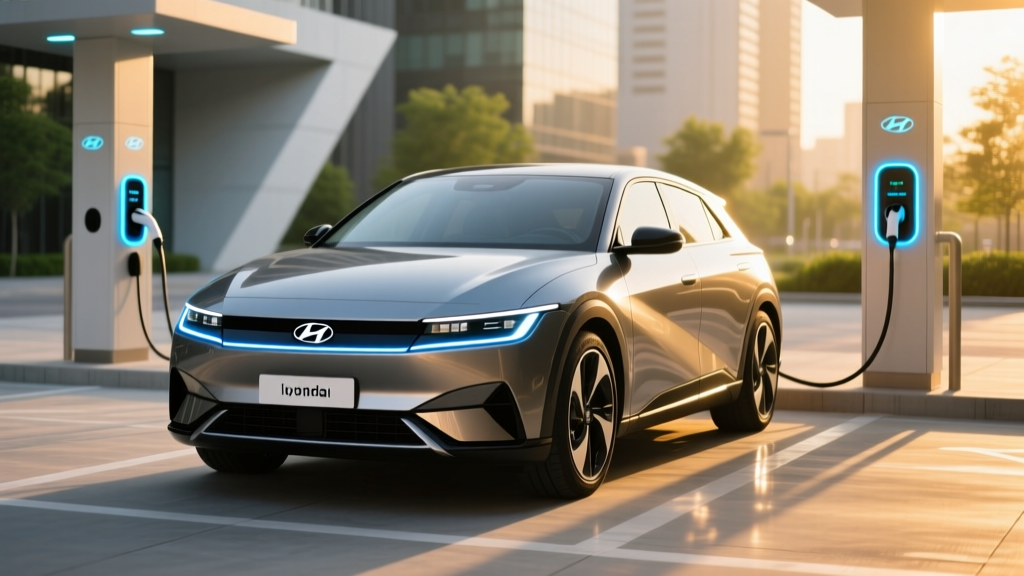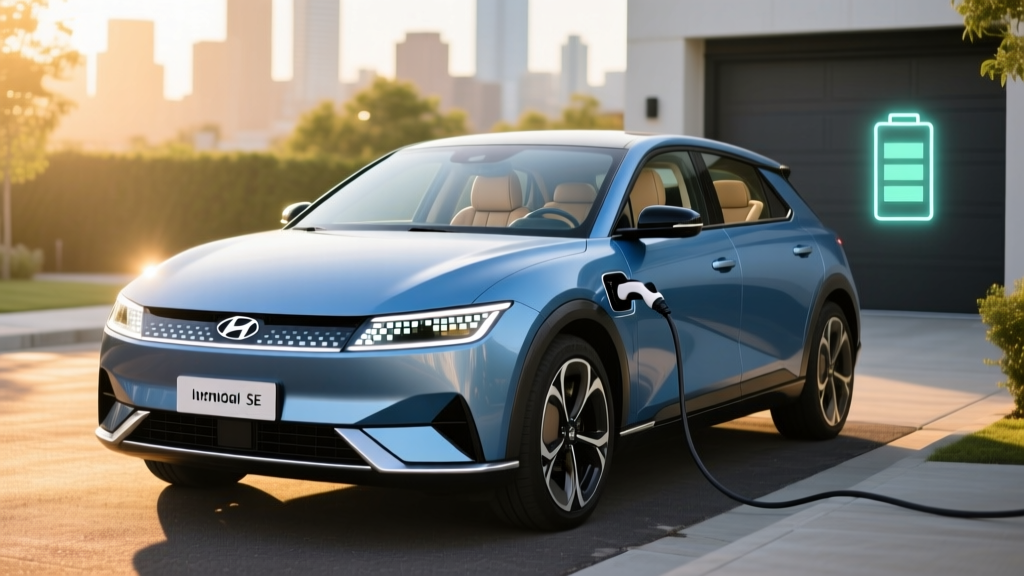
The 2024 Hyundai Ioniq 5 SE is the value sweet spot of Hyundai's retro-futuristic electric crossover lineup. Sitting below the SEL and Limited trims, the SE delivers the same striking design, ultra-fast 800-voltage charging architecture, and usable daily range — without pushing the price into luxury-EV territory. For buyers who want a practical, tech-forward electric daily driver without paying for premium leather or advanced parking assists, the SE trim makes a compelling case.
But spec sheets only tell part of the story. After spending time with the Ioniq 5 platform across multiple trims and seasons, we're breaking down what the SE actually delivers on the road: real-world highway range, sustained DC fast-charging behavior, home charging practicality, and whether the 2024 model year qualifies for the full federal tax credit under current IRS §30D rules.
2024 Hyundai Ioniq 5 SE: Core Specifications at a Glance
| Specification | SE Standard Range (RWD) | SE Long Range (RWD) | SE Long Range (AWD) |
|---|---|---|---|
| EPA Range | 240 miles | 303 miles | 260 miles |
| Battery (usable) | 58 kWh (NMC) | 77.4 kWh (NMC) | 77.4 kWh (NMC) |
| Horsepower | 168 hp | 225 hp | 320 hp |
| 0–60 mph | ~7.5 sec | ~7.0 sec | ~4.5 sec |
| Drivetrain | Rear-Wheel Drive | Rear-Wheel Drive | Dual-Motor AWD |
| Max DC Fast Charge | ~175 kW (peak) | ~235 kW (peak) | ~235 kW (peak) |
| 10–80% DCFC Time | ~18 min | ~18 min | ~18 min |
| Level 2 Home Charge | 10.9 kW (~37 mi/hr) | 10.9 kW (~37 mi/hr) | 10.9 kW (~37 mi/hr) |
| MPGe (combined) | 110 MPGe | 114 MPGe | 101 MPGe |
| Base MSRP | $41,850 | $45,850 | $49,350 |
All pricing reflects 2024 MSRP before destination ($1,195). Source: Hyundai USA.
Real-World Range: What the EPA Sticker Doesn't Tell You
EPA sticker: 303 miles
Real-world highway (70–75 mph, mild weather): ~255–270 miles
Cold weather (below 32°F, mixed driving): ~210–235 miles
City/regenerative driving (moderate temps): ~285–305 miles
The 303-mile EPA figure on the Long Range RWD SE is achievable — but mostly in city and suburban driving where regenerative braking recaptures energy and speeds stay moderate. On a sustained 70+ mph highway run in 65–75°F conditions, expect to use roughly 32–34 kWh/100mi, which translates to about 255–270 miles before you'd want to stop.
Cold weather is where every EV loses range, and the Ioniq 5 is no exception. The battery's thermal management system helps, but in sub-freezing temperatures without preconditioning, range can drop 25–30%. Hyundai's available heat pump (standard on higher trims, not included on the base SE) mitigates cabin energy draw — SE buyers in cold climates should factor this into winter planning and consider preconditioning the battery while plugged in.
The Standard Range SE's 240-mile EPA rating is tighter for road trips but perfectly adequate for daily commutes under 80 miles round-trip with home charging. According to fueleconomy.gov, the Long Range RWD achieves 114 MPGe combined, with efficiency rated at 29 kWh/100mi — competitive with the Tesla Model Y Long Range and slightly better than the Ford Mustang Mach-E Extended Range RWD.
Charging Speed: 800V Architecture Makes a Real Difference
| Charging Level | Power / Rate | Miles Added per Hour | Notes |
|---|---|---|---|
| Level 1 (120V outlet) | ~1.4 kW | ~5 miles/hr | Emergency/trickle only |
| Level 2 (240V home) | 10.9 kW | ~37 miles/hr | Full charge in ~7.5 hrs (77.4 kWh) |
| DC Fast Charge (peak) | ~235 kW | — | 10–80% in ~18 min (Long Range) |
| DC Fast Charge (sustained avg.) | ~150–170 kW | — | Average across 10–80% session |
The Ioniq 5's headline feature is its 800-volt electrical architecture — shared with the Kia EV6 and Porsche Taycan — which enables DC fast-charging speeds that most 400V competitors simply can't match. On a 350 kW Electrify America or compatible CCS station, the Long Range Ioniq 5 SE peaks near 235 kW, adding roughly 10–80% in about 18 minutes under ideal conditions.
Charging curve reality check: Peak kW is not sustained kW. The Ioniq 5 holds strong charging power through about 55–60% State of Charge (SoC), then begins tapering. From 60–80%, you'll see rates drop to roughly 120–150 kW. Above 80%, charging slows dramatically to protect battery health — a session from 80–100% can take as long as the 10–80% portion. For road trips, plan to charge in the 10–80% window and move on.
At home on a Level 2 (240V/48A) charger, the onboard 10.9 kW charger replenishes the 77.4 kWh battery in roughly 7.5 hours — overnight charging is effortless. The SE trim comes with a portable Level 1/2 charging cable, but most buyers will want a dedicated wall-mounted Level 2 unit. Installation typically runs $500–$2,000 depending on panel capacity and run length; budget for a 50-amp circuit with a licensed electrician.
The Ioniq 5 SE uses the CCS1 connector for DC fast charging. Hyundai has confirmed that 2025+ models will adopt the NACS (Tesla) connector, and adapters will be available for current CCS-equipped vehicles to access Tesla Superchargers. As of 2024, the Ioniq 5 accesses Electrify America, EVgo, ChargePoint, and other major CCS networks.
Performance and Driving Dynamics
The SE Long Range RWD's single rear motor produces 225 horsepower and 258 lb-ft of torque. The 0–60 mph time of roughly 7.0 seconds is brisk enough for confident highway merging and passing — it won't pin you to your seat like the AWD dual-motor variant (320 hp, ~4.5 seconds), but it feels responsive and immediate in a way that internal-combustion crossovers in this price range rarely do.
The AWD SE adds a front motor for 320 combined horsepower and substantially more traction in wet or snowy conditions. The trade-off is range: 260 miles EPA versus 303 for the RWD. For most buyers outside severe-winter climates, the RWD is the efficiency play; the AWD makes sense for mountain commutes, frequent snow, or those who simply want the extra acceleration.
Ride quality is composed and slightly firm — the Ioniq 5 prioritizes stability over plushness, with well-damped responses to bumps. Road noise is moderate at highway speeds, improved over earlier Hyundai EVs. The steering is light and precise, though feedback is minimal — this is a comfortable cruiser, not a sports car.
One-pedal driving via the steering-wheel-mounted regen paddles is excellent. The i-Pedal mode brings the car to a complete stop without touching the brake, and the progressive regen levels let you dial in exactly the deceleration feel you want.
Interior, Cargo, and Practicality
The Ioniq 5's cabin is one of its strongest selling points. The flat floor (thanks to the dedicated E-GMP EV platform) creates a genuinely spacious interior with a sliding center console that can move forward or back to prioritize front legroom or rear cargo access.
Key interior dimensions:
- Front headroom: 39.4 inches
- Front legroom: 41.7 inches
- Rear headroom: 38.7 inches
- Rear legroom: 39.4 inches
- Cargo behind rear seats: 27.2 cu ft
- Cargo with rear seats folded: 59.3 cu ft
- Front trunk (frunk): 0.85 cu ft (RWD) — fits a charging cable, not much more
Rear seat comfort is outstanding — among the best in the compact EV crossover segment. The 39.4 inches of rear legroom beats the Tesla Model Y and rivals midsize sedans. Two adults will be very comfortable; three across is tight but feasible for shorter trips.
The SE trim uses cloth seating surfaces (heated front seats are standard). You won't get the ventilated seats, leather, or premium audio of the Limited — but the SE's interior materials feel durable and modern, with a minimalist design anchored by dual 12.3-inch displays (instrument cluster and infotainment).
Technology and Driver Assistance
The 2024 Ioniq 5 SE includes Hyundai's SmartSense suite of driver-assistance features:
- Forward Collision-Avoidance Assist (with pedestrian/cyclist detection)
- Lane Keeping Assist and Lane Following Assist
- Blind-Spot Collision-Avoidance Assist
- Smart Cruise Control with Stop & Go
- Rear Cross-Traffic Collision-Avoidance Assist
- Highway Driving Assist (combines adaptive cruise + lane centering on mapped highways)
The infotainment system supports wireless Apple CarPlay and Android Auto, includes built-in navigation with EV-specific route planning (factoring in charging stops), and features over-the-air (OTA) update capability. The SE lacks the digital side mirrors and augmented-reality head-up display found on higher trims, but the conventional mirrors and standard HUD-free setup are perfectly functional.
One standout feature: Vehicle-to-Load (V2L). The Ioniq 5 can output up to 3.6 kW of AC power through an adapter (sold separately for the SE trim, ~$300) plugged into the charge port, or through a 120V outlet in the rear seat area on some configurations. This lets you power a laptop, run a small appliance while camping, or even trickle-charge another EV in an emergency.
Pricing, Tax Credits, and Total Cost
| Trim | Base MSRP | + Destination | Potential §30D Credit | Effective Price |
|---|---|---|---|---|
| SE Standard Range RWD | $41,850 | $43,045 | Up to $7,500 | ~$35,545 |
| SE Long Range RWD | $45,850 | $47,045 | Up to $7,500 | ~$39,545 |
| SE Long Range AWD | $49,350 | $50,545 | Up to $7,500 | ~$43,045 |
Federal tax credit eligibility (§30D): The 2024 Ioniq 5 is assembled in Ellabell, Georgia (since late 2024 production shifted stateside), making it eligible for the federal EV tax credit — but eligibility depends on several buyer-specific and vehicle-specific factors:
- MSRP cap: Must be under $80,000 for SUVs — all Ioniq 5 trims qualify ✓
- Buyer income cap: Modified AGI must not exceed $150,000 (single) / $300,000 (joint) ✓ buyer-dependent
- Battery sourcing: Critical minerals and battery component requirements phase in annually. For 2024, partial credit ($3,750) or full credit ($7,500) depends on whether the battery meets both sourcing thresholds. Hyundai has worked to shift supply chains, but verify current eligibility at irs.gov or through your dealer's point-of-sale system.
- Point-of-sale transfer: As of 2024, buyers can transfer the credit to the dealer at purchase, reducing the purchase price directly rather than waiting for a tax refund.
Tax credit rules change frequently. Consult a tax professional and verify eligibility at the time of purchase. State and local incentives may stack on top — check AFDC's state incentive database.
Warranty and Long-Term Ownership
Hyundai backs the Ioniq 5 with one of the strongest warranty packages in the EV market:
- Battery warranty: 10 years / 100,000 miles (capacity retention threshold: 70%)
- Powertrain warranty: 10 years / 100,000 miles
- New vehicle limited: 5 years / 60,000 miles
- Roadside assistance: 5 years / unlimited miles
- Complimentary maintenance: 3 years / 36,000 miles
The 77.4 kWh battery uses NMC (nickel-manganese-cobalt) chemistry, which offers high energy density but requires more careful charge management than LFP batteries. Hyundai's battery management system includes active liquid cooling and a buffer that prevents true 0% or 100% states to reduce degradation. Real-world data from early Ioniq 5 owners (2022–2023 models) suggests approximately 3–5% degradation over the first 30,000 miles — well within the 70% warranty threshold over 10 years.
Insurance costs for the Ioniq 5 SE run roughly 15–25% higher than a comparably priced gas crossover, based on national averages. Get quotes before purchasing — EV insurance premiums vary significantly by state, driving record, and insurer.
Pros and Cons
- 800V architecture enables best-in-class DC fast charging (~18 min 10–80%)
- Spacious rear seat and flat floor beat most competitors for passenger comfort
- 303-mile EPA range (Long Range RWD) covers most commutes and road trips
- V2L capability adds versatility for camping, emergencies, or job-site use
- Strong warranty: 10-year/100,000-mile battery and powertrain
- Federal tax credit eligible (U.S.-assembled, verify sourcing rules)
- Frunk is tiny (0.85 cu ft) — barely fits the charging cable
- SE trim lacks heat pump (cold-weather range suffers more than higher trims)
- CCS1 connector requires adapter for Tesla Supercharger access (as of 2024)
- Infotainment learning curve — touch-capacitive controls can be distracting
- Rear wiper absent on early builds; Hyundai added it on later 2024 production
- Insurance premiums run higher than gas equivalents
Is the 2024 Ioniq 5 SE Worth It vs. the Competition?
- You prioritize fast DC charging for road trips (800V is a genuine advantage over Model Y, Mach-E, and ID.4 on 350 kW stations)
- Rear passenger space is a priority (family hauling, rideshare, tall passengers)
- You want a long warranty and plan to keep the vehicle 7+ years
- You value distinctive design over conservative styling
- Tesla Model Y: You need Supercharger network access without an adapter, prefer OTA-first software, or want slightly more cargo volume
- Ford Mustang Mach-E: You prefer a sportier driving feel and don't mind slower DC charging (~150 kW peak)
- VW ID.4: You want a lower entry price (ID.4 S starts ~$39,735) and don't need 800V charging speed
- Kia EV6: You want the same 800V platform in a sleeker, lower-roofline package (less cargo room, similar pricing)
Frequently Asked Questions
What is the real-world range of the 2024 Hyundai Ioniq 5 SE?
The Long Range RWD SE achieves 303 miles EPA. In real-world highway driving at 70+ mph, expect 255–270 miles. In cold weather below freezing, plan for 210–235 miles. The Standard Range SE delivers about 240 EPA / ~200 real-world highway miles.
How fast does the Ioniq 5 SE charge?
On a 350 kW DC fast charger, the Long Range model peaks near 235 kW and charges from 10–80% in approximately 18 minutes. At home on Level 2 (240V), it charges at 10.9 kW, adding about 37 miles of range per hour — a full charge takes roughly 7.5 hours.
How much does the 2024 Ioniq 5 SE cost after tax credits?
The SE Long Range RWD starts at $47,045 (including destination). If you qualify for the full $7,500 federal tax credit under §30D (income, sourcing, and MSRP requirements met), the effective price drops to roughly $39,545. Verify eligibility at irs.gov and through your dealer.
Does the 2024 Ioniq 5 qualify for the federal EV tax credit?
Yes — the Ioniq 5 is now assembled in Georgia, making it eligible. However, the actual credit amount ($3,750 or $7,500) depends on battery-sourcing requirements that phase in annually. Buyer income must not exceed $150K single / $300K joint. Check current status at irs.gov.
Is the Ioniq 5 SE a good family car?
Yes. The rear seat offers 39.4 inches of legroom — more than the Tesla Model Y — and the 27.2 cu ft cargo area (59.3 with seats folded) handles strollers and groceries easily. The IIHS rated the Ioniq 5 a Top Safety Pick+ for 2024 when equipped with specific headlights.
Can the Ioniq 5 SE tow?
The Ioniq 5 has a braked towing capacity of up to 2,300 lbs (AWD) or 1,650 lbs (RWD) when equipped with the factory tow hitch. This covers a small utility trailer or bike rack, but not a large camper. Towing will reduce range by roughly 30–50%.