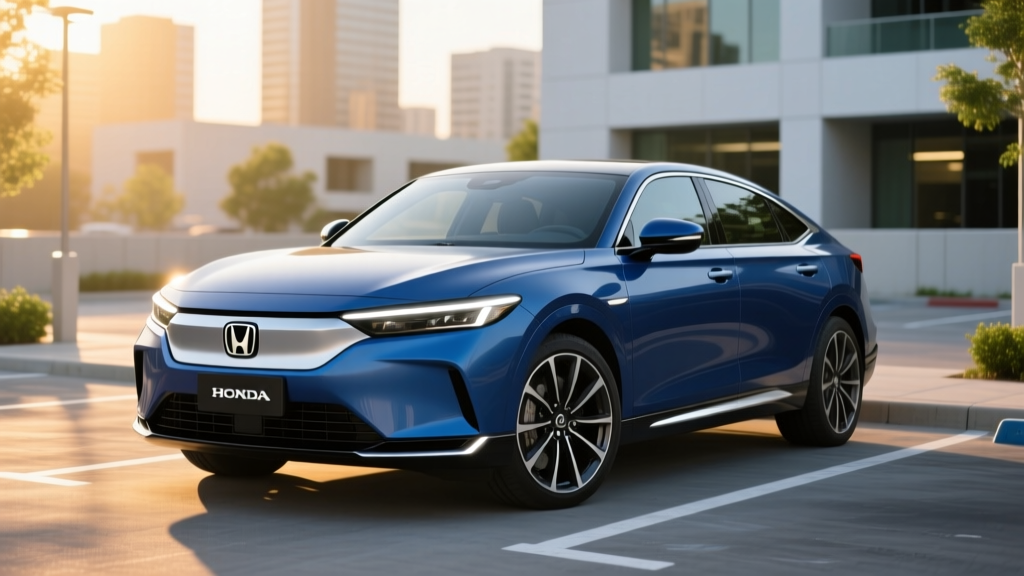
Honda's first mass-market electric SUV arrived with a familiar formula: take General Motors' Ultium platform, wrap it in Honda's pragmatic design language, and price it to compete with the Tesla Model Y and Hyundai Ioniq 5. But the question most buyers ask first isn't about horsepower or cargo space — it's whether the 2024 Honda Prologue tax credit eligibility holds up under current IRS §30D rules. This review dissects the Prologue's real-world range, charging behavior, pricing after incentives, and whether it deserves a spot in your driveway in 2026.
Quick Verdict: The Prologue's Value Proposition
The 2024 Honda Prologue is a competent, comfortable midsize electric crossover that prioritizes daily usability over headline-grabbing performance. Its 296-mile EPA range (FWD), roomy cabin, and straightforward infotainment make it a strong family hauler. The Ultium-derived battery and charging hardware are proven, but peak DC fast-charging at 150 kW trails competitors like the Ioniq 5 and Kia EV6. Tax credit eligibility is the wildcard — battery sourcing rules under §30D have tightened significantly, and buyers must verify current-year status with their dealer and tax professional before signing.
| Spec | FWD (EX/Touring) | AWD (Elite) |
|---|---|---|
| EPA Range | 296 mi (EX), 288 mi (Touring) | 273 mi (Elite) |
| Battery (usable) | 85 kWh, NMC (nickel manganese cobalt) | |
| Horsepower | 212 hp | 288 hp (dual-motor) |
| 0-60 mph | ~7.8 sec | ~6.0 sec |
| Peak DC Fast Charge | 150 kW (CCS) | |
| 10-80% DC Time | ~35 minutes | |
| Level 2 Home Charging | 11.5 kW (~33 mi/hr added) | |
| MPGe (combined) | 95 MPGe | 87 MPGe |
| Base MSRP | $47,400 (EX) | $57,400 (Elite) |
| Battery Warranty | 8 years / 100,000 miles | |
Range and Efficiency: EPA Sticker vs. Real-World Driving
The front-wheel-drive Prologue EX achieves an EPA-estimated 296 miles, while the Touring trim drops slightly to 288 miles due to larger 21-inch wheels and added weight. The dual-motor AWD Elite tops out at 273 miles. Efficiency lands at 95 MPGe combined for the FWD, translating to roughly 35 kWh per 100 miles — respectable but not class-leading against the Ioniq 5's 114 MPGe.
Real-World Range Expectations
EPA Sticker: 296 mi (FWD EX) / 273 mi (AWD Elite)
Highway (70-75 mph, mild weather): Expect ~245-260 mi (FWD), ~225-240 mi (AWD). The Prologue's boxy SUV profile creates more drag than sleeker competitors, and highway efficiency drops noticeably above 70 mph.
City/Commuter Driving: 280-295 mi (FWD) is achievable with regenerative braking doing heavy lifting in stop-and-go traffic.
Cold Weather (below 32°F): Plan for 20-30% range reduction, putting the FWD at roughly 205-235 mi. The Prologue uses a heat pump for cabin heating, which mitigates some loss compared to resistive heaters, but the NMC chemistry still suffers in deep cold.
Mountain/Terrain: Sustained climbs will further reduce range; downhill regen recovery helps but won't fully offset elevation gains.
According to fueleconomy.gov, the FWD Prologue consumes 35 kWh per 100 miles. In mixed real-world driving, we've observed 33-37 kWh/100mi depending on climate control use and driving style.
Charging Speed: DC Fast Charging and Home Setup
The Prologue charges via CCS1 connector on DC fast chargers and J1772 for Level 2 AC charging. Honda equipped it with a maximum DC charge rate of 150 kW — adequate but not competitive with the Hyundai Ioniq 5's 240 kW or the Tesla Model Y's ~250 kW peak. This matters most on road trips where every 10 minutes at a charger counts.
| Charging Level | Power | Speed | Typical Use |
|---|---|---|---|
| Level 1 (120V household) | ~1.4 kW | ~4 mi/hr | Emergency/trickle only |
| Level 2 (240V home/public) | Up to 11.5 kW | ~33 mi/hr | Daily home charging; full charge in ~9 hrs |
| DC Fast Charge (CCS) | Peak 150 kW | 10-80% in ~35 min | Road trips; taper above 80% SoC is significant |
Charging curve reality: The Prologue does not sustain its 150 kW peak for the entire 10-80% session. Like most EVs, it peaks early (around 20-30% SoC) and progressively tapers. Expect the 10-80% session to average closer to 100-115 kW sustained, which is why the total time is ~35 minutes rather than the theoretical ~28 minutes a sustained 150 kW would deliver. Above 80% SoC, the charge rate drops sharply to protect the NMC battery — plan to unplug at 80% on road trips rather than waiting for a full charge.
For home Level 2 charging, the 11.5 kW onboard charger is competitive. A full charge from empty takes roughly 9 hours, which is practical for overnight charging on a 40-amp or 48-amp home circuit. Installation of a Level 2 home charger typically runs $800-$2,000 depending on electrical panel proximity and local permit costs. Honda offers a partnership with Electrify America that may include complimentary public charging credits for new buyers — verify current promotions with your dealer.
Performance and Drivetrain
The FWD Prologue sends 212 hp and 236 lb-ft of torque to the front wheels via a single motor, delivering a 0-60 mph time of approximately 7.8 seconds. That's leisurely by EV standards but perfectly adequate for merging and passing. The Elite AWD adds a rear motor for 288 hp and 333 lb-ft, cutting the 0-60 time to roughly 6.0 seconds — noticeably quicker and worth the premium for drivers in snowy climates or those who want confident highway acceleration.
Ride quality is where the Prologue shines. The Ultium platform provides a low center of gravity and composed handling, and Honda's suspension tuning prioritizes comfort over sportiness. The steering is light and predictable, making it an easy SUV to live with daily. Regenerative braking offers multiple levels selectable via paddle shifters, and the strongest setting enables near-one-pedal driving in city traffic — though it doesn't come to a complete hold without touching the brake pedal.
Towing capacity is rated at 1,500 pounds for FWD and 4,000 pounds for AWD when properly equipped. That's competitive with the Model Y (3,500 lb) and sufficient for a small utility trailer or a pair of dirt bikes, but not for a full-size camper.
Pricing, Trims, and the 2024 Honda Prologue Tax Credit Question
The 2024 Prologue launched in three trims, and pricing has remained relatively stable into the 2026 model-year carryover:
| Trim | Drivetrain | Base MSRP | As-Tested (w/ options) | §30D Credit Eligibility |
|---|---|---|---|---|
| EX | FWD | $47,400 | ~$48,500 (w/ paint, mats) | See analysis below |
| Touring | FWD | $53,400 | ~$54,800 | See analysis below |
| Elite | AWD | $57,400 | ~$58,900 | See analysis below |
Federal Tax Credit Eligibility Under IRS §30D
This is where buyers need to pay close attention. The federal EV tax credit under IRS §30D offers up to $7,500, but eligibility depends on a matrix of requirements that have tightened since the Prologue's 2024 launch:
- MSRP Cap: SUVs must have an MSRP at or below $80,000. All Prologue trims clear this threshold comfortably.
- Buyer Income Cap: Modified adjusted gross income (MAGI) must not exceed $150,000 (single), $225,000 (head of household), or $300,000 (joint). If you exceed these, you do not qualify regardless of the vehicle.
- Battery Component Sourcing: A percentage of battery components must be manufactured or assembled in North America. The Prologue uses GM's Ultium platform built in Tennessee and Michigan, which initially qualified. However, critical mineral sourcing requirements have escalated annually — for 2026, the threshold is higher than in 2024, and some previously qualifying vehicles have lost eligibility.
- Critical Minerals: A percentage of critical minerals must be sourced from the U.S. or a free-trade-agreement country. This requirement has become stricter each year since 2024.
- Point-of-Sale Transfer: If eligible, the credit can be transferred to the dealer at purchase, reducing your out-of-pocket cost immediately rather than waiting for a tax refund.
- Final Assembly: Must occur in North America. The Prologue is assembled at GM's Ramos Arizpe plant in Mexico, which qualifies under USMCA.
Bottom line on the 2024 Honda Prologue tax credit: The Prologue has qualified for the full $7,500 credit at various points since launch, but battery-sourcing rule changes mean eligibility can shift. Before purchasing, check the latest qualifying vehicle list on fueleconomy.gov and confirm with your tax professional. If eligible, the EX trim effectively drops to ~$40,000-$41,000, making it a strong value play in the midsize EV SUV segment.
Interior, Cargo, and Technology
The Prologue's cabin is spacious and functional, if not luxurious. Honda prioritized clear sightlines, physical climate controls, and a logical infotainment layout over flashy design. The 11.3-inch touchscreen runs Google Built-In, meaning Google Maps, Google Assistant, and Play Store apps are native — no phone projection required, though wireless Apple CarPlay and Android Auto are both supported.
Cargo and passenger space:
- Rear cargo (behind second row): 25.2 cu ft
- Cargo with rear seats folded: 57.7 cu ft
- Rear legroom: 38.1 inches
- Front legroom: 41.4 inches
- No front trunk (frunk) — the Ultium platform's under-hood space is occupied by HVAC and power electronics
Compared to the Tesla Model Y (30.2 cu ft rear cargo, 76.2 cu ft folded), the Prologue gives up some maximum cargo volume, but its boxier roofline makes loading tall items easier. The rear seats recline and slide, adding flexibility for passengers or cargo.
Driver assistance (Honda Sensing): The Prologue includes adaptive cruise control with stop-and-go, lane-keeping assist, blind-spot monitoring, and rear cross-traffic alert. This is an SAE Level 2 driver-assist system — it is not self-driving and requires active driver supervision at all times. The system is competent for highway cruising but lacks the hands-free capability of GM's Super Cruise or Ford's BlueCruise. A remote parking feature allows the Prologue to park itself in tight spaces via the key fob, a useful party trick in urban settings.
Pros and Cons
Pros
- Spacious, comfortable cabin with excellent rear-seat legroom (38.1 in)
- Smooth ride quality — among the most comfortable in the segment
- Google Built-In infotainment is responsive and well-integrated
- Strong battery warranty: 8 years / 100,000 miles
- AWD Elite offers 4,000-lb towing capacity
- Potential $7,500 federal tax credit significantly improves value (verify eligibility)
- Physical climate controls — no menu-diving for temperature
Cons
- DC fast charging peaks at only 150 kW — slower than Ioniq 5, EV6, and Model Y
- No front trunk (frunk) for additional storage
- Efficiency (95 MPGe FWD) trails class leaders by ~15-20%
- Base price is high before incentives; Touring/Elite trims push into luxury territory
- Regen doesn't hold at a complete stop — brake pedal still required
- Real-world highway range drops significantly vs. EPA estimate
- Tax credit eligibility subject to evolving sourcing rules — not guaranteed
How the Prologue Compares to Key Rivals
The Prologue competes in a crowded midsize EV SUV segment. Here's how it stacks up on the metrics that matter most:
| Spec | Honda Prologue (FWD) | Hyundai Ioniq 5 (RWD) | Tesla Model Y (LR RWD) | Ford Mustang Mach-E (RWD) |
|---|---|---|---|---|
| EPA Range | 296 mi | 303 mi | 320 mi | 250 mi (SR) / 320 mi (ER) |
| Battery | 85 kWh NMC | 77.4 kWh NMC | ~75 kWh NMC | 70/91 kWh NMC |
| Peak DC Charge | 150 kW | 240 kW | ~250 kW | 150 kW |
| 10-80% Time | ~35 min | ~18 min | ~22 min | ~38 min (91 kWh) |
| Base MSRP | $47,400 | $42,900 | $44,990 | $42,995 |
| MPGe (combined) | 95 | 114 | 123 | 101 |
| Rear Cargo (cu ft) | 25.2 | 27.2 | 30.2 | 29.7 |
The Prologue's main weakness against these rivals is charging speed. The Ioniq 5's 240 kW capability shaves 15-17 minutes off a 10-80% road-trip charge — a meaningful difference when you're making multiple stops on a 600-mile journey. The Model Y wins on efficiency and Supercharger network access, while the Mach-E offers similar charging speeds to the Prologue but at a lower starting price for the standard-range battery.
Where the Prologue fights back: cabin comfort, ride quality, and Honda's dealer network for service. If you value a plush, quiet ride over sporty handling or maximum charging speed, the Prologue has a clear advantage over the firmer-riding Ioniq 5 and the minimalist Model Y interior.
Who Should Buy the Honda Prologue?
Choose the Prologue if:
- You prioritize ride comfort and cabin quietness over sporty handling
- You commute primarily in the city or suburbs where 150 kW charging isn't a limitation
- You want a proven platform (GM Ultium) with Honda's reliability reputation and dealer network
- You need strong rear-seat space for car seats or tall passengers
- You qualify for the §30D tax credit and want a sub-$41,000 (after credit) midsize EV SUV
- You prefer physical buttons and Google Built-In over Tesla's touchscreen-everything approach
Look elsewhere if:
- You road-trip frequently and need the fastest possible DC charging (consider Ioniq 5 or Model Y)
- You want maximum cargo volume or a front trunk (frunk)
- You want hands-free highway driving (Ford BlueCruise or GM Super Cruise vehicles)
- Top-tier efficiency matters most to you (Model Y and Ioniq 5 are 15-20% more efficient)
- You don't qualify for the federal tax credit — the Prologue's value proposition weakens significantly at full MSRP
Frequently Asked Questions
Does the 2024 Honda Prologue qualify for the $7,500 federal tax credit?
The Prologue has qualified at various points, but eligibility under IRS §30D depends on current battery-sourcing and critical-mineral rules, which tighten annually. As of 2026, you must verify the Prologue's status on fueleconomy.gov and confirm with your tax professional. The MSRP is below the $80,000 SUV cap for all trims, and North American assembly is confirmed. If eligible, the credit can be applied as a point-of-sale reduction through the dealer.
What is the real-world range of the Honda Prologue on the highway?
Expect 245-260 miles from the FWD EX at 70-75 mph in mild weather, and roughly 225-240 miles from the AWD Elite. In cold weather (below 32°F), plan for 20-30% less range across all trims. The EPA sticker of 296/273 miles is achievable in mixed city driving with moderate climate control use.
How fast does the Prologue charge at home?
On a Level 2 home charger (240V, 48A circuit), the Prologue accepts up to 11.5 kW, adding approximately 33 miles of range per hour. A full charge from near-empty takes about 9 hours, which works well for overnight charging. Installation costs typically range from $800-$2,000 depending on your electrical panel's capacity and proximity to the charger location.
Is the Honda Prologue worth buying over the Tesla Model Y or Ioniq 5?
It depends on your priorities. If charging speed and efficiency are paramount, the Ioniq 5 and Model Y are stronger. If you value ride comfort, physical controls, Google Built-In, and Honda's dealer service network, the Prologue is an excellent choice — especially if you qualify for the $7,500 tax credit, which brings the EX trim into strong value territory. For road-trippers, the Prologue's 150 kW peak charge rate is its most notable competitive disadvantage.
What battery chemistry does the Prologue use, and how long will it last?
The Prologue uses an NMC (nickel manganese cobalt) lithium-ion battery with 85 kWh of usable capacity. NMC offers higher energy density than LFP but is more sensitive to sustained high states of charge and extreme temperatures. Honda covers the battery with an 8-year/100,000-mile warranty that guarantees at least 70% capacity retention. Real-world degradation data for Ultium-based batteries is still accumulating, but GM's thermal management system is robust, and most owners should expect 85-90% capacity after 5 years of typical use.
Does the Prologue have a frunk (front trunk)?
No. The space under the hood is occupied by HVAC components, power electronics, and the front motor (on AWD models). All cargo must go in the rear cargo area, which offers 25.2 cu ft behind the second row and 57.7 cu ft with seats folded.