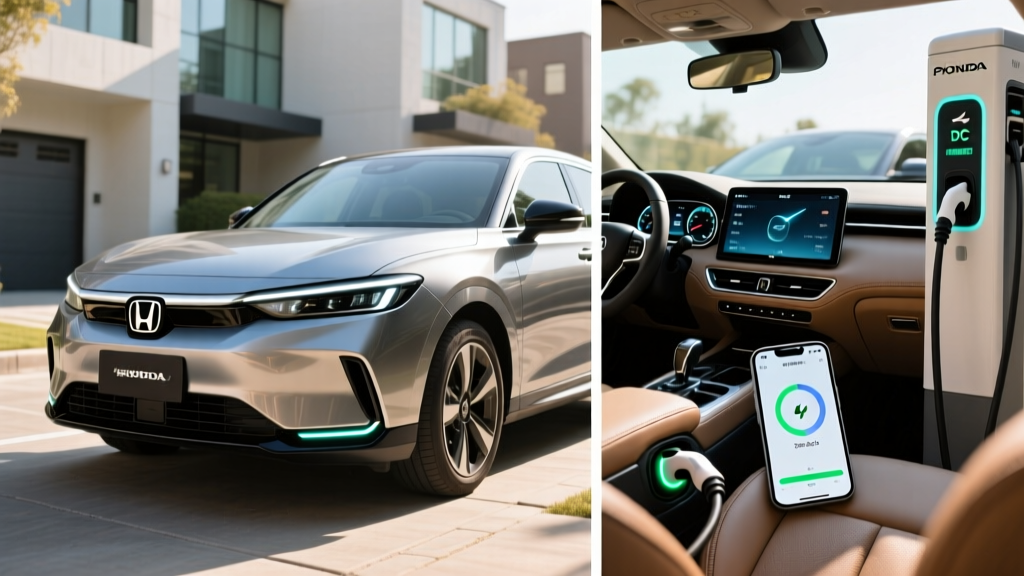
The 2024 Honda Prologue marks the brand's first purpose-built electric SUV, developed on General Motors' Ultium platform through a partnership that gives Honda access to proven EV hardware while wrapping it in Honda's design language and interior philosophy. For buyers cross-shopping midsize electric crossovers, the Prologue presents an interesting proposition: familiar Honda ergonomics paired with GM's battery and motor technology. But how do the 2024 Honda Prologue specs stack up against rivals like the Hyundai Ioniq 5, Ford Mustang Mach-E, and Tesla Model Y in real-world driving and ownership? This review breaks down every critical number.
Quick Verdict: Who Should Consider the Prologue
The Prologue suits Honda-loyal families transitioning from a CR-V or Passport who want a spacious two-row electric crossover without a steep learning curve. Its 108.4 cu ft of passenger volume and 25.2 cu ft cargo area (behind the second row) put it near the top of its class for interior space. The trade-off is a starting MSRP of $47,400 that positions it above some competitors, though federal and state incentives can narrow that gap significantly. If you prioritize interior comfort and a smooth ride over sporty handling or cutting-edge charging speed, the Prologue delivers a compelling package.
2024 Honda Prologue Spec Sheet at a Glance
| Specification | EX (FWD) | Touring (AWD) | Elite (AWD) |
|---|---|---|---|
| EPA Range | 296 miles | 281 miles | 273 miles |
| Battery (Usable) | 85 kWh, NMC (nickel manganese cobalt) | ||
| Motor Output | 212 hp / 236 lb-ft | 288 hp / 333 lb-ft | |
| 0–60 mph | ~7.2 sec | ~5.8 sec | |
| Drivetrain | Single-motor FWD | Dual-motor AWD | |
| Max DC Fast Charge | 150 kW peak | ||
| 10–80% DC Charge Time | ~35 minutes | ||
| Level 2 Home Charging | 11.5 kW (~32 miles/hr) | ||
| MPGe (Combined) | 94 MPGe | 90 MPGe | 89 MPGe |
| Efficiency | 36 kWh/100 mi | 37 kWh/100 mi | 38 kWh/100 mi |
| Cargo (behind 2nd row) | 25.2 cu ft | ||
| Cargo (seats folded) | 57.7 cu ft | ||
| Towing Capacity | 1,500 lbs | ||
| Base MSRP | $47,400 | $54,400 | $57,400 |
Source: EPA Fueleconomy.gov and Honda Newsroom. Specs reflect the 2024 model year.
Range and Efficiency: EPA Sticker vs. Real-World Driving
Honda's decision to use an 85 kWh usable battery (from GM's Ultium platform) gives the Prologue competitive range, though its efficiency figures lag behind the most aerodynamic rivals. The FWD model achieves 94 MPGe combined (36 kWh per 100 miles), which trails the Hyundai Ioniq 5 Long Range RWD at 114 MPGe combined. This means the Prologue consumes more energy per mile, translating to slightly higher charging costs over time.
The range hierarchy across trims matters for buyers: stepping from the FWD EX to the dual-motor AWD Touring costs you 15 miles of EPA range, and the Elite drops another 8 miles due to larger 21-inch wheels and additional equipment weight. For buyers in mild climates who primarily drive in the city, this difference is negligible. For those in northern states or who regularly drive highway distances, the FWD EX offers meaningfully more buffer.
Charging Speed: DC Fast Charging and Home Setup
| Charging Level | Power | Speed | Typical Use Case |
|---|---|---|---|
| Level 1 (120V) | ~1.4 kW | ~4 miles/hr | Emergency/overnight trickle |
| Level 2 (240V, 48A) | 11.5 kW | ~32 miles/hr | Home daily charging |
| DC Fast Charge | 150 kW peak | 10–80% in ~35 min | Road trips, public stations |
The Prologue's 150 kW peak DC fast-charging rate is its most debated specification. While competitive with the Ford Mustang Mach-E's 150 kW, it falls behind the Hyundai Ioniq 5's 240 kW capability (which achieves 10–80% in roughly 18 minutes under ideal conditions) and the Tesla Model Y's ~250 kW peak on V3 Superchargers.
Understanding the charge curve is essential. The Prologue will sustain close to its 150 kW peak between roughly 10% and 40% state of charge, then progressively taper. From 60% to 80%, expect speeds closer to 60–80 kW. This taper is normal for NMC battery chemistry and thermal management strategies, but it means a 10–80% session takes approximately 35 minutes at a capable 150+ kW station. On Electrify America or EVgo stations capped at 50 kW, that same session stretches past an hour.
For home charging, the Prologue's 11.5 kW onboard charger is a strong point. On a properly installed 48-amp Level 2 circuit (requiring a 60-amp breaker), you'll add roughly 32 miles of range per hour. A full charge from 10% to 100% takes approximately 8.5 hours — ideal for overnight charging on a time-of-use electricity plan. Honda includes a dual-level portable charging cord with every Prologue, though most buyers will want a dedicated wall-mounted Level 2 unit for daily convenience.
Performance and Driving Dynamics
The single-motor FWD Prologue EX produces 212 horsepower and 236 lb-ft of torque, delivering a 0–60 mph time of approximately 7.2 seconds. This is adequate for merging and passing but won't feel quick by EV standards. The dual-motor AWD variants (Touring and Elite) bump output to 288 hp and 333 lb-ft, dropping the 0–60 time to roughly 5.8 seconds — a meaningful improvement that makes highway on-ramps effortless.
Driving dynamics lean toward comfort over sportiness. The Prologue's suspension tuning absorbs road imperfections well, and cabin noise levels are low at highway speeds thanks to acoustic glass and sound deadening. The steering is light and precise, though it lacks the feedback that enthusiasts seek. Regenerative braking is adjustable via paddle shifters behind the steering wheel, allowing drivers to dial in everything from coasting to near one-pedal driving — though it doesn't achieve a full stop without brake pedal input.
Towing capacity is rated at 1,500 lbs across all trims, which handles a small utility trailer or a pair of dirt bikes but rules out most campers and boat trailers. Competitors like the Hyundai Ioniq 5 (up to 2,300 lbs with the towing package) and the Rivian R1S (7,700 lbs) offer substantially more capability if towing is a priority.
Interior, Cargo Space, and Technology
The Prologue's interior is where Honda loyalists will feel at home. The cabin uses quality soft-touch materials on the dashboard and door panels, with an 11.3-inch touchscreen running Google Built-in (including Google Maps navigation, Google Assistant, and access to the Play Store for apps). A 11-inch digital instrument cluster sits behind the steering wheel. Wireless Apple CarPlay and Android Auto are standard on all trims, as is a wireless phone charging pad.
Space is a genuine advantage. With 108.4 cu ft of passenger volume, the Prologue offers more interior room than the Ioniq 5 and Mach-E. Rear-seat legroom measures 39.4 inches — enough for tall adults on longer trips. The 25.2 cu ft cargo area behind the second row expands to 57.7 cu ft with the rear seats folded flat. Notably, the Prologue does not have a front trunk (frunk), which some competitors use for additional storage or charging cable organization.
The Honda Sensing suite of driver-assistance features comes standard across all trims and includes adaptive cruise control with low-speed follow, lane-keeping assist, collision mitigation braking, and traffic sign recognition. This is a Level 2 SAE driver-assist system — it requires the driver to remain fully engaged with hands on the wheel and eyes on the road at all times. It is not a self-driving system.
Pricing, Trims, and Federal Tax Credit Eligibility
| Trim | Drivetrain | Base MSRP | Destination | Total Before Incentives |
|---|---|---|---|---|
| EX | FWD | $47,400 | $1,395 | $48,795 |
| Touring | AWD | $54,400 | $1,395 | $55,795 |
| Elite | AWD | $57,400 | $1,395 | $58,795 |
- Maximum credit: Up to $7,500 if the vehicle meets both critical-mineral and battery-component sourcing requirements under current IRS rules.
- MSRP cap: SUVs must have an MSRP at or below $80,000 — all Prologue trims qualify.
- Buyer income cap: Modified adjusted gross income must not exceed $150,000 (single), $225,000 (head of household), or $300,000 (joint filing).
- Battery sourcing: The Prologue's Ultium battery is assembled in the U.S., but critical-mineral and component sourcing requirements phase in annually and may reduce the credit to $3,750 or $0 depending on the purchase date and current IRS guidance.
- Point-of-sale transfer: Eligible buyers can transfer the credit to the dealer at purchase, reducing the out-of-pocket price immediately rather than waiting to claim it on a tax return.
After applying the maximum $7,500 federal credit (where eligible), the Prologue EX FWD effectively starts near $41,295 — bringing it closer to the Ioniq 5 and Mach-E on price. Many states also offer additional rebates or tax credits (California's CVRP, Colorado's state credit, etc.), though these vary by jurisdiction and income. Check your state's energy office or the AFDC state incentives database for current local programs.
Battery Warranty and Long-Term Ownership
Honda backs the Prologue's battery and drive unit with an 8-year/100,000-mile warranty (whichever comes first), which is the industry standard for EV powertrains and aligns with federal requirements. This warranty covers battery capacity loss below a specified threshold (typically 60–70% of original capacity, though Honda has not published the exact retention guarantee as of the 2024 model year). The vehicle limited warranty covers 3 years/36,000 miles, and the powertrain warranty extends to 5 years/60,000 miles.
The NMC (nickel manganese cobalt) battery chemistry in the Prologue offers high energy density but is more sensitive to sustained high state-of-charge and extreme heat than LFP (lithium iron phosphate) alternatives. For maximum longevity, Honda recommends keeping the battery between 20% and 80% for daily driving and using the charge-limit setting in the infotainment system. Occasional charges to 100% for long trips are fine — it's the daily pattern that matters most for long-term degradation.
How the Prologue Compares to Key Rivals
| Spec | Honda Prologue EX (FWD) | Hyundai Ioniq 5 SEL (RWD LR) | Ford Mach-E Select (RWD ER) | Tesla Model Y (LR RWD) |
|---|---|---|---|---|
| EPA Range | 296 mi | 303 mi | 320 mi | 320 mi |
| Battery | 85 kWh (NMC) | 77.4 kWh (NMC) | 91 kWh (NMC) | ~75 kWh (NMC/LFP) |
| Peak DC Charge | 150 kW | 240 kW | 150 kW | ~250 kW |
| 10–80% Time | ~35 min | ~18 min | ~36 min | ~22 min |
| MPGe (Combined) | 94 | 114 | 101 | 123 |
| 0–60 mph | ~7.2 sec | ~7.0 sec | ~6.1 sec | ~5.8 sec |
| Cargo (behind 2nd) | 25.2 cu ft | 27.2 cu ft | 29.7 cu ft | 30.2 cu ft |
| Base MSRP | $47,400 | $46,650 | $42,995 | $44,990 |
The Prologue's strongest competitive advantages are passenger volume, ride comfort, and the Honda dealer network for service. Its weakest points relative to rivals are charging speed (the Ioniq 5 and Model Y charge substantially faster), energy efficiency, and starting price. The Mach-E offers more cargo space and a lower entry price, while the Model Y leads in efficiency and Supercharger network access (though the Prologue will gain NACS adapter compatibility for Tesla Supercharger access in the coming years).
Pros and Cons
Pros
- Spacious cabin with class-leading passenger volume
- Comfortable, quiet ride quality
- Familiar Honda ergonomics and build quality
- Google Built-in infotainment is responsive and well-integrated
- 11.5 kW Level 2 home charging is competitive
- All trims under the $80,000 MSRP cap for the federal tax credit
- Standard Honda Sensing ADAS suite across all trims
Cons
- 150 kW peak DC charging is slower than Ioniq 5 and Model Y
- Energy efficiency (94 MPGe FWD) trails most rivals
- No front trunk (frunk) for additional storage
- 1,500-lb towing capacity is the lowest in class
- Base price higher than Mach-E and Model Y before incentives
- Regenerative braking doesn't bring the vehicle to a full stop
- AWD trims lose noticeable range (273 mi on Elite)
Is the 2024 Honda Prologue Worth Buying?
The Prologue makes the most sense for buyers who value interior space, ride comfort, and the security of Honda's dealer network over bleeding-edge charging speed or sporty dynamics. If you're upgrading from a CR-V or Pilot and want to stay within the Honda ecosystem, the transition will feel natural. The Google Built-in infotainment system is one of the best in the business, and the cabin quality meets Honda's reputation.
However, if fast road-trip charging is a priority, the Hyundai Ioniq 5's 240 kW capability (nearly halving DC charge stops) is a meaningful advantage. If cargo space or towing matters, the Mach-E or a three-row EV like the Kia EV9 may serve you better. And if minimizing total cost of ownership is the goal, the Tesla Model Y's superior efficiency and Supercharger access remain difficult to beat.
Frequently Asked Questions
What is the real-world range of the 2024 Honda Prologue?
The FWD EX carries a 296-mile EPA estimate. In mixed real-world driving with moderate climate use, expect 260–280 miles. Sustained highway driving at 75 mph drops this to roughly 250–265 miles. In freezing temperatures, plan for 200–230 miles on the FWD model.
How fast does the Prologue charge at home and on the road?
At home on a 48-amp Level 2 charger, the Prologue adds approximately 32 miles of range per hour (11.5 kW), fully charging overnight in about 8.5 hours. On a 150+ kW DC fast charger, a 10–80% session takes approximately 35 minutes. On slower 50 kW public chargers, expect over an hour for the same session.
Does the 2024 Honda Prologue qualify for the $7,500 federal tax credit?
It may qualify for up to $7,500 under IRS §30D, depending on the buyer's income (must be under $150K single / $300K joint), the vehicle's battery sourcing compliance for the purchase year, and the MSRP (all trims are under the $80,000 SUV cap). The credit can be transferred to the dealer at point of sale. Always check current eligibility on IRS.gov before purchasing.
Is the Honda Prologue built by Honda or GM?
The Prologue uses General Motors' Ultium platform (battery, motors, and underlying architecture) but features Honda-designed exterior and interior styling, Honda-tuned suspension, and Honda's infotainment integration. It is assembled at GM's Spring Hill, Tennessee plant. This partnership gives Honda a competitive EV quickly while leveraging GM's battery manufacturing scale.
Can the Prologue use Tesla Superchargers?
Not natively in 2024, as the Prologue uses a CCS1 connector. However, Honda has confirmed that a NACS adapter will be available for Prologue owners to access Tesla's Supercharger network. Check with your Honda dealer for adapter availability and compatibility details, as this is rolling out progressively.
How does the Prologue handle in winter and cold weather?
The Prologue is equipped with a heat pump on AWD trims, which helps preserve range in cold weather by efficiently heating the cabin without drawing heavily from the traction battery. FWD models use a resistive heater, which consumes more energy in cold conditions. Expect 20–30% range reduction in sustained below-freezing temperatures. Preconditioning the battery while plugged in (available via the HondaLink app) helps mitigate charging-speed losses in cold weather.