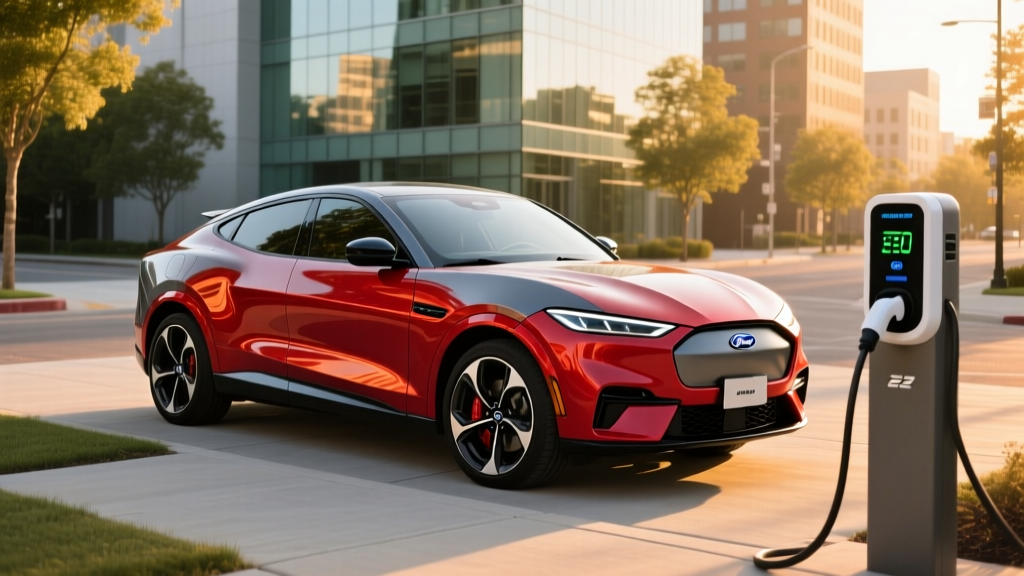
The Ford Mustang Mach-E entered its fourth model year in 2024 with a significant refresh: a new Tesla NACS charge port (granting native Supercharger access without an adapter), updated battery chemistry options, and revised pricing. Now that we're well into 2026, the 2024 Mach-E has become one of the most compelling targets on the used and certified-pre-owned market — and lease pull-ahead offers from Ford Credit are making residual values work in favor of savvy lessees. If you're searching for 2024 Ford Mustang Mach-E lease deals, this review gives you every number you need to negotiate with confidence.
Range, Battery, and Real-World Efficiency
The 2024 Mach-E is offered with two battery packs across multiple trims. The Standard Range pack uses a 72 kWh (usable) lithium-ion NMC (nickel-manganese-cobalt) battery, while the Extended Range pack steps up to a 91 kWh usable NMC pack. Ford also introduced an LFP (lithium iron phosphate) option on the Select trim for buyers prioritizing longevity and daily charging tolerance over maximum range.
| Configuration | Battery (Usable kWh) | Chemistry | EPA Range (mi) | MPGe (Combined) | kWh/100 mi |
|---|---|---|---|---|---|
| Select RWD (Std Range) | 72 kWh | LFP | 230 | 101 | 33 |
| Premium RWD (Ext Range) | 91 kWh | NMC | 320 | 104 | 32 |
| Premium AWD (Ext Range) | 91 kWh | NMC | 290 | 98 | 34 |
| GT AWD (Ext Range) | 91 kWh | NMC | 280 | 90 | 37 |
Charging Speed: DC Fast, Level 2, and NACS Access
The biggest 2024 update was the switch to the NACS (North American Charging Standard) port, meaning the 2024 Mach-E can plug directly into Tesla Superchargers — a network with dramatically higher uptime than most CCS-based alternatives. This single change transformed the Mach-E's road-trip viability.
| Charging Level | Connector | Peak Power (kW) | Rate (mi/hr) | 10–80% Time |
|---|---|---|---|---|
| Level 1 (120V household) | NACS / J1772 adapter | 1.4 kW | ~3–4 mi/hr | N/A (overnight trickle) |
| Level 2 (240V home/public) | NACS / J1772 adapter | 10.5 kW (48A) | ~30–34 mi/hr | ~7.5 hrs (0–100%, Ext Range) |
| DC Fast Charge | NACS (native) | 150 kW (peak) | ~59 mi in 10 min | ~36 min (Std Range) ~45 min (Ext Range) |
Charging-curve reality: The Mach-E peaks at 150 kW only between roughly 10–30% State of Charge on the Extended Range pack. Above 50%, the curve tapers to ~90 kW, and above 80%, it drops below 40 kW. This is typical for NMC packs without 800V architecture, but it means your real highway stop will be 30–40 minutes if you need to push past 80%. For daily use, charging to 80% at home on Level 2 is the sweet spot — about 6.5 hours for Extended Range, easily done overnight.
Performance and Drivetrain
The Mach-E lineup spans comfortable commuter to genuine performance EV. Here's how the powertrain options stack up:
- Select / Premium RWD: 266 hp, 317 lb-ft torque, 0–60 mph in ~6.1 seconds. Single rear motor.
- Premium AWD (eAWD): 312 hp, 428 lb-ft, 0–60 in ~5.1 seconds. Dual motor.
- GT AWD: 480 hp, 600 lb-ft (with Performance Upgrade), 0–60 in ~3.5 seconds. Dual motor with MagneRide dampers and summer tires.
The GT's 3.5-second sprint puts it in Porsche Taycan territory for a fraction of the price, and the eAWD system provides confident traction in rain and light snow. However, the Mach-E is not a track car — it's a grand-touring crossover that prioritizes daily comfort, and the ride quality on the Premium trims reflects that tuning philosophy.
Pricing, Lease Deals, and Federal Tax Credit Eligibility
When new, the 2024 Mach-E started at $42,995 for the Select RWD and climbed to $65,995 for the GT with the Rally package. Here's the full MSRP breakdown by trim:
| Trim | Drivetrain | Base MSRP | As-Tested (Typical Options) |
|---|---|---|---|
| Select | RWD (Std Range) | $42,995 | $44,500–$46,000 |
| Premium | RWD (Ext Range) | $50,995 | $53,000–$56,000 |
| Premium | AWD (Ext Range) | $53,995 | $56,000–$59,000 |
| GT | AWD (Ext Range) | $59,995 | $62,000–$65,995 |
Understanding 2024 lease economics in 2026: Many 36-month leases signed in early-to-mid 2024 are now reaching maturity or pull-ahead eligibility. Ford Credit has periodically offered lease loyalty incentives — typically $1,000–$2,500 in pull-ahead credits — for lessees who roll into a new Ford EV. On the used/CPO market, 2024 Mach-E values have settled between $28,000 and $42,000 depending on trim and mileage, making off-lease examples a strong value proposition.
Federal Tax Credit (§30D) — Key Rules
If you're purchasing a used 2024 Mach-E from a dealer in 2026, you may qualify for the Used Clean Vehicle Credit (up to $4,000 or 30% of sale price, whichever is less) under IRC §25E, provided the vehicle sells for $25,000 or less and you meet income thresholds ($75,000 single / $150,000 joint). The original $7,500 new-vehicle credit (§30D) is no longer available on 2024 models purchased new in 2026.
- Used EV credit (§25E): Max $4,000; sale price must be ≤$25,000; income caps apply
- Lease loophole (Commercial Credit §45W): If leasing new through Ford Credit, the lessor may pass through a $7,500 incentive as a capitalized-cost reduction — this was common on 2024 Mach-E leases and may still apply to remaining new inventory
- Point-of-sale transfer: Both credits can be applied at the dealer to reduce your out-of-pocket cost immediately
Always verify current eligibility with your tax professional and consult the IRS Clean Vehicle Credits page for the latest sourcing and income rules.
Interior, Cargo, and Tech Features
The Mach-E's cabin is dominated by a 15.5-inch portrait touchscreen running Ford's SYNC 4A system with wireless Apple CarPlay and Android Auto. The interface is responsive, though the near-total elimination of physical buttons (climate controls are buried in the screen) remains a polarizing choice. A 10.2-inch digital instrument cluster sits behind the steering wheel.
Cargo capacity: 29.7 cubic feet behind the rear seats, expanding to 59.7 cu ft with the 60/40 rear seats folded. The front trunk (frunk) adds 4.7 cu ft of drainable storage — useful for wet gear or charging cables. Rear legroom measures 38.9 inches, adequate for adults on longer trips.
Driver assistance: Ford's Co-Pilot360 2.0 is standard, featuring adaptive cruise control with stop-and-go, lane centering, evasive steering assist, and blind-spot monitoring. The optional BlueCruise (Ford's Level 2 hands-free highway driving system) allows hands-off operation on over 130,000 miles of pre-mapped divided highways — but requires active driver monitoring via an infrared camera. This is not autonomous driving; you must remain attentive and ready to resume control at all times.
Warranty and Ownership Costs
Ford backs the 2024 Mach-E with a competitive warranty package:
- Bumper-to-bumper: 3 years / 36,000 miles
- Powertrain: 5 years / 60,000 miles
- Battery & electric components: 8 years / 100,000 miles (capacity retention threshold: 70% of original capacity)
The 70% battery retention threshold is industry-standard but less generous than Hyundai's approach (which doesn't specify a minimum percentage, effectively covering any notable degradation). In practice, NMC packs in the Mach-E have shown 5–8% degradation over the first 50,000 miles based on owner-reported State of Health data, well within warranty coverage. The LFP pack on the Select trim is expected to degrade more slowly due to its chemistry advantages in cycle life, though long-term 2024 data is still accumulating.
Insurance: Expect premiums 15–25% higher than a comparably priced gas crossover. The GT, in particular, is rated as a performance vehicle by most insurers. Get quotes before signing — the difference between carriers can be $800+/year.
Pros, Cons, and Who Should Lease
Pros
- Native NACS port — direct Tesla Supercharger access without adapter
- GT performance rivals sports sedans at half the price
- Competitive real-world range (260–280 mi highway, Ext Range)
- Strong cargo capacity with useful frunk
- BlueCruise is one of the better Level 2 systems available
- LFP battery option on Select for longevity-focused buyers
Cons
- DC fast charging peaks at 150 kW — slower than Hyundai Ioniq 5 (240 kW) or Kia EV6 (240 kW)
- Climate controls buried in touchscreen — no physical knobs
- Cold-weather range loss is significant (~25–30% below 30°F)
- Insurance premiums elevated, especially GT trim
- Rear visibility compromised by thick C-pillars and small rear window
- Used §25E credit requires ≤$25,000 sale price — hard to find on Premium/GT trims
Who This EV Suits Best
Commuters and suburban families: The Premium Extended Range RWD is the sweet spot — 320 EPA miles means most owners charge once or twice a week at home, and the cargo space handles groceries, strollers, and weekend gear. BlueCruise makes highway commutes less fatiguing.
Performance enthusiasts: The GT is a legitimate alternative to a BMW i4 M50 or Tesla Model Y Performance, with a more distinctive design and MagneRide comfort. Just accept the range trade-off and insurance cost.
Road trippers: NACS Supercharger access is a genuine advantage, but the 150 kW peak charge rate means longer stops than an Ioniq 5 or EV6. Plan for 35–45 minute breaks on 300+ mile journeys.
Towing: The Mach-E is rated for only 1,500 lbs (with the factory hitch kit). This is a light-duty tow vehicle — think bike racks and small trailers, not boats or campers. If towing is a priority, look at the Ford F-150 Lightning or Rivian R1S.
Frequently Asked Questions
What is the real-world range of the 2024 Mustang Mach-E?
The EPA rates the Extended Range RWD at 320 miles, but real-world highway driving at 70–75 mph typically yields 260–280 miles. In cold weather (below 30°F), expect 200–230 miles. The GT averages 230–250 miles in mixed conditions. Always plan trips around 80% of the EPA number for a safety margin.
How fast does the 2024 Mach-E charge at home and on the road?
At home on a 240V Level 2 charger (48A/10.5 kW), the Extended Range pack charges at roughly 30–34 miles per hour, taking about 7.5 hours from empty to full. On DC fast chargers, it peaks at 150 kW and achieves a 10–80% charge in approximately 36 minutes (Standard Range) or 45 minutes (Extended Range), with significant taper above 80%.
Does the 2024 Mach-E qualify for any federal tax credits in 2026?
If purchasing new (remaining inventory), the §30D new-vehicle credit may apply — up to $7,500, subject to buyer income caps ($150,000 joint / $75,000 single), MSRP caps ($80,000 for SUVs), and battery-sourcing requirements. If buying used for $25,000 or less, the §25E used-EV credit offers up to $4,000. Lease deals often passed through the $7,500 commercial credit as a cap-cost reduction. Consult IRS guidelines and a tax professional.
Is the 2024 Mach-E worth it versus the Tesla Model Y or Hyundai Ioniq 5?
It depends on your priorities. The Model Y offers slightly more range, faster Supercharger-native charging, and a more mature software ecosystem, but its interior quality and ride comfort are a step below. The Ioniq 5 charges significantly faster (240 kW peak, 10–80% in ~18 min) and has a more distinctive design, but uses a CCS port (requiring an adapter for Superchargers until 2025+ models). The Mach-E's advantages are its car-like driving dynamics, native NACS access, and BlueCruise. If DC charging speed is your top priority, the Ioniq 5 wins. If you want the best overall driving experience with Supercharger convenience, the Mach-E is a strong pick.
What are the biggest drawbacks I should know before leasing?
The 150 kW peak DC charge rate is the Mach-E's most notable limitation compared to 800V competitors. Climate controls lack physical buttons, which frustrates some drivers. Cold-weather range loss is steeper than some rivals with larger thermal management systems. And the 1,500-lb tow rating is low for a crossover in this price range.
Should I lease or buy a 2024 Mach-E in 2026?
If you can find a CPO or off-lease example under $25,000, buying unlocks the $4,000 used-EV tax credit — an effective price that's hard to beat. Leasing remaining new inventory may still yield $7,500 in cap-cost reduction through the commercial credit loophole, but new 2024 stock is dwindling. For a 3-year commitment with warranty coverage, leasing a 2025 or 2026 model year is worth comparing — Ford has continued to refine the Mach-E with incremental software and hardware updates.