Quick Verdict: The Last-Mile Workhorse That Knows Its Limits
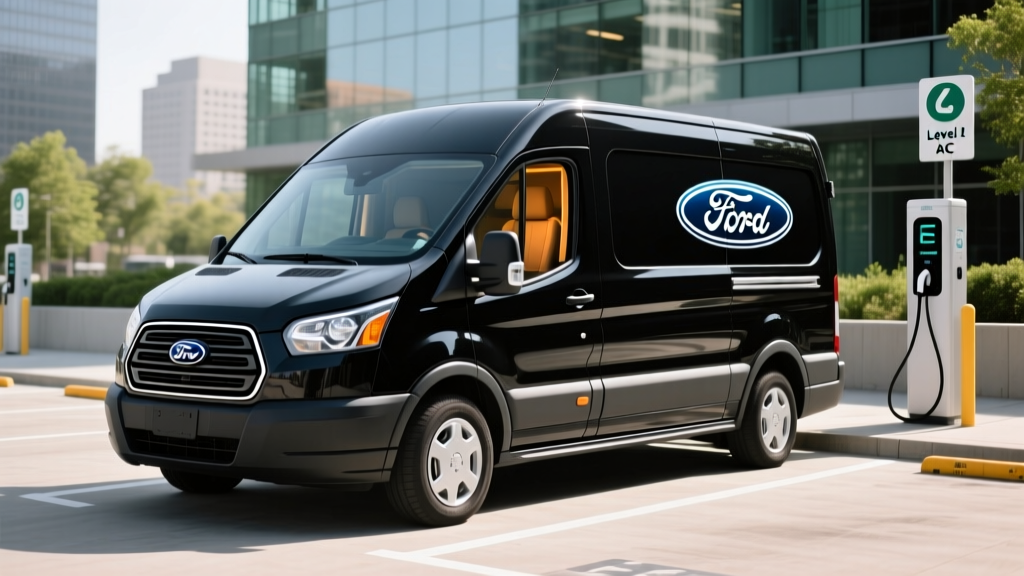
The 2024 Ford E-Transit cargo van is not designed to win drag races or conquer cross-country road trips. It's engineered for a specific, high-volume mission: urban and suburban commercial delivery routes under 100 miles per day. With a 68 kWh usable battery, 126 miles of EPA-estimated range (for the low-roof, short-wheelbase cargo variant), and Ford Pro's integrated fleet telematics, the E-Transit slots into existing delivery operations with minimal disruption — provided fleet managers understand exactly where its range ceiling lives.
If your routes regularly exceed 120 miles, involve sustained highway speeds above 65 mph, or operate in sub-freezing climates without depot charging mid-route, the E-Transit requires careful route planning. For the vast majority of last-mile delivery, service, and urban trade applications, however, it delivers lower per-mile operating costs, zero tailpipe emissions in city centers, and a driving experience that reduces operator fatigue compared to its diesel Transit sibling.
Range, Battery & Efficiency: What the Numbers Actually Mean
The 2024 E-Transit cargo van uses a 68 kWh usable lithium-ion NMC (nickel manganese cobalt) battery pack mounted beneath the load floor. Ford chose NMC over LFP for its higher energy density — critical in a commercial van where every pound of battery weight directly reduces payload capacity.
EPA estimate: 126 miles (low-roof, 130" wheelbase cargo van)
Real-world delivery route (stop-and-go, 25-45 mph): 115–130 miles — regenerative braking in urban driving recovers meaningful energy, sometimes matching or exceeding the EPA sticker.
Highway-heavy (sustained 65-70 mph): 85–100 miles — the boxy aerodynamic profile and 5,800+ lb curb weight hit efficiency hard above 55 mph.
Cold weather (below 32°F): 80–100 miles — expect 20–30% range loss in freezing conditions, compounded by cabin heating demands. The E-Transit does not include a heat pump; it uses resistive electric heating, which draws directly from the traction battery.
| Spec | Value |
|---|---|
| Battery (usable) | 68 kWh, NMC chemistry |
| EPA Range (low-roof cargo) | 126 miles |
| EPA Efficiency | 2.0 kWh/mile (approx. 50 kWh/100 mi) |
| Motor | Single rear-mounted, RWD |
| Horsepower | 266 hp (198 kW) |
| Torque | 317 lb-ft |
| 0–60 mph | ~8.5 seconds (unladen) |
| Top Speed | Electronically limited to ~82 mph |
| Max Payload | 3,880 lbs (low-roof cargo) |
| Cargo Volume (low-roof, 130" WB) | 246.7 cu ft |
| GVWR | 9,500 lbs |
The E-Transit's efficiency of roughly 2.0 kWh per mile (50 kWh/100 miles combined) is competitive within the full-size electric van segment. For fleet operators calculating energy cost: at the U.S. commercial electricity average of ~$0.12/kWh, that's approximately $0.06 per mile in electricity — compared to $0.22–$0.28/mile for a diesel Transit at current fuel prices.
Charging Speed: DC Fast Charge and Depot Level 2
Charging infrastructure is the make-or-break factor for commercial EV adoption. The E-Transit supports both DC fast charging and AC Level 2 charging, but the specs reflect its depot-based use case rather than road-trip ambitions.
| Charging Level | Power | Speed / Time | Use Case |
|---|---|---|---|
| Level 1 (120V) | ~1.4 kW | ~3 miles/hour | Emergency top-off only |
| Level 2 (240V, 48A) | 11.5 kW | ~22 miles/hour; 0–100% in ~8 hours | Overnight depot charging |
| DC Fast Charge (CCS) | Peak 115 kW | 15–80% in ~45 minutes | Mid-day opportunity charging |
The 115 kW peak DC fast-charge rate is modest by 2024 passenger-car standards (where 200–350 kW is common), but it's practical for a commercial van. Most fleet depots will rely on overnight Level 2 charging, where the 11.5 kW onboard charger fills the 68 kWh pack in roughly 8 hours — aligning well with a standard shift pattern. For fleets needing mid-day top-ups, a 115 kW CCS station can add approximately 60–70 miles of range in a 30-minute lunch break.
Charging curve reality: The E-Transit holds close to peak charge rate from 15% to roughly 55% SoC, then tapers progressively. The 15–80% time of ~45 minutes reflects this taper. Don't expect the full 115 kW to sustain above 60% — fleet operators should plan mid-day charges around the 15–70% window for the fastest energy delivery.
Ford Pro also offers the Ford Pro Intelligence software suite, which includes smart charging scheduling to optimize depot charging during off-peak utility rate windows — a meaningful cost saver for fleets on time-of-use electricity plans.
Performance, Drivetrain & Driving Dynamics
The E-Transit uses a single 266 hp (198 kW) rear-mounted electric motor driving the rear wheels. There is no AWD or dual-motor option. Torque is a robust 317 lb-ft, available from zero RPM — a significant advantage over the gasoline or diesel Transit in stop-and-go urban driving, where the E-Transit pulls away from stops with minimal effort even when loaded.
The 0–60 mph time of approximately 8.5 seconds (unladen) won't impress anyone, but it's perfectly adequate for merging onto highways and navigating city traffic. The electronically limited top speed of ~82 mph reflects Ford's assessment of this van's mission profile — this is a vehicle optimized for routes under 65 mph, and the limiter preserves range at highway speeds.
Driving dynamics are surprisingly composed. The low-mounted battery gives the E-Transit a lower center of gravity than the diesel Transit, reducing body roll in corners. The regenerative braking system offers multiple levels of regen, selectable via the dashboard, enabling near one-pedal driving in urban conditions — reducing brake wear, a significant fleet maintenance cost savings.
Notable drawback: The E-Transit's ride quality when unladen is firm, particularly over expansion joints and potholes. The leaf-spring rear suspension is tuned for loaded operation; empty, the van can feel jarring. Drivers who spend full shifts in the vehicle will notice this.
Cargo Space, Configurations & Practical Utility
The E-Transit mirrors the body configurations of the conventional Ford Transit, which means existing upfitters, shelving systems, and rack installations carry over directly — a deliberate and smart engineering choice by Ford.
| Configuration | Wheelbase | Roof Height | Cargo Volume | Max Payload |
|---|---|---|---|---|
| Low Roof, Short WB | 130" | Low | 246.7 cu ft | 3,880 lbs |
| Low Roof, Long WB | 148" | Low | 311.9 cu ft | 3,630 lbs |
| Medium Roof, Long WB | 148" | Medium | 363.8 cu ft | 3,410 lbs |
| High Roof, Long WB | 148" | High | 487.3 cu ft | 3,160 lbs |
| High Roof, EL WB | 148" (extended) | High | 542.0 cu ft | 2,980 lbs |
The low-floor battery placement preserves a flat, unobstructed cargo floor. Interior height in the high-roof variant allows a 6-foot-tall person to stand upright inside — critical for delivery drivers who walk in and out of the cargo area dozens of times per shift.
Ford also offers the E-Transit as a chassis cab and cutaway model for upfitting as box trucks, flatbeds, and specialty service vehicles — expanding its addressable market well beyond the standard cargo van.
Tech, Safety & Driver Assistance
The 2024 E-Transit comes equipped with Ford's SYNC 4 infotainment system on a standard 12-inch touchscreen — a significant upgrade over the Transit's previous generation. Apple CarPlay and Android Auto are wireless. The system integrates with Ford Pro's fleet management platform, enabling real-time vehicle location, state-of-charge monitoring, driver behavior scoring, and maintenance alerts.
Standard driver-assistance features include:
- Pre-Collision Assist with Automatic Emergency Braking (AEB)
- Lane-Keeping System
- Rear View Camera
- Automatic High-Beam Headlamps
- Blind Spot Information System (BLIS) with Cross-Traffic Alert (available)
Important clarification: The E-Transit does not offer Ford's BlueCruise hands-free driving system. All driver-assistance features are SAE Level 1 — the driver must remain fully engaged at all times. This is appropriate for a commercial work vehicle where driver attentiveness is both a safety and liability concern.
The available 360-degree camera system and reverse brake assist are particularly valuable in tight urban loading docks and multi-stop delivery scenarios where the driver is frequently maneuvering in confined spaces.
Pricing, Tax Credits & Total Cost of Ownership
The 2024 E-Transit cargo van starts at a base MSRP of approximately $45,995 (low-roof, short-wheelbase, before destination). Higher-roof and longer-wheelbase configurations push the MSRP toward $52,000–$55,000. Fully optioned with upfit packages, expect as-tested prices in the $55,000–$62,000 range.
Commercial fleet buyers should note: the E-Transit is primarily purchased by businesses, which means it typically falls under the §45W Commercial Clean Vehicle Credit rather than the consumer §30D credit. Key rules:
- §45W credit: Up to $7,500 for vehicles under 14,000 lbs GVWR (the E-Transit qualifies at 9,500 lbs GVWR)
- Business use requirement: Vehicle must be used primarily for business/commercial purposes
- No MSRP cap for commercial credit (unlike the consumer §30D)
- No buyer income cap for commercial purchasers
- Battery sourcing requirements: Still apply — confirm with your Ford Pro dealer that the specific build qualifies under current IRS guidance
- Consult a tax professional and review IRS Clean Vehicle Credit rules before finalizing purchase
Individual buyers purchasing an E-Transit for personal use would fall under §30D consumer rules, which include MSRP caps ($80,000 for vans/trucks/SUVs), buyer income limits ($150K single / $300K joint), and battery component/mineral sourcing requirements. The E-Transit's MSRP clears the cap, but income and sourcing rules may limit eligibility.
| Cost Category | E-Transit | Diesel Transit (Baseline) |
|---|---|---|
| Purchase Price (after credit) | ~$38,500 | ~$42,000 |
| Fuel / Electricity | ~$4,500 | ~$16,875 |
| Maintenance | ~$2,200 | ~$5,800 |
| Estimated 5-Year Total | ~$45,200 | ~$64,675 |
The fuel and maintenance savings are where the E-Transit makes its case. At $0.06/mile electricity vs. $0.25/mile diesel, and with no oil changes, fuel filters, DEF fluid, or transmission service, the E-Transit can save a fleet operator $15,000–$20,000+ over five years per vehicle — provided routes stay within its range envelope and depot charging is available.
Warranty & Battery Longevity
Ford backs the 2024 E-Transit with a comprehensive warranty package designed for commercial confidence:
- Battery & Electric Components: 8 years / 100,000 miles
- Basic Vehicle: 3 years / 36,000 miles
- Powertrain (motor, reduction gear): 5 years / 60,000 miles
- Corrosion Perforation: 5 years / unlimited miles
The battery warranty guarantees that the pack will retain at least 70% of its original capacity over the 8-year/100,000-mile period. For a delivery van averaging 20,000–25,000 miles per year, this means the battery should remain functional (albeit with reduced range) well past the 100,000-mile mark. Ford's NMC chemistry has demonstrated moderate degradation curves in fleet data — expect roughly 10–15% capacity loss at 100,000 miles under normal use, with faster degradation if the battery is routinely DC fast-charged to 100% or operated frequently in extreme heat.
Competitors & Buying Decision
The E-Transit competes primarily with the Mercedes-Benz eSprinter (200-mi range with the larger battery option, but starting above $70,000) and the BrightDrop Zevo 600 (250-mi range, targeted at large enterprise fleets). For smaller operators and owner-operators, the E-Transit's lower entry price and existing Ford Pro dealer/service network make it the most accessible electric full-size van on the market.
- Your daily routes are under 100–110 miles with predictable patterns
- You have depot or home-base Level 2 charging available overnight
- You're replacing a diesel Transit and want drop-in compatibility with existing upfits
- Per-mile operating cost reduction is a primary KPI for your fleet
- You operate in urban areas with clean-air zone mandates or emissions restrictions
- Your routes regularly exceed 130 miles without mid-day charging access
- You operate in extreme cold climates without heated depot storage
- You need sustained highway cruising above 70 mph for long stretches
- You require AWD capability for unpaved or snow-covered routes
- Lowest entry price in the full-size electric van segment
- Drop-in compatibility with existing Transit upfits and shelving
- Strong Ford Pro dealer and service network nationwide
- Significant per-mile cost savings vs. diesel in urban delivery
- Instant torque makes loaded urban driving effortless
- Fleet telematics integration is best-in-class
- 126-mile EPA range limits use to short-haul routes only
- No heat pump — cold-weather range loss is significant
- 115 kW DC fast charging is slow by 2024 passenger-EV standards
- Firm, jarring ride when unladen
- No AWD option for snow or off-pavement routes
- 82 mph top-speed limiter restricts highway use
Frequently Asked Questions
What is the real-world range of the 2024 Ford E-Transit cargo van?
In urban delivery use (stop-and-go, 25–45 mph), expect 115–130 miles — sometimes matching or exceeding the 126-mile EPA estimate thanks to regenerative braking. On highway-heavy routes at 65–70 mph, range drops to 85–100 miles. In freezing weather, plan for 80–100 miles regardless of route type due to battery chemistry limitations and resistive cabin heating.
How fast does the E-Transit charge at home and on DC fast chargers?
On a Level 2 (240V, 48A) home or depot charger, the E-Transit charges at 11.5 kW, adding roughly 22 miles per hour and filling the battery from empty in about 8 hours. On a DC fast charger (CCS connector), it peaks at 115 kW and charges from 15–80% in approximately 45 minutes. The charge curve tapers significantly above 60% SoC.
How much does the E-Transit cost after federal tax credits?
The base MSRP is approximately $45,995. Commercial fleet buyers using the §45W Commercial Clean Vehicle Credit can receive up to $7,500 off, bringing the effective price to roughly $38,495 — before any state or utility incentives. Individual buyers may qualify under §30D if they meet income caps and battery-sourcing requirements. Always verify eligibility with a tax professional and consult current IRS guidelines.
Is the E-Transit worth buying vs. a diesel Transit or the Mercedes eSprinter?
For fleets with sub-100-mile daily routes and depot charging, the E-Transit delivers $15,000–$20,000+ in 5-year fuel and maintenance savings over a diesel Transit, with a lower effective purchase price after credits. The Mercedes-Benz eSprinter offers more range (up to 200 mi with the 113 kWh battery) but starts above $70,000 — a steep premium that's hard to justify unless your routes demand it. The E-Transit is the value play in the segment.
Does the 2024 Ford E-Transit qualify for the federal EV tax credit?
Yes, but the specific credit pathway depends on the buyer. Commercial/business purchasers typically use the §45W Commercial Clean Vehicle Credit (up to $7,500, no MSRP or income cap). Individual consumers would use §30D, which has income caps ($150K single / $300K joint for vans), an $80,000 MSRP cap (which the E-Transit clears), and battery component/critical mineral sourcing requirements that vary by build date. Confirm with your dealer and tax advisor before purchase.
What is the E-Transit's payload and cargo capacity?
The low-roof, short-wheelbase cargo van offers 246.7 cu ft of cargo volume and a maximum payload of 3,880 lbs. Higher-roof and longer-wheelbase configurations increase volume up to 542 cu ft but reduce payload to approximately 2,980 lbs due to increased vehicle weight. These figures are competitive with the diesel Transit and sufficient for most parcel-delivery and trade-service applications.