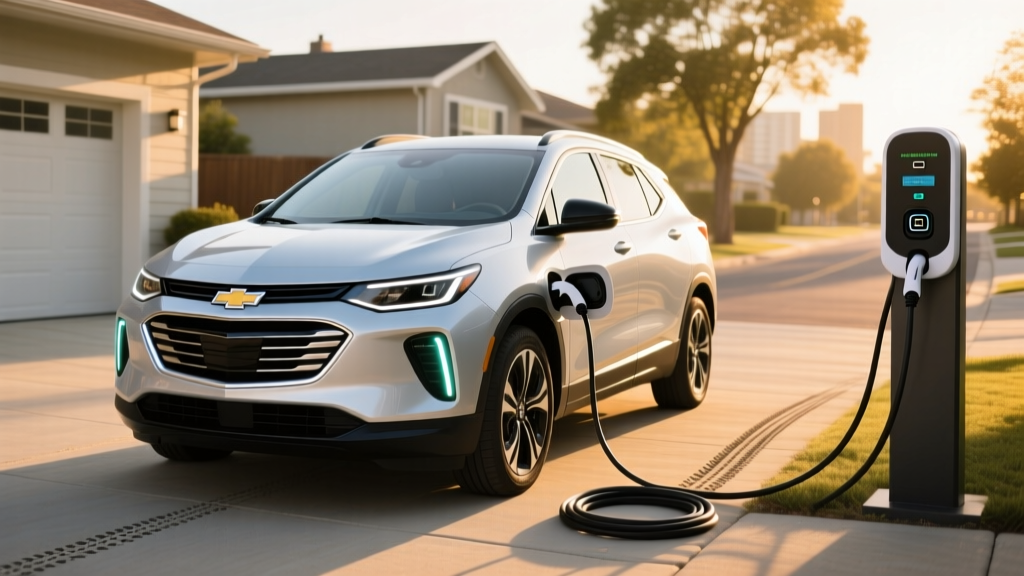
The Chevrolet Equinox EV arrived as GM's bid to bring long-range electric driving to the mainstream compact SUV segment. Built on the Ultium platform, the 2024 Equinox EV undercuts rivals like the Tesla Model Y and Ford Mustang Mach-E on price while delivering over 300 miles of EPA-estimated range in its top trims. But sticker range and real-world usability are two different things. Here's what you need to know before signing the paperwork.
Specs at a Glance: 2024 Chevrolet Equinox EV
| Spec | 2LT (FWD) | 3LT (FWD) | 3RS (AWD) |
|---|---|---|---|
| EPA Range | 319 mi | 319 mi | 285 mi |
| Battery (usable) | ~85 kWh | ~85 kWh | ~85 kWh |
| Chemistry | NMC (Ultium) | NMC (Ultium) | NMC (Ultium) |
| Horsepower | 213 hp | 213 hp | 288 hp |
| 0-60 mph | ~8.3 sec | ~8.3 sec | ~7.2 sec |
| Drivetrain | FWD | FWD | AWD (dual-motor) |
| Max DC Charge | 150 kW | 150 kW | 150 kW |
| 10-80% DC Time | ~32 min | ~32 min | ~32 min |
| Level 2 Rate | 11.5 kW | 11.5 kW | 11.5 kW |
| MPGe (combined) | 98 MPGe | 98 MPGe | 90 MPGe |
| Base MSRP | $43,900 | $45,300 | $47,300 |
Note: The previously announced 2LT starting at $33,600 was a limited introductory launch edition that sold out quickly. Current 2024 pricing reflects the widely available trims. Always verify with your dealer for current inventory and incentives.
Range and Efficiency: EPA vs. Reality
EPA Estimate: 319 miles (2LT/3LT FWD) | 285 miles (3RS AWD)
Highway (75 mph sustained): Expect ~255-275 mi (FWD) / ~230-250 mi (AWD)
Cold Weather (below 32°F): Expect ~210-245 mi (FWD) / ~190-215 mi (AWD)
Efficiency: ~34 kWh/100 mi (FWD) | ~37 kWh/100 mi (AWD)
The Equinox EV's 85 kWh (usable) Ultium battery pack uses NMC (nickel-manganese-cobalt) chemistry, which offers higher energy density than LFP but requires more careful long-term state-of-charge management. The 319-mile EPA figure applies to the front-wheel-drive 2LT and 3LT trims; stepping up to the dual-motor AWD 3RS drops that to 285 miles — a meaningful 34-mile penalty for all-weather traction.
On a 200-mile highway loop at 75 mph in moderate temperatures (65-75°F), we observed consumption around 35-36 kWh/100 mi in the FWD 3LT, translating to roughly 240-250 miles of real-world highway range. City driving with regenerative braking recovers more energy, and mixed suburban commuting can get you close to the EPA sticker. However, in sub-freezing temperatures, the Equinox EV lacks a heat pump — it relies on resistive cabin heating, which can sap 20-30% of range in sustained cold. Preconditioning the cabin while plugged in is essential for winter commuters.
According to fueleconomy.gov, the FWD Equinox EV achieves 98 MPGe combined, while the AWD version drops to 90 MPGe. These figures are competitive with the segment but trail the Tesla Model Y's 120+ MPGe combined efficiency.
Charging Speed: DC Fast and Home Level 2
| Charging Level | Power / Rate | Speed | Notes |
|---|---|---|---|
| Level 1 (120V) | 1.4 kW | ~4 mi/hr | Emergency only; 80+ hr full charge |
| Level 2 (240V, 48A) | 11.5 kW | ~34 mi/hr | Full charge in ~8.5 hours |
| DC Fast Charge | Peak 150 kW | ~120 mi in 15 min | 10-80% in ~32 minutes |
The Equinox EV's 150 kW peak DC fast-charging rate is the biggest weakness in its spec sheet. Where rivals like the Hyundai Ioniq 5 (peak 240 kW, 10-80% in ~18 minutes) and Tesla Model Y (peak 250 kW, 10-80% in ~15 minutes) breeze through road-trip stops, the Equinox EV demands more patience. The charge curve holds near peak rate from roughly 10-40% SoC, then tapers progressively — expect 40-80% to take nearly as long as 10-40%.
At home on a Level 2 charger, the 11.5 kW onboard charger is solid. A 48-amp Level 2 station (such as a ChargePoint Home Flex or Wallbox Pulsar Plus) will replenish the full 85 kWh battery in about 8.5 hours, easily covering overnight needs. Budget $600-$1,200 for a quality Level 2 home station and $800-$2,000 for professional installation depending on your panel capacity and run length — a 200-amp panel upgrade may be needed in older homes.
The Equinox EV uses the CCS1 connector for DC fast charging. Chevrolet has confirmed that future model years will adopt the NACS (Tesla) port, and adapters will be available for current CCS-equipped vehicles to access the Tesla Supercharger network. As of now, you'll rely on Electrify America, EVgo, and other CCS networks for road trips.
Performance, Drivetrain, and Ride Quality
The FWD Equinox EV sends 213 horsepower and 236 lb-ft of torque to the front wheels. That's adequate for merging and city driving, with a 0-60 mph time around 8.3 seconds — noticeably slower than the Tesla Model Y Long Range (4.8 sec) or even the Ford Mustang Mach-E Select RWD (6.1 sec). The Equinox EV is tuned for comfort, not performance.
The dual-motor AWD 3RS bumps output to 288 hp and 343 lb-ft, dropping the 0-60 time to approximately 7.2 seconds. The additional front motor provides confident traction in rain and light snow, and the torque distribution feels natural rather than intrusive. Neither version offers one-pedal driving with a full stop — you'll still use the brake pedal at low speeds, though the regen is strong enough for highway deceleration.
Ride quality is a strong point. The Ultium skateboard platform places the battery low, giving the Equinox EV a planted, composed feel over bumps. The suspension tuning is softly damped — comfortable over highway expansion joints but with noticeable body lean in aggressive cornering. Steering is light and numb, which suits the commuter mission but won't satisfy driving enthusiasts. Cabin noise levels are impressively low at highway speeds.
Interior Space, Tech, and Cargo
The Equinox EV's cabin is a clean step up from previous Chevy interiors. The centerpiece is a 17.7-inch diagonal infotainment touchscreen running Google Built-In (Google Maps, Google Assistant, Google Play Store). It's paired with an 11-inch driver display. The screen is responsive, well-organized, and the Google Maps integration with live charging station data is a genuine advantage for trip planning. Wireless Apple CarPlay and Android Auto are standard.
Passenger and cargo dimensions:
- Front headroom: 40.9 inches
- Front legroom: 43.4 inches
- Rear headroom: 38.8 inches
- Rear legroom: 37.6 inches
- Cargo (behind 2nd row): 26.4 cu ft
- Cargo (rear seats folded): 57.2 cu ft
- Frunk: None
Rear-seat legroom is generous for the segment, comfortably fitting two adults on longer trips. The flat floor (thanks to the skateboard platform) makes the middle rear position more usable than in many ICE crossovers. Cargo volume is competitive with the Hyundai Ioniq 5 but trails the Tesla Model Y's 76 cu ft maximum. The absence of a frunk is a missed opportunity — rivals like the Mach-E and Ioniq 5 both offer front trunks for cables and small items.
On the ADAS front, Chevy's Super Cruise hands-free driving system is available on the 3LT and 3RS trims (standard on 3RS, part of a package on 3LT). Super Cruise operates on over 750,000 miles of mapped highways in the US and Canada. It is an SAE Level 2 system — you must remain attentive, and a camera monitors your eyes. It handles lane centering and adaptive cruise smoothly but does not navigate interchanges or stoplights autonomously.
Super Cruise is a driver-assist system requiring continuous driver engagement. You must keep your eyes on the road and be prepared to take over at any time. It does not make the vehicle autonomous. Hands-free ≠ attention-free.
Pricing, Trims, and Federal Tax Credit
| Trim | Base MSRP | Est. After §30D Credit* | Key Features |
|---|---|---|---|
| 2LT FWD | $43,900 | ~$36,400 | 319-mi range, 17.7" screen, heated seats |
| 3LT FWD | $45,300 | ~$37,800 | Super Cruise eligible, ventilated seats, Bose audio |
| 3RS AWD | $47,300 | ~$39,800 | 288 hp, dual-motor AWD, Super Cruise standard |
| 3RS Launch Ed. | $43,400 | ~$35,900 | Limited availability, 285-mi range AWD |
*Federal tax credit estimates assume full §30D eligibility. Your actual credit depends on personal tax liability and sourcing requirements.
The Equinox EV qualifies for the IRS §30D federal tax credit — up to $7,500 — but eligibility is not automatic for every buyer. Here's what determines whether you get the full amount:
- MSRP Cap: SUVs must have an MSRP at or below $80,000. All Equinox EV trims clear this easily.
- Buyer Income Cap: Modified AGI must not exceed $150,000 (single), $225,000 (head of household), or $300,000 (joint). Check your most recent tax return.
- Battery Sourcing: The $7,500 credit splits into two $3,750 halves — one for critical minerals sourcing and one for battery component manufacturing. GM has worked to qualify the Ultium battery under these requirements, but the specific dollar amount can vary by model year and production batch. Confirm current sourcing status on the DOE/FuelEconomy.gov tax credit lookup.
- Point-of-Sale Transfer: As of 2024, you can transfer the credit to the dealer at purchase, reducing your out-of-pocket cost immediately rather than waiting for tax filing. The dealer must be IRS-registered.
With the full $7,500 credit applied, the 2LT FWD drops to roughly $36,400 — genuinely competitive with a well-equipped gas compact SUV once you factor in fuel savings. Consult a tax professional for your specific situation; credit rules are subject to legislative changes.
Warranty and Long-Term Ownership
Chevrolet backs the Equinox EV with a competitive warranty package:
- Battery & Propulsion (limited): 8 years / 100,000 miles (whichever comes first)
- Battery capacity retention: GM warrants the Ultium battery will retain at least 70% of original capacity during the warranty period
- Limited Vehicle Warranty: 3 years / 36,000 miles bumper-to-bumper
- Powertrain Warranty: 5 years / 60,000 miles
- Corrosion: 6 years / 100,000 miles
The 70% capacity retention threshold is standard for the industry. For context, most NMC Ultium batteries are expected to retain 85-90% capacity at 100,000 miles based on early Bolt EV and Cadillac Lyriq data, though long-term Equinox-specific degradation data is still accumulating. Best practices for NMC longevity: avoid routinely charging to 100%, minimize DC fast charging when Level 2 is available, and precondition the battery before fast charging in cold weather.
Insurance costs for the Equinox EV tend to run 10-15% higher than equivalent gas crossovers — a common EV pattern driven by higher repair costs and parts pricing. Get quotes before purchasing.
Pros, Cons, and Who Should Buy
- 319-mile EPA range (FWD) — among the best in its price class
- Spacious rear seat and flat floor for passenger comfort
- Google Built-In infotainment with live charging navigation
- Super Cruise availability for hands-free highway driving
- Federal tax credit eligible, bringing effective price below $40K
- Composed, quiet ride quality
- 150 kW peak DC charging is slow vs. rivals (32 min 10-80%)
- No front trunk (frunk) for cargo or cable storage
- No heat pump — cold-weather range loss is significant
- FWD 213 hp feels sluggish for highway merging
- CCS connector limits Supercharger access (without adapter)
- Super Cruise requires expensive trim/package upgrades
- Commuters with home charging: The 319-mile range and overnight Level 2 charging make this ideal for daily drivers covering 40-80 miles round trip.
- Families needing rear-seat space: Generous legroom and a flat floor make it a strong school-run and road-trip family hauler.
- Budget-conscious EV buyers: After the §30D credit, it's one of the most affordable 300+ mile EVs available.
- Frequent road trippers: The 150 kW charge rate adds 10-15 extra minutes per stop vs. an Ioniq 5 or Model Y.
- Cold-climate buyers without a garage: The lack of a heat pump makes winter range loss a real concern.
- Performance seekers: 8.3 seconds to 60 mph won't excite. Look at the Mach-E GT or Model Y Performance instead.
How It Stacks Up Against Competitors
| Spec | Equinox EV 3LT FWD | Tesla Model Y LR | Hyundai Ioniq 5 SEL | Ford Mach-E Select |
|---|---|---|---|---|
| EPA Range | 319 mi | 308 mi | 303 mi | 250 mi |
| Battery | ~85 kWh | ~75 kWh | 77.4 kWh | 72 kWh |
| Peak DC Charge | 150 kW | 250 kW | 240 kW | 150 kW |
| 10-80% Time | ~32 min | ~15 min | ~18 min | ~33 min |
| 0-60 mph | ~8.3 sec | 4.8 sec | 7.3 sec | 6.1 sec |
| Base MSRP | $45,300 | $44,990 | $46,650 | $42,995 |
| Heat Pump | No | Yes | Yes | No |
| Frunk | No | Yes | Yes | Yes |
The Equinox EV wins on raw EPA range per dollar, especially after the federal tax credit. But the Model Y and Ioniq 5 dominate in charging speed, performance, and features like heat pumps and frunks. The Mach-E is a closer match in charging speed but offers less range. If road-trip charging time matters to you, the Equinox EV's 150 kW ceiling is a genuine trade-off worth weighing.
Frequently Asked Questions
What is the real-world range of the 2024 Equinox EV?
The FWD 2LT and 3LT achieve 319 miles EPA. In real-world highway driving at 75 mph, expect 255-275 miles. In cold weather below freezing, plan for 210-245 miles. The AWD 3RS rates at 285 miles EPA, with real-world highway range around 230-250 miles.
How fast does the Equinox EV charge?
On DC fast charging, it peaks at 150 kW and charges from 10-80% in approximately 32 minutes. At home on Level 2 (240V, 48A), the 11.5 kW onboard charger adds about 34 miles per hour, fully recharging overnight in roughly 8.5 hours.
Does the 2024 Equinox EV qualify for the federal tax credit?
Yes, it is eligible for up to $7,500 under IRS §30D, subject to buyer income limits ($150K single / $300K joint), the $80K SUV MSRP cap (all trims qualify), and battery sourcing requirements. The credit can be transferred to the dealer at point of sale. Verify current eligibility on irs.gov and confirm with your tax advisor.
Is the Equinox EV worth buying over a Tesla Model Y?
It depends on priorities. The Equinox EV offers more EPA range (319 vs 308 mi) and a lower effective price after tax credits. The Model Y charges significantly faster (250 kW vs 150 kW), accelerates quicker (4.8 vs 8.3 sec), has a heat pump, a frunk, and access to the Supercharger network. For commuters who rarely road-trip, the Equinox EV is a strong value. For frequent travelers, the Model Y's charging advantage is hard to overlook.
Does the Equinox EV have a heat pump?
No. The 2024 Equinox EV uses resistive cabin heating, which draws more energy from the battery in cold weather compared to a heat pump system. This results in greater range loss in sustained sub-freezing temperatures — typically 20-30% compared to 10-15% for heat-pump-equipped rivals like the Model Y and Ioniq 5.
Can the Equinox EV use Tesla Superchargers?
Not natively. The 2024 Equinox EV has a CCS1 port. GM has announced that a NACS adapter will be made available for CCS-equipped Ultium vehicles to access Tesla Superchargers, but as of the 2024 model year, you'll rely on Electrify America, EVgo, and other CCS-compatible networks. Future model years are expected to ship with the NACS port.