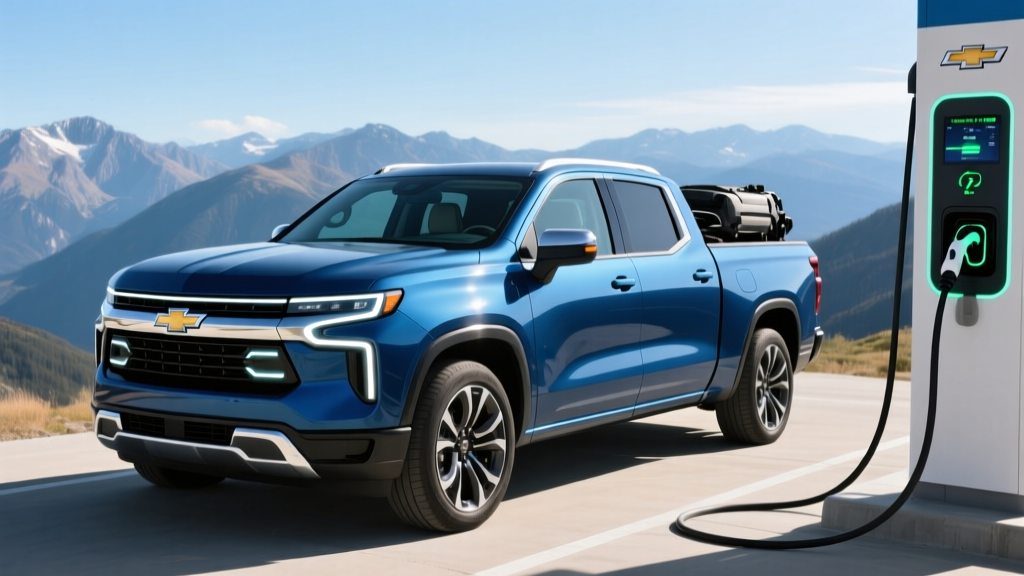
The 2024 Chevy Silverado EV launched with a bold promise: full-size truck capability with over 400 miles of range. Built on GM's dedicated Ultium platform (not a converted gas Silverado), it arrives with a massive battery, competitive towing, and tech-forward features like the Multi-Flex Midgate. But at a starting price well north of $50,000 for early trims, buyers need to know whether the real-world performance justifies the sticker. We break down every spec that matters — from actual highway range to charge-curve behavior to federal tax credit eligibility.
Quick Verdict: Who the Silverado EV Is For
The 2024 Silverado EV is best suited for truck buyers who need serious range for long hauls, want a comfortable daily-driver commute with low running costs, and can charge at home. It trades some traditional truck simplicity for a tech-heavy, car-like driving experience. If you tow frequently over long distances or lack home charging access, the calculus shifts — more on that below.
Range, Efficiency, and the Real-World Reality
Real-World Expectation: ~340–380 miles highway at 70 mph; ~260–300 miles in cold weather (below 32°F) with cabin heat; towing a 5,000-lb trailer cuts range roughly in half to ~200–220 miles.
The headline 440-mile figure applies to the 4WT Extended Range trim with its enormous 200+ kWh (usable) Ultium battery pack using NMC (nickel manganese cobalt) chemistry. The standard-range Work Truck and the launch 3LT and 4LT trims carry a smaller pack (approximately 200 kWh total / ~190 kWh usable) and are EPA-rated around 380–400 miles depending on configuration.
According to fueleconomy.gov, the 2024 Silverado EV 4WT achieves approximately 63 MPGe combined (city/highway), which translates to roughly 53 kWh per 100 miles. That efficiency figure is competitive for a full-size electric truck but means this vehicle consumes a lot of energy per mile — expect higher electricity costs than a compact EV like the Equinox EV or Tesla Model Y.
Cold-weather note: Like all NMC-pack EVs, the Silverado loses meaningful range in freezing temperatures. GM's heat pump and battery thermal management help, but plan on 25–35% reduction in winter conditions. Preconditioning the battery while plugged in mitigates some of this loss and is critical for maintaining fast-charge speeds in cold weather.
| Spec | Value |
|---|---|
| EPA Range (max config) | 440 miles (4WT Ext. Range) |
| Battery (usable, est.) | ~200 kWh, NMC chemistry |
| DC Fast Charge (peak) | 200 kW |
| 10–80% DC Charge Time | ~45 minutes (est.) |
| Level 2 Home Charge | 11.5 kW (~25 mi/hr) standard; 19.2 kW (~42 mi/hr) available on select trims |
| Horsepower | Up to 754 hp (4WT, Wide Open Watts mode) |
| 0–60 mph | ~4.5 seconds (4WT WOW mode) |
| Drivetrain | Dual-motor AWD (eAWD) |
| Max Towing | 10,000 lbs (with max trailering pkg) |
| Max Payload | ~1,800 lbs |
| MPGe (combined) | ~63 MPGe |
| Battery Warranty | 8 years / 100,000 miles |
| Base MSRP (4WT) | $74,800 (before dest.) |
Charging Speed: DC Fast, Level 2, and the Charge Curve
The Silverado EV supports DC fast charging at up to 200 kW on CCS-equipped public chargers (and NACS via adapter as GM transitions to the Tesla Supercharger network). At peak rate, you can add roughly 100 miles of range in about 10 minutes. However, the charge curve tapers significantly above 80% state of charge (SoC) — a 10–80% session takes approximately 45 minutes on a capable 200+ kW charger, while a 10–90% session can stretch past 65 minutes.
For a battery this large, 200 kW peak is adequate but not class-leading. The Rivian R1T and Tesla Cybertruck can accept higher peak rates (though sustained rates vary). The practical implication: on road trips, plan for slightly longer stops than you'd take in a smaller-battery EV.
| Charging Level | Power | Miles Added per Hour | Notes |
|---|---|---|---|
| Level 1 (120V) | ~1.4 kW | ~2–3 mi/hr | Emergency/trickle only |
| Level 2 (240V, 48A) | 11.5 kW | ~25 mi/hr | Standard onboard charger |
| Level 2 (240V, 80A) | 19.2 kW | ~42 mi/hr | Available on select trims; requires 100A circuit |
| DC Fast Charge | Up to 200 kW | ~600 mi/hr (peak) | Tapers above 80% SoC |
Home charging reality: Fully replenishing a ~200 kWh battery from near-empty on an 11.5 kW Level 2 charger takes roughly 17–18 hours. The optional 19.2 kW onboard charger cuts that to about 10–11 hours — a meaningful upgrade for owners who regularly drain the pack. Either setup requires a dedicated 240V circuit; the 19.2 kW option needs a 100-amp breaker, which may require a panel upgrade in older homes (budget $1,500–$3,000 for electrical work, per licensed electrician estimates).
Performance, Towing, and Payload
In its top 4WT configuration with Wide Open Watts (WOW) mode enabled, the Silverado EV delivers 754 horsepower and a 0–60 mph time of approximately 4.5 seconds — sports-car acceleration from a full-size truck. Dual-motor eAWD is standard across all trims, providing confident traction in rain and light off-road conditions.
Towing capacity reaches 10,000 pounds with the max trailering package, competitive with the Ford F-150 Lightning (also 10,000 lbs) and ahead of the Rivian R1T's standard rating. However, towing at max capacity slashes range dramatically — expect roughly 1.5–2.0 miles per kWh under heavy load, cutting the 440-mile range to approximately 200 miles or less. This is physics, not a Chevy flaw: all electric trucks face this trade-off.
Payload tops out around 1,800 lbs, and the 5-foot bed (expandable to nearly 11 feet with the Multi-Flex Midgate folded down) handles long lumber, kayaks, or ladders with ease. The Midgate is genuinely the Silverado EV's most innovative feature — it transforms the truck's utility in ways a traditional bed cannot.
Interior, Tech, and Driver Assistance
The cabin is spacious, with generous front legroom (approximately 44.5 inches) and a flat floor thanks to the skateboard platform. Rear-seat space is adequate for adults on shorter trips but trails some body-on-frame crew cabs for long-distance rear-seat comfort. Cargo volume behind the rear seats is approximately 40 cu ft, expanding significantly with seats folded.
The infotainment system centers on a large 17.7-inch diagonal touchscreen (on higher trims) running Google Built-In with native Google Maps, Assistant, and Play Store apps. Wireless Apple CarPlay and Android Auto are standard. The available Super Cruise hands-free driving system works on over 400,000 miles of compatible highways — it's a genuine road-trip asset but remains SAE Level 2, meaning the driver must remain attentive and keep eyes on the road at all times.
Additional tech highlights include a digital rearview camera mirror, head-up display, and the available Multi-Flex Tailgate with six configurable positions. Drawbacks include the sheer vehicle size making parking challenging in tight urban settings, and some reviewers have noted the regenerative braking feel could be more intuitive for one-pedal driving.
Pricing, Trims, and Federal Tax Credit Eligibility
The 2024 Silverado EV launched with higher-priced trims first — a common EV strategy. The initial lineup includes:
- 4WT (Work Truck, Extended Range): Starting at ~$74,800 (before destination). Fleet-oriented with vinyl floors and utilitarian interior.
- 3LT: Starting at ~$68,700. More refined interior, better optioned for personal use.
- 4LT: Starting at ~$88,700 (limited launch edition). Fully loaded with premium materials, Super Cruise, and all available features.
Lower-priced trims (including a planned ~$55,000 entry point) were announced for later production, expanding accessibility. Check current availability with your dealer, as GM's production ramp has evolved since initial launch.
- MSRP Cap: Trucks/vans/SUVs must have MSRP ≤ $80,000. The 4LT at ~$88,700 exceeds this cap and does NOT qualify.
- Buyer Income Cap: AGI must not exceed $150,000 (single), $225,000 (head of household), or $300,000 (joint filing).
- Battery Sourcing: Critical minerals and battery components must meet phased-in domestic/free-trade sourcing thresholds (increasing yearly through 2029).
- Point-of-Sale Transfer: Eligible buyers can transfer the credit to the dealer at purchase for an immediate price reduction (up to $7,500).
- Assembled in North America: Required — the Silverado EV is built at Factory ZERO in Michigan. ✓
Always verify current eligibility at irs.gov or consult a tax professional. Rules change annually, and battery-sourcing compliance can shift with supply-chain updates.
| Trim | Base MSRP | MSRP Under $80K Cap? | Max §30D Credit | Est. Net Price (if eligible) |
|---|---|---|---|---|
| 4WT | $74,800 | Yes ✓ | Up to $7,500 | ~$67,300 |
| 3LT | $68,700 | Yes ✓ | Up to $7,500 | ~$61,200 |
| 4LT (Launch Ed.) | $88,700 | No ✗ | $0 | $88,700 |
Warranty and Long-Term Ownership
GM backs the Silverado EV's battery pack with an 8-year / 100,000-mile warranty, covering defects and capacity loss below a specified retention threshold (typically 60–70% of original capacity, per GM's Ultium warranty terms). The limited vehicle warranty is 3 years / 36,000 miles, and the powertrain warranty extends to 5 years / 60,000 miles.
NMC battery chemistry offers excellent energy density (enabling the 440-mile range) but historically degrades slightly faster than LFP chemistry over thousands of cycles. For most owners driving 12,000–15,000 miles per year, the battery should comfortably outlast the warranty period with well over 80% capacity retention. Avoiding routine charging to 100% (unless needed for long trips) and minimizing DC fast-charging in extreme heat will help maximize longevity.
Silverado EV vs. Key Competitors
The electric truck segment is competitive. Here's how the Silverado EV stacks up against its primary rivals:
| Spec | 2024 Chevy Silverado EV | Ford F-150 Lightning | Rivian R1T | Tesla Cybertruck |
|---|---|---|---|---|
| Max EPA Range | 440 mi | 320 mi (Ext. Range) | 410 mi (Max Pack) | 340 mi (est.) |
| Battery (usable) | ~200 kWh | ~131 kWh | ~149 kWh | ~123 kWh |
| Peak DC Charge | 200 kW | 150 kW | 220 kW | 250 kW |
| 0–60 mph | 4.5 sec | 3.8 sec | 3.0 sec | 2.6 sec (Cyberbeast) |
| Max Towing | 10,000 lbs | 10,000 lbs | 11,000 lbs | 11,000 lbs |
| Starting MSRP | ~$55,000 (announced) | ~$55,000 | ~$73,000 | ~$80,000 |
- Range is your top priority — 440 miles leads the segment
- You want the Multi-Flex Midgate for oversized cargo
- You prefer a traditional truck aesthetic and driving position
- You qualify for the §30D credit and target the 3LT or 4WT trim
- You need the lowest starting price now (F-150 Lightning has broader trim availability)
- You want the fastest acceleration or most off-road capability (Rivian R1T quad-motor)
- You prefer the most established Supercharger network access today (Cybertruck with native NACS)
- Class-leading 440-mile EPA range (Extended Range)
- Multi-Flex Midgate is genuinely innovative
- Strong 10,000-lb towing capacity
- Spacious cabin with flat floor
- Super Cruise for hands-free highway driving
- Built at Factory ZERO in Michigan (domestic assembly)
- High starting price; 4LT exceeds tax-credit MSRP cap
- 200 kW peak charging is slower than some rivals
- Massive battery means long Level 2 home charge times
- Towing slashes range dramatically (all EV trucks, but acute here)
- Large footprint challenging in tight parking
- Lower trims still ramping production — availability varies
Frequently Asked Questions
What is the real-world range of the 2024 Chevy Silverado EV?
The EPA rates the Extended Range 4WT at 440 miles. In real-world highway driving at 70 mph, expect approximately 340–380 miles. In freezing temperatures with cabin heat, plan on 260–300 miles. Towing a trailer near max capacity cuts range to roughly 200 miles or less.
How fast does the Silverado EV charge at home and on the road?
On a DC fast charger, it peaks at 200 kW with a 10–80% time of about 45 minutes. At home on a standard 11.5 kW Level 2 charger, you'll add about 25 miles per hour (a full charge takes ~17 hours). The optional 19.2 kW onboard charger nearly doubles home charging speed to ~42 miles per hour.
How much does the Silverado EV cost after tax credits?
The 3LT starts around $68,700 and the 4WT around $74,800 — both fall under the $80,000 MSRP cap for the §30D federal credit. If you meet income and sourcing requirements, you could save up to $7,500, bringing the 3LT to approximately $61,200. The 4LT Launch Edition at $88,700 exceeds the cap and does not qualify.
Does the 2024 Silverado EV qualify for the $7,500 federal EV tax credit?
Trims under $80,000 MSRP (3LT, 4WT) can qualify if the buyer meets income caps ($150K single / $300K joint), the battery meets critical-mineral and component sourcing rules, and the vehicle is assembled in North America (it is). The 4LT at $88,700 does not qualify. Verify current rules at irs.gov.
Is the Silverado EV worth buying over the F-150 Lightning or Rivian R1T?
If range is your top priority, the Silverado EV's 440-mile rating is unmatched. The F-150 Lightning offers broader trim availability and a lower entry price today. The Rivian R1T excels in off-road capability and acceleration but starts higher. Test-drive all three and compare real pricing with your dealer — incentives and availability vary by region.
How does towing affect the Silverado EV's range?
Towing a 5,000–7,000 lb trailer typically reduces range by 40–55%. At the 10,000-lb max rating, expect a 50–60% reduction. This means a 440-mile rated truck may deliver only 180–220 miles while towing heavy. Plan charging stops accordingly on long hauls.