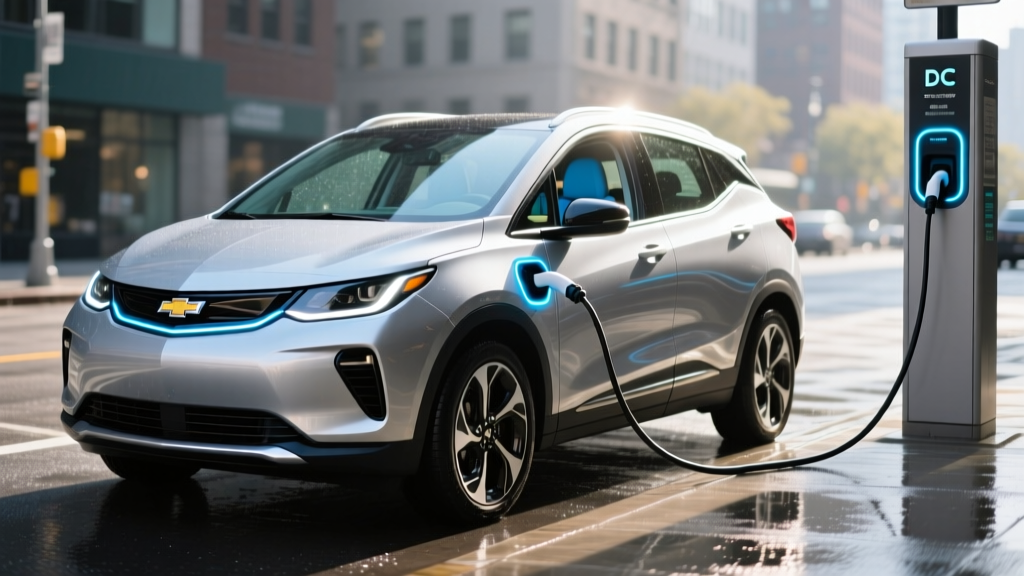
The 2024 Chevrolet Bolt EUV occupies a rare space in the electric vehicle market: a sub-$30,000 crossover with over 240 miles of EPA-rated range, spacious rear seating, and eligibility for the full federal tax credit. Though Chevrolet discontinued the Bolt EUV after the 2023 model year to make way for the next-generation Equinox EV, a strong supply of 2024-equivalent Bolt EUVs remains on dealer lots and in the certified pre-owned market heading into 2026. For budget-conscious buyers, it remains one of the most practical entry points into EV ownership — provided you understand its charging limitations.
This review covers the Bolt EUV's real-world range, charging behavior, ownership economics, and how it stacks up against newer competitors in the affordable EV segment.
Range, Efficiency, and Real-World Expectations
The 2024 Chevy Bolt EUV carries an EPA-estimated range of 247 miles on a full charge. That figure comes from a 65 kWh (usable) lithium-ion battery pack using NMC (nickel-manganese-cobalt) chemistry — the same pack architecture shared with the smaller Bolt EV hatchback, though the EUV's longer wheelbase and slightly heavier curb weight trim a few miles off the EPA sticker compared to the hatch's 259-mile rating.
EPA sticker: 247 miles
City/commute driving (mild weather): 250–265 miles — the Bolt EUV excels in stop-and-go traffic where regenerative braking recovers energy.
Highway driving (70–75 mph): 200–220 miles — the boxy crossover shape and lack of a heat pump increase consumption at sustained speed.
Cold weather (below 32°F): 160–190 miles — NMC chemistry loses roughly 25–35% of range in freezing temperatures without a heat pump to manage cabin heating efficiently.
Worst-case road trip scenario: ~160 miles of usable range in winter highway conditions before needing to plan a charge stop.
Efficiency is rated at 115 MPGe combined (city 125 / highway 104), which translates to roughly 29 kWh per 100 miles. That's competitive with the Hyundai Kona Electric and slightly behind the more aerodynamic Tesla Model Y. The Bolt EUV rewards drivers who use the one-pedal driving mode and the steering-wheel regen paddle — both of which can bring the vehicle to a complete stop without touching the brake pedal, maximizing energy recovery in urban environments.
| Spec | Value |
|---|---|
| EPA Range | 247 miles |
| Battery (usable) | 65 kWh, NMC |
| Efficiency | 115 MPGe / 29 kWh/100mi |
| Max DC Fast Charge | 55 kW (CCS1) |
| 10–80% DC Charge Time | ~56 minutes |
| Level 2 Home Charge Rate | 11.5 kW (48A) / ~37 mi/hr |
| Motor / Drivetrain | 200 hp / 266 lb-ft, FWD single-speed |
| 0–60 mph | 7.0 seconds |
| Cargo Volume | 16.3 cu ft (rear seats up) / 56.9 cu ft (folded) |
| Rear Legroom | 39.1 inches |
| Curb Weight | 3,935 lbs |
| Base MSRP (LT) | $27,800 |
| Premier Trim MSRP | $32,400 |
| Battery Warranty | 8 years / 100,000 miles |
Charging Speed: The Bolt EUV's Known Weakness
The most important thing to understand about the 2024 Bolt EUV before purchasing is its DC fast-charging limitation. The vehicle peaks at just 55 kW on a DC fast charger using its CCS1 connector. In an era where competitors like the Hyundai Ioniq 5 and Tesla Model Y accept 150–250 kW, the Bolt EUV's charging speed is its single biggest compromise.
| Level | Power | Miles Added per Hour | Notes |
|---|---|---|---|
| Level 1 (120V) | ~1.4 kW | ~4 mi/hr | Emergency/trickle only; ~60+ hours for full charge |
| Level 2 (240V, 48A) | 11.5 kW | ~37 mi/hr | Full charge in ~7 hours; ideal overnight home charging |
| DC Fast (CCS1) | 55 kW peak | ~100 mi in 30 min | 10–80% in ~56 min; tapers above 80% SoC |
What this means practically: On a road trip, plan for 45–60 minute charge stops every 150–180 miles. The Bolt EUV's charge curve is relatively flat — it sustains close to 55 kW through about 60% state of charge, then gradually tapers. This isn't a catastrophic limitation for a commuter vehicle that charges at home overnight, but it makes the Bolt EUV noticeably less convenient than 150+ kW competitors on long highway trips.
Home charging is where the Bolt EUV shines. Its onboard charger accepts up to 11.5 kW on Level 2 (240V at 48 amps), which is excellent for this price class. Plug in when you get home, and you'll wake up with a full battery every morning — roughly 7 hours from empty. Most owners will rarely, if ever, need DC fast charging for daily use.
One important note: the Bolt EUV uses the CCS1 connector, not the Tesla NACS plug. As of 2026, Chevrolet's newer models have transitioned to NACS, but the Bolt EUV requires a CCS-to-NACS adapter (sold separately, ~$200–$250) to access Tesla Supercharger stalls. The broader Electrify America, EVgo, and ChargePoint networks all support CCS1 natively.
Performance and Driving Dynamics
The 2024 Bolt EUV uses a single permanent-magnet electric motor driving the front wheels, producing 200 horsepower and 266 lb-ft of torque. The 0–60 mph sprint takes 7.0 seconds — quick enough for confident highway merging and passing, though not in the same league as dual-motor EVs that hit 60 in under 5 seconds.
There is no AWD option. The front-wheel-drive layout means the Bolt EUV can struggle with traction on wet or icy roads when applying heavy throttle, though the instant electric torque and standard traction control manage this adequately for most conditions. The low center of gravity from the under-floor battery pack gives the EUV surprisingly composed handling for a tall crossover, and the ride quality is comfortable — well-tuned for absorbing potholes and highway expansion joints.
The Regen on Demand paddle behind the left steering-wheel spoke lets you dial in aggressive regenerative braking without committing to full one-pedal mode. This is a standout feature for drivers transitioning from gas cars who want a familiar coasting feel with the option to regen harder in traffic.
Interior, Cargo, and Technology
The Bolt EUV's strongest selling point beyond price is interior space. Chevrolet stretched the wheelbase 2.9 inches over the standard Bolt EV hatchback, and nearly all of that extra length went to rear-seat legroom. At 39.1 inches of rear legroom, the EUV outpaces the Hyundai Kona Electric (33.4 in) and rivals mid-size crossovers costing twice as much. Two adults can sit comfortably behind two tall front-seat occupants without knee contact.
Cargo volume measures 16.3 cubic feet behind the rear seats and 56.9 cubic feet with the 60/40 split rear seats folded. There is no front trunk (frunk) — the space under the hood houses the motor and power electronics. A flat load floor and low lift-over height make loading groceries and luggage easy.
The infotainment system centers on a 10.2-inch touchscreen running Chevrolet's Infotainment 3 Plus system with wireless Apple CarPlay and Android Auto. The LT trim includes a 10.2-inch screen; the Premier adds an 8-inch driver information cluster. A Wi-Fi hotspot is available via OnStar subscription. The system is responsive and logically laid out, though it lacks the visual polish of Hyundai's or Tesla's interfaces.
Driver-assistance features include:
- Chevy Safety Assist (standard): automatic emergency braking, front pedestrian braking, lane keep assist with lane departure warning, following distance indicator, IntelliBeam auto high beams
- Super Cruise (optional on Premier, $2,200): GM's hands-free Level 2 driving system on 400,000+ miles of mapped highways — a standout feature that no competitor in this price range offers. Note: Super Cruise is SAE Level 2 — the driver must remain attentive and eyes on the road at all times.
- Adaptive cruise control (available on Premier)
- HD Surround Vision 360° camera (Premier standard)
Pricing, Trims, and Federal Tax Credit
The 2024 Bolt EUV launched with aggressive pricing that undercut nearly every EV on the market:
| Trim | Base MSRP | Est. Federal Credit | Effective Price |
|---|---|---|---|
| LT | $27,800 | Up to $7,500 | ~$20,300 |
| Premier | $32,400 | Up to $7,500 | ~$24,900 |
| Premier + Super Cruise | $34,600 | Up to $7,500 | ~$27,100 |
Federal tax credit eligibility (§30D): The Bolt EUV qualifies for the full $7,500 federal tax credit for eligible buyers, as confirmed by IRS guidelines. However, eligibility depends on several requirements that buyers must verify:
- MSRP cap: The Bolt EUV's MSRP falls well below the $80,000 SUV/crossover cap ✓
- Buyer income limits (2024–2026 MAGI): $150,000 single / $225,000 head of household / $300,000 joint filers
- Battery sourcing requirements: The Bolt EUV's battery components and critical minerals must meet phased-in sourcing thresholds — GM has confirmed Bolt EUV compliance for the full credit, but verify your specific VIN at fueleconomy.gov
- Point-of-sale transfer: As of 2024, buyers can transfer the credit to the dealer at purchase, reducing the purchase price directly rather than waiting for a tax refund
- New vehicle requirement: Credit applies to new purchases only; used Bolt EUVs may qualify for the separate used EV credit (up to $4,000, income-limited)
Important: Tax credit rules evolve. Consult a tax professional and check the latest IRS guidance before relying on credit eligibility for your purchase decision.
Battery Longevity and Warranty Coverage
Chevrolet backs the Bolt EUV's battery pack with an 8-year / 100,000-mile warranty (whichever comes first), covering defects and capacity loss below 60% of original capacity. This is industry-standard and matches warranties from Hyundai, Tesla, and Ford.
The NMC chemistry in the Bolt EUV has proven durable in real-world use. Data from early Bolt EV owners (sharing the same cell architecture) shows typical degradation of 8–12% over the first 100,000 miles, with the majority of loss occurring in the first 20,000–30,000 miles before stabilizing. GM's battery management system includes active liquid cooling and heating, which helps preserve cell health across temperature extremes.
Longevity tips from real Bolt owners:
- Avoid routinely charging to 100% — set the charge limit to 80–90% for daily use and reserve 100% for road trips
- Use DC fast charging sparingly; Level 2 home charging is gentler on cells
- Precondition the battery (via the infotainment or app) before fast charging in cold weather
- The Bolt EUV's Hill Top Reserve setting (found in charging settings) limits charge to ~90% — a useful built-in tool for daily driving
How It Compares: Bolt EUV vs. the Competition
The Bolt EUV's value proposition is compelling, but the affordable EV space has grown more competitive. Here's how it stacks up against key rivals on the metrics that matter most:
| Metric | 2024 Bolt EUV | Hyundai Kona Electric | Chevrolet Equinox EV (2025+) |
|---|---|---|---|
| EPA Range | 247 mi | 261 mi | 319 mi |
| DC Fast Charge | 55 kW | 100+ kW | 150+ kW |
| Rear Legroom | 39.1 in | 33.4 in | ~37 in |
| Base MSRP | $27,800 | $32,675 | $33,000 |
| Super Cruise Option | Yes | No | Yes |
| Connector | CCS1 | CCS1 | NACS |
Choose the Bolt EUV if: You primarily commute and charge at home, need generous rear-seat space for kids or passengers, want the lowest possible purchase price after tax credits, and rarely take road trips over 200 miles.
Look elsewhere if: You frequently drive long distances (the 55 kW DC charging will frustrate you), need AWD for snow-belt winters, want NACS native Supercharger access without an adapter, or plan to tow (the Bolt EUV is not rated for towing).
Pros, Cons, and Final Verdict
- Lowest-priced EV crossover with 240+ miles of range
- Class-leading rear-seat legroom (39.1 in)
- Full $7,500 federal tax credit eligible
- 11.5 kW Level 2 home charging — fast overnight refill
- Super Cruise available — best hands-free driving in this price range
- Proven battery durability from Bolt EV lineage
- One-pedal driving and Regen on Demand paddle
- 55 kW DC fast charging — slowest in class, painful on road trips
- No heat pump — significant range loss in cold weather
- CCS1 connector — requires adapter for Tesla Superchargers
- FWD only — no AWD option
- Discontinued after 2023 MY — future parts/service uncertainty
- No front trunk (frunk)
- Infotainment feels dated vs. newer competitors
Verdict: The 2024 Chevy Bolt EUV is the best value in the EV market for a specific buyer: someone who charges at home, commutes locally, needs real back-seat space, and wants to spend as little as possible after tax incentives. Its 55 kW charging speed is a genuine limitation — not a deal-breaker for daily use, but a real inconvenience on road trips. If your driving profile matches its strengths, the Bolt EUV delivers more car per dollar than anything else in the electric crossover segment.
Frequently Asked Questions
What is the real-world range of the 2024 Chevy Bolt EUV?
The EPA rates the Bolt EUV at 247 miles. In real-world driving, expect 250–265 miles in city commuting, 200–220 miles on the highway, and 160–190 miles in freezing winter conditions. The lack of a heat pump makes cold-weather range loss more pronounced than in EVs equipped with one.
How fast does the Bolt EUV charge?
On a DC fast charger, it peaks at 55 kW — a 10–80% charge takes approximately 56 minutes. At home on a Level 2 (240V, 48A) charger, it accepts 11.5 kW and adds about 37 miles of range per hour, fully charging overnight in roughly 7 hours. Level 1 (120V) trickle charging adds only about 4 miles per hour.
How much does the Bolt EUV cost after the federal tax credit?
The LT trim starts at $27,800 MSRP, dropping to approximately $20,300 after the full $7,500 federal credit. The Premier trim starts at $32,400, or roughly $24,900 after credit. Eligibility depends on buyer income (MAGI caps), battery sourcing compliance, and MSRP limits per IRS §30D rules. The credit can be transferred at point of sale to reduce your purchase price directly.
Does the Bolt EUV qualify for the federal EV tax credit?
Yes — the Bolt EUV qualifies for the full $7,500 credit for eligible buyers. Verify your specific VIN at fueleconomy.gov and confirm your income falls within the MAGI caps ($150K single / $300K joint). Used Bolt EUVs may qualify for the separate used EV credit of up to $4,000.
Is the Bolt EUV worth buying vs. newer competitors in 2026?
For home-charging commuters who prioritize price and rear-seat space, yes — the Bolt EUV's effective price of ~$20,000 after tax credit is unmatched. However, if you road-trip frequently, the 55 kW DC charging and CCS1 connector are significant drawbacks compared to the Equinox EV (150+ kW, NACS) or Hyundai Kona Electric (100+ kW). The Bolt EUV also lacks a heat pump and AWD, which matter in cold climates.
What are the biggest drawbacks of the Bolt EUV?
The 55 kW DC fast-charging speed is the primary limitation — it makes road trips slower and less convenient than in competing EVs. The absence of a heat pump compounds cold-weather range loss. The CCS1 connector requires an adapter for Tesla Supercharger access. And because Chevrolet discontinued the model, long-term parts availability and resale value carry some uncertainty compared to in-production models.
Can the Bolt EUV use Tesla Superchargers?
Yes, but only with a CCS-to-NACS adapter (approximately $200–$250). GM has enabled Supercharger access for CCS-equipped Chevrolet EVs through the adapter and the myChevrolet app. Without the adapter, you're limited to CCS networks like Electrify America, EVgo, and ChargePoint.
What is the battery warranty on the Bolt EUV?
Chevrolet covers the battery and electric powertrain for 8 years or 100,000 miles, whichever comes first. The warranty covers defects and capacity degradation below approximately 60% of original capacity. The broader vehicle limited warranty is 3 years / 36,000 miles.