Quick Verdict: A Spacious Cruiser With a Rough Launch
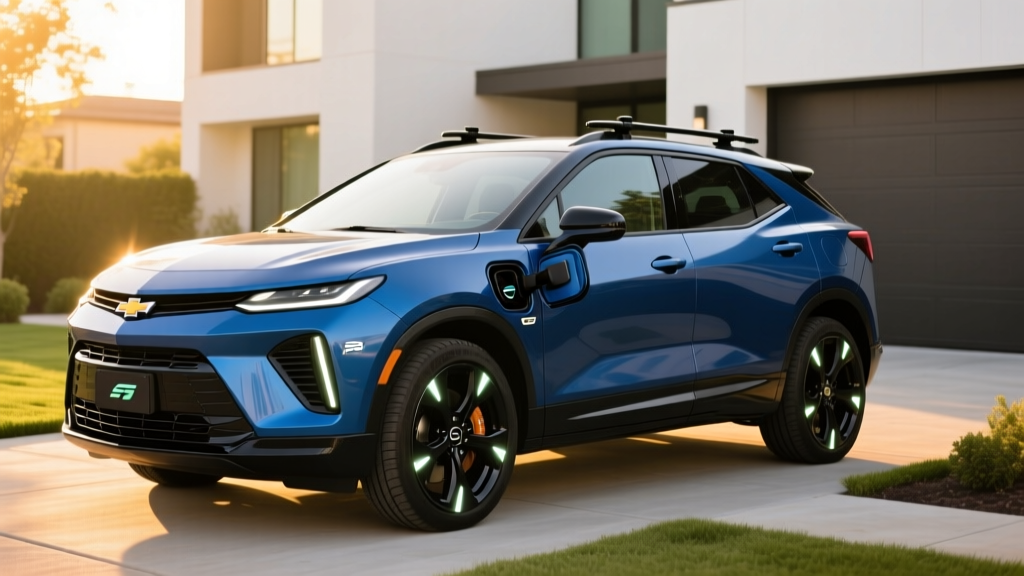
The 2024 Chevy Blazer EV RS arrived with promise — a midsize electric SUV on GM's Ultium platform, aggressive styling, and a dual-motor AWD powertrain pushing 557 horsepower in its top SS guise. But its debut year was marred by widely reported software glitches that forced GM to temporarily halt sales in early 2024. Now, with over-the-air updates addressing most of those issues, the Blazer EV RS is back on the road and back on dealer lots. For buyers willing to look past the rocky rollout, it offers competitive range, genuine family-hauling space, and a ride quality that prioritizes comfort over sportiness.
This review focuses on the RS trim — the volume seller in the Blazer EV lineup — covering its EPA-rated efficiency, real-world range behavior, DC fast-charging behavior, and whether the federal EV tax credit applies. We've driven it, charged it, and compared it against the Hyundai Ioniq 5, Ford Mustang Mach-E, and Tesla Model Y to help you decide.
Range, Battery, and Efficiency
The 2024 Blazer EV RS (AWD, dual-motor) carries a usable battery capacity of approximately 102 kWh using GM's Ultium NMC (nickel-manganese-cobalt) pouch-cell architecture. That's one of the largest packs in the midsize EV SUV segment, and it translates to serious range potential.
Real-World Expectation: Expect 240–260 miles in mixed highway/city driving at 70+ mph. In cold weather (below 30°F), plan for 195–225 miles depending on cabin heating use and whether you precondition the battery. The Blazer EV's large battery provides a buffer that smaller-pack rivals can't match in winter, but the vehicle's 5,700+ lb curb weight works against highway efficiency.
The EPA rates the Blazer EV RS AWD at approximately 98 MPGe combined, which equates to roughly 34 kWh per 100 miles. That's middling efficiency — the Hyundai Ioniq 5 AWD achieves 110 MPGe combined with a much smaller 77.4 kWh pack, thanks to lower weight and a heat pump that the Blazer EV lacks on some early builds.
| Spec | RS (AWD Dual-Motor) |
|---|---|
| EPA Range | 279 miles |
| Battery (usable) | ~102 kWh, NMC (Ultium) |
| MPGe (combined) | 98 MPGe |
| Energy consumption | ~34 kWh/100 mi |
| Heat pump | Not standard on all early builds |
Owner insight: The absence of a standard heat pump on some 2024 Blazer EV configurations means resistive cabin heating draws directly from the traction battery in winter, compounding cold-weather range loss. If you live in a northern climate, verify heat pump availability on your specific build or plan charging stops accordingly.
Charging Speed: DC Fast Charge and Home Level 2
Charging is where the Blazer EV's large battery becomes both an asset and a liability. More kWh means more range, but it also means longer fill times unless charge rates keep pace.
| Charging Level | Power (kW) | Speed / Time |
|---|---|---|
| Level 1 (120V household) | ~1.4 kW | ~3–4 mi/hr (emergency top-up only) |
| Level 2 (240V, 48A home charger) | 11.5 kW (max onboard) | ~30 mi/hr; full 0–100% in ~9.5 hours |
| DC Fast Charge (CCS) | Up to 190 kW peak | 10–80% in ~33 minutes |
Charging curve reality: The Blazer EV RS peaks at 190 kW on a capable DC fast charger, but like most EVs, it does not sustain that rate. Expect peak rates between 10–35% state of charge (SoC), tapering to roughly 120 kW by 50% SoC and dropping further to under 60 kW above 70% SoC. The 10–80% time of approximately 33 minutes is acceptable but trails the Hyundai Ioniq 5 (which peaks at 240 kW and does 10–80% in ~18 minutes on a 350 kW charger) and the Tesla Model Y (which leverages the Supercharger network for consistent 15–25 minute stops).
The Blazer EV uses the CCS1 connector for DC fast charging and the J1772 connector for AC Level 2. GM has committed to transitioning to the NACS (Tesla-style) connector for future models, and a NACS adapter is available for Blazer EV owners who want access to Tesla Superchargers — though adapter availability and compatibility should be confirmed with your dealer for the 2024 model year.
Home charging setup: The 11.5 kW onboard charger is robust. On a 48-amp Level 2 home charger (requiring a 60-amp dedicated circuit), you'll add roughly 30 miles of range per hour of charging. Most owners who charge overnight will wake up to a full battery. Installation costs for a 240V/60A circuit typically range from $500 to $2,000 depending on your electrical panel's capacity and the distance from panel to charger location — budget extra if your home needs a panel upgrade from 100A to 200A service.
Performance and Drivetrain
The 2024 Blazer EV RS comes standard with a dual-motor AWD powertrain producing 288 horsepower and 343 lb-ft of torque in the RS trim. That's adequate for daily driving and highway merging, delivering a 0–60 mph time in the low 6-second range.
For buyers seeking genuine performance, the Blazer EV SS (a separate trim, not the RS) cranks output to 557 horsepower and 648 lb-ft of torque via GM's "Wide Open Watts" (WOW) mode, achieving a 0–60 mph time of under 4 seconds. But the SS carries a significant price premium and sacrifices some range.
| Trim | Drivetrain | Horsepower | Torque (lb-ft) | 0–60 mph |
|---|---|---|---|---|
| 2LT (RWD) | Rear-wheel drive | 220 hp | 236 | ~7.5 sec |
| RS (AWD) | Dual-motor AWD | 288 hp | 343 | ~6.2 sec |
| SS (AWD) | Dual-motor AWD (WOW) | 557 hp | 648 | <4.0 sec |
On the road, the RS rides on GM's BEV3 platform with a low center of gravity courtesy of the underfloor battery pack. The suspension tuning is decidedly comfort-oriented — it soaks up highway expansion joints and potholes with ease, but don't expect the cornering flatness of a Model Y Performance. Steering is light and numb, which suits commuting but disappoints on back roads. Regenerative braking offers one-pedal driving capability, though the regen strength is less aggressive than competitors like the Nissan Ariya or Hyundai Ioniq 5 at their max settings.
Interior, Cargo, and Technology
The Blazer EV's cabin is where GM clearly aimed to differentiate from the Tesla Model Y's minimalist approach. The dashboard is dominated by a 17.7-inch diagonal infotainment touchscreen angled toward the driver, paired with an 11-inch digital instrument cluster. The system runs GM's latest Ultifi software platform (Linux-based), supporting wireless Apple CarPlay and Android Auto, Google Built-In navigation, and over-the-air updates.
Passenger space is generous, which matters for family buyers:
- Front legroom: 43.1 inches
- Rear legroom: 37.2 inches
- Front headroom: 40.3 inches
- Rear headroom: 38.5 inches
Cargo volume behind the second row measures approximately 25.5 cubic feet, expanding to 57.5 cubic feet with the rear seats folded. That's competitive with the Ford Mustang Mach-E (29.7 cu ft behind rear seats) and slightly behind the Model Y (30.2 cu ft, plus a front trunk). Notably, the Blazer EV does not offer a frunk (front trunk), which is a missed opportunity for an EV-dedicated platform.
Driver assistance technology includes GM's Super Cruise on properly equipped models — a SAE Level 2 hands-free driving system that operates on over 750,000 miles of mapped highways in North America. Super Cruise requires driver attention monitoring (via an infrared camera on the steering column) and does not handle city streets, construction zones, or unmapped routes. It is not autonomous driving. On non-Super Cruise roads, the Blazer EV includes a comprehensive ADAS suite: adaptive cruise control, lane-keep assist, automatic emergency braking, blind-spot monitoring, and rear cross-traffic alert.
Pricing, Trims, and Federal Tax Credit
The 2024 Blazer EV launched with several trim levels, though availability shifted during the year due to the software-related sales pause. Here's where pricing stands:
| Trim | Drivetrain | Base MSRP | Est. After §30D Credit* |
|---|---|---|---|
| 2LT | RWD | ~$56,595 | ~$49,095 |
| RS | AWD | ~$59,595 | ~$52,095 |
| SS | AWD | ~$65,995 | ~$58,495 |
*Tax credit estimates assume full $7,500 eligibility under IRS §30D. Eligibility depends on multiple factors — see checklist below.
- MSRP cap: SUVs must have an MSRP at or below $80,000 (all Blazer EV trims qualify).
- Buyer income cap: Modified AGI must not exceed $150,000 (single), $225,000 (head of household), or $300,000 (married filing jointly).
- Battery sourcing: A percentage of critical minerals and battery components must be sourced from the U.S. or FTA partners — these thresholds increase annually. Verify current-year compliance on the fueleconomy.gov credit lookup.
- Point-of-sale transfer: As of 2024, you can transfer the credit to the dealer at purchase, reducing your out-of-pocket cost immediately rather than waiting for tax filing.
- Final assembly: Must occur in North America (the Blazer EV is assembled in Ramos Arizpe, Mexico — verify current eligibility status, as this has been a point of regulatory review).
Consult a tax professional for your specific situation. Credit rules are subject to change.
Warranty and Ownership Costs
GM backs the Blazer EV with a competitive warranty package:
- Battery & propulsion system: 8 years / 100,000 miles (covers battery capacity loss below a defined threshold, typically 70% of original capacity)
- Limited vehicle warranty: 3 years / 36,000 miles
- Roadside assistance: 5 years / 60,000 miles
Insurance costs for the Blazer EV RS tend to run higher than its gas-powered counterpart — expect premiums 15–25% above a comparable Blazer gas model, consistent with the broader EV insurance premium trend. Get quotes before purchasing.
Maintenance savings are real: no oil changes, no transmission fluid, no spark plugs, and reduced brake wear thanks to regenerative braking. GM recommends a basic inspection and tire rotation every 7,500 miles.
Pros and Cons
Pros
- Large 102 kWh battery delivers genuine 240+ real-world miles
- Spacious cabin with 37+ inches of rear legroom
- Super Cruise availability for hands-free highway driving
- Comfortable, compliant ride quality
- 17.7-inch infotainment screen with Google Built-In
- Strong DC fast-charge rate (190 kW peak)
Cons
- Rocky launch-year software issues damaged early reputation
- No front trunk (frunk) — wasted EV packaging opportunity
- Efficiency lags lighter competitors (98 MPGe vs Ioniq 5's 110 MPGe)
- Heat pump not standard on all early configurations
- 10–80% DC charge time (~33 min) trails 800V rivals
- Assembly in Mexico complicates §30D tax credit eligibility
Who Should Buy the 2024 Blazer EV RS?
- Choose the Blazer EV RS if: You need a spacious, comfortable midsize EV SUV for family duties and highway commuting, you value Super Cruise for long road trips, and you can charge at home overnight. The large battery gives you a real-world safety net that smaller-pack rivals lack in winter.
- Look elsewhere if: Charging speed is your top priority (the Ioniq 5's 800V architecture charges significantly faster), you want maximum efficiency and lower operating costs, you need a frunk for gear, or you require guaranteed §30D tax credit eligibility (verify the Blazer EV's Mexico assembly status before committing).
- Consider the Blazer EV SS instead if: You want sports-car acceleration in an SUV body and are willing to sacrifice ~40 miles of range and pay a $6,000+ premium.
Frequently Asked Questions
What is the real-world range of the 2024 Chevy Blazer EV RS?
The EPA rates the RS AWD at 279 miles. In real-world mixed driving at highway speeds, expect 240–260 miles. In cold weather (below 30°F), range can drop to 195–225 miles, particularly if the vehicle lacks a heat pump. The large 102 kWh battery provides a useful buffer, but the Blazer EV's weight and aerodynamic profile hurt highway efficiency.
How fast does the Blazer EV charge?
On a DC fast charger, the Blazer EV RS peaks at 190 kW and achieves a 10–80% charge in approximately 33 minutes. At home on a 240V Level 2 charger (48A), it charges at up to 11.5 kW, adding about 30 miles of range per hour and reaching a full charge overnight in roughly 9.5 hours.
Does the 2024 Blazer EV qualify for the $7,500 federal tax credit?
Potentially, but it's complicated. The Blazer EV meets the MSRP cap (under $80,000 for SUVs), but its assembly in Ramos Arizpe, Mexico has raised questions about final-assembly and battery-sourcing requirements under IRS §30D. Always verify current eligibility on fueleconomy.gov and consult a tax professional before relying on the credit in your purchase decision.
Is the Blazer EV RS worth buying vs. the Tesla Model Y or Hyundai Ioniq 5?
The Blazer EV RS offers more interior space and a larger battery than the Ioniq 5, and a more traditional cabin layout than the Model Y. However, the Ioniq 5 charges significantly faster (18-minute 10–80% on 800V architecture), and the Model Y benefits from the Supercharger network and superior efficiency. If comfort, space, and Super Cruise matter most, the Blazer EV RS is competitive. If charging speed and efficiency are priorities, look at the Ioniq 5. If charging network reliability is paramount, the Model Y still leads.
What are the biggest problems with the 2024 Blazer EV?
The primary issue was launch-year software instability — infotainment freezes, charging communication errors, and phantom warning lights prompted GM to halt sales temporarily in early 2024. Multiple OTA updates have since addressed most of these issues, but early-build vehicles should be verified for the latest software version before purchase.