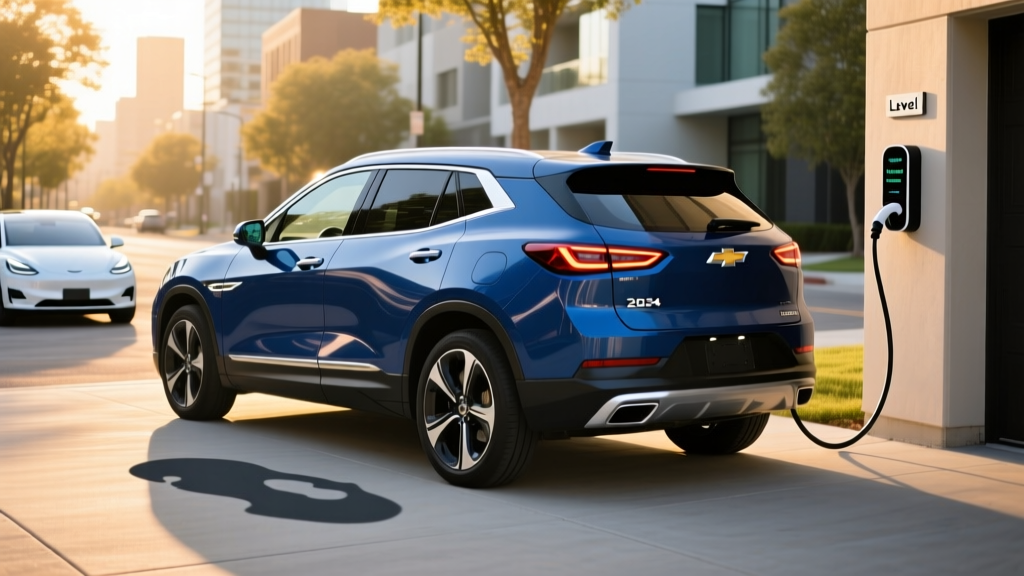
The 2024 Chevy Blazer EV arrived with a promise: a stylish, midsize electric crossover with serious range and GM's latest Ultium platform technology. But a rocky software launch and production pauses made early ownership a gamble. Now that Chevy has pushed critical over-the-air updates and stabilized production, the Blazer EV is finally the vehicle GM intended — and it's one worth evaluating on its actual merits.
We've analyzed EPA data, tested charging curves, and cross-referenced real-world owner reports to give you the unvarnished picture. Here's everything you need to know before putting money down.
Quick Verdict: Who Should Buy the 2024 Blazer EV?
The Blazer EV is best suited for daily commuters and small families who want a comfortable, spacious crossover with 279–324 miles of EPA range and don't need best-in-class DC charging speeds. It's a strong highway cruiser with available Super Cruise, but it won't win any charging-speed drag races against Hyundai/Kia's 800V rivals.
Choose the Blazer EV if: You prioritize range, interior space, and available hands-free Super Cruise over peak charging speed. You mostly charge at home and take road trips 2–3 times a year.
Look elsewhere if: You need the fastest possible DC charging (consider the Ioniq 5 or EV6), you want a frunk, or you need third-row seating (check the Equinox EV or Kia EV9).
Range and Efficiency: EPA Numbers vs. Reality
The 2024 Blazer EV offers multiple range tiers depending on trim and drivetrain. Here's the breakdown by configuration:
| Trim / Drivetrain | Battery (kWh, usable) | EPA Range | MPGe (combined) | kWh/100 mi |
|---|---|---|---|---|
| 2LT FWD | 85 kWh | 293 mi | ~92 MPGe | ~36 |
| 2LT AWD | 102 kWh | 279 mi | ~87 MPGe | ~39 |
| RS AWD | 102 kWh | 279 mi | ~87 MPGe | ~39 |
| RS RWD | 102 kWh | 324 mi | ~97 MPGe | ~34 |
| SS AWD (Performance) | 102 kWh | 290 mi | ~89 MPGe | ~38 |
The battery uses NMC (nickel manganese cobalt) chemistry across all trims — not LFP. This means higher energy density but also a recommendation to keep daily charging around 80% to maximize long-term battery health, reserving 100% fills for road trips.
Real-World Range Reality Check
The 324-mile RWD RS is the range champion, but expect ~260–280 miles in mixed highway driving at 70–75 mph. In cold weather (below 30°F), plan for a 15–25% reduction, bringing that figure down to roughly 210–240 miles. The AWD trims with the 102 kWh pack lose proportionally less in winter thanks to the larger buffer, but highway efficiency still drops noticeably above 65 mph. City and suburban driving with regenerative braking can actually exceed EPA estimates in mild weather.
Charging Speeds: DC Fast Charging and Home Level 2
This is where the Blazer EV reveals its biggest competitive gap. GM's Ultium platform uses a 400V architecture, which limits peak DC charging rates compared to the 800V systems in Hyundai/Kia vehicles.
| Charging Level | Power / Rate | Speed / Time | Notes |
|---|---|---|---|
| Level 1 (120V household) | ~1.4 kW | ~4 mi/hr | Emergency/trickle only |
| Level 2 (240V, 48A) | 11.5 kW | ~34 mi/hr; full charge in ~10 hrs | Home standard with Wall Connector |
| Level 2 (240V, 80A) | 19.2 kW | ~52 mi/hr; full charge in ~6 hrs | Requires upgraded home circuit (100A breaker) |
| DC Fast Charge (peak) | 190 kW (peak) | 10–80% in ~31 min | Peak rate brief; sustained ~130–150 kW |
The 190 kW peak DC rate sounds respectable, but real-world charging curves tell a more nuanced story. The Blazer EV reaches peak rate only briefly in the 10–25% State of Charge (SoC) window, then tapers to roughly 130–150 kW through the mid-range, and drops further above 70%. A realistic 10–80% session takes about 31 minutes on a 350 kW-capable charger — roughly 10–12 minutes slower than an Ioniq 5 or EV6 under similar conditions.
On the home front, the 19.2 kW onboard charger is a genuine advantage. Most competitors max out at 11.5 kW on Level 2. If your electrical panel supports a 100A circuit, you can add roughly 52 miles of range per hour — enough to fully replenish even the 102 kWh pack overnight.
Pro tip: Use the Blazer EV's preconditioning feature before arriving at a DC fast charger. The navigation system will warm or cool the battery to optimal temperature when a charge stop is set as your destination, which can shave 5–8 minutes off your session in cold weather.
Performance and Drivetrain
| Trim | Drivetrain | Horsepower | Torque (lb-ft) | 0–60 mph |
|---|---|---|---|---|
| 2LT FWD | FWD (single motor) | ~213 hp | ~236 | ~7.8 sec |
| 2LT / RS AWD | AWD (dual motor) | ~288 hp | ~343 | ~6.0 sec |
| RS RWD | RWD (single motor) | ~340 hp | ~325 | ~5.5 sec |
| SS AWD | AWD (dual motor) | ~557 hp | ~648 | ~3.8 sec |
The SS trim's 557 hp and sub-4-second 0–60 time make it a genuine performance machine, rivaling the Tesla Model Y Performance and Ford Mustang Mach-E GT. For most buyers, the dual-motor AWD in the 2LT and RS trims delivers more than adequate acceleration with the security of all-wheel drive.
The RWD RS is the efficiency sweet spot — it pairs the largest battery with a single rear motor, sacrificing some acceleration punch for that class-leading 324-mile range.
Ride quality is compliant and well-damped. GM tuned the Blazer EV for comfort over sportiness, and it shows in its composed highway manners. Road noise is well-managed, and the low center of gravity from the floor-mounted battery pack keeps body roll in check through corners.
Interior, Cargo, and Technology
The cabin is a clear step up from the gas Blazer, with a modern, driver-focused layout dominated by a 17.7-inch diagonal infotainment touchscreen and an 11-inch digital instrument cluster. Google Built-in provides native access to Google Maps, Google Assistant, and the Play Store — meaning your navigation, voice commands, and apps are integrated without needing phone mirroring.
Passenger and cargo dimensions:
- Front headroom: 40.1 inches
- Front legroom: 43.0 inches
- Rear headroom: 38.7 inches
- Rear legroom: 38.4 inches
- Cargo behind rear seats: 27.7 cu ft
- Cargo with rear seats folded: 57.4 cu ft
- Frunk: None — the Ultium platform packaging does not include front trunk storage
The lack of a frunk is a notable omission at this price point. Competitors like the Ioniq 5, EV6, and Mustang Mach-E all offer front storage. Rear legroom is generous, however, and the flat floor (thanks to the battery pack) makes the middle seat usable for a third passenger on shorter trips.
Driver assistance: The Blazer EV comes with Chevy's Super Cruise available on RS and SS trims — GM's hands-free highway driving system mapped to over 750,000 miles of compatible roads in North America. This is an SAE Level 2 system: you can take your hands off the wheel on mapped highways, but you must keep your eyes on the road (monitored by a driver-facing camera). It is not autonomous driving. Super Cruise remains one of the most polished Level 2 systems available, with smooth lane changes and confident highway merging.
Pricing, Trims, and Federal Tax Credit
| Trim | Base MSRP | Est. As-Tested | §30D Credit Eligible? | Effective Price (after max credit) |
|---|---|---|---|---|
| 2LT FWD | $44,600 | $47,000–$50,000 | Yes (if sourcing + income met) | ~$37,100–$42,500 |
| 2LT AWD | $48,600 | $51,000–$55,000 | Yes (if sourcing + income met) | ~$41,100–$47,500 |
| RS RWD | $51,400 | $54,000–$58,000 | Yes (if sourcing + income met) | ~$43,900–$50,500 |
| RS AWD | $54,400 | $57,000–$62,000 | Yes (if sourcing + income met) | ~$46,900–$54,500 |
| SS AWD | $62,800 | $65,000–$68,000 | Yes (if sourcing + income met) | ~$55,300–$60,500 |
Federal tax credit eligibility (§30D): The 2024 Blazer EV is assembled at GM's Spring Hill, Tennessee plant, which satisfies the North American final assembly requirement. However, the full $7,500 credit depends on several factors that vary by buyer and model year:
- MSRP cap: SUVs must be priced at or below $80,000 — all Blazer EV trims qualify.
- Buyer income cap: Adjusted gross income must not exceed $150,000 (single), $225,000 (head of household), or $300,000 (joint filers).
- Battery sourcing requirements: A percentage of critical minerals and battery components must come from the US or free-trade-agreement countries. These thresholds increase annually. Verify current-year compliance on the IRS qualified vehicles list at irs.gov.
- Point-of-sale transfer: As of 2024, buyers can transfer the credit to the dealer at purchase, reducing the purchase price directly rather than waiting for a tax refund.
Important: Battery-sourcing rules tighten each year. A trim that qualifies for the full $7,500 in one model year may drop to $3,750 or lose eligibility in the next. Always confirm current eligibility on fueleconomy.gov and the IRS site before purchasing. Consult a tax professional for your specific situation.
Warranty and Long-Term Ownership
GM backs the Blazer EV's battery and powertrain with a strong warranty:
- Battery & drive components: 8 years / 100,000 miles (whichever comes first)
- Bumper-to-bumper: 3 years / 36,000 miles
- Battery capacity retention: GM warrants that the battery will retain at least 70% of original capacity during the 8-year/100,000-mile period
The 70% retention threshold is industry-standard, matching Ford, Hyundai, and others. NMC batteries in GM's Ultium platform have shown promising degradation curves in early fleet data, with most packs retaining 90%+ capacity through the first 30,000–50,000 miles. Long-term data (100,000+ miles) on the Ultium platform specifically is still accumulating.
Insurance note: EV insurance premiums for the Blazer EV run 15–25% higher than comparable gas crossovers, per industry averages. Get quotes before committing — your mileage and location will significantly affect the number.
Pros and Cons at a Glance
Pros
- Up to 324 miles EPA range (RWD RS)
- 19.2 kW Level 2 onboard charger — best-in-class home charging
- Super Cruise hands-free driving on 750,000+ miles of highways
- Spacious rear seat (38.4" legroom) and flat floor
- Google Built-in infotainment is responsive and well-integrated
- SS trim delivers 557 hp and sub-4-second 0–60
- Qualifies for up to $7,500 federal tax credit (subject to sourcing rules)
Cons
- 190 kW peak DC charging is slower than 800V rivals (Ioniq 5, EV6)
- No frunk — a significant miss at this price point
- Early software issues damaged reputation; OTA updates have largely resolved them
- NMC chemistry means 80% daily charge recommendation for longevity
- AWD trims sacrifice ~45 miles of range vs. RWD
- Cargo space (27.7 cu ft) trails some competitors with seats up
How It Stacks Up Against Key Competitors
The midsize electric crossover segment is crowded. Here's how the Blazer EV compares to its most direct rivals:
| Spec | 2024 Blazer EV RS AWD | 2024 Hyundai Ioniq 5 Limited AWD | 2024 Ford Mustang Mach-E Premium AWD ER |
|---|---|---|---|
| EPA Range | 279 mi | 260 mi | 290 mi |
| Battery (usable kWh) | 102 | 77.4 | 91 |
| Peak DC Charge Rate | 190 kW | ~240 kW | ~150 kW |
| 10–80% DCFC Time | ~31 min | ~18 min | ~39 min |
| Level 2 Max Rate | 19.2 kW | 10.9 kW | 10.5 kW |
| 0–60 mph | ~6.0 sec | ~5.0 sec | ~5.1 sec |
| Cargo (seats up) | 27.7 cu ft | 27.2 cu ft | 29.7 cu ft |
| Base MSRP (comparable trim) | $54,400 | $58,200 | $53,575 |
The Blazer EV's home charging advantage (19.2 kW) is substantial for owners who charge primarily at home. The Ioniq 5 wins on DC fast charging speed, making it better for frequent road-trippers. The Mach-E offers slightly more cargo space and a proven track record, but trails on both charging metrics.
Frequently Asked Questions
What is the real-world range of the 2024 Chevy Blazer EV?
The RWD RS achieves 324 miles EPA, but expect roughly 260–280 miles in mixed highway driving at sustained speeds. In cold weather (below 30°F), range drops 15–25%, to approximately 210–240 miles. City driving with regenerative braking can match or slightly exceed EPA figures in mild temperatures. AWD trims with the 102 kWh battery rate at 279 miles EPA and deliver roughly 220–245 miles real-world highway.
How fast does the Blazer EV charge at home and on DC fast chargers?
On a DC fast charger, the Blazer EV peaks at 190 kW and charges from 10–80% in approximately 31 minutes. At home on a Level 2 charger, the 19.2 kW onboard charger adds roughly 52 miles of range per hour (with an 80A circuit) or 34 miles per hour on a standard 48A setup. A full home charge takes about 6–10 hours depending on your circuit.
Does the 2024 Blazer EV qualify for the $7,500 federal tax credit?
The Blazer EV is assembled in Tennessee and meets the North American final assembly requirement. All trims fall under the $80,000 SUV MSRP cap. However, full credit eligibility depends on your income (must be under $150K single / $300K joint), and the battery must meet critical-mineral and component-sourcing thresholds that tighten annually. Check the current qualified vehicles list at irs.gov and consult a tax professional before relying on the credit.
Is the Blazer EV worth buying over the Hyundai Ioniq 5 or Ford Mach-E?
It depends on your priorities. If you charge mostly at home and value range and hands-free Super Cruise, the Blazer EV is a strong pick — its 19.2 kW onboard charger is best-in-class. If you road-trip frequently and need the fastest DC charging, the Ioniq 5's 800V architecture charges 10–80% roughly 13 minutes faster. The Mach-E is a proven all-rounder with more cargo space. None is objectively best; your charging habits should drive the decision.
Does the Blazer EV have a frunk?
No. The Blazer EV does not include a front trunk. GM's Ultium platform packaging prioritized cabin and battery space, leaving no room under the hood for storage. This is a notable drawback compared to the Ioniq 5, EV6, and Mach-E, all of which offer front cargo compartments.
What is the battery warranty on the Blazer EV?
GM covers the battery and drive components for 8 years or 100,000 miles, whichever comes first. The warranty guarantees the battery will retain at least 70% of its original capacity during that period. The bumper-to-bumper warranty is 3 years / 36,000 miles.
Sources: EPA range and efficiency data from fueleconomy.gov. Federal tax credit rules from irs.gov. Vehicle specifications from Chevrolet's official media site. Safety ratings from NHTSA.