Quick Verdict: The Silverado EV RST at a Glance
The 2024 Chevrolet Silverado EV RST is the launch edition of GM's ground-up electric full-size pickup, built on the Ultium platform shared with the GMC Sierra EV and Cadillac Escalade IQ. With an EPA-estimated 440 miles of range, 664 horsepower, and a maximum towing capacity of 10,000 pounds, it targets buyers who need truck capability without sacrificing daily-drivable efficiency. The RST trim launched at a premium price point — roughly $87,300 before destination — placing it squarely against the Ford F-150 Lightning Platinum and Rivian R1T, though its range and charging architecture give it distinct advantages for road-trippers and heavy commuters alike.
This review covers the 2024 model year RST, the only trim available at launch. The more affordable WT (Work Truck) and lower-priced trims followed in subsequent model years. If you're evaluating this truck in the current market, understanding its real-world range behavior, charging curve realities, and tax credit positioning is essential before signing any paperwork.
Range & Efficiency: 440 EPA Miles, But What About the Real World?
EPA Estimate: 440 miles
Highway driving (70-75 mph): Expect ~340–370 miles
Cold weather (below 32°F): Expect ~300–340 miles (20–30% reduction)
Mixed city/highway (moderate temps): ~380–410 miles
The Silverado EV RST's massive battery gives it a substantial buffer, but aerodynamic drag at highway speeds and cold-weather battery chemistry limitations apply to every EV this size.
The 2024 Silverado EV RST carries a usable battery capacity of approximately 200 kWh — one of the largest packs in any production light-duty vehicle. GM uses NMC (nickel manganese cobalt) chemistry in the Ultium platform, prioritizing energy density over the longer cycle life of LFP. That trade-off makes sense here: fitting 200 kWh into a truck platform requires the volumetric and gravimetric density that NMC provides.
On the EPA combined cycle, the RST achieves 440 miles, translating to roughly 51 MPGe combined or about 65 kWh per 100 miles driven. That efficiency figure is impressive for a 9,000+ pound vehicle, but it also means each mile costs more in electricity than a lighter EV like the Hyundai Ioniq 5 or Tesla Model Y. At a national average of $0.16/kWh for home charging, you're looking at roughly $10.40 per 100 miles — still dramatically less than a gas Silverado 1500 at $16–$20 per 100 miles depending on fuel prices.
Charging Speed & Infrastructure
| Level | Power | Miles Added per Hour | Notes |
|---|---|---|---|
| Level 1 (120V) | ~1.4 kW | ~2 mi/hr | Emergency/trickle only; full charge in ~6 days |
| Level 2 (240V, 48A) | 11.5 kW | ~17 mi/hr | Full charge in ~17–18 hours |
| Level 2 (240V, 80A) | 19.2 kW | ~29 mi/hr | Requires compatible wall connector + 100A circuit |
| DC Fast Charge | Peak 350 kW | N/A (time-based) | 10–80% in ~45 min (see curve notes below) |
The Silverado EV RST supports DC fast charging at up to 350 kW on compatible CCS-equipped chargers (via the Ultium platform's 800V-class architecture). However, peak rate is not sustained rate. In practice, the truck holds strong charging speeds through the 10–50% state of charge window, then progressively tapers. Expect a 10–80% charge in approximately 45 minutes at a 350 kW-capable station. On more common 150 kW chargers, plan for closer to 60–70 minutes for the same session.
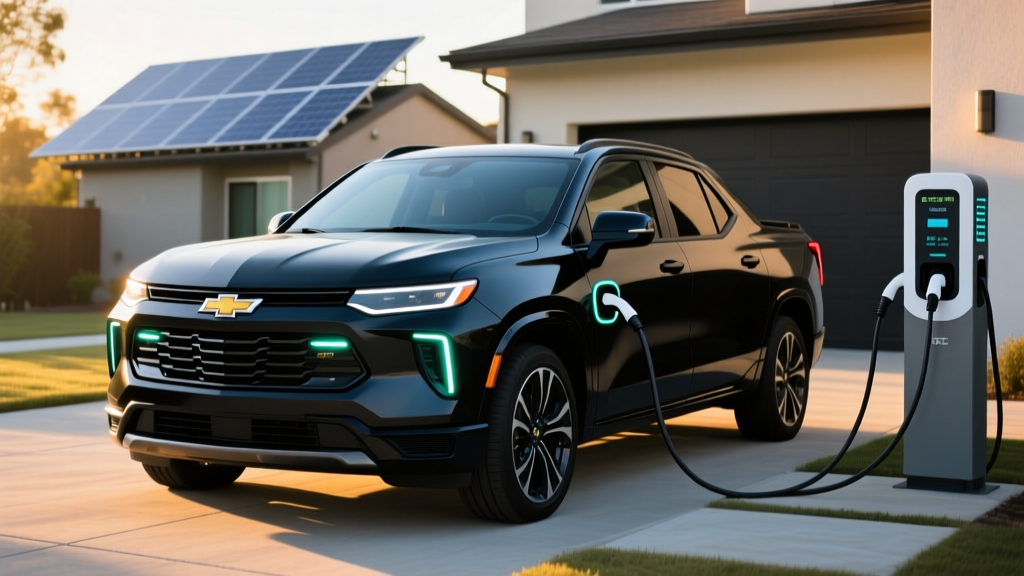
Home charging is where the 200 kWh battery presents a real challenge. On a standard 48-amp Level 2 home charger (11.5 kW), a full depleted-to-full charge takes roughly 17–18 hours. That's fine for daily top-ups if you're only using 80–100 miles per day, but recovering from a long road trip requires patience. If your electrical panel supports it, upgrading to an 80-amp circuit with a 19.2 kW charger cuts that to roughly 10–11 hours — a worthwhile investment for heavy-use owners.
The RST uses the CCS1 connector for DC fast charging and J1772 for Level 2 AC. GM has announced a transition to NACS (Tesla's connector) for future model years, but 2024 models ship with CCS. Adapters for Tesla Supercharger access are available and expanding network compatibility.
Performance & Drivetrain
| Metric | Value |
|---|---|
| Drivetrain | Dual-motor AWD (e4WD) |
| Horsepower | 664 HP (Wide Open Watts mode) |
| Torque | 780 lb-ft |
| 0–60 mph | ~4.5 seconds |
| Max Towing | 10,000 lbs (with max trailering pkg) |
| Payload | ~1,300 lbs |
| Ground Clearance | ~10.8 inches (with air suspension) |
The dual-motor all-wheel-drive system delivers instant torque to all four wheels, and GM's Wide Open Watts (WOW) mode unlocks the full 664 horsepower for maximum acceleration. A 4.5-second 0–60 time in a full-size pickup is genuinely startling — this is sports-car territory from two decades ago in a vehicle that weighs over four tons.
The available air suspension adjusts ride height for highway efficiency, off-road clearance, or bed-loading convenience. Towing at the 10,000-pound maximum will significantly impact range — expect a 40–50% reduction, bringing effective range to roughly 200–260 miles depending on trailer aerodynamics and terrain. This is a common reality for all electric trucks and remains the primary limitation for heavy-towing use cases.
Interior, Tech & Cargo
The RST trim is positioned as the premium consumer offering, and the interior reflects that. A 17.7-inch diagonal infotainment touchscreen dominates the dashboard, paired with an 11-inch driver instrument cluster. The system runs GM's latest Ultifi software platform with Google Built-In (Maps, Assistant, Play Store), wireless Apple CarPlay and Android Auto, and over-the-air update capability.
The Silverado EV's most distinctive feature is the MidGate — a pass-through between the bed and cabin that allows the truck to carry items up to roughly 10 feet long with the tailgate closed (or nearly 11 feet with it open). This is a genuine functional advantage over conventional truck beds for hauling lumber, kayaks, or ladders.
Cargo and passenger dimensions:
- Bed length: 5'11" (standard), extends to ~9' with MidGate open
- Front trunk (frunk): ~10.7 cu ft — lockable, weather-sealed, with drain plug
- Front legroom: ~44.5 inches
- Rear legroom: ~43.4 inches
- Crew cab seating: 5 passengers
The frunk is a significant practical benefit, providing secure, enclosed storage that a gas truck simply can't match. It's ideal for tools, groceries, or charging cables.
Driver Assistance & Safety Technology
Super Cruise is a Level 2 driver-assistance system, not self-driving. You must remain attentive, keep your eyes on the road, and be prepared to take over at any time. The system monitors driver attention via an infrared camera on the steering column. Hands-free operation on pre-mapped divided highways does not mean the vehicle is autonomous.
The 2024 Silverado EV RST comes equipped with Super Cruise, GM's hands-free highway driving system that operates on over 750,000 miles of compatible roads in North America (source). It handles steering, acceleration, and braking on divided highways, with automatic lane changes on newer iterations. It remains one of the most capable Level 2 systems available, alongside Ford's BlueCruise and Tesla's Autopilot.
Standard safety features include Chevy Safety Assist: automatic emergency braking, forward collision alert, lane keep assist with lane departure warning, following distance indicator, and IntelliBeam automatic high beams. The truck also offers Enhanced Super Cruise with trailering capability — allowing hands-free driving while towing a compatible trailer on mapped highways.
Pricing, Tax Credits & Ownership Costs
| Item | Amount |
|---|---|
| Base MSRP (RST First Edition) | ~$87,300 |
| Destination charge | ~$1,995 |
| As-tested (typical options) | $89,000–$93,000 |
| Federal §30D tax credit | Up to $7,500 (see eligibility below) |
| Effective price (with full credit) | ~$81,800–$85,500 |
Federal tax credit eligibility requires careful evaluation. Under current IRS §30D rules (source), the Silverado EV RST qualifies as a light truck, meaning the MSRP cap is $80,000 for trucks, vans, and SUVs. However, the RST First Edition's MSRP of ~$87,300 exceeds this cap, which disqualifies it from the federal credit in its launch configuration. Lower-priced trims introduced in subsequent model years (WT, LT) were positioned to fall under the cap.
Additional §30D requirements that apply regardless of MSRP:
- Buyer income caps: Modified AGI ≤ $300,000 (joint), $225,000 (head of household), $150,000 (single)
- Battery sourcing: Critical minerals and battery component percentages must meet annual thresholds (increasing yearly through 2032)
- Point-of-sale transfer: Eligible buyers can transfer the credit to the dealer at purchase for an immediate price reduction
- Assembly: Vehicle must undergo final assembly in North America (the Silverado EV is built at GM's Factory ZERO in Detroit — this requirement is met)
Always verify current-year eligibility with a tax professional and check your specific VIN on the IRS clean vehicle credit portal before relying on the credit in your purchase decision.
5-Year Ownership Cost Estimate
| Category | Estimate |
|---|---|
| Electricity (home charging, $0.16/kWh avg) | ~$7,800 |
| Insurance (national avg EV premium) | ~$14,000–$18,000 |
| Maintenance (no oil changes, fewer brake replacements) | ~$2,500–$3,500 |
| Depreciation (estimated 5-yr) | ~$35,000–$42,000 |
| Total (excl. purchase price) | ~$59,300–$71,300 |
Insurance remains a notable cost factor. EV pickups carry higher premiums than their gas counterparts due to repair complexity, battery replacement costs, and higher initial vehicle values. Budget $230–$300/month depending on your state and driving record.
Warranty Coverage
| Coverage | Term |
|---|---|
| Battery (capacity retention ≥70%) | 8 years / 100,000 miles |
| Powertrain (motors, power electronics) | 5 years / 60,000 miles |
| Bumper-to-bumper | 3 years / 36,000 miles |
| Corrosion | 6 years / 100,000 miles |
| Roadside assistance | 5 years / 60,000 miles |
GM guarantees the Ultium battery will retain at least 70% of its original capacity over 8 years or 100,000 miles. Given the 440-mile starting range, that means the battery should still deliver ~308 miles even at the warranty threshold. Out-of-warranty battery replacement for a 200 kWh pack is a significant expense — industry estimates place it in the $25,000–$35,000 range, though costs are expected to decline as battery manufacturing scales.
Pros, Cons & Who Should Buy
- Class-leading 440-mile EPA range
- MidGate provides unmatched bed flexibility
- 350 kW DC fast charging capability
- Super Cruise hands-free highway driving
- Massive frunk for secure storage
- 4.5-second 0–60 with 664 HP
- Bidirectional charging (V2L/V2H capable)
- RST First Edition exceeds $80K MSRP cap — no federal tax credit
- 200 kWh battery means very long home charge times
- Premium pricing vs. F-150 Lightning and Rivian R1T
- Towing drastically reduces range (200–260 mi loaded)
- CCS connector (NACS adapter required for Superchargers)
- Heavy curb weight impacts tire wear and efficiency
- Limited initial availability; long wait times at launch
Who This Truck Suits Best
- You commute 80–150 miles daily and want to charge only at home overnight
- You need a full-size truck bed with creative cargo solutions (MidGate)
- You take regular road trips and value range over everything else
- Super Cruise compatibility matters for your highway-heavy commute
- You want bidirectional power for job-site tools or home backup (V2L/V2H)
- You tow heavy loads frequently (range penalty is severe for all EV trucks)
- You need the federal tax credit to make the math work — consider the WT or LT trims at lower MSRPs
- You don't have reliable home charging access (a 200 kWh battery is impractical on public Level 2 alone)
- Budget is under $70,000 — the F-150 Lightning XLT or Lariat may fit better
Frequently Asked Questions
What is the real-world range of the 2024 Silverado EV RST?
The EPA rates it at 440 miles combined. In real-world highway driving at 70–75 mph, expect 340–370 miles. In cold weather below freezing, plan for 300–340 miles. The large battery provides a generous buffer, but physics still applies — speed, temperature, and terrain all reduce range from the sticker number.
How fast does the Silverado EV RST charge at home and on the road?
At home on a 48-amp Level 2 charger, you'll add about 17 miles per hour (11.5 kW), requiring 17–18 hours for a full charge. On an 80-amp circuit at 19.2 kW, that drops to about 10–11 hours. On DC fast chargers, the truck peaks at 350 kW and charges from 10–80% in approximately 45 minutes on a 350 kW station, or 60–70 minutes on a 150 kW station.
Does the 2024 Silverado EV RST qualify for the federal EV tax credit?
The RST First Edition's MSRP of approximately $87,300 exceeds the IRS §30D truck MSRP cap of $80,000, making it ineligible for the $7,500 federal credit in that specific trim. Lower-priced trims introduced later may qualify, subject to buyer income limits, battery sourcing requirements, and North American final assembly. Always verify with the IRS clean vehicle credit page and a tax professional.
Is the Silverado EV RST worth buying vs. the Ford F-150 Lightning or Rivian R1T?
It depends on your priorities. The Silverado EV RST wins on range (440 mi vs. Lightning's ~320 mi extended range) and bed versatility (MidGate). The F-150 Lightning wins on pricing (starting ~$55K) and tax credit eligibility. The Rivian R1T wins on off-road capability and adventure-oriented design but seats only five in a smaller footprint and starts around $73,000. If range and highway tech are paramount, the Silverado EV RST has a strong case.
What happens to the battery after the warranty expires?
GM's Ultium battery is designed for long-term durability with active thermal management. Industry data on similar NMC packs suggests 10–15% degradation over 150,000–200,000 miles is typical. After the 8-year/100,000-mile warranty, you own the risk. A full pack replacement could cost $25,000–$35,000, though module-level repairs may be possible at lower cost. Battery prices continue to decline, so future replacement costs may be lower than today's estimates.
Can the Silverado EV RST power my home during an outage?
Yes. The truck supports V2H (vehicle-to-home) bidirectional charging when paired with GM's Energy Transfer Pro accessory and a compatible home energy management system. With a 200 kWh battery, the truck could theoretically power an average US home (~30 kWh/day) for approximately 5–6 days. This requires professional installation and coordination with your utility.