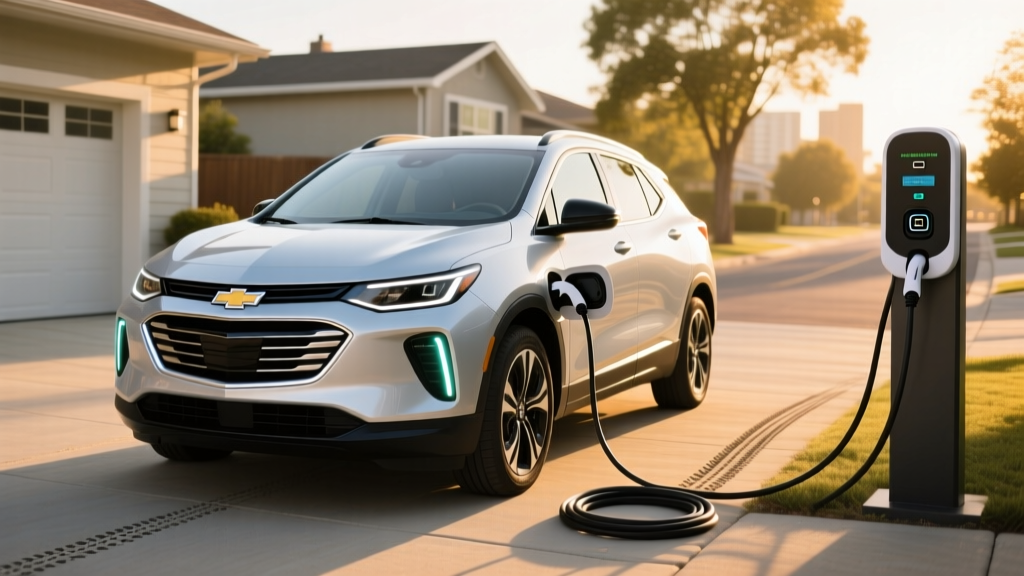
The 2024 Chevrolet Equinox EV arrived with a bold promise: an affordable, long-range electric crossover built on GM's Ultium platform that doesn't feel like a compromise. After spending time with the specs, charging data, and real-world efficiency numbers, the Equinox EV largely delivers — though buyers need to understand exactly which trim gets the headline range and what trade-offs come with the lower price point.
This is the first mainstream compact electric SUV from Chevrolet aimed squarely at the mass market — undercutting the Tesla Model Y, Ford Mustang Mach-E, and Hyundai Ioniq 5 on price while offering competitive range. Here's everything you need to know before buying.
Range and Efficiency: EPA Numbers vs. Real-World Reality
Real-World Expectation: Plan for 260–285 miles in mixed highway driving (65–75 mph). Cold-weather drivers should budget 20–30% range loss below freezing, bringing effective range to roughly 200–230 miles in winter conditions.
The headline 319-mile EPA figure applies specifically to the RS trim with front-wheel drive and the full 85 kWh usable battery. The LT trim with its smaller battery pack nets 285 miles, while adding all-wheel drive drops range to 271–285 miles depending on trim and wheel size.
Efficiency lands at approximately 3.0–3.4 kWh per mile (roughly 98–114 MPGe combined, per fueleconomy.gov). That's respectable for a 4,700-pound crossover but trails the Hyundai Ioniq 5's efficiency. On highway-heavy road trips at 75 mph, expect consumption to climb — the Equinox EV's boxy shape creates more aerodynamic drag than sleeker competitors.
Battery, Platform, and Chemistry
| Spec | Detail |
|---|---|
| Platform | GM Ultium (BEV3) |
| Battery Capacity (Usable) | ~85 kWh (RS/AWD) / ~72 kWh (LT FWD) |
| Chemistry | NMC (Nickel Manganese Cobalt) — Ultium pouch cells |
| Thermal Management | Active liquid cooling/heating |
| Battery Warranty | 8 years / 100,000 miles |
| Warranty Capacity Threshold | Retains ≥60% of original capacity |
The Equinox EV uses GM's Ultium battery architecture with NMC pouch cells — not the LFP chemistry found in some Tesla and Ford models. NMC offers higher energy density (more range per pound) but is more sensitive to sustained 100% state-of-charge storage. For daily driving, GM recommends charging to 80–90% and only hitting 100% before long trips.
The liquid thermal management system includes battery preconditioning for DC fast charging, which warms or cools the pack to optimal temperature before you arrive at a charger. This matters — without preconditioning, cold-soaked batteries can charge at half their rated speed.
Charging Speed: DC Fast, Level 2, and Level 1
| Level | Power | Speed / Time |
|---|---|---|
| DC Fast Charge (Peak) | 150 kW | 10–80% in ~30 minutes; ~70 miles in 10 min |
| Level 2 (Home/Public AC) | 11.5 kW (48A) | ~34 miles of range per hour |
| Level 2 (Optional 19.2 kW) | 19.2 kW (80A) | ~56 miles of range per hour |
| Level 1 (120V Household) | ~1.4 kW | ~4 miles of range per hour |
The 150 kW peak DC fast-charge rate is the Equinox EV's most notable limitation versus competitors. The Hyundai Ioniq 5 peaks at 240 kW (with its 800V architecture), and the Tesla Model Y can sustain high charge rates on the Supercharger network. At 150 kW, the Equinox EV's 10–80% session takes about 30 minutes — adequate for road trips but not class-leading.
The charge curve matters here. Expect peak 150 kW only between roughly 10–30% state-of-charge. Above 50%, the rate tapers progressively, dropping below 80 kW past 70% SoC. This is typical NMC behavior, but it means the last 20% of a charge session takes disproportionately long. On road trips, plan your stops around 10–80% sessions rather than topping off to full.
At home, the standard 11.5 kW onboard charger replenishes the battery overnight — roughly 9–10 hours for a full charge from near-empty on the larger pack. The optional 19.2 kW charger (available on RS trims) cuts that to about 5.5 hours but requires a dedicated 100-amp circuit, which adds significant installation cost.
The Equinox EV ships with a NACS (Tesla-style) charge port on 2024 models built after mid-2024, granting native access to Tesla Superchargers. Earlier 2024 production units have CCS1 with a NACS adapter included. Confirm your build's port type before purchase.
Performance and Drivetrain
| Metric | FWD | AWD (RS) |
|---|---|---|
| Horsepower | 213 hp | 288 hp |
| Torque | 236 lb-ft | 325 lb-ft |
| 0–60 mph | ~8.5 seconds | ~5.9 seconds |
| Drivetrain | Single motor, front | Dual motor, front + rear |
| Towing Capacity | Not rated | Not rated |
The Equinox EV is not a performance vehicle — and it doesn't pretend to be. The FWD models prioritize efficiency and range, delivering adequate acceleration for merging and passing but nothing thrilling. The AWD RS with its dual-motor setup is genuinely quick, hitting 60 mph in under six seconds, which makes highway overtaking effortless.
Ride quality is composed, with the heavy battery pack mounted low giving the crossover a planted feel through corners. Regenerative braking offers multiple levels selectable via steering-wheel paddles, and a one-pedal driving mode is available for stop-and-go commuting. The brake pedal feel is better-calibrated than early GM EVs (looking at you, first-gen Bolt), with a more natural transition between regen and friction braking.
Pricing, Trims, and Federal Tax Credit Eligibility
| Trim | MSRP | Est. After §30D Credit* |
|---|---|---|
| 2LT (FWD) | $33,600 | ~$26,100 |
| 3LT (FWD) | $35,600 | ~$28,100 |
| 2RS (FWD) | $41,900 | ~$34,400 |
| 3RS (AWD) | $43,400 | ~$35,900 |
| Launch Edition 3RS (AWD) | $43,900 | ~$36,400 |
*Federal §30D credit eligibility depends on multiple factors. The Equinox EV qualifies as an SUV under IRS rules, so the MSRP cap is $80,000 — all trims clear that threshold. However, buyer income caps apply ($150,000 single / $300,000 joint AGI), and battery component and critical mineral sourcing requirements must be met. The credit can now be transferred to the dealer at point of sale as an instant discount. Always verify current eligibility with your tax professional and the IRS §30D guidelines before purchase.
The 2LT at $33,600 (before destination) is the value play — it undercuts nearly every competitor with 285 miles of range and a well-equipped interior. The 3RS AWD at $43,400 pushes into Model Y territory but adds the dual-motor performance and full 319-mile range isn't available here (AWD trims max at 285 miles).
Interior Space, Cargo, and Technology
The Equinox EV's cabin is its strongest differentiator against the price competition. The flat Ultium skateboard platform frees up interior volume that gas-powered compact SUVs can't match.
| Dimension | Measurement |
|---|---|
| Front Legroom | 43.7 inches |
| Rear Legroom | 37.8 inches |
| Cargo (Behind Rear Seats) | 26.4 cu ft |
| Cargo (Seats Folded) | 57.2 cu ft |
| Front Trunk (Frunk) | Not available |
Rear-seat space is generous for two adults, though the floor-mounted battery does raise the seat height slightly compared to the gas Equinox. The absence of a frunk is a missed opportunity — competitors like the Ioniq 5 and Model Y both offer front storage.
The infotainment system centers on a 17.7-inch diagonal touchscreen (11.3-inch on 2LT) running GM's latest Google Built-in interface. This means native Google Maps navigation, Google Assistant voice control, and access to the Play Store for apps — no phone mirroring required. Wireless Apple CarPlay and Android Auto are standard across all trims.
The Super Cruise hands-free driver-assistance system is available on 3RS trims. This is a SAE Level 2 system — it handles steering, acceleration, and braking on pre-mapped divided highways, but the driver must remain attentive and keep eyes on the road. An infrared camera monitors driver attention. Super Cruise is impressive for long highway stretches but is not autonomous driving and does not function on unmapped or surface streets.
How It Stacks Up Against Competitors
The Equinox EV competes in the most crowded segment of the EV market. Here's how it measures up:
| Spec | Equinox EV 3RS AWD | Tesla Model Y LR | Hyundai Ioniq 5 SEL | Ford Mach-E Select |
|---|---|---|---|---|
| EPA Range | 285 mi | 320 mi | 303 mi | 250 mi |
| Battery (kWh) | ~85 | ~75 | 77.4 | 70 |
| DC Fast Charge (Peak kW) | 150 | 250 | 240 | 150 |
| 10–80% Time | ~30 min | ~25 min | ~18 min | ~35 min |
| 0–60 mph | 5.9 sec | 5.0 sec | 7.2 sec | 6.1 sec |
| Base MSRP | $43,400 | $44,990 | $46,650 | $42,995 |
The Equinox EV wins on starting price (especially the 2LT at $33,600) and interior tech. It loses on charging speed — both the Model Y and Ioniq 5 charge significantly faster, which matters on road trips. The Model Y still leads in range and Supercharger network convenience, while the Ioniq 5's 800V architecture makes it the fastest-charging vehicle in this group.
Pros, Cons, and Who Should Buy
Pros
- Class-leading starting price at $33,600 (2LT)
- 319-mile EPA range on RS FWD — competitive with vehicles costing $10K more
- Spacious interior with excellent rear-seat legroom (37.8 in)
- 17.7-inch Google Built-in infotainment is responsive and modern
- Super Cruise hands-free driving available (3RS)
- NACS port provides native Tesla Supercharger access (late-build 2024)
- Strong 8-year/100,000-mile battery warranty
Cons
- 150 kW peak DC charge rate trails Ioniq 5 (240 kW) and Model Y (250 kW)
- No front trunk (frunk) — cargo space is rear-only
- AWD trims sacrifice significant range (285 mi vs 319 mi FWD)
- FWD acceleration (8.5 sec 0–60) feels sluggish for the price
- Super Cruise limited to 3RS trim (adds cost)
- Not rated for towing
- Early 2024 builds have CCS port, not native NACS
Look elsewhere if: You take frequent road trips and need the fastest DC charging (Ioniq 5), want maximum range and Supercharger convenience (Model Y), or need towing capability (Rivian R1S, Ford F-150 Lightning).
Frequently Asked Questions
What is the real-world range of the 2024 Chevrolet Equinox EV?
The EPA rates the RS FWD at 319 miles, but real-world mixed driving at highway speeds typically yields 260–285 miles. In cold weather (below 32°F), expect a 20–30% reduction, bringing effective range to approximately 200–230 miles. City driving with regenerative braking can push efficiency closer to the EPA sticker.
How fast does the Equinox EV charge at home and on the road?
On DC fast chargers, it peaks at 150 kW with a 10–80% session taking roughly 30 minutes. At home on a Level 2 (240V/48A) charger, it adds about 34 miles of range per hour, fully recharging overnight in 9–10 hours. The optional 19.2 kW onboard charger cuts home charging to ~5.5 hours but requires a 100-amp circuit.
Does the 2024 Equinox EV qualify for the $7,500 federal tax credit?
It can, but eligibility depends on your situation. The MSRP cap for SUVs is $80,000 (all trims qualify). Buyer income must not exceed $150,000 (single) or $300,000 (joint). Battery component and critical mineral sourcing requirements also apply and can change. The credit can be applied as a point-of-sale discount at the dealer. Verify with the IRS §30D page and a tax professional.
Is the Equinox EV worth buying over the Tesla Model Y?
It depends on priorities. The Equinox EV starts ~$11,000 lower (2LT vs Model Y) and offers comparable interior space and better infotainment UX for many buyers. The Model Y wins on range (320 mi AWD), charging speed (250 kW), Supercharger network reliability, and performance. If budget is primary, the Equinox EV is the value pick. If road-trip convenience matters most, the Model Y still leads.
What warranty covers the Equinox EV battery?
GM provides an 8-year/100,000-mile battery and powertrain limited warranty. The warranty guarantees the battery will retain at least 60% of its original capacity during that period. The vehicle limited warranty is 3 years/36,000 miles bumper-to-bumper.
Can the Equinox EV use Tesla Superchargers?
Yes. Late-build 2024 Equinox EVs come with a native NACS (Tesla-style) charge port, granting direct Supercharger access. Earlier 2024 models have a CCS1 port and include a NACS adapter. Confirm your specific build's port configuration with the dealer before purchase.