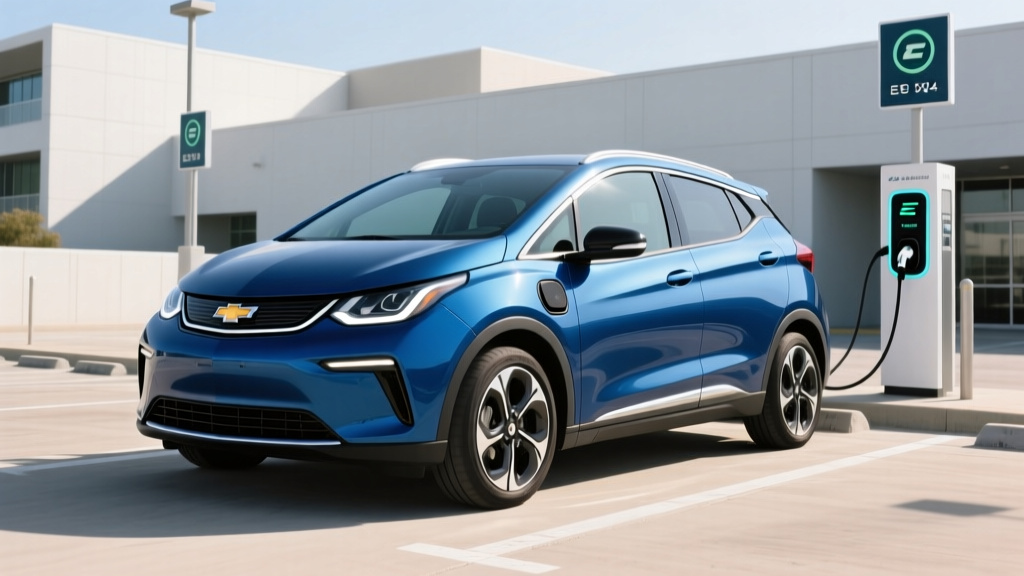
The 2024 Chevrolet Bolt EV remains one of the most affordable long-range electric vehicles on the new-car market, and its compact footprint makes it a standout for urban commuters. At a time when most new EVs push well past 185 inches in overall length, the Bolt EV's 163.1-inch length gives it genuine subcompact agility while still delivering an EPA-estimated 259 miles of range. This review breaks down every spec that matters — from exact dimensions and battery chemistry to real-world charging behavior and federal tax credit eligibility under current IRS §30D rules.
Dimensions & Exterior: Why the 2024 Bolt EV Length Matters
The question many shoppers search — "2024 Chevrolet Bolt EV length" — gets a straightforward answer: 163.1 inches bumper to bumper. That places the Bolt EV firmly in subcompact hatchback territory, roughly 14 inches shorter than the Tesla Model 3 and nearly 20 inches shorter than the Hyundai Ioniq 5. For context, here is how the Bolt EV's full dimensional profile stacks up:
| Dimension | Bolt EV | Tesla Model 3 | Hyundai Ioniq 5 |
|---|---|---|---|
| Overall Length | 163.1 in | 184.8 in | 182.7 in |
| Wheelbase | 102.4 in | 113.2 in | 118.1 in |
| Width (no mirrors) | 69.5 in | 72.8 in | 74.4 in |
| Height | 62.8 in | 56.8 in | 63.2 in |
| Curb Weight | 3,563 lbs | 3,862 lbs | 4,431 lbs |
| Turning Diameter | 35.8 ft | 38.8 ft | 39.4 ft |
The short wheelbase and tight 35.8-foot turning circle make the Bolt EV genuinely easy to park in cramped city spaces — a practical advantage that longer EVs simply cannot match. The trade-off is rear-seat legroom and highway stability, which we cover below.
Range, Battery & Real-World Efficiency
Real-World Expectation: 220–240 miles in mixed highway driving; 190–210 miles in sustained cold weather (below 32°F) with cabin heat; up to 265 miles in mild-weather city commuting with regenerative braking.
The 2024 Bolt EV uses a 65 kWh usable lithium-ion battery pack built with NMC (nickel-manganese-cobalt) chemistry. NMC offers higher energy density than LFP, which is how Chevrolet packs 259 miles of EPA range into such a small, light vehicle. The pack sits low in the chassis, contributing to a relatively low center of gravity for the hatchback's tall stance.
Efficiency is rated by the EPA at 120 MPGe combined, which translates to roughly 28 kWh per 100 miles. That is competitive for the segment, though the Bolt EV's efficiency advantage comes partly from its low curb weight. On the highway at 70+ mph, expect consumption to rise to around 32–34 kWh/100mi, which is where the real-world range drops below the EPA sticker.
Cold weather hits NMC batteries harder than LFP in terms of temporary range loss. Without preconditioning (the Bolt EV lacks a dedicated battery preconditioning feature for DC charging), winter range can dip 25–30% below the EPA figure. If your commute is under 40 miles round-trip, this is manageable with nightly Level 2 top-ups. For longer winter road trips, plan charging stops conservatively.
Charging Speed: DC Fast Charge & Home Level 2
Charging is the Bolt EV's most debated spec. Here are the exact numbers:
| Charging Level | Max Rate | Speed / Time |
|---|---|---|
| Level 1 (120V household) | ~1.2 kW | ~4 miles of range per hour |
| Level 2 (240V home/public) | 11.5 kW (48A) | ~39 miles of range per hour; full charge in ~7 hours |
| DC Fast Charge (CCS) | 55 kW peak | 10–80% in approximately 60 minutes |
The 11.5 kW onboard AC charger is a genuine strong point — it is faster than many rivals that cap at 7.2 or 9.6 kW. Plug into a 48-amp Level 2 home charger and you will wake up to a full battery every morning, even after a near-empty evening arrival.
DC fast charging is where the Bolt EV draws criticism. The 55 kW peak rate is modest by 2024 standards, where competitors like the Ioniq 5 (240 kW peak) and Tesla Model 3 (170 kW peak) charge dramatically faster. In practice, the Bolt EV sustains close to 50–55 kW up to roughly 55% state of charge, then tapers progressively. A 10–80% session takes about 60 minutes at a properly rated CCS station. That is workable for grocery-stop top-ups but noticeably slow for highway road trips where you need 150+ miles of added range.
One practical note: the Bolt EV uses the CCS1 connector for DC charging and the J1772 connector for AC. With Chevrolet's announced transition to NACS (Tesla-style) for future models, current Bolt EV owners can access Tesla Superchargers using a GM-approved NACS adapter, expanding the available fast-charging network significantly.
Performance & Driving Dynamics
| Spec | Value |
|---|---|
| Motor | Single permanent-magnet front motor |
| Drivetrain | FWD (front-wheel drive) |
| Horsepower | 200 hp |
| Torque | 266 lb-ft |
| 0–60 mph | 6.5 seconds |
| Top Speed | 93 mph (electronically limited) |
| Regen Modes | One-Pedal Driving, Regen on Demand paddle |
The 200-hp single-motor FWD powertrain gives the Bolt EV genuine punch off the line. The instant 266 lb-ft of torque makes it feel quicker in city driving than the 6.5-second 0–60 time suggests. Highway passing is confident up to about 75 mph, though the short wheelbase and tall ride height mean you will feel crosswinds and truck wake more than in a longer, lower EV.
Chevrolet's One-Pedal Driving mode is well-calibrated, allowing near-complete stops using only the accelerator in most traffic conditions. The Regen on Demand paddle behind the steering wheel provides additional braking force when you need it without touching the friction brakes. These features reduce brake wear substantially — many Bolt EV owners report original brake pads lasting well past 80,000 miles.
Interior, Cargo Space & Technology
Inside, the Bolt EV offers a practical but budget-conscious cabin. The 10.2-inch touchscreen running Chevrolet Infotainment 3 Plus is responsive and supports wireless Apple CarPlay and Android Auto. A 8-inch digital driver cluster replaces analog gauges. Heated front seats and a heated steering wheel are standard on the 2LT trim.
| Dimension | Measurement |
|---|---|
| Front Legroom | 42.1 inches |
| Rear Legroom | 36.0 inches |
| Front Headroom | 40.0 inches |
| Rear Headroom | 37.8 inches |
| Cargo Volume (rear seats up) | 16.6 cu ft |
| Cargo Volume (rear seats folded) | 56.6 cu ft |
| Frunk | None |
Front-seat space is generous thanks to the tall roofline. Rear legroom at 36.0 inches is adequate for adults on shorter trips but tight for taller passengers on longer rides — a direct consequence of the 102.4-inch wheelbase. Cargo space at 16.6 cubic feet behind the rear seats is competitive with gas-powered subcompacts and expands to 56.6 cu ft with the 60/40 split rear seats folded. There is no front trunk (frunk), as the motor and power electronics occupy the space under the hood.
On the driver-assistance front, the Bolt EV includes Chevy Safety Assist as standard: automatic emergency braking, forward collision alert, lane keep assist with lane departure warning, following distance indicator, and IntelliBeam automatic high beams. Adaptive cruise control is available on the 2LT trim. This is a solid Level 1–2 ADAS suite — it assists but does not replace the driver. Keep your hands on the wheel and eyes on the road at all times.
Pricing, Trims & Federal Tax Credit Eligibility
Chevrolet made a significant price cut to the Bolt EV for the 2024 model year, positioning it as the most affordable 250+ mile EV in the US market:
| Trim | Base MSRP | Est. Federal Credit (§30D) | Effective Price* |
|---|---|---|---|
| 1LT | $26,500 | Up to $7,500 | From ~$19,000 |
| 2LT | $30,700 | Up to $7,500 | From ~$23,200 |
*Effective price assumes full $7,500 federal tax credit eligibility. Actual credit depends on individual tax liability, income limits, and battery-sourcing compliance. Destination charge ($1,195) not included.
The Bolt EV qualifies for the IRS §30D Clean Vehicle Credit, but eligibility is not automatic for every buyer. Key requirements for 2024:
- MSRP cap: The Bolt EV is classified as a passenger car (not an SUV), so the MSRP cap is $55,000. Both trims qualify easily.
- Buyer income limits: Adjusted gross income must not exceed $150,000 (single), $225,000 (head of household), or $300,000 (joint filers).
- Battery sourcing: The $7,500 credit is split into two $3,750 halves — one for critical minerals sourcing and one for battery component manufacturing. GM has worked to shift Bolt EV battery supply chains to North American and FTA-partner sources, but the exact credit amount ($3,750 or $7,500) can vary by production batch. Confirm with your dealer and a tax professional before purchase.
- Point-of-sale transfer: As of 2024, eligible buyers can transfer the credit to the dealer at purchase, reducing the upfront price rather than waiting for a tax refund.
At roughly $19,000 effective price after the full credit, the 1LT Bolt EV undercuts every other new EV with comparable range. Even the well-equipped 2LT at ~$23,200 is a bargain relative to rivals that start above $38,000.
Warranty & Battery Longevity
Chevrolet backs the Bolt EV with a competitive warranty package:
- Battery & Propulsion: 8 years / 100,000 miles (whichever comes first), covering capacity below 60% of original
- Limited Vehicle Warranty: 3 years / 36,000 miles bumper-to-bumper
- Powertrain: 5 years / 60,000 miles
- Corrosion: 6 years / 100,000 miles
The 60% capacity retention threshold on the battery warranty is industry-standard but worth noting — it means Chevrolet will replace or repair the pack only if degradation exceeds 40% within the warranty period. In practice, Bolt EV batteries have shown strong longevity. Multiple owner surveys and fleet data indicate typical degradation of 8–12% over the first 100,000 miles, well within the warranty buffer. NMC chemistry in the Bolt's pack benefits from GM's active thermal management system, which liquid-cools and heats the battery to keep cells in their optimal temperature range.
Pros, Cons & Who Should Buy
Pros
- Lowest effective price of any 250+ mile new EV (with tax credit)
- Compact 163.1-inch length — easy parking, tight turning circle
- Strong 11.5 kW Level 2 onboard charging
- Proven battery longevity with active thermal management
- One-Pedal Driving and Regen on Demand are well-implemented
- Wireless Apple CarPlay / Android Auto standard
Cons
- 55 kW DC fast charging is slow for road trips
- No battery preconditioning for DC charging
- Rear seat legroom is tight for tall passengers
- No frunk for additional storage
- FWD only — no AWD option for snow-belt buyers
- Interior materials reflect budget pricing
Who the Bolt EV suits best: Urban and suburban commuters with home Level 2 charging who prioritize low purchase cost and easy maneuverability. If your daily drive is under 80 miles round-trip and you rarely road-trip more than 200 miles one-way, the Bolt EV is an outstanding value. It is less ideal for frequent long-distance travelers who need fast DC charging, families who regularly carry rear-seat passengers, or buyers in regions with heavy snow who want AWD.
Frequently Asked Questions
What is the exact length of the 2024 Chevrolet Bolt EV?
The 2024 Chevrolet Bolt EV measures 163.1 inches in overall length, making it one of the shortest EVs currently sold in the US with over 250 miles of range. Its wheelbase is 102.4 inches.
What is the real-world range of the 2024 Bolt EV?
The EPA rates the Bolt EV at 259 miles. In real-world mixed driving, expect 220–240 miles. In cold weather below freezing, plan for 190–210 miles. City commuting with regen braking can push range to 265 miles in mild conditions.
How fast does the Bolt EV charge at home and on the road?
At home on a 240V Level 2 charger, the Bolt EV charges at up to 11.5 kW, adding about 39 miles of range per hour and fully charging in roughly 7 hours. On DC fast chargers, it peaks at 55 kW, taking about 60 minutes for a 10–80% charge.
Does the 2024 Bolt EV qualify for the $7,500 federal tax credit?
The Bolt EV is eligible for the IRS §30D Clean Vehicle Credit, potentially up to $7,500. However, the exact amount depends on battery-sourcing compliance for your specific vehicle's production batch, your income (must be under $150K single / $300K joint), and your tax liability. The credit can be transferred at point of sale to reduce your purchase price. Confirm eligibility with your dealer and a tax professional.
Is the 2024 Bolt EV worth buying over competitors?
If your priorities are low cost and compact size, the Bolt EV is difficult to beat. At an effective price of ~$19,000 after credits, it undercuts the Nissan Leaf ($29,230 MSRP, 149–212 mi range), Hyundai Kona Electric ($34,000, 261 mi), and Tesla Model 3 ($40,240, 272 mi). The trade-off is DC charging speed — if you road-trip frequently, the Kona Electric (100 kW DC) or Model 3 (170 kW DC) are better choices despite higher prices.
What battery chemistry does the Bolt EV use?
The 2024 Bolt EV uses an NMC (nickel-manganese-cobalt) lithium-ion battery with 65 kWh of usable capacity. NMC provides higher energy density than LFP, enabling the Bolt's 259-mile range in a lightweight, compact package. GM's liquid-cooled thermal management system helps preserve long-term battery health.