Quick Verdict: A Stylish Midsize EV With Real Trade-Offs
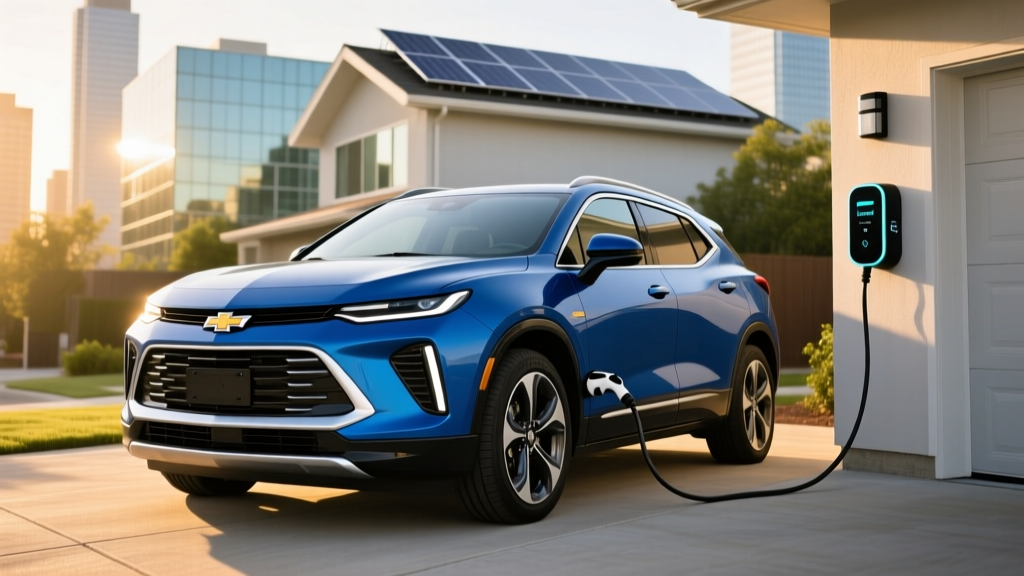
The 2024 Chevrolet Blazer EV arrived with bold styling, GM's Ultium platform, and a promised 324-mile range — but its launch was anything but smooth. Software glitches, infotainment freezes, and build-quality complaints dogged early-production models, prompting Chevrolet to issue multiple over-the-air updates through 2024 and into 2025. For buyers shopping the used or remaining-new inventory in 2026, the Blazer EV now represents a more polished product, though it still faces stiff competition from the Hyundai Ioniq 5, Ford Mustang Mach-E, and Tesla Model Y in the midsize electric SUV segment.
This review covers every spec that matters — from real-world range and charging curves to tax-credit eligibility and total cost of ownership — so you can decide whether the Blazer EV earns a spot in your driveway.
Range, Battery & Efficiency: What the Numbers Actually Mean
The 2024 Blazer EV uses GM's Ultium battery architecture with lithium-ion NMC (nickel manganese cobalt) chemistry. Battery capacity varies by trim and drivetrain:
| Trim / Drivetrain | Battery Capacity (usable) | EPA Range | MPGe (City/Hwy/Combined) |
|---|---|---|---|
| 2LT AWD | 85 kWh | 279 miles | 103 / 88 / 96 MPGe |
| RS RWD | 102 kWh | 324 miles | 110 / 92 / 102 MPGe |
| RS AWD | 102 kWh | 279 miles | 100 / 87 / 94 MPGe |
| SS AWD | 102 kWh | 293 miles | 97 / 84 / 91 MPGe |
Source: EPA fueleconomy.gov
The RS RWD's EPA-estimated 324 miles is achievable in mixed city/suburban driving at moderate temperatures. However, expect approximately 260–285 miles on sustained highway trips at 70–75 mph, and 210–240 miles in cold weather (below 32°F) where battery resistance increases and cabin heating draws significant energy. The AWD trims with the 85 kWh pack should plan for 220–240 real-world miles on road trips. Always budget a 15–20% buffer below EPA estimates for trip planning.
Efficiency peaks in the RS RWD at roughly 33 kWh per 100 miles in combined driving. The heavier AWD variants consume 36–38 kWh/100mi. These figures are competitive with the Mach-E Extended Range but trail the Ioniq 5's class-leading efficiency.
Charging Speed: DC Fast Charging and Home Level 2
The Blazer EV supports DC fast charging at up to 190 kW peak on properly equipped trims (RS and SS with the 102 kWh pack). The 2LT with the smaller battery peaks around 150 kW. Here's what that means in practice:
| Charging Level | Power / Rate | Time or Miles Added |
|---|---|---|
| Level 1 (120V household) | ~1.4 kW | ~3–4 miles per hour |
| Level 2 (240V, 48A home charger) | 11.5 kW | ~34 miles per hour; full charge in ~9–10 hrs |
| DC Fast Charge (peak) | 190 kW | 10–80% in approximately 30 minutes |
Charging curve reality check: The Blazer EV does not sustain its 190 kW peak for long. Expect peak rates between 10–30% State of Charge (SoC), tapering to roughly 120–140 kW through 50%, and dropping sharply above 80%. That 10–80% time of ~30 minutes is respectable but slower than the Hyundai Ioniq 5's 18-minute 10–80% sprint at 240 kW. On a road trip, plan for 30–35 minute charging stops at 150+ kW stations.
The Blazer EV uses a standard CCS1 connector for DC fast charging and a J1772 inlet for Level 2 AC. GM has begun transitioning to the NACS (Tesla-style) connector for 2025+ models, so 2024 Blazer EV owners will need an adapter to access Tesla Superchargers — GM provides a complimentary adapter for eligible vehicles.
Performance: 0–60, Horsepower & Drivetrain Options
The 2024 Blazer EV offers four distinct powertrain configurations:
| Trim | Drivetrain | Horsepower | Torque (lb-ft) | 0–60 mph |
|---|---|---|---|---|
| 2LT | AWD (dual-motor) | 288 hp | 343 | ~7.0 sec |
| RS | RWD (single rear motor) | 340 hp | 325 | ~6.2 sec |
| RS | AWD (dual-motor) | 557 hp | 648 | ~4.0 sec |
| SS | AWD (dual-motor) | 557 hp | 648 | ~3.9 sec |
The SS and RS AWD models deliver genuine performance-SUV thrust — the 557-hp dual-motor setup rockets the Blazer to 60 mph in under four seconds, putting it in the same ballpark as a Tesla Model Y Performance. The RWD RS is the efficiency play, sacrificing some acceleration for maximum range.
Ride quality leans firm, particularly on the SS with its 22-inch wheels. The steering is well-weighted but not particularly communicative. Regenerative braking offers multiple levels, including a one-pedal driving mode that can bring the Blazer to a complete stop, though it lacks the aggressive initial bite of some competitors.
Interior, Cargo & Technology
The Blazer EV's cabin makes a strong visual impression with its 17.7-inch diagonal infotainment touchscreen (standard on RS and SS) and an 11-inch digital instrument cluster. The design borrows cues from the Camaro — angular vents, ambient lighting, and a driver-focused layout.
Cargo and passenger dimensions:
- Cargo volume (behind rear seats): 25.5 cu ft
- Cargo volume (rear seats folded): 58.5 cu ft
- Front legroom: 42.2 inches
- Rear legroom: 38.4 inches
- Front headroom: 40.1 inches
The cargo area is competitive with the Mach-E but trails the Model Y's ~76 cu ft maximum. There is no front trunk (frunk) — the space under the hood houses HVAC and power electronics.
Standout tech features:
- Google built-in (Google Maps, Google Assistant, Play Store) on the infotainment system
- Wireless Apple CarPlay and Android Auto
- Super Cruise availability (hands-free driving on compatible highways — SAE Level 2, driver must remain attentive)
- Head-up display (SS standard, optional on RS)
- EV-specific route planning with automatic preconditioning for DC fast charging
GM's Super Cruise is an SAE Level 2 driver-assistance system. It provides hands-free steering, acceleration, and braking on pre-mapped divided highways (over 750,000 miles of compatible roads in North America). However, the driver must remain engaged — an infrared camera monitors eye gaze and will issue escalating warnings if attention lapses. This is fundamentally different from Level 4 robotaxi services like Waymo. You are still the driver.
Notable drawbacks: The early-production 2024 Blazer EV was plagued by infotainment bugs, including black screens, unresponsive touch inputs, and connectivity failures. While most issues have been addressed through OTA updates by late 2024/early 2025, buyers of remaining new or certified pre-owned units should verify that all software updates have been applied. Additionally, some owners report wind noise at highway speeds and hard plastics on the lower door panels and center console.
Pricing, Trim Levels & Federal Tax Credit Eligibility
| Trim | Base MSRP (2024) | Est. Price After §30D Credit |
|---|---|---|
| 2LT AWD | $50,195 | ~$42,695* |
| RS RWD | $54,195 | ~$46,695* |
| RS AWD | $57,595 | ~$50,095* |
| SS AWD | $65,795 | ~$58,295* |
*Estimated price assumes full $7,500 federal tax credit. Actual eligibility depends on individual circumstances. Destination charges, dealer markups, and options not included.
- Credit amount: Up to $7,500, split between critical minerals ($3,750) and battery components ($3,750) requirements
- MSRP cap: SUVs/vans/pickups must have an MSRP at or below $80,000 — all Blazer EV trims qualify
- Buyer income cap: AGI must not exceed $150,000 (single), $225,000 (head of household), or $300,000 (joint filers)
- Battery sourcing: Increasingly strict critical-mineral and battery-component sourcing rules apply — the Blazer EV's Ultium battery is assembled in the U.S., but partial credit eligibility may apply depending on model year and production date
- Point-of-sale transfer: Eligible buyers can transfer the credit to the dealer at purchase, reducing the purchase price upfront
Always verify current eligibility at IRS.gov and consult a tax professional before relying on credit amounts. Rules change annually and vary by VIN and production date.
Ownership Costs: Warranty, Insurance & Maintenance
Chevrolet backs the 2024 Blazer EV with:
- Battery & propulsion warranty: 8 years / 100,000 miles (covers battery capacity below 70% retention)
- Bumper-to-bumper: 3 years / 36,000 miles
- Powertrain (non-battery): 5 years / 60,000 miles
- Corrosion: 6 years / 100,000 miles
The 8-year/100,000-mile battery warranty is industry-standard and matches competitors like Ford and Hyundai. The 70% capacity retention threshold means Chevrolet will repair or replace battery modules if usable capacity falls below that level within the warranty period.
Insurance premiums for the Blazer EV run approximately 15–25% higher than a comparable gas-powered Blazer, driven by higher repair costs and parts pricing for EV-specific components. Expect annual premiums in the $1,800–$2,400 range depending on location, driving record, and coverage level.
Maintenance costs are significantly lower than a gas vehicle — no oil changes, no transmission fluid, no spark plugs. Budget for tire rotation, cabin air filter, brake fluid checks, and wiper fluid. Expect roughly $300–$500 per year in scheduled maintenance.
Pros, Cons & Who Should Buy the Blazer EV
Pros
- Up to 324 miles EPA range (RS RWD)
- SS delivers 557 hp and sub-4-second 0–60
- Super Cruise hands-free highway driving
- Striking exterior design stands out in the segment
- Spacious rear seat with 38.4" legroom
- Google built-in infotainment with EV route planning
Cons
- Early-production software reliability issues
- No front trunk (frunk)
- DC fast charging peaks at 190 kW — slower than rivals
- Cargo space trails Model Y significantly
- Higher starting price than some competitors
- Firm ride quality, especially on SS with 22" wheels
- Daily commuters with home Level 2 charging who want a stylish, comfortable ride with ample range for a 40–60 mile round trip
- Performance-oriented buyers who want SUV practicality with sports-sedan acceleration (SS or RS AWD)
- GM loyalists who prefer Super Cruise and the Chevrolet dealer network over Tesla's ecosystem
- Not ideal for: Frequent long-distance road trippers who prioritize the fastest possible DC charging, or buyers who need maximum cargo volume for gear or family hauling
Blazer EV vs. Key Competitors: Is It Worth Buying?
| Spec | 2024 Blazer EV RS RWD | 2024 Hyundai Ioniq 5 Limited AWD | 2024 Ford Mustang Mach-E ER AWD | 2024 Tesla Model Y Long Range |
|---|---|---|---|---|
| EPA Range | 324 mi | 260 mi | 290 mi | 310 mi |
| Battery (usable) | 102 kWh | 77.4 kWh | 91 kWh | 75 kWh |
| Peak DC Charge | 190 kW | 240 kW | 150 kW | 250 kW |
| 10–80% Time | ~30 min | ~18 min | ~38 min | ~25 min |
| 0–60 mph | 6.2 sec | 5.1 sec | 5.1 sec | 4.8 sec |
| Cargo (max) | 58.5 cu ft | 59.3 cu ft | 59.7 cu ft | 76.2 cu ft |
| Base MSRP | $54,195 | $52,600 | $50,995 | $48,590 |
The Blazer EV wins on maximum EPA range in its RWD configuration, but it gives back that advantage in charging speed and cargo versatility. The Ioniq 5 charges dramatically faster, the Model Y offers far more cargo space and access to the Supercharger network, and the Mach-E provides a sportier driving feel at a lower entry price.
If range is your top priority and you primarily drive in moderate climates with home charging access, the Blazer EV RS RWD is a compelling choice. If you road-trip frequently, the Ioniq 5 or Model Y are stronger picks due to faster charging and better public-charging network access.
Frequently Asked Questions
What is the real-world range of the 2024 Chevrolet Blazer EV?
The RS RWD achieves an EPA-estimated 324 miles, but real-world highway driving at 70+ mph yields approximately 260–285 miles. In cold weather (below freezing), expect 210–240 miles. The AWD trims with the smaller 85 kWh battery deliver roughly 220–250 real-world miles depending on conditions.
How fast does the Blazer EV charge at home and on the road?
At home on a 240V Level 2 charger (48A), the Blazer EV adds about 34 miles of range per hour, reaching a full charge in roughly 9–10 hours. On a DC fast charger, it peaks at 190 kW and charges from 10–80% in approximately 30 minutes — adequate but slower than the segment leaders.
How much does the Blazer EV cost after the federal tax credit?
If you qualify for the full $7,500 §30D credit, the RS RWD drops from $54,195 to approximately $46,695. However, eligibility depends on your income (AGI caps apply), the vehicle's battery sourcing compliance, and MSRP limits. The point-of-sale transfer option lets you apply the credit directly at purchase. Verify eligibility at IRS.gov.
Does the 2024 Blazer EV qualify for the full $7,500 federal tax credit?
It depends on the production date and battery component sourcing. The Blazer EV's Ultium battery is assembled in the U.S., which satisfies the battery-component half ($3,750). Critical-mineral sourcing requirements have tightened annually — some 2024 production units may qualify for the full $7,500, while others may only receive $3,750. Check the specific VIN against the IRS eligible vehicle list and consult a tax professional.
Is the 2024 Blazer EV reliable after the software fixes?
Chevrolet issued multiple over-the-air updates through 2024 and 2025 that addressed the majority of early infotainment and charging-system complaints. Units with all current updates applied show significantly improved stability. Before purchasing any 2024 model — new or used — confirm with the dealer that all Technical Service Bulletins (TSBs) and software updates have been completed.
Can the Blazer EV use Tesla Superchargers?
The 2024 Blazer EV has a CCS1 inlet, not the NACS (Tesla) connector. However, GM has provided complimentary NACS adapters for eligible vehicles, enabling access to Tesla's Supercharger network. Charging speeds on Superchargers may be limited by adapter throughput — expect roughly 150–170 kW peak through the adapter versus the native 190 kW on CCS stations.