Quick Verdict: The Lyriq's Place in the Luxury EV Landscape
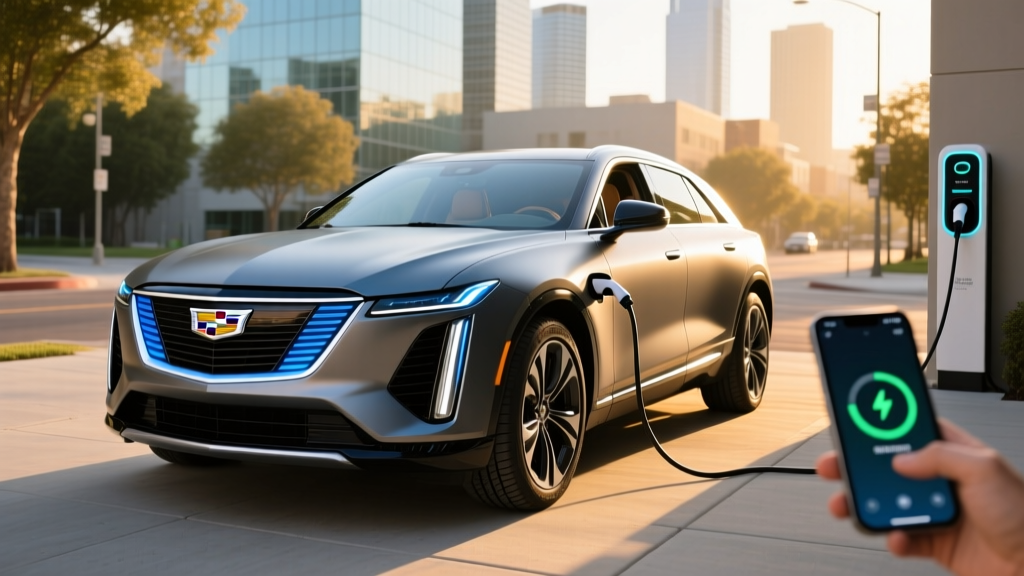
The 2024 Cadillac Lyriq represents GM's first serious entry into the premium electric SUV segment, built on the dedicated Ultium platform. With a 102 kWh usable battery, rear-wheel-drive efficiency, and a starting price that undercuts European rivals, it targets buyers who want luxury without the Tesla aesthetic. But specs on paper only tell part of the story — real-world range, charging behavior, and ownership costs determine whether this EV actually delivers.
This review breaks down every critical 2024 Cadillac Lyriq spec with real-world context, from cold-weather range loss to DC fast-charging taper curves, so you know exactly what to expect before signing a purchase agreement.
Range, Battery, and Efficiency: Beyond the EPA Sticker
| Specification | 2024 Lyriq RWD (Luxury/Premium Luxury) | 2024 Lyriq AWD (Sport/Premium Luxury AWD) |
|---|---|---|
| EPA Estimated Range | 314 miles | 307 miles |
| Battery Capacity (Usable) | 102 kWh | 102 kWh |
| Battery Chemistry | NMC (Nickel Manganese Cobalt) | NMC (Nickel Manganese Cobalt) |
| MPGe (City / Hwy / Combined) | 97 / 82 / 89 MPGe | 95 / 82 / 89 MPGe |
| Energy Consumption | 36 kWh/100 mi | 37 kWh/100 mi |
| Drivetrain | Rear-Wheel Drive (single motor) | All-Wheel Drive (dual motor) |
The Lyriq's 102 kWh usable Ultium battery uses NMC (nickel manganese cobalt) pouch cells manufactured at the Ultium Cells joint venture plants. NMC chemistry offers higher energy density than LFP, which is why the Lyriq achieves over 300 miles without an excessively heavy pack. However, NMC cells benefit from staying between 20–80% state of charge for daily use to maximize long-term cycle life — a consideration for owners without home charging who may rely on DC fast charging.
According to fueleconomy.gov, the RWD Lyriq's combined 89 MPGe places it behind the BMW iX xDrive50 (86 MPGe combined is similar) and well behind the more efficient Tesla Model X (102 MPGe combined). The Lyriq's 36 kWh per 100 miles means a full charge costs roughly $5.40–$7.20 at residential electricity rates of $0.15–$0.20/kWh.
Charging Speed: DC Fast Charge, Level 2, and the Curve Reality
| Charging Level | Power / Rate | Time or Miles Added | Connector |
|---|---|---|---|
| Level 1 (120V household) | ~1.4 kW | ~3–4 miles per hour | J1772 / NACS (with adapter) |
| Level 2 (240V home/public) | 11.5 kW (48A onboard charger) | ~31 miles per hour; full charge in ~9.5 hours | J1772 / NACS |
| DC Fast Charge (peak) | 190 kW | 10–80% in ~33 minutes | CCS1 (2024 model year) |
The 2024 Lyriq uses the CCS1 connector standard. GM announced a transition to NACS (Tesla's connector) for 2025+ models, so the 2024 Lyriq requires a CCS-to-NACS adapter to access Tesla Supercharger stalls — an important consideration for road-trip charging access.
Charging curve reality: The Lyriq peaks at 190 kW only at low state of charge (roughly 5–25% SoC) and optimal battery temperature. From 25–50%, expect sustained rates around 130–150 kW. Above 80%, charging slows dramatically to protect battery health — typically dropping below 50 kW. This is why the 10–80% time of approximately 33 minutes is the meaningful metric, not the peak kW number. If you arrive at a charger at 30% SoC instead of 10%, your effective charge session to 80% will take closer to 22–25 minutes.
For home charging, the 11.5 kW onboard charger is competitive. A full overnight charge from 10% to 100% takes roughly 9.5 hours on a 48-amp Level 2 circuit (hardwired, 60-amp breaker). Most owners who charge nightly from 30–80% will add range in about 4.5 hours — easily achievable with a standard overnight session.
Performance: Powertrain, 0-60, and Driving Dynamics
| Metric | RWD (Luxury/Premium Luxury) | AWD (Sport/Premium Luxury AWD) |
|---|---|---|
| Horsepower | 340 hp | 500 hp |
| Torque | 325 lb-ft | 450 lb-ft |
| 0–60 mph | ~6.0 seconds | ~4.6 seconds |
| Top Speed | 118 mph (electronically limited) | 130 mph |
| Towing Capacity | Not rated | Not rated |
| Curb Weight | ~5,610 lbs | ~5,780 lbs |
The RWD Lyriq delivers adequate acceleration for a luxury cruiser, with its single rear motor providing smooth, linear torque. The AWD variant adds a front induction motor for 500 hp total, transforming the Lyriq into a genuinely quick SUV that can merge onto highways and overtake with authority.
Notably, GM did not rate the 2024 Lyriq for towing. If you need an EV SUV with towing capability (the Rivian R1S tows 7,700 lbs; the Tesla Model X tows 5,000 lbs), the Lyriq is not the right tool. This is a deliberate engineering choice — the Ultium platform in this configuration prioritizes range and comfort over utility hauling.
Ride quality is where the Lyriq earns its luxury badge. The five-link rear suspension and available air ride (on Premium Luxury trims) deliver composed, quiet highway cruising. Road noise isolation is excellent, and the steering is weighted appropriately for a grand-touring character rather than sport-sedan sharpness.
Interior, Cargo, and Technology
| Dimension | Measurement |
|---|---|
| Front Headroom | 39.1 inches |
| Front Legroom | 44.3 inches |
| Rear Headroom | 38.4 inches |
| Rear Legroom | 39.6 inches |
| Cargo Volume (behind 2nd row) | 28.0 cu ft |
| Cargo Volume (seats folded) | 60.9 cu ft |
| Frunk (Front Trunk) | None |
The Lyriq's interior is dominated by a 33-inch LED display that spans the instrument cluster and infotainment screen in a single curved unit running Google Built-In. This means native Google Maps navigation (which integrates with the vehicle's range estimator and charging preconditioning), Google Assistant voice control, and access to the Play Store for apps. Wireless Apple CarPlay and Android Auto are also supported.
Super Cruise — GM's hands-off-wheel Level 2 driver-assistance system — is available on Premium Luxury and Sport trims with a three-year included subscription. On mapped divided highways, Super Cruise allows genuine hands-off operation while the driver monitoring system tracks eye attention. Per NHTSA SAE classification, this remains Level 2 automation — the driver must remain alert and ready to resume control. It is not self-driving.
One notable omission: the Lyriq has no frunk (front trunk). The space under the hood houses electronics and HVAC components. At 28.0 cu ft behind the second row, cargo capacity trails the Genesis Electrified GV70 (28.7 cu ft) and significantly trails the Tesla Model X (37.1 cu ft behind the second row).
Pricing, Trims, and Federal Tax Credit Eligibility
| Trim | Base MSRP | Federal §30D Credit | Effective Price (if eligible) |
|---|---|---|---|
| Luxury RWD | $57,195 | Up to $7,500 | ~$49,695 |
| Premium Luxury RWD | $63,195 | Up to $7,500 | ~$55,695 |
| Sport AWD | $62,195 | Up to $7,500 | ~$54,695 |
| Premium Luxury AWD | $66,195 | Up to $7,500 | ~$58,695 |
All 2024 Lyriq trims fall under the $80,000 MSRP cap for SUVs under IRS §30D rules. However, qualifying for the full $7,500 credit requires meeting multiple criteria simultaneously:
- Buyer income caps: Modified adjusted gross income must not exceed $150,000 (single), $225,000 (head of household), or $300,000 (married filing jointly)
- Battery sourcing requirements: Critical minerals and battery components must meet escalating percentage thresholds from US or free-trade-agreement partners — these thresholds tightened significantly for 2024
- Assembly: The Lyriq is assembled in Spring Hill, Tennessee, satisfying the North American final assembly requirement
- Point-of-sale transfer: For 2024, buyers can transfer the credit to the dealer at purchase, reducing the purchase price directly rather than waiting for a tax refund
Verify current eligibility on irs.gov before purchasing, as battery component and critical mineral sourcing rules are updated annually and can affect whether a vehicle qualifies for the full $7,500, a partial $3,750, or no credit at all. Consult a tax professional for your specific situation.
Warranty and Long-Term Ownership
| Coverage | Term |
|---|---|
| Bumper-to-Bumper | 4 years / 50,000 miles |
| Powertrain | 6 years / 70,000 miles |
| Battery Pack | 8 years / 100,000 miles (retains ≥70% capacity) |
| Corrosion | 6 years / unlimited miles |
| Roadside Assistance | 6 years / 70,000 miles |
The 8-year/100,000-mile battery warranty with a 70% capacity retention threshold is standard for the industry. In practice, GM's Ultium NMC cells with active thermal management are expected to degrade approximately 8–12% over the first 100,000 miles based on early fleet data and comparable platforms. For most owners, this means roughly 280 miles of range at the 100,000-mile mark for the RWD model — still highly usable.
One ownership consideration: Cadillac's dealer network has been investing in EV service training and equipment, but coverage in rural areas remains thinner than Tesla's mobile service network. Check your local dealer's EV service capability before purchasing.
Pros, Cons, and Who Should Buy the Lyriq
- Quiet, refined ride quality with excellent road isolation
- 33-inch Google Built-In display is responsive and well-integrated
- 314-mile EPA range (RWD) is competitive for the class
- Undercuts BMW iX, Mercedes EQE SUV on starting price
- Super Cruise hands-off driving on mapped highways
- Strong federal tax credit eligibility (verify sourcing annually)
- No frunk — cargo capacity trails rivals
- 190 kW DC peak charge rate is slower than Hyundai/Kia 800V platforms (240+ kW)
- CCS1 connector requires adapter for Tesla Supercharger access
- Not rated for towing
- Rear visibility is limited; relies heavily on cameras
- AWD model sacrifices range for performance without efficiency advantage
Look elsewhere if: You need towing capability (Rivian R1S), maximum fast-charging speed for frequent road trips (Hyundai Ioniq 5 / Kia EV6 with 800V architecture), or maximum cargo space (Tesla Model X). If Tesla Supercharger access without adapters is a priority, consider 2025+ NACS-native vehicles.
Frequently Asked Questions
What is the real-world range of the 2024 Cadillac Lyriq?
The EPA rates the RWD Lyriq at 314 miles and the AWD at 307 miles. In real-world highway driving at 75 mph, expect 260–280 miles. In cold weather below 30°F, plan for 220–250 miles. City driving with regenerative braking in mild weather can exceed the EPA estimate.
How fast does the 2024 Lyriq charge at home and on the road?
At home on a Level 2 (240V, 48A) charger, the Lyriq adds about 31 miles per hour, with a full charge taking roughly 9.5 hours. On DC fast chargers, it peaks at 190 kW, achieving a 10–80% charge in approximately 33 minutes. Expect slower sustained rates above 50% SoC due to the charge curve taper.
How much does the 2024 Cadillac Lyriq cost after tax credits?
The base Luxury RWD starts at $57,195. If you qualify for the full $7,500 federal §30D credit (meeting income, sourcing, and assembly requirements), the effective price drops to approximately $49,695. Higher trims range from $63,195 to $66,195 before credits. Always verify current-year eligibility on irs.gov.
Does the 2024 Lyriq qualify for the federal EV tax credit?
The Lyriq is assembled in Tennessee and falls under the $80,000 SUV MSRP cap, meeting two key requirements. However, the full $7,500 credit also depends on battery critical-mineral and component sourcing thresholds, which tightened for 2024, plus buyer income limits ($150K single / $300K joint). Check the latest IRS guidance and confirm with your dealer before purchase.
Is the 2024 Lyriq worth buying vs. the BMW iX or Tesla Model X?
The Lyriq offers the best starting price in its class ($57,195 vs. $87,250 for the BMW iX and $79,990 for the Tesla Model X) and delivers competitive range. However, the BMW iX offers more cargo space and a sportier drive, while the Tesla Model X provides faster charging, Supercharger access, and available third-row seating. The Lyriq wins on value and traditional luxury comfort; it loses on utility and charging speed.
Is Super Cruise on the Lyriq self-driving?
No. Super Cruise is an SAE Level 2 driver-assistance system. It allows hands-off-wheel operation on pre-mapped divided highways, but the driver must maintain visual attention (monitored by an infrared camera) and be ready to take over at any time. It does not handle city streets, construction zones, or unmapped roads autonomously.