Quick Verdict: A Luxury EV SUV That Prioritizes Refinement Over Flash
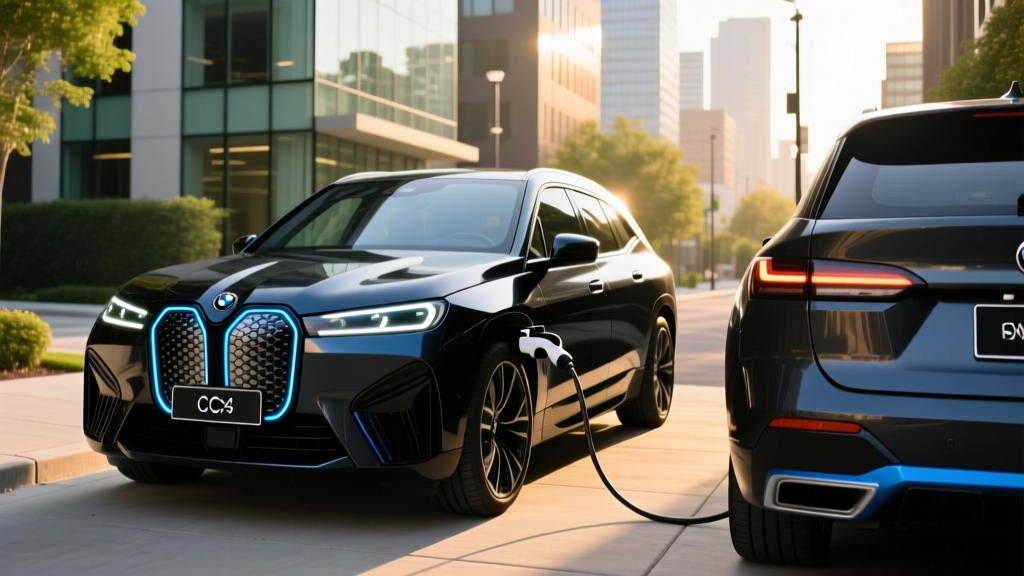
The 2024 BMW iX xDrive50 occupies a specific niche in the electric luxury SUV segment: it's the quiet, comfortable, tech-dense cruiser that doesn't try to be a sports car or a minimalist sculpture. With an EPA-estimated 324 miles of range, dual-motor all-wheel drive producing 516 horsepower, and one of the most sophisticated thermal management systems in the business, the iX xDrive50 rewards owners who value ride quality and long-distance composure over 0-60 bragging rights.
But at a starting MSRP above $87,000 and with federal tax credit eligibility hinging on battery-sourcing rules that shift yearly, the iX demands a careful look at the numbers before you sign. This review breaks down every spec that matters — from real-world highway range to DC fast-charging taper curves — so you can decide whether BMW's flagship electric SUV earns a spot in your garage.
Range, Battery, and Real-World Efficiency
| Spec | Value |
|---|---|
| EPA Estimated Range | 324 miles (xDrive50 w/ 20" wheels) |
| Battery Gross / Usable Capacity | 111.5 kWh gross / ~105.2 kWh usable |
| Battery Chemistry | NMC (Nickel Manganese Cobalt) |
| EPA Efficiency | 86 MPGe combined (39 kWh/100 mi) |
| Drivetrain | Dual-motor AWD |
| Heat Pump | Standard |
The iX's battery pack uses NMC chemistry, which offers higher energy density than LFP (lithium iron phosphate) alternatives — that's how BMW fits over 105 kWh of usable capacity without making the vehicle excessively heavy. The trade-off is that NMC cells prefer not to sit at 100% state of charge for extended periods. For daily driving, BMW recommends setting the charge limit to 80–90% and saving 100% for road-trip days. The EPA's fueleconomy.gov portal lists the iX xDrive50 at 86 MPGe combined, which translates to roughly 39 kWh consumed per 100 miles driven — competitive with the Mercedes EQS SUV and slightly behind the lighter Tesla Model X.
Charging Speed: DC Fast, Level 2, and the Taper Curve
| Charging Level | Power / Rate | Time or Miles Added |
|---|---|---|
| DC Fast Charge (Peak) | Up to 150 kW (CCS) | 10–80% in ~31 minutes (BMW est.) |
| DC Fast Charge (Sustained Avg.) | ~110–120 kW average to 80% | ~220 miles added in 30 min |
| Level 2 (Home / Public AC) | Up to 11 kW (48A at 240V) | ~25–28 miles per hour of charging |
| Level 1 (120V Household) | ~1.4 kW | ~3–4 miles per hour |
The iX xDrive50 accepts up to 150 kW on a DC fast charger via its CCS1 connector. That peak figure is achievable when the battery is preconditioned (the iX does this automatically when you navigate to a charger using the built-in routing) and when the state of charge is between roughly 10–30%. As with all EVs, the charge curve tapers significantly above 80% — pushing from 80–100% can take nearly as long as the 10–80% session. On a road trip, the practical move is to charge to 80% and drive on.
At home on a Level 2 charger delivering the full 11 kW the iX can accept, you'll replenish the entire usable battery in roughly 10–11 hours. That means an overnight charge easily refills a day's worth of driving. Most owners will install a 48-amp Level 2 unit (such as a ChargePoint Home Flex or BMW's own Wallbox) on a 60-amp circuit. Expect to wake up to a full battery every morning if your commute is under 100 miles round-trip.
One note for 2026 buyers: BMW has begun offering a NACS adapter for access to Tesla's Supercharger network. This expands the iX's public fast-charging options considerably, though the vehicle's 150 kW peak means you won't fully utilize the V3 Superchargers' 250 kW capability. You'll still charge — just not at the maximum rate a Tesla-native vehicle would.
Performance and Driving Dynamics
| Spec | Value |
|---|---|
| Horsepower | 516 hp (combined) |
| Torque | 564 lb-ft |
| 0–60 mph | 4.4 seconds (BMW est.) |
| Top Speed | 124 mph (electronically limited) |
| Drivetrain | Dual-motor AWD (eDrive) |
| Towing Capacity | 3,500 lbs (braked) |
The xDrive50's dual-motor setup delivers 516 horsepower and a 4.4-second 0–60 mph time. That's brisk enough to merge confidently and overtake without drama, but it's not the neck-snapping acceleration of the iX M60 (which bumps output to 610 hp and drops the 0–60 to 3.6 seconds). The xDrive50 is tuned for composure rather than aggression — the steering is precise but not overly communicative, the air suspension soaks up broken pavement, and the cabin remains remarkably quiet even at highway speeds.
Regenerative braking is adjustable via paddle shifters (three levels) or can be set to adaptive mode, which uses radar and map data to modulate regen based on traffic and upcoming curves. There's no true one-pedal driving mode that brings the car to a complete stop and holds it, which some EV buyers accustomed to Tesla or Nissan Leaf behavior may notice. You'll still use the brake pedal in stop-and-go traffic.
Interior Space, Cargo, and Daily Livability
The iX is a midsize two-row SUV, and BMW designed it from the ground up as an electric vehicle on a dedicated platform. That means a flat floor, generous interior volume, and a cabin that feels larger than its exterior footprint suggests.
| Dimension | Measurement |
|---|---|
| Cargo Volume (Behind 2nd Row) | 35.5 cu ft |
| Cargo Volume (2nd Row Folded) | 77.9 cu ft |
| Front Legroom | 40.2 in |
| Rear Legroom | 38.5 in |
| Seating Capacity | 5 passengers |
| Frunk (Front Trunk) | Not available (no frunk) |
The absence of a frunk is a missed opportunity — BMW uses that space for HVAC and power electronics. But 35.5 cubic feet behind the rear seats is competitive with the Audi Q8 e-tron and exceeds the Tesla Model X's rear cargo area with the third row folded. The rear seat folds in a 40/20/40 split, giving flexibility for long cargo while still carrying a rear passenger.
Interior materials are premium: BMW uses a combination of synthetic leather (Sensatec) as standard, with available genuine leather and open-pore wood trim. The panoramic electrochromic glass roof is a standout — it switches between transparent and opaque with a button press, eliminating the need for a physical shade.
Tech, Infotainment, and Driver Assistance
The iX runs BMW's iDrive 8 system on a curved display that merges a 12.3-inch instrument cluster with a 14.9-inch central touchscreen. The system is responsive, supports wireless Apple CarPlay and Android Auto, and includes a natural-language voice assistant. A hexagonal steering wheel (a design choice that divides opinion) frames the display.
Driver assistance comes via BMW's Driving Assistant Professional package, which includes:
- Adaptive cruise control with stop-and-go
- Lane-keeping assist with active side collision avoidance
- Automatic lane-change on highways (with turn-signal confirmation)
- Cross-traffic alert and evasion assist
The available Parking Assistant Professional can handle parallel and perpendicular parking automatically, and the Reversing Assistant remembers the last 50 meters of forward travel and can retrace it in reverse — useful for narrow driveways or dead-end trails.
Pricing, Trims, and Federal Tax Credit Eligibility
| Trim / Config | Base MSRP | Typical As-Tested |
|---|---|---|
| iX xDrive50 (Base) | $87,250 | $92,000–$98,000 (w/ options) |
| iX M60 | $111,500 | $115,000+ |
The 2024 iX xDrive50 starts at $87,250 (including destination). Popular option packages — the Executive Package (ventilated/massaging seats, soft-close doors), the Premium Package, and larger wheel selections — push most examples into the $92,000–$98,000 range before any incentives.
- MSRP Cap: SUVs must have an MSRP at or below $80,000 to qualify. The iX xDrive50's base MSRP of $87,250 exceeds this cap, making it ineligible for the new-vehicle §30D credit.
- Buyer Income Cap: Even if MSRP qualified, adjusted gross income must be ≤$300,000 (joint) / ≤$150,000 (single).
- Battery Sourcing: Critical minerals and battery components must meet phased-in domestic/free-trade sourcing requirements that tighten each year through 2030.
- Point-of-Sale Transfer: Eligible credits can be transferred to the dealer at purchase for an immediate price reduction — but only if all above criteria are met.
Bottom line: The 2024 BMW iX xDrive50 does not qualify for the $7,500 federal new-EV tax credit due to its MSRP exceeding the $80,000 SUV cap. Verify current rules at IRS.gov §30D, as regulations evolve.
For buyers who still want an iX and a tax incentive, the used-EV tax credit (§25E) offers up to $4,000 (or 30% of the sale price, whichever is lower) on a pre-owned iX purchased from a dealer for $25,000 or more, subject to income caps ($150,000 joint / $75,000 single). As iX lease returns begin entering the used market in 2026–2027, this may become a viable path to ownership at a discount.
Warranty and Long-Term Battery Outlook
| Coverage | Terms |
|---|---|
| Limited Vehicle Warranty | 4 years / 50,000 miles |
| Battery Warranty | 8 years / 100,000 miles (retains ≥70% capacity) |
| Powertrain Warranty | 8 years / 100,000 miles |
| Corrosion Perforation | 12 years / unlimited miles |
| Roadside Assistance | 4 years / unlimited miles |
BMW guarantees the high-voltage battery will retain at least 70% of its original usable capacity for 8 years or 100,000 miles, whichever comes first. This is consistent with industry norms (Tesla, Mercedes, and Audi offer similar terms). NMC batteries in BMW's fifth-generation eDrive architecture have shown modest degradation in early data — most owners report 3–5% capacity loss in the first 30,000 miles, with the curve flattening afterward. Full battery replacement costs, should they be needed out of warranty, are estimated at $18,000–$25,000 based on current parts pricing, though this figure is expected to decline as the supply chain matures.
Pros, Cons, and Who Should Buy the iX xDrive50
- 324-mile EPA range is competitive for the luxury EV SUV class
- Exceptionally quiet, comfortable ride with standard air suspension
- Premium interior materials and build quality
- Strong standard safety tech (IIHS Top Safety Pick+ eligible)
- Standard heat pump preserves cold-weather range
- Generous rear-seat legroom for a midsize SUV
- Base MSRP exceeds $80,000 — no federal new-EV tax credit
- 150 kW peak DC charging trails rivals (Hyundai/Kia at 240–350 kW)
- No frunk for additional storage
- Polarizing exterior design and hexagonal steering wheel
- No true one-pedal driving to a full stop
- Options quickly push price past $95,000
- You want a refined, quiet luxury SUV for commuting and road trips without needing sporty dynamics
- You have home Level 2 charging and rarely need 200+ miles of DC fast-charging in a single stop
- Interior quality and ride comfort rank above 0–60 times in your priorities
- You don't need a third row (consider the Kia EV9 or Rivian R1S if you do)
- You need the fastest possible DC charging for frequent long road trips (consider the Hyundai Ioniq 5 or Porsche Macan EV)
- Federal tax credit eligibility is essential to your purchase math
- You want a third-row electric SUV
- You prefer minimalist, Tesla-style interiors over traditional luxury
Frequently Asked Questions
What is the real-world range of the 2024 BMW iX xDrive50?
The EPA rates the iX xDrive50 at 324 miles with 20-inch wheels. In real-world highway driving at 70 mph in moderate weather, expect roughly 270–290 miles. In cold weather below freezing, that drops to approximately 230–260 miles. City driving with regenerative braking can match or slightly exceed the EPA estimate.
How fast does the iX xDrive50 charge at home and on the road?
On a DC fast charger, the iX peaks at 150 kW and charges from 10–80% in approximately 31 minutes under ideal conditions. At home on a Level 2 charger (11 kW / 48 amps), a full charge takes roughly 10–11 hours, adding about 25–28 miles of range per hour.
Does the 2024 BMW iX xDrive50 qualify for the federal EV tax credit?
No. The iX xDrive50's base MSRP of $87,250 exceeds the $80,000 SUV cap set by the IRS under §30D. It does not qualify for the up-to-$7,500 new clean vehicle credit. The used-EV credit (§25E, up to $4,000) may apply when purchasing a pre-owned iX, subject to income limits and the $25,000 maximum sale price rule. Always verify current eligibility at IRS.gov.
Is the BMW iX worth buying over the Mercedes EQS SUV or Tesla Model X?
The iX excels in ride comfort, cabin quietness, and build quality. The Mercedes EQS SUV offers slightly more range (up to 330 miles EPA) and a more opulent interior but starts at a similar price. The Tesla Model X provides faster DC charging (250 kW), access to the Supercharger network natively, and an available third row — but its interior quality doesn't match the BMW. If ride refinement and traditional luxury are your priorities, the iX is a strong pick. If charging speed and range are paramount, the Model X or even the Hyundai Ioniq 5 (at a fraction of the price) may serve better.
Does the iX have a front trunk (frunk)?
No. BMW uses the under-hood space for power electronics and HVAC components. All cargo must go in the rear hatch area, which offers 35.5 cu ft behind the second row and 77.9 cu ft with seats folded.
What is the battery warranty on the BMW iX?
BMW covers the high-voltage battery for 8 years or 100,000 miles, guaranteeing it will retain at least 70% of its original usable capacity during that period. The powertrain (motors, power electronics) carries the same 8-year/100,000-mile coverage.
Can the iX tow, and how does towing affect range?
The iX xDrive50 is rated to tow up to 3,500 pounds (braked trailer). Towing at or near maximum capacity will significantly reduce range — expect a 30–50% reduction depending on trailer aerodynamics, weight, and terrain. For a 324-mile EPA range, plan for roughly 160–220 miles of real-world range while towing a loaded trailer on the highway.