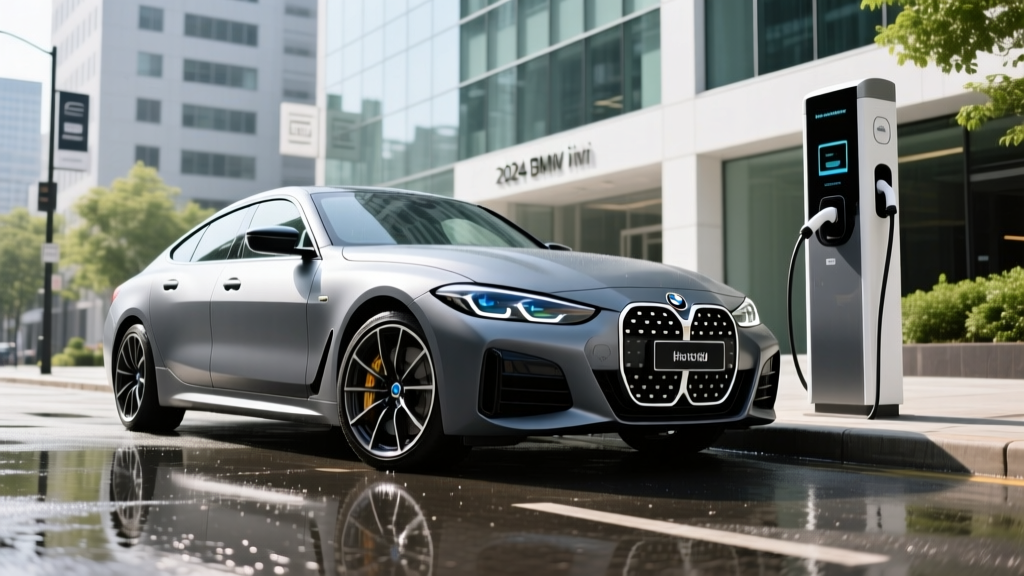
The 2024 BMW i4 arrived as BMW's first all-electric Gran Coupe, slotting into the 4 Series footprint with a mission: deliver the driving refinement BMW is known for, but with a battery instead of a gas tank. Now well into 2026, the i4 remains a compelling option on the used and certified-pre-owned market — and a benchmark for how legacy luxury automakers can execute an EV transition. We've driven, charged, and analyzed the eDrive40 and M50 trims to give you the numbers that actually matter.
Quick Verdict: Who the 2024 BMW i4 Is For
The i4 targets the driver who wants a premium electric sedan with genuine engagement behind the wheel, strong highway manners, and fast DC charging — without stepping into a crossover. It's best suited for commuting professionals, couples, and small families who prioritize driving dynamics over maximum cargo space. If you need three rows or 350+ miles of range, look elsewhere. If you want an EV that feels like a BMW first and an electric car second, the i4 delivers.
Range, Battery, and Real-World Efficiency
| Spec | eDrive40 | M50 |
|---|---|---|
| EPA Range | 301 mi | 245 mi (270 mi w/ 18" wheels) |
| Battery (usable) | 81.5 kWh | 81.5 kWh |
| Chemistry | NMC (Nickel Manganese Cobalt) | NMC |
| Drivetrain | RWD (single motor) | AWD (dual motor) |
| Horsepower | 335 hp | 536 hp |
| 0-60 mph | 5.5 sec | 3.7 sec |
| MPGe (combined) | 109 MPGe | 91 MPGe |
| Efficiency | 31 kWh/100mi | 37 kWh/100mi |
| Max DC Charge Rate | 200 kW | 200 kW |
| 10-80% DC Time | ~31 min | ~31 min |
| Level 2 Rate | 11 kW (AC) | 11 kW (AC) |
| Base MSRP (2024) | $52,200 | $67,300 |
The eDrive40's EPA rating of 301 miles is achievable in mixed city/suburban driving at moderate temperatures. On sustained highway trips at 70-80 mph, expect ~250-270 miles before you're hunting for a charger. In freezing temperatures (below 32°F), range can drop to ~210-230 miles due to battery resistance and cabin heating demands. The M50's heavier, more powerful setup yields roughly 200-220 highway miles in temperate conditions. BMW's heat pump (standard on the i4) mitigates cold-weather loss better than many competitors, but physics still applies.
The 81.5 kWh usable battery pack uses NMC (Nickel Manganese Cobalt) chemistry, which prioritizes energy density over the cycle-life longevity of LFP packs found in some competitors. NMC delivers more range in the same physical space — important in a sedan platform — but owners should avoid routinely charging to 100% or draining below 10% to maximize long-term State of Health (SoH). BMW's battery management system includes a buffer above and below the usable capacity to protect the cells.
Charging Speed: DC Fast and Home Level 2
| Level | Power | Speed (approx.) | Use Case |
|---|---|---|---|
| Level 1 (120V) | ~1.4 kW | ~4 mi/hr | Emergency / overnight trickle |
| Level 2 (240V) | 11 kW | ~33 mi/hr | Home daily charging (~9 hr 0-100%) |
| DC Fast Charge | Up to 200 kW | 10-80% in ~31 min | Road trips, public stations |
The i4's 200 kW peak DC fast-charge rate is competitive for its class, though it falls short of the 250+ kW peaks offered by Hyundai/Kia's E-GMP platform and the Tesla Model 3. More important than peak rate is the charge curve: the i4 sustains strong charging speeds through the 10-60% window but tapers noticeably above 80% State of Charge. On a road trip, plan your stops around the 10-80% window for the most efficient use of time. Charging from 80-100% at a DC fast charger can add another 20+ minutes for relatively few gained miles — a common EV road-trip reality.
At home on a Level 2 charger at 11 kW, the i4 adds roughly 33 miles of range per hour of charging. A full 0-100% charge takes approximately 9 hours, making overnight charging practical for virtually any daily commute. The i4 uses the CCS1 connector for DC fast charging in North America. Note: BMW has committed to adopting the Tesla NACS connector for future models, but the 2024 i4 is CCS1 only. Adapters for Tesla Supercharger access may become available — check BMW's official guidance for compatibility updates.
Performance and Driving Dynamics
The eDrive40's single rear motor producing 335 hp delivers the kind of linear, instant torque that makes EV acceleration addictive. The 5.5-second 0-60 time doesn't sound extraordinary next to a Tesla Model 3 Performance, but the i4's chassis tuning, 50/50-ish weight distribution (slightly rear-biased thanks to the CLAR platform), and precise steering make it genuinely engaging on a back road. This is where BMW's decades of sedan development pay off — the i4 doesn't feel like a heavy battery sled; it feels like a BMW.
The M50 steps into serious performance territory with dual motors, 536 hp, and a 3.7-second 0-60 time. It also gains M-specific suspension tuning, larger brakes, and an electronically limited top speed of 130 mph (vs. 118 mph on the eDrive40). The trade-off is efficiency: the M50's 37 kWh/100mi combined means more frequent charging and a lower EPA range. For most buyers, the eDrive40 hits the sweet spot of performance and practicality.
Both trims feature adaptive regenerative braking with multiple intensity settings and an adaptive mode that uses navigation and sensor data to modulate regen based on traffic ahead. One-pedal driving is possible but not as aggressive as some competitors — BMW lets you tailor the experience rather than forcing a single approach.
Interior, Cargo, and Technology
The i4's cabin is unmistakably BMW: the curved display housing a 12.3-inch instrument cluster and 14.9-inch infotainment touchscreen running iDrive 8 dominates the dash. The system is responsive, supports wireless Apple CarPlay and Android Auto, and includes a natural-language voice assistant. Physical climate controls are minimal — most adjustments route through the touchscreen, which some drivers find distracting.
Cargo space is the i4's most notable compromise. The liftback-style Gran Coupe body offers 16.6 cubic feet behind the rear seats — less than a Tesla Model 3's trunk (23 cu ft) and significantly less than any electric SUV. Fold the rear seats and you get roughly 45 cu ft, enough for a weekend trip for two but tight for family hauling. Rear legroom measures 34.5 inches, adequate for adults on shorter trips but snug compared to the Hyundai Ioniq 6 or Tesla Model S.
Driver-assistance technology includes BMW's Driving Assistant Professional package (available, not standard), which bundles adaptive cruise control with stop-and-go, lane-keeping assist, and lane-change assist. This is an SAE Level 2 system — the driver must remain fully engaged and supervising at all times. It is not self-driving. The system performs competently on highways but doesn't match the hands-free confidence of GM's Super Cruise or Ford's BlueCruise on mapped roads.
Pricing, Tax Credits, and Ownership Costs
| Trim | Base MSRP | As-Tested (typical) | §30D Credit Eligible? |
|---|---|---|---|
| eDrive40 | $52,200 | $57,000-$62,000 | Not for new (MSRP cap: $55,000 for sedans) |
| M50 | $67,300 | $72,000-$78,000 | No (exceeds $55,000 sedan cap) |
The 2024 BMW i4 faces a significant hurdle under current IRS §30D rules. The federal clean vehicle credit imposes an MSRP cap of $55,000 for sedans. The eDrive40's $52,200 base technically qualifies, but virtually any options package pushes the MSRP above the threshold. The M50 is well over the cap at $67,300. Additionally, buyers must meet income caps ($150,000 single / $300,000 joint AGI) and the vehicle must satisfy critical minerals and battery component sourcing requirements — BMW's supply chain has historically struggled to meet these thresholds. Always verify current eligibility on the IRS website and consult a tax professional before counting on the credit. As a CPO or used purchase, the i4 may qualify for the used EV credit (up to $4,000) under §25E if priced at or below $25,000 and purchased from a licensed dealer.
Ownership costs beyond purchase price include BMW's 4-year/50,000-mile limited warranty and the critical 8-year/100,000-mile battery and powertrain warranty, which covers the high-voltage battery if capacity drops below 70% of original. Insurance premiums for the i4 tend to run 15-25% higher than equivalent gas-powered 4 Series models, reflecting EV repair costs and parts pricing. Electricity costs for charging average roughly $0.04-$0.06 per mile at residential rates (national average ~$0.16/kWh), versus $0.12-$0.18/mile for a comparable gas sedan at $3.50/gallon.
How the 2024 BMW i4 Stacks Up Against Competitors
The i4 doesn't exist in a vacuum. Here's how it compares to the key rivals a cross-shopper will encounter:
- Tesla Model 3 (2024 Highland): More range (up to 341 mi), faster charging (250 kW), and lower pricing — but the i4's interior quality, ride comfort, and steering feel are a class above. The Model 3 wins on specs; the i4 wins on luxury execution.
- Hyundai Ioniq 6: Offers up to 361 miles of range, 800V architecture for ultra-fast 10-80% charging in ~18 minutes, and a lower starting price. Less premium inside, but a compelling efficiency play.
- Mercedes-Benz EQB / EQE Sedan: The EQE is larger and more expensive; the EQB is an SUV. The i4 sits in a unique sport-sedan niche that Mercedes doesn't directly match at this price point.
- Polestar 2: Closest in spirit — a premium electric fastback with strong driving dynamics. The Polestar offers slightly less range (276 mi) and slower DC charging (205 kW) but qualifies more easily for the federal credit.
Choose the BMW i4 if: You value driving dynamics, premium interior materials, and brand prestige over maximum range or the lowest price.
Choose the Tesla Model 3 if: Range, charging speed, and software/OTA updates are your top priorities.
Choose the Hyundai Ioniq 6 if: You want the fastest charging and longest range at a lower price point and don't need luxury badging.
Pros and Cons
- Genuine BMW driving dynamics — steering, chassis balance, and ride quality
- 301-mile EPA range (eDrive40) is practical for most daily use
- 200 kW DC fast charging is adequate for road trips
- Premium interior with excellent fit and finish
- Heat pump standard — better cold-weather efficiency
- iDrive 8 is responsive and feature-rich
- Cargo space (16.6 cu ft) is tight for the class
- Rear legroom is snug for taller passengers
- Federal tax credit eligibility is very limited (MSRP + sourcing)
- CCS1 only — no native NACS/Supercharger access
- Charging tapers significantly above 80% SoC
- Insurance costs run higher than gas equivalents
- M50's range penalty (245 mi) is steep for the performance gain
Frequently Asked Questions
What is the real-world range of the 2024 BMW i4?
The eDrive40's EPA rating is 301 miles, but expect roughly 250-270 miles on sustained highway drives and 210-230 miles in freezing winter conditions. The M50 delivers around 200-220 highway miles in temperate weather. These figures assume moderate driving speeds (70-80 mph) and standard climate control use. According to fueleconomy.gov, the eDrive40 achieves 109 MPGe combined.
How fast does the 2024 BMW i4 charge?
On a DC fast charger, the i4 peaks at 200 kW and charges from 10-80% in approximately 31 minutes. At home on a Level 2 charger (240V, 11 kW), it adds about 33 miles of range per hour, with a full charge taking roughly 9 hours. The charge curve tapers above 80% SoC, so plan road-trip stops around the 10-80% window.
Does the 2024 BMW i4 qualify for the federal EV tax credit?
Eligibility is limited. The eDrive40's base MSRP of $52,200 falls under the $55,000 sedan cap, but option packages often push it above. The M50 at $67,300 exceeds the cap entirely. Additionally, buyers must meet income limits and the vehicle must satisfy IRS battery-sourcing and critical-minerals requirements, which BMW's supply chain has historically struggled with. Check the IRS clean vehicle credit page for current eligibility. As a used purchase under $25,000, it may qualify for the §25E used EV credit (up to $4,000).
Is the 2024 BMW i4 worth buying vs. the competition?
If driving engagement, interior quality, and brand prestige are your priorities, the i4 is one of the best electric sedans available. If you prioritize maximum range, fastest charging, or the lowest price, the Tesla Model 3 and Hyundai Ioniq 6 offer stronger spec sheets. The i4 is the driver's choice; the others are the efficiency-and-value choices.
What is the battery warranty on the 2024 BMW i4?
BMW covers the high-voltage battery and electric powertrain for 8 years or 100,000 miles, whichever comes first. The warranty applies if battery capacity drops below 70% of its original usable capacity. The standard vehicle warranty is 4 years/50,000 miles, with 4 years of complimentary maintenance included.
Can I charge the 2024 BMW i4 at Tesla Superchargers?
Not natively. The 2024 i4 uses the CCS1 connector, while Tesla Superchargers use the NACS connector. BMW has announced NACS adoption for future models, and CCS-to-NACS adapters are expected to become available. Check BMW's official channels and Tesla's Supercharger compatibility list for the latest adapter availability and approved stations.