Quick Verdict: The Electric Gran Coupe That Drives Like a BMW First
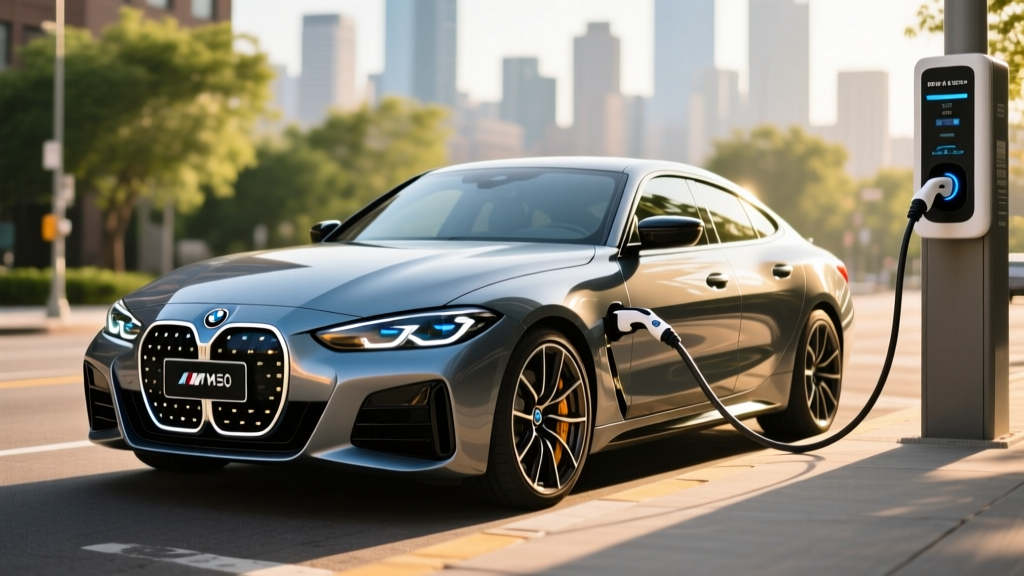
The 2024 BMW i4 M50 occupies a rare position in the EV market: it's a performance sedan that prioritizes driving dynamics over headline-grabbing range or futuristic styling. Built on BMW's CLAR platform — the same architecture underpinning the 4 Series Gran Coupe — the i4 M50 delivers dual-motor all-wheel drive, 536 horsepower, and a 3.7-second 0-60 mph time while maintaining the ride quality and interior refinement BMW buyers expect. The trade-off is an EPA-estimated 270 miles of range from its 81.5 kWh usable battery pack, which trails rivals like the Tesla Model 3 Performance and Hyundai Ioniq 6 on paper. But for drivers who value chassis balance, build quality, and a cabin that doesn't feel like a tech demo, the i4 M50 makes a compelling case as a daily-drivable electric sports sedan.
At a starting MSRP of $69,700 (before destination), the i4 M50 sits in premium territory. Federal tax credit eligibility is complicated — more on that below — and real-world range will vary significantly based on driving style and climate. This review breaks down every number that matters before you sign a lease or purchase agreement.
Range & Efficiency: EPA Numbers vs. What You'll Actually See
EPA Estimated: 270 miles (with 19" wheels)
Real-World Expectation: 230–255 miles mixed driving; 210–230 miles sustained highway at 70+ mph; 185–210 miles in freezing temperatures with cabin heat
Efficiency: 97 MPGe combined / 34 kWh per 100 miles
The i4 M50's 270-mile EPA rating applies specifically to models equipped with the standard 19-inch aerodynamic wheels. Option for the 20-inch M performance wheels, and that number drops to approximately 245 miles — a meaningful hit on longer road trips. According to fueleconomy.gov, the combined efficiency rating is 97 MPGe, translating to 34 kWh consumed per 100 miles of driving.
In real-world testing, the i4 M50's gran coupe silhouette — with its sloping roofline and sport-tuned suspension — creates more aerodynamic drag than sleeker competitors like the Hyundai Ioniq 6 (EPA 360 miles) or the Tesla Model 3 Long Range (EPA 341 miles). At sustained highway speeds above 70 mph, expect range to contract to roughly 210–230 miles before needing a charge. Cold weather compounds this: in temperatures below 32°F, battery chemistry limitations and cabin heating demands can push range down to 185–210 miles. The i4 M50 does include a heat pump as standard equipment, which helps mitigate winter losses compared to resistive heating systems, but the physics of a 5,000+ lb performance sedan work against it.
One practical note: BMW's battery management system reserves a buffer at both the top and bottom of the state of charge, so the 81.5 kWh usable capacity (out of 83.9 kWh gross) already accounts for longevity protection. You won't regularly see a true 100% or 0% on the dash.
| Spec | Value |
|---|---|
| Battery (usable / gross) | 81.5 kWh / 83.9 kWh (NMC) |
| EPA Range (19" wheels) | 270 miles |
| EPA Range (20" wheels) | ~245 miles |
| Efficiency | 97 MPGe / 34 kWh/100mi |
| Drivetrain | Dual-motor AWD (eDrive40 front + rear) |
| Horsepower | 536 hp (combined) |
| Torque | 586 lb-ft |
| 0–60 mph | 3.7 seconds |
| Top Speed | 130 mph (electronically limited) |
| Max DC Fast Charge | 205 kW (CCS1) |
| 10–80% DC Charge Time | ~31 minutes |
| Level 2 AC Charge Rate | 11 kW (~32 miles/hr) |
| Cargo Volume | 16.6 cu ft (rear seats up) |
| Base MSRP | $69,700 |
Charging Speeds: DC Fast Charging and Home Setup
Understanding the difference between kW (power, or how fast energy flows) and kWh (energy, or how much the battery holds) is essential for evaluating any EV's charging capability. The i4 M50's battery stores 81.5 kWh of energy, and its onboard charger and DC fast-charge hardware determine how quickly you can replenish it.
| Level | Power | Miles Added per Hour | Typical Use Case |
|---|---|---|---|
| Level 1 (120V) | ~1.4 kW | ~4 mi/hr | Emergency / overnight trickle |
| Level 2 (240V, 48A) | 11 kW | ~32 mi/hr | Home / workplace daily charging |
| DC Fast Charge | Up to 205 kW | N/A (measured in minutes) | Road trips, highway corridors |
DC Fast Charging: The i4 M50 peaks at 205 kW on a CCS1 connector. BMW quotes a 10–80% charge time of approximately 31 minutes under optimal conditions — meaning a battery preconditioned to the right temperature and connected to a charger capable of sustaining that rate. In practice, the charge curve tapers significantly above 60% state of charge. You'll see peak speeds in the 190–205 kW range from roughly 10–40% SoC, after which the rate progressively drops. From 80–100%, charging slows dramatically to protect battery health, adding 15–20 additional minutes if you need a full fill.
Compared to Hyundai/Kia's E-GMP platform vehicles (which peak at 240+ kW and can hit 10–80% in ~18 minutes), the i4 M50's charging speed is adequate but not class-leading. On Electrify America or EVgo 350 kW chargers, the i4 M50 will be the bottleneck, not the station. For typical road-trip planning, budget 30–35 minutes per stop when charging from 10–80%.
Home Level 2 Charging: The onboard AC charger maxes out at 11 kW, which translates to roughly 32 miles of range added per hour on a 240V/48A circuit. A full charge from near-empty takes approximately 8.5 hours — easily achievable overnight. Most owners will install a 48-amp hardwired Level 2 station (such as a ChargePoint Home Flex or BMW's own Wallbox) on a 60-amp dedicated circuit. Expect installation costs between $800 and $2,500 depending on panel proximity and local permitting, with a possible panel upgrade adding $1,500–$3,000 if your home's electrical service is older or at capacity.
The i4 M50 uses the CCS1 connector standard. Note that BMW has confirmed future models will adopt the NACS (Tesla) connector, but the 2024 i4 M50 requires a CCS-to-NACS adapter for access to Tesla Supercharger stations — and not all Supercharger stalls support adapter-based access at full speed.
Performance & Driving Dynamics
The M50 badge isn't merely cosmetic. The i4 M50 pairs a 258-hp front electric motor with a 312-hp rear motor for a combined 536 horsepower and 586 lb-ft of torque, routed through BMW's xDrive all-wheel-drive system. The result is a 3.7-second 0–60 mph sprint — quick enough to gap most traffic and firmly in sports-sedan territory.
But the M50's real advantage over competitors is chassis tuning. The adaptive M suspension, variable sport steering, and near-50/50 weight distribution (a BMW hallmark, even with a heavy battery pack slung low in the floor) deliver a driving experience that feels planted, communicative, and genuinely engaging on back roads. The regenerative braking system offers multiple levels of recuperation, including an adaptive mode that uses navigation and sensor data to modulate regen based on traffic and upcoming curves. One-pedal driving is available but not as aggressive as some competitors — BMW prioritizes a natural coasting feel.
The trade-off for this dynamic capability is weight: the i4 M50 tips the scales at roughly 5,020 lbs. You feel that mass during hard direction changes, though the low center of gravity and M-tuned dampers manage it better than most. Ride quality in Comfort mode is genuinely compliant — a welcome contrast to the stiff-legged feel of some performance EVs.
Interior, Tech & Practicality
The i4 M50's cabin is where BMW's traditional luxury positioning shows most clearly. The BMW Curved Display — a 12.3-inch instrument cluster merged with a 14.9-inch touchscreen running iDrive 8.5 — dominates the dashboard. Wireless Apple CarPlay and Android Auto are standard, as is a head-up display, Harman Kardon surround sound, and BMW's Intelligent Personal Assistant voice control.
On the driver-assistance front, the i4 M50 comes standard with Active Driving Assistant, which includes forward collision warning, automatic emergency braking, lane departure warning, and blind-spot monitoring. The optional Driving Assistance Professional Package adds adaptive cruise control with stop-and-go, lane-keeping assist, and evasion assist. Important clarity: these are SAE Level 2 driver-assistance systems — the driver must remain fully engaged and hands-on (or eyes-on, depending on the system). This is not autonomous or "self-driving" capability.
Cargo and passenger space reflect the gran coupe form factor. The rear hatch opens to reveal 16.6 cubic feet of cargo space (seats up), expanding to approximately 45.7 cu ft with the 40/20/40 rear seats folded. That hatch design is more practical than a traditional sedan trunk, but the sloping roofline limits vertical space for taller items. Rear legroom measures 34.1 inches — adequate for adults on shorter trips but tighter than a midsize sedan. Rear headroom is the real compromise at 37.0 inches; taller passengers will notice the roofline intrusion. Front occupants fare better with 42.1 inches of legroom and supportive, power-adjustable sport seats.
There is no front trunk (frunk) — the space under the hood houses electronics and the HVAC system, a consequence of the i4's shared platform with ICE 4 Series models rather than a dedicated EV architecture.
Pricing, Trims & Federal Tax Credit Eligibility
The 2024 BMW i4 is available in three trims, though only the M50 is the focus of this review:
- i4 eDrive35: $52,200 — single-motor RWD, 281 hp, EPA 301 miles
- i4 eDrive40: $57,900 — single-motor RWD, 335 hp, EPA 301 miles
- i4 M50: $69,700 — dual-motor AWD, 536 hp, EPA 270 miles
All prices are before the $995 destination charge. Options on the M50 can push the as-tested price well into the $75,000–$82,000 range. Popular packages include the Premium Package (heated steering wheel, heated rear seats, lumbar support), the M Sport Package (aesthetic and suspension upgrades), and the Executive Package (parking assistance, soft-close doors, gesture control).
Does the 2024 BMW i4 M50 Qualify for the Federal EV Tax Credit?
This is where 2024 i4 M50 buyers face a significant hurdle. Under the IRS §30D Clean Vehicle Credit rules, eligibility depends on several factors that work against this specific model:
- MSRP Cap: Sedans must have an MSRP at or below $55,000 to qualify. The i4 M50's $69,700 base price exceeds this cap, making it ineligible for the new-vehicle federal credit regardless of other factors.
- Buyer Income Cap: Even if the price qualified, adjusted gross income must not exceed $150,000 (single), $225,000 (head of household), or $300,000 (joint filers).
- Battery Sourcing: Critical mineral and battery component sourcing requirements further restrict eligible vehicles. BMW's supply chain for the i4 has historically not met these thresholds for US-assembled credits.
- Assembly Location: The i4 is assembled in Munich, Germany. Final assembly in North America is a hard requirement for §30D eligibility.
The bottom line: the 2024 BMW i4 M50 does not qualify for the $7,500 federal tax credit for new vehicle purchases. This is confirmed on fueleconomy.gov's tax credit listings and IRS.gov guidance. Some buyers may find relief through state-level incentives (California's CVRP, Colorado's state credit, etc.) or through BMW's own lease programs, which sometimes pass through commercial credit savings as lease cash — but these vary by jurisdiction and time. Consult a tax professional for your specific situation.
Pros, Cons & Who Should Buy the i4 M50
✅ Pros
- Genuine sports-sedan driving dynamics — steering feel, chassis balance, adaptive damping
- Premium interior with excellent materials, iDrive 8.5 is responsive and feature-rich
- 536 hp and 3.7s 0-60 deliver effortless acceleration
- Heat pump standard — better cold-weather efficiency than many rivals
- Hatchback practicality with 16.6 cu ft cargo area
- Strong build quality and BMW dealer network
❌ Cons
- 270-mile EPA range trails Model 3 Performance (315 mi), Ioniq 6 (360 mi)
- 205 kW peak DC charging is slower than E-GMP rivals (240+ kW)
- No federal tax credit — MSRP and assembly location disqualify it
- Rear headroom and legroom are tight for a $70K+ sedan
- No frunk — platform shared with ICE 4 Series
- Heavy at 5,020 lbs; mass is noticeable in tight corners
- Options quickly push price above $80,000
Who This EV Suits Best
The i4 M50 is ideal for the driving-enthusiast commuter who prioritizes handling, cabin quality, and brand cachet over maximum range or value. If your daily drive is under 80 miles round-trip with home Level 2 charging, the 270-mile range is a non-issue. It also works for couples or small families who need a practical hatchback but want something that feels special to drive. It is less suited for frequent long-distance road trippers (the range and charge speed add stops), large families (rear seat space is limited), or buyers who need the lowest total cost of ownership (no federal credit, premium insurance rates).
How It Stacks Up Against Key Competitors
| Spec | BMW i4 M50 | Tesla Model 3 Performance | Hyundai Ioniq 6 Limited AWD |
|---|---|---|---|
| Base MSRP | $69,700 | $54,990 | $56,100 |
| EPA Range | 270 mi | 315 mi | 270 mi (AWD) |
| 0–60 mph | 3.7s | 2.9s | 5.1s |
| Horsepower | 536 hp | 510 hp | 320 hp |
| Max DC Charge | 205 kW | 250 kW | 240 kW |
| 10–80% Time | ~31 min | ~25 min | ~18 min |
| Federal Credit | No | Partial* | Yes (up to $7,500)* |
* Tax credit eligibility depends on buyer income, battery sourcing, and current IRS rules. Verify at irs.gov before purchasing.
The Tesla Model 3 Performance wins on straight-line speed, range, charging speed, and price — and may qualify for partial federal credit. But it can't match the BMW's interior quality, ride refinement, or steering feedback. The Ioniq 6 charges fastest and offers strong range, but gives up significant performance (5.1s 0-60) and lacks the premium badge appeal. The i4 M50 is the driver's choice, not the spreadsheet choice.
Battery Warranty & Long-Term Ownership
BMW covers the i4 M50's high-voltage battery for 8 years or 100,000 miles, whichever comes first, against defects and capacity loss below 70% of original capacity. The powertrain (electric motors, power electronics) carries the same 8-year/100,000-mile coverage. The basic vehicle warranty is 4 years/50,000 miles, and BMW includes 3 years/36,000 miles of complimentary scheduled maintenance.
The NMC (nickel manganese cobalt) chemistry in the i4 M50 offers high energy density but is more sensitive to sustained high state-of-charge and extreme heat than LFP (lithium iron phosphate) batteries. Best practices for longevity: set daily charge limits to 80% via the iDrive system, avoid frequent DC fast charging when Level 2 is available, and use the preconditioning feature before fast-charging stops. Real-world degradation data from early i4 owners suggests approximately 5–8% capacity loss over the first 50,000 miles — within normal expectations for NMC packs.
Insurance costs tend to run 15–25% higher than comparable ICE BMW 4 Series models, reflecting the i4's higher repair costs and battery replacement expense. Get quotes before purchasing — premiums vary significantly by carrier and region.
Frequently Asked Questions
What is the real-world range of the 2024 BMW i4 M50?
Expect 230–255 miles in mixed driving, 210–230 miles on sustained highway trips, and 185–210 miles in freezing weather. The EPA rates it at 270 miles with 19" wheels, but real-world conditions — especially speed, temperature, and terrain — reduce that figure. The heat pump helps in winter, but the sedan's weight and drag work against it.
How fast does the i4 M50 charge at home and on the road?
At home on a 240V Level 2 charger (11 kW), the i4 M50 adds roughly 32 miles of range per hour, with a full charge taking about 8.5 hours. On DC fast chargers, it peaks at 205 kW and charges from 10–80% in approximately 31 minutes under optimal conditions. Charging slows considerably above 80% to protect battery health.
Does the 2024 BMW i4 M50 qualify for the $7,500 federal EV tax credit?
No. The i4 M50's MSRP of $69,700 exceeds the $55,000 sedan cap under IRS §30D rules, and the vehicle is assembled in Germany rather than North America. It does not qualify for the new-vehicle federal credit. State incentives and BMW lease programs may offer partial relief — check IRS.gov and your state's EV incentive page for current details.
Is the i4 M50 worth buying over a Tesla Model 3 Performance?
It depends on your priorities. The Model 3 Performance is faster (2.9s 0-60), has longer range (315 mi), charges quicker (250 kW), costs $15,000 less, and may qualify for a federal credit. The i4 M50 wins on interior luxury, ride comfort, steering feel, and overall build quality. If driving engagement and cabin refinement matter more than value and range, the BMW is worth the premium. If you optimize for cost-per-mile and tech features, the Tesla is the rational pick.
Does the i4 M50 have a frunk?
No. Because the i4 shares BMW's CLAR platform with the combustion-engine 4 Series, there is no front trunk. All cargo space is in the rear hatch area (16.6 cu ft).
What connector does the i4 M50 use?
The 2024 i4 M50 uses the CCS1 connector for DC fast charging and a J1772 inlet for Level 1/Level 2 AC charging. An adapter is required to use Tesla Superchargers, and compatibility may vary by station.