Quick Verdict: The Electric 4 Series That Actually Drives Like a BMW
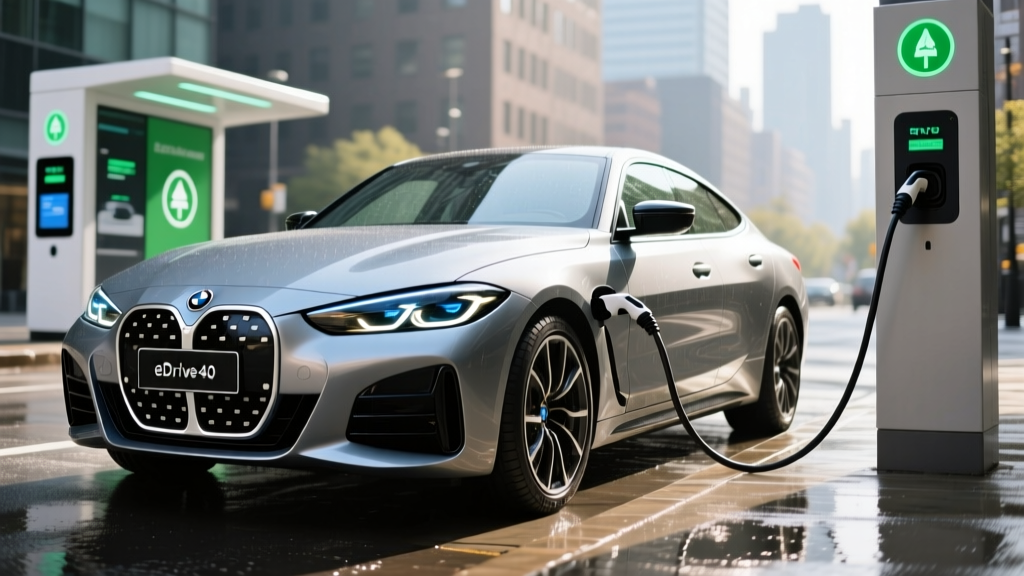
The 2024 BMW i4 eDrive40 is the rare EV that doesn't ask its driver to sacrifice anything meaningful to go electric. Built on BMW's CLAR platform — shared with the conventional 4 Series Gran Coupe — it delivers 335 horsepower, 301 miles of EPA-rated range, and the kind of chassis balance that reminds you why BMW earned its reputation. It's not a dedicated EV platform, and that shows in a few packaging compromises, but for the driver who wants a premium electric sedan without crossover proportions, the i4 eDrive40 makes a compelling case.
For 2024, the eDrive40 remains the volume trim — a single-motor, rear-wheel-drive configuration that prioritizes range and value over the dual-motor M50's performance punch. With a starting MSRP around $57,900 (including destination), it undercuts rivals like the Tesla Model S while offering a more traditional luxury sedan experience with BMW's latest iDrive 8.5 infotainment.
Range, Efficiency, and Real-World Expectations
The EPA rates the 2024 BMW i4 eDrive40 at 301 miles of combined range on its 19-inch wheels (the standard setup). Opt for the larger 20-inch M Sport wheels, and that drops to approximately 274 miles due to increased rolling resistance and weight. Efficiency comes in at a strong 109 MPGe combined, or roughly 30 kWh per 100 miles, according to fueleconomy.gov.
EPA Sticker: 301 miles (19" wheels, combined)
Expect in real-world highway driving (70-75 mph): ~260–280 miles. The i4's aerodynamic efficiency holds up well at speed, but sustained highway driving always costs more energy than the EPA's mixed cycle suggests.
Cold weather (below 32°F / 0°C): Expect a 15–25% reduction, putting you in the 225–255 mile range. The i4's heat pump (standard on 2024 models) mitigates cabin-heating losses, but battery chemistry itself becomes less efficient in cold temperatures.
Best-case scenario (city driving, mild weather, moderate speeds): You can approach or even slightly exceed the 301-mile EPA figure thanks to generous regenerative braking opportunities.
The usable battery capacity is approximately 81.5 kWh from a gross pack rated at 83.9 kWh. BMW uses NMC (nickel manganese cobalt) chemistry in the i4 — chosen for its higher energy density, which is essential given the car's sedan form factor where space for cells is more constrained than in an SUV. BMW doesn't publish a specific cell supplier for the 2024 US-market i4, but the pack is assembled in-house at BMW's Dingolfing facility.
Charging Speed: DC Fast, Level 2, and Level 1
The i4 eDrive40 supports a peak DC fast-charging rate of 205 kW via its CCS1 connector. In practice, BMW's charging curve is one of the more honest in the industry — the car sustains strong power delivery through the mid-range of the state of charge before tapering.
| Charging Level | Power / Voltage | Speed (Miles of Range Added) | Time |
|---|---|---|---|
| Level 1 (120V household) | ~1.4 kW | ~3–4 miles per hour | ~60+ hours (0–100%) |
| Level 2 (240V home, 48A) | 11 kW (onboard charger max) | ~30–34 miles per hour | ~8.5 hours (0–100%) |
| DC Fast Charge (CCS) | Peak 205 kW | Up to ~200 miles in 10 min | ~31 min (10–80%) |
The 10–80% DC fast-charge time of approximately 31 minutes is competitive but not class-leading — the Hyundai Ioniq 6 and Porsche Taycan both charge faster. However, 205 kW peak means you'll find plenty of headroom at most Electrify America and EVgo stations, which commonly deliver 150–350 kW. One practical note: the charging curve tapers noticeably above 80% SoC, so plan your road-trip stops around the 10–80% window rather than topping off to full unless you have time to wait.
At home, the i4's 11 kW onboard AC charger is a strong point. On a 48-amp Level 2 circuit (the most common home installation on a 60-amp breaker), you'll recover roughly 30–34 miles of range per hour — enough for a full overnight charge from nearly empty. BMW includes a Flexible Fast Charger cable with the car that handles both 120V and 240V outlets, though dedicated wall units from ChargePoint or the BMW-branded Wallbox offer a cleaner permanent setup.
Performance and Driving Dynamics
| Specification | 2024 BMW i4 eDrive40 |
|---|---|
| Powertrain | Single electric motor, rear-wheel drive |
| Horsepower | 335 hp |
| Torque | 317 lb-ft |
| 0–60 mph | 5.5 seconds |
| Top Speed | 118 mph (electronically limited) |
| Battery (usable / gross) | 81.5 kWh / 83.9 kWh (NMC) |
| EPA Range (19" wheels) | 301 miles |
| EPA Efficiency | 109 MPGe combined / 30 kWh/100mi |
| DC Fast Charge (peak) | 205 kW (CCS1) |
| 10–80% DC Charge Time | ~31 minutes |
| Level 2 Onboard Charger | 11 kW |
| Curb Weight | ~4,682 lbs |
| Cargo Volume (rear seats up / folded) | 16.6 cu ft / 45.6 cu ft |
| Rear Legroom | 34.5 inches |
| Battery Warranty | 8 years / 100,000 miles |
| Base MSRP (incl. destination) | $57,900 |
The single rear-mounted motor delivers 335 hp and 317 lb-ft of torque, propelling the i4 eDrive40 to 60 mph in 5.5 seconds. That's comfortably quick — faster than most V6-powered luxury sedans — and the instant torque delivery makes it feel even more responsive in real-world passing situations. The rear-drive layout gives the i4 a traditional BMW character: neutral balance, predictable breakaway, and a willingness to rotate through corners that AWD-heavy EV competitors often lack.
Ride quality is firm but well-damped, particularly with the optional Adaptive M Suspension. Road noise is impressively isolated — BMW added acoustic insulation specific to the i4 variant. The steering is precise if not as communicative as a 3 Series, but for a 4,600-pound electric sedan, the dynamics are genuinely engaging.
Interior, Tech, and Daily Usability
The cabin uses BMW's curved display layout: a 12.3-inch instrument cluster flows into a 14.9-inch central touchscreen running iDrive 8.5. The system is responsive, logically menued, and supports wireless Apple CarPlay and Android Auto. Physical shortcut buttons for climate and volume remain — a welcome decision in an era of touch-only interfaces.
The Gran Coupe hatchback body style gives the i4 a practical advantage over traditional sedans. The rear liftgate opens wide, and the 16.6 cubic feet of cargo space behind the rear seats (45.6 cu ft with seats folded) is genuinely usable. For comparison, the Tesla Model 3 sedan offers 23 cu ft of trunk space, but its opening is much narrower. The i4's hatch is more practical for bulky items like luggage or a folded stroller.
However, the shared CLAR platform means the battery sits beneath the floor in a space originally designed for a driveshaft tunnel and fuel tank. The result is a slightly raised floor in the rear seat, which reduces under-thigh support for taller passengers. Rear legroom at 34.5 inches is adequate but not generous — adults over 6 feet will find long trips in the back seat less comfortable than in a dedicated EV platform like the Hyundai Ioniq 6.
Standout tech features:
- Driving Assistant Professional (optional): Includes adaptive cruise with stop-and-go, lane centering, and automatic lane change on highways. This is a Level 2 SAE system — driver supervision is required at all times.
- Parking Assistant Plus with surround-view cameras and remote-controlled parking via the BMW app.
- BMW Digital Key Plus: Uses ultra-wideband to unlock and start the car from your iPhone or compatible Samsung device without removing it from your pocket.
- IconicSounds Electric: Hans Zimmer-composed drive soundscapes (love it or leave it, you can turn them off).
Pricing, Trims, and Federal Tax Credit Eligibility
The 2024 BMW i4 eDrive40 starts at $57,900 including destination. Key options that push the price higher include the Premium Package (~$2,800), Driving Assistant Professional (~$1,700), M Sport Package (~$3,200), and the Executive Package with ventilated seats and a head-up display (~$3,200). A well-equipped eDrive40 typically lands between $62,000 and $67,000 before incentives.
| Item | Amount |
|---|---|
| Base MSRP (eDrive40) | $57,900 |
| As-tested (typical equipped) | ~$63,500 |
| Federal §30D EV Tax Credit (potential) | Up to $7,500 |
| Effective price after max credit | ~$50,400 – $56,000 |
Does the 2024 BMW i4 eDrive40 qualify for the federal EV tax credit? This is where it gets complex, and the answer depends on your specific situation. Under current IRS §30D rules, the i4 eDrive40 is eligible for up to $7,500 in federal tax credit — but only if you meet all of the following criteria:
- MSRP cap: The vehicle's MSRP must not exceed $55,000 for sedans. Since the i4 eDrive40 starts at $57,900, it exceeds the sedan MSRP cap. This is a critical point — as a sedan, the i4 does NOT qualify for the §30D new-vehicle credit at its base price.
- Buyer income limits: Modified adjusted gross income must not exceed $150,000 (single), $225,000 (head of household), or $300,000 (joint filing).
- Battery sourcing: Critical minerals and battery components must meet phased-in domestic-content thresholds (50% domestic critical minerals and 60% domestic battery components for 2024 model-year vehicles).
- Point-of-sale transfer: As of 2024, eligible buyers can transfer the credit to the dealer at purchase, reducing the purchase price directly rather than waiting to claim it on their tax return.
The MSRP cap is the dealbreaker for most i4 buyers. BMW classifies the i4 as a sedan (not an SUV), meaning the $55,000 cap applies — and the eDrive40 clears that threshold by nearly $3,000 at base. Some buyers have explored whether specific option configurations or BMW's own vehicle classification could shift this, but as of the current IRS eligible vehicle list, the i4 sedan is subject to the $55,000 cap. Always verify your specific eligibility with a tax professional and the latest IRS guidance before purchasing.
Warranty and Long-Term Ownership
BMW backs the i4's high-voltage battery with an 8-year / 100,000-mile warranty, which guarantees the battery will retain at least 70% of its original capacity during that period. The limited vehicle warranty covers 4 years / 50,000 miles, and complimentary scheduled maintenance is included for 3 years / 36,000 miles — a meaningful perk that reduces early ownership costs.
NMC batteries in BMW's fifth-generation eDrive system have shown strong degradation performance in European fleet data. Real-world reports from high-mileage i4 owners suggest roughly 5–8% capacity loss in the first 60,000 miles, which is well within the warranty threshold. The thermal management system is liquid-cooled and actively conditions the battery during both driving and charging, which contributes to longevity.
If a battery replacement were ever needed out of warranty, BMW has not published a consumer-facing replacement cost for the i4 specifically, but industry estimates for comparable 80+ kWh NMC packs range from $12,000 to $18,000 including labor. This remains a long-term ownership risk worth factoring into your decision if you plan to keep the vehicle well beyond the warranty period.
How It Compares to Key Competitors
The i4 eDrive40's most direct rivals are the Tesla Model 3 Long Range, Hyundai Ioniq 6 SE/Limited, and the Polestar 2 Long Range Single Motor. Here's how they stack up on the metrics that matter:
| Spec | 2024 BMW i4 eDrive40 | 2024 Tesla Model 3 LR | 2024 Ioniq 6 Limited | 2024 Polestar 2 LR SM |
|---|---|---|---|---|
| EPA Range | 301 mi | 341 mi | 305 mi | 320 mi |
| Price (base) | $57,900 | $47,740 | $46,700 | $51,300 |
| 0–60 mph | 5.5 sec | 4.2 sec | 5.1 sec | 6.2 sec |
| DC Fast Charge (peak) | 205 kW | 250 kW | 240 kW | 205 kW |
| 10–80% Time | ~31 min | ~25 min | ~18 min | ~30 min |
| Cargo Volume | 16.6 cu ft | 23 cu ft | 12.3 cu ft | 14.4 cu ft |
| Federal Tax Credit | Likely not (MSRP cap) | $7,500 eligible | $7,500 eligible | Likely not (MSRP cap) |
The Model 3 wins on range, price, charging speed, and tax credit eligibility — a formidable combination. But the i4 answers with superior build quality, a quieter cabin, more traditional luxury materials, and driving dynamics that feel more substantial. The Ioniq 6 charges faster than anything in this group and is the most affordable, but its styling is polarizing and rear visibility is poor. The Polestar 2 offers a minimalist Scandinavian interior and strong safety credentials but trails on performance and charging speed.
Pros
- Engaging rear-drive dynamics — genuinely fun to drive
- Premium cabin materials and excellent noise isolation
- Strong 301-mile EPA range with proven real-world reliability
- Hatchback practicality with 16.6 cu ft of usable cargo
- iDrive 8.5 is responsive with physical shortcut buttons retained
- 11 kW Level 2 onboard charger enables fast home charging
- Complimentary maintenance for 3 years / 36,000 miles
Cons
- Base MSRP exceeds $55,000 sedan cap — likely ineligible for §30D credit
- DC fast charging (205 kW / 31 min 10–80%) trails Ioniq 6 and Model 3
- Rear seat floor is slightly raised, reducing under-thigh support
- Rear legroom (34.5") is tight for taller passengers
- Options packages add up quickly — $65K+ is common
- CCS1 connector only — no native NACS (Supercharger access requires adapter)
Who Should Buy the 2024 BMW i4 eDrive40?
Choose the i4 eDrive40 if:
- You want a premium electric sedan with genuine driving engagement and don't want a crossover
- You have access to home Level 2 charging and your daily commute is under 80 miles round-trip
- Build quality, cabin quietness, and brand cachet matter more to you than maximizing range-per-dollar
- You value BMW's dealer network and included maintenance program
Look elsewhere if:
- The $7,500 federal tax credit is essential to your budget — the Model 3 LR or Ioniq 6 will serve you better
- You regularly carry rear-seat passengers over 6 feet tall
- Fastest possible DC charging is a priority for frequent road trips (consider the Ioniq 6's 18-min 10–80%)
- You want Tesla Supercharger network access without an adapter — wait for BMW's planned NACS transition or plan to use a CCS-to-NACS adapter
Frequently Asked Questions
What is the real-world range of the 2024 BMW i4 eDrive40?
The EPA rates it at 301 miles on 19-inch wheels. In real-world mixed driving, expect 260–280 miles on the highway and potentially close to or exceeding 301 miles in city driving with regenerative braking. In cold weather below freezing, plan for 225–255 miles. The car's heat pump helps, but battery chemistry inherently loses efficiency in cold temperatures.
How fast does the i4 eDrive40 charge at home and on the road?
At home on a 48-amp Level 2 charger (240V), the i4's 11 kW onboard charger adds roughly 30–34 miles of range per hour, fully charging the battery in about 8.5 hours. On a DC fast charger, it peaks at 205 kW and charges from 10–80% in approximately 31 minutes. That's adequate for road-trip stops but not class-leading.
Does the 2024 BMW i4 qualify for the $7,500 federal EV tax credit?
Most likely not. Because BMW classifies the i4 as a sedan, it falls under the $55,000 MSRP cap for the §30D credit. The eDrive40 starts at $57,900, exceeding that cap. Even if the battery sourcing requirements are met, the MSRP disqualifies it. Always confirm with the IRS eligible vehicle list and a tax professional before purchasing.
Is the BMW i4 eDrive40 worth buying over a Tesla Model 3?
It depends on your priorities. The Model 3 Long Range offers more range (341 mi), faster charging, a lower price ($47,740), and full tax credit eligibility. The i4 counters with superior interior materials, quieter ride, more engaging driving dynamics, hatchback practicality, and BMW's dealer/service network. If driving feel and luxury matter most, the i4 justifies its premium. If value and efficiency lead your list, the Model 3 wins.
Does the i4 use NACS or CCS for charging?
The 2024 i4 uses a CCS1 connector for DC fast charging and a J1772 inlet for Level 2 AC charging. BMW has announced plans to transition to the NACS (Tesla) connector for future models, but the 2024 i4 requires a CCS-to-NACS adapter to access Tesla Superchargers. BMW provides or supports adapter solutions — check with your dealer for the latest compatibility details.
What is the battery warranty on the BMW i4?
BMW covers the high-voltage battery for 8 years or 100,000 miles, whichever comes first. The warranty guarantees the battery will retain at least 70% of its original usable capacity. The general vehicle warranty is 4 years / 50,000 miles, and BMW includes complimentary scheduled maintenance for 3 years / 36,000 miles.
Can the i4 eDrive40 tow?
No. The i4 eDrive40 is not rated for towing in the US market. If towing capacity is a requirement, consider the BMW iX, Rivian R1S, or Ford F-150 Lightning.