Quick Verdict: The 2024 Blazer EV in 2026
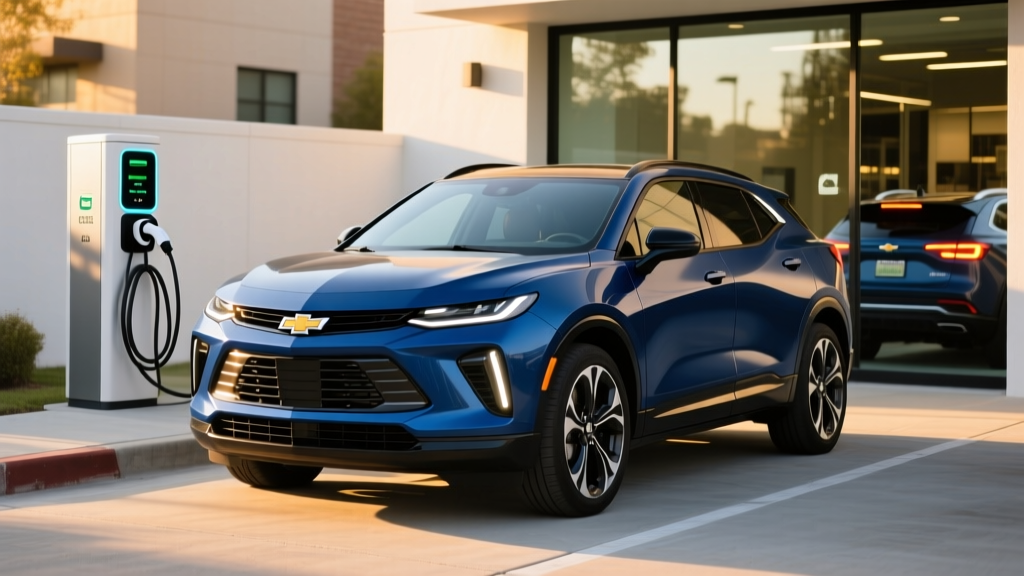
The 2024 Chevrolet Blazer EV was one of the most anticipated midsize electric crossovers to reach dealers — and after two years on the road, its strengths and weaknesses are well documented. With a usable battery capacity of roughly 102 kWh (GM's Ultium NMC chemistry), EPA range up to 324 miles on the RS AWD trim, and a spacious cabin that mirrors the gas Blazer's practicality, it slots squarely into the family-EV segment. But peak DC fast-charging at 190 kW puts it behind rivals like the Hyundai Ioniq 5 and Tesla Model Y in replenishment speed, and early software stumbles (Chevy halted sales briefly in late 2023 for infotainment fixes) shaped first-year ownership. For 2026 buyers shopping the used or remaining new-inventory market, the 2024 Blazer EV is a comfortable, long-range cruiser that rewards home-charging owners more than frequent road-trippers.
EPA sticker: 324 miles (RS AWD, 19-inch wheels). Real-world expectation: ~260–290 miles on mixed highway driving at 70 mph, dropping to ~220–250 miles in sub-freezing temperatures. The 2LT FWD achieves up to 279 mi EPA; the SS performance trim drops to 290 mi EPA. Cold-weather losses of 20–30% are typical for NMC packs without aggressive preconditioning.
Range, Battery & Efficiency
The Blazer EV rides on GM's BEV3 platform and uses an NMC (nickel manganese cobalt) Ultium battery pack — not the LFP chemistry found in some base Tesla Model Y variants. NMC offers higher energy density, which helps the Blazer achieve its long EPA numbers, but it is more sensitive to sustained 100% state-of-charge storage and benefits from the 20–80% daily charging habit most EV owners adopt.
| Spec | 2LT (FWD) | RS (RWD) | RS (AWD) | SS (AWD) |
|---|---|---|---|---|
| EPA Range | 279 mi | 334 mi | 324 mi | 290 mi |
| Battery (usable) | 85 kWh | 102 kWh | 102 kWh | 102 kWh |
| Chemistry | NMC | NMC | NMC | NMC |
| Horsepower | 220 hp | 340 hp | 288 hp | 557 hp |
| 0–60 mph | ~8.0 sec | ~6.0 sec | ~6.5 sec | ~3.4 sec (WOW mode) |
| Drivetrain | FWD single motor | RWD single motor | Dual-motor AWD | Dual-motor AWD |
| EPA Efficiency | 92 MPGe (36 kWh/100mi) | 87 MPGe (39 kWh/100mi) | 85 MPGe (40 kWh/100mi) | 76 MPGe (44 kWh/100mi) |
| Max DC Fast Charge | 190 kW | 190 kW | 190 kW | 190 kW |
| Level 2 Charge Rate | 11.5 kW (~31 mi/hr) | 11.5 kW (~31 mi/hr) | 11.5 kW (~31 mi/hr) | 11.5 kW (~31 mi/hr) |
| Towing Capacity | — | — | 1,500 lbs | — |
Source: EPA / fueleconomy.gov, Chevrolet
The 102 kWh pack is large by midsize crossover standards — larger than the Ioniq 5's 77.4 kWh or the Model Y Long Range's ~75 kWh — and that capacity is what delivers the 300+ mile range. However, a larger battery also means longer charge sessions if peak kW is modest, which brings us to the Blazer's most debated spec.
Charging Speed: DC Fast, Level 2 & Home Setup
On a DC fast charger, the 2024 Blazer EV peaks at 190 kW — adequate, but not class-leading. In real-world testing on 350 kW Electrify America or Tesla Supercharger (via NACS adapter, now standard on newer GM EVs but available via adapter for 2024 CCS-equipped models), the 10–80% session takes approximately 28–34 minutes depending on battery temperature and station output.
| Level | Power | Miles Added | Time |
|---|---|---|---|
| Level 1 (120V household) | ~1.4 kW | ~4 mi/hr | ~65+ hrs (0–100%) |
| Level 2 (240V, 48A home) | 11.5 kW | ~31 mi/hr | ~9.5 hrs (0–100%) |
| DC Fast Charge (peak) | 190 kW | ~180 mi in 20 min | ~28–34 min (10–80%) |
The charge curve matters here. The Blazer EV holds close to its 190 kW peak from roughly 10–40% state of charge, then tapers progressively. Above 80%, charging slows sharply — a characteristic of NMC packs with conservative thermal management. If you're road-tripping, plan your stops around the 15–80% window for the fastest throughput; charging past 90% at a DC station adds significant time for minimal range gain.
For home charging, the 11.5 kW onboard charger is competitive. A fully depleted 102 kWh battery replenishes overnight on a Level 2 wall connector — roughly 9.5 hours from empty. Most owners who plug in nightly will never need DC fast charging for daily use. Budget roughly $800–$1,500 for a quality Level 2 home station (ChargePoint Home Flex, Emporia, or Wallbox Pulsar Plus) plus $500–$2,000 for electrician installation depending on panel capacity and run length. If your home has a 200-amp panel with spare breaker slots, installation stays on the lower end.
Performance & Driving Dynamics
The Blazer EV lineup offers something for most driving priorities. The base 2LT FWD (220 hp) is adequate for commuting but feels its 4,700+ lb curb weight during highway merges. The RS RWD (340 hp) is the sweet spot for most buyers — responsive off the line, efficient, and the longest-range variant at 334 miles EPA.
The SS trim is the headliner: 557 hp, GM's WOW (Wide Open Watt) mode, and a 3.4-second 0–60 time that puts it in Porsche Cayenne territory. But the SS sacrifices range (290 mi EPA) and efficiency (76 MPGe) for that performance, and the price premium is substantial.
Ride quality across all trims is composed and quiet — GM's acoustic glass and active noise cancellation work well. The steering is light and direct, the regenerative braking offers a one-pedal driving mode with adjustable levels via steering-wheel paddles, and the turning radius is reasonable for a crossover this size. It's not a sports car (the SS excepted), but it's a genuinely comfortable long-distance cruiser.
Interior, Cargo & Technology
The cabin is where the Blazer EV leverages its GM midsize-crossover DNA. Passenger space is generous:
- Front legroom: 43.4 inches
- Rear legroom: 38.3 inches
- Cargo behind rear seats: 25.5 cu ft
- Cargo with rear seats folded: 55.1 cu ft
- Front trunk (frunk): None — the Blazer EV does not include a frunk, which is a notable omission vs. the Ford Mustang Mach-E (4.7 cu ft) or Rivian R1S.
The centerpiece of the dash is a 17.7-inch diagonal infotainment touchscreen paired with an 11-inch driver display. Google Built-In (Google Maps, Google Assistant, Play Store) is standard, meaning navigation and voice commands work natively without phone mirroring. Wireless Apple CarPlay and Android Auto are also included. Physical climate controls are absent — everything routes through the touchscreen, which drew criticism from reviewers and owners who prefer tactile buttons.
Driver-assistance technology includes Chevy's Super Cruise (available on RS and SS trims), a hands-free highway driving system rated as SAE Level 2 — meaning the driver must remain attentive and eyes on the road at all times. Super Cruise works on over 400,000 miles of mapped highways in the US and Canada and is one of the most capable Level 2 systems available, but it is not autonomous driving.
Super Cruise is an SAE Level 2 driver-assistance system. The vehicle controls steering, acceleration, and braking on compatible highways, but the driver must remain engaged, monitor surroundings, and be prepared to take over instantly. It is not self-driving. Only Level 4 services (e.g., Waymo in limited geofenced areas) operate without a human driver.
Pricing, Trims & Federal Tax Credit
The 2024 Blazer EV launched with aggressive pricing, though early MSRPs shifted as GM adjusted content and incentives. Here's where the trims land:
| Trim | Base MSRP | §30D Federal Credit | Effective Price (if eligible) |
|---|---|---|---|
| 2LT FWD | $44,600 | Up to $7,500* | ~$37,100 |
| RS RWD | $51,400 | Up to $7,500* | ~$43,900 |
| RS AWD | $54,200 | Up to $7,500* | ~$46,700 |
| SS AWD | $62,800 | Up to $7,500* | ~$55,300 |
*MSRP shown before destination charge (~$1,395). Tax credit subject to IRS §30D eligibility. Source: Chevrolet, IRS.gov
The federal §30D Clean Vehicle Credit can reduce your tax burden by up to $7,500, but eligibility depends on several requirements that shift periodically:
- MSRP cap: SUVs/crossovers must be at or below $80,000 — all Blazer EV trims qualify.
- Buyer income cap: Modified AGI must not exceed $150,000 (single), $225,000 (head of household), or $300,000 (joint).
- Battery sourcing: Critical minerals and battery components must meet escalating domestic-content thresholds. As of 2024–2025, the Blazer EV (built in Ramos Arizpe, Mexico, with Ultium cells from US plants) has qualified for the full $7,500, but sourcing rules tighten annually. Verify current eligibility at fueleconomy.gov before purchasing.
- Point-of-sale transfer: Buyers can transfer the credit to the dealer at purchase, receiving the $7,500 as an immediate price reduction rather than waiting to claim it on a tax return.
Always confirm with a tax professional and check the latest IRS guidance — rules change, and your individual situation (tax liability, income, prior credit usage) affects eligibility.
Warranty & Long-Term Battery Health
Chevrolet covers the Blazer EV's battery and powertrain with an 8-year / 100,000-mile limited warranty, which guarantees the battery will retain a minimum capacity threshold (typically ~60–70% of original capacity, though GM's exact warranty language should be reviewed in the owner's manual). The bumper-to-bumper warranty is 3 years / 36,000 miles.
NMC battery degradation for the Ultium platform is expected to follow industry norms: roughly 5–10% capacity loss over the first 5 years, leveling off thereafter. Real-world data from 2024 model-year Blazer EVs is still maturing, but GM's thermal management system (liquid cooling with active preconditioning) is designed to mitigate the accelerated degradation that plagued some early passive-cooled EVs. To maximize longevity:
- Set daily charge limit to 80% (configurable in the infotainment system).
- Avoid repeated DC fast-charging to 100%.
- Use preconditioning when navigating to a DC charger — the Blazer EV will warm or cool the battery to optimize charge acceptance.
Pros, Cons & Who Should Buy
- Class-leading EPA range (334 mi RS RWD) in the midsize EV crossover segment
- Spacious cabin with 38+ inches of rear legroom
- Super Cruise (Level 2) hands-free highway driving available
- Quiet, comfortable ride quality with strong sound insulation
- Google Built-In infotainment with native Maps and Assistant
- SS trim offers 557 hp and sub-3.5-second 0–60
- Qualifies for full $7,500 §30D credit (verify current sourcing rules)
- 190 kW peak DC charging is slower than rivals (Ioniq 5 at 240 kW, Model Y at 250 kW)
- No front trunk (frunk) — lost cargo opportunity
- Touchscreen-only climate controls frustrate some drivers
- Early software issues (late-2023 sales pause) affected brand perception
- Heavy curb weight (~4,700–5,200 lbs) impacts efficiency at highway speeds
- Base 2LT FWD is underpowered for the weight
- No NACS port from factory (CCS1 standard; adapter needed for Tesla Superchargers)
Best for: Families and commuters who prioritize range and cabin space over fast-charging speed. The RS RWD at 334 miles EPA is the value-and-range sweet spot. If you charge at home nightly and take road trips 2–3 times a year, the Blazer EV's range advantage outweighs its charging-speed deficit.
Look elsewhere if: You road-trip frequently and want the fastest possible DC charge stops (Hyundai Ioniq 5, Kia EV6, or Tesla Model Y charge 5–10 minutes faster per session), or if you need a frunk for gear storage.
Frequently Asked Questions
What is the real-world range of the 2024 Blazer EV?
The EPA rates the RS RWD at 334 miles and the RS AWD at 324 miles. In real-world mixed highway driving at 65–75 mph, expect 260–290 miles. In cold weather (below 32°F), range can drop to 220–250 miles due to battery chemistry limitations and cabin heating demands. City driving with regenerative braking tends to return results closer to or slightly above EPA estimates.
How fast does the 2024 Blazer EV charge?
On a DC fast charger, it peaks at 190 kW, achieving a 10–80% charge in roughly 28–34 minutes. On a Level 2 home charger (11.5 kW / 48 amps), a full charge takes about 9.5 hours. Level 1 (120V) adds roughly 4 miles per hour — suitable only for emergency topping off.
Does the 2024 Blazer EV qualify for the $7,500 federal tax credit?
As of its launch year, the Blazer EV qualified for the full $7,500 §30D credit. However, eligibility depends on buyer income limits, battery critical-mineral sourcing requirements (which tighten annually), and MSRP caps. Always verify current status at fueleconomy.gov and consult a tax professional. The credit can be transferred to the dealer at point of sale for an immediate price reduction.
Is the 2024 Blazer EV worth buying vs. competitors?
It depends on your priorities. The Blazer EV wins on EPA range (324–334 mi beats the Mach-E Extended Range at ~312 mi and the Ioniq 5 at ~303 mi). It loses on DC charging speed (190 kW vs. 240–250 kW for rivals) and lacks a frunk. If range and interior space are your top criteria, it's a strong pick. If fast road-trip charging is critical, the Ioniq 5 or Model Y serves better.
Does the Blazer EV have Super Cruise?
Yes — Super Cruise is available on RS and SS trims. It is an SAE Level 2 hands-free highway driving system that works on over 400,000 miles of compatible roads. The driver must remain attentive and eyes-forward at all times; it is not autonomous or self-driving.
What is the battery warranty?
Chevrolet provides an 8-year / 100,000-mile battery and powertrain limited warranty, guaranteeing minimum capacity retention over that period. The bumper-to-bumper warranty covers 3 years / 36,000 miles.