Quick Verdict: A Luxury Grand Tourer That Charges Like a Sports Car
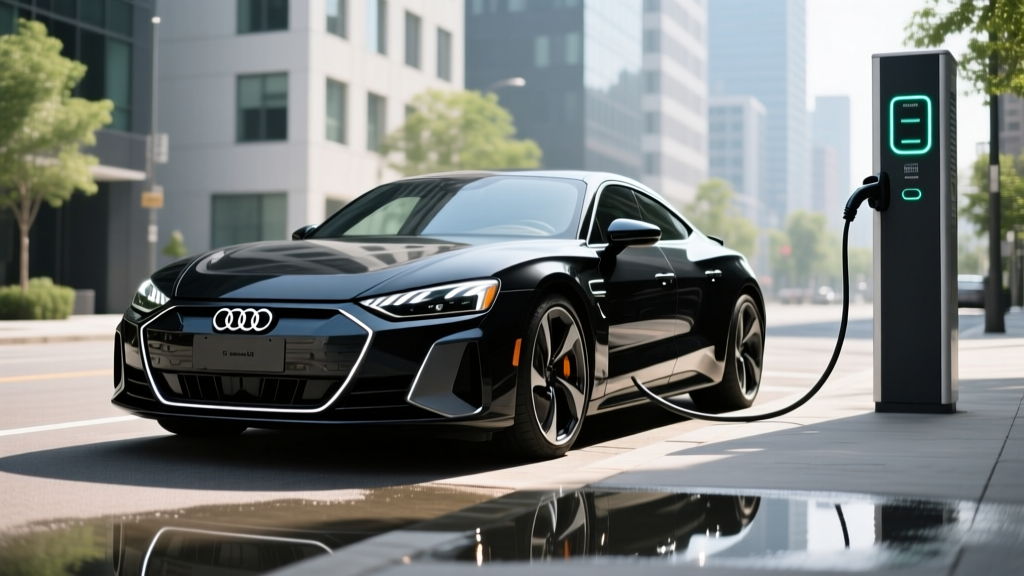
The 2024 Audi e-tron GT occupies a rare niche: a four-door electric grand tourer that pairs Porsche Taycan underpinnings with Audi's restrained luxury execution. Built on the J1 platform alongside the Taycan at Audi's Böllinger Höfe facility in Germany, it delivers blistering acceleration and class-leading DC fast-charging architecture — but at a steep entry price and with range figures that trail competitors like the Tesla Model S and Lucid Air.
For 2026 buyers evaluating remaining 2024 inventory or certified pre-owned examples, the e-tron GT remains compelling if your priorities skew toward build quality, 800-volt charging speed, and daily-driver comfort over maximum range. Here's every number that matters.
Range, Battery, and Efficiency: The Numbers Behind the Badge
EPA Estimated: 238 miles (Premium Plus) / 232 miles (Prestige) / 232 miles (RS e-tron GT)
Real-World Highway (70 mph, 75°F): ~205–220 miles
Cold Weather (32°F, mixed driving): ~170–190 miles
Expect roughly 10–15% highway range loss at sustained speeds and up to 25–30% reduction in freezing conditions without preconditioning.
The 2024 e-tron GT houses a 93.4 kWh gross battery pack (83.7 kWh usable) using LG Energy Solution NMC (nickel-manganese-cobalt) pouch cells arranged in a 33-module configuration. The pack operates on an 800-volt architecture — one of the defining technical features of the J1 platform — enabling the charging speeds detailed below.
Efficiency lands at 82 MPGe combined (81 city / 83 highway) for the standard e-tron GT, translating to roughly 41 kWh per 100 miles. The RS variant drops to 79 MPGe combined. These figures are respectable for a 5,100-pound performance sedan but trail the Tesla Model S (120 MPGe combined) and Lucid Air Pure (140 MPGe combined) significantly.
| Specification | e-tron GT Premium Plus | e-tron GT Prestige | RS e-tron GT |
|---|---|---|---|
| EPA Range | 238 mi | 232 mi | 232 mi |
| Battery (gross / usable) | 93.4 / 83.7 kWh | 93.4 / 83.7 kWh | 93.4 / 83.7 kWh |
| Chemistry | NMC (LG) | NMC (LG) | NMC (LG) |
| Horsepower (Launch Control) | 522 hp | 522 hp | 637 hp |
| 0–60 mph | 3.9 sec | 3.9 sec | 3.1 sec |
| Drivetrain | AWD (dual-motor) | AWD (dual-motor) | AWD (dual-motor) |
| Top Speed | 152 mph | 152 mph | 155 mph |
| MPGe (combined) | 82 | 82 | 79 |
| Base MSRP | $106,395 | $112,395 | $147,295 |
Source: EPA Fuel Economy — 2024 Audi e-tron GT
Charging Speed: Where the 800-Volt Architecture Pays Off
The e-tron GT's 800-volt electrical system is its most underappreciated advantage. While many competitors still use 400-volt architectures that cap DC fast-charging at 150 kW or less, the e-tron GT accepts a peak 270 kW on a compatible DC fast charger — putting it among the fastest-charging EVs on the road.
| Charging Level | Power / Rate | Time / Range Added |
|---|---|---|
| Level 1 (120V household) | ~1.2 kW | ~3 miles per hour |
| Level 2 (240V, 48A home charger) | 11.5 kW (9.6 kW on some circuits) | ~28–33 miles per hour; 0–100% in ~9.5 hours |
| DC Fast Charge (peak) | 270 kW | 10–80% in ~22.5 minutes |
| DC Fast Charge (sustained avg.) | ~175–200 kW avg. | ~180 miles added in 20 minutes |
Charging curve reality check: The 270 kW peak is not sustained across the full session. The e-tron GT holds above 200 kW from roughly 10% to 40% state of charge (SoC), then tapers progressively. From 80% to 100%, charging slows dramatically to protect cell longevity — expect that final 20% to take as long as the 10–80% portion. For road trips, plan to charge from 10% to 80% and skip the top-off unless needed.
On a Electrify America 350 kW station or a Tesla Supercharger V4 (with NACS adapter, which Audi began providing for 2025+ model years and retrofits), you'll see the best results. Older 50–150 kW CHAdeMO or CCS stations will bottleneck the car well below its capability.
Home charging on a Level 2 Audi-recommended wallbox at 11.5 kW replenishes the pack in roughly 9.5 hours — practical for overnight top-ups if you have a 240V / 50A circuit installed.
Performance and Driving Dynamics
The dual-motor all-wheel-drive powertrain in the standard e-tron GT produces 469 hp in normal driving, rising to 522 hp with Launch Control engaged. The RS e-tron GT bumps that to 590 hp (637 hp on launch) with a 2-speed transmission on the rear axle — a unique J1-platform feature that gives the RS ferocious off-the-line acceleration without sacrificing highway efficiency.
The 0–60 mph sprint takes 3.9 seconds in the standard model and 3.1 seconds in the RS. Both figures are independently verified and repeatable thanks to the launch-control system managing traction and thermal load.
Driving dynamics benefit from standard adaptive air suspension, rear-axle steering (optional on Premium Plus, standard on Prestige and RS), and a low center of gravity from the floor-mounted battery. The result is a grand tourer that absorbs highway miles with composure yet hustles through back roads with a precision that belies its 5,139-pound curb weight.
Regenerative braking offers two modes: a coasting mode (the car's default, and unusually natural for an EV) and a moderate regen mode activated via steering-wheel paddles. Audi deliberately omitted aggressive one-pedal driving — a choice that divides EV enthusiasts but aligns with the GT character.
Interior, Cargo, and Technology
The cabin uses Audi's familiar dual-screen MMI layout: a 12.3-inch Virtual Cockit digital instrument cluster and a 10.1-inch upper touchscreen for navigation and media, with an 8.6-inch lower screen for climate and handwriting input. Wireless Apple CarPlay and Android Auto are standard. The system is responsive but not class-leading in graphics compared to newer Tesla or Lucid interfaces.
Passenger space:
- Front headroom: 38.0 inches
- Front legroom: 41.1 inches
- Rear headroom: 36.7 inches (tighter due to the sloping roofline)
- Rear legroom: 33.9 inches
Cargo volume:
- Trunk: 9.2 cubic feet (surprisingly shallow due to rear motor packaging)
- Front trunk (frunk): 3.5 cubic feet (enough for a charging cable and a small bag)
- Total: 12.7 cu ft — this is the e-tron GT's most practical weakness versus the Model S (28 cu ft liftgate) or Taycan Cross Turismo
Driver-assistance features include Audi adaptive cruise control with stop-and-go, lane-keeping assist, traffic-sign recognition, and intersection assist. These constitute SAE Level 2 driver assistance — the driver must remain fully engaged at all times. There is no hands-free driving mode comparable to GM's Super Cruise or Ford's BlueCruise on highway sections.
Pricing, Tax Credits, and Ownership Costs
| Trim | Base MSRP | As-Tested (typical) | Federal §30D Credit Eligible? |
|---|---|---|---|
| Premium Plus | $106,395 | $112,000–$118,000 | No (exceeds MSRP cap) |
| Prestige | $112,395 | $120,000–$128,000 | No (exceeds MSRP cap) |
| RS e-tron GT | $147,295 | $155,000–$168,000 | No (exceeds MSRP cap) |
Federal tax credit reality: Under IRS §30D rules, the new clean vehicle credit imposes an MSRP cap of $55,000 for sedans. Every 2024 e-tron GT trim exceeds this cap by a wide margin, making it ineligible for the $7,500 federal tax credit regardless of buyer income or battery sourcing. This is a firm disqualifier — no workaround exists for new purchases.
Used-eV credit possibility: If you find a qualifying pre-owned 2024 e-tron GT through a licensed dealer, the §25E used clean vehicle credit offers up to $4,000 (30% of sale price, capped at $4,000) for vehicles priced at or below $25,000. Given the e-tron GT's residual values, this threshold is unlikely to be met in the near term.
5-year estimated ownership cost: Assuming 12,000 miles/year, $0.14/kWh home charging, $3.50/gallon gas equivalent, and typical insurance premiums for a $110K+ vehicle:
- Energy cost (5 years): ~$4,900 (vs. ~$8,400 for a comparable gas sedan at 22 MPG)
- Insurance (5 years): ~$18,000–$24,000 (varies significantly by state and driver profile)
- Maintenance: Minimal — no oil changes, reduced brake wear from regen. Budget ~$2,000 over 5 years for cabin filters, wiper fluid, and tire rotation.
- Depreciation: Expect 45–55% over 5 years based on current luxury EV residuals.
Warranty and Battery Longevity
Audi covers the e-tron GT with the following warranty structure:
- New Vehicle Limited Warranty: 4 years / 50,000 miles
- Battery Pack Warranty: 8 years / 100,000 miles (covers defects and capacity loss below 70% of original)
- Powertrain Warranty: 8 years / 100,000 miles (electric motors, power electronics)
- Roadside Assistance: 4 years / unlimited miles
The 70% capacity-retention threshold is industry-standard (matching Tesla, BMW, and Mercedes-Benz). NMC chemistry in the e-tron GT's pack has demonstrated moderate degradation in early fleet data — expect roughly 5–8% capacity loss over the first 100,000 miles with typical charging habits. Avoiding frequent DC fast-charging above 90% SoC and minimizing storage at 100% will extend longevity.
Pros and Cons
Pros
- 800V architecture delivers 270 kW peak DC charging — 10–80% in ~22.5 min
- Superb build quality, materials, and cabin isolation
- RS variant hits 637 hp and 3.1-sec 0–60 with daily-driver usability
- Air suspension and rear-axle steering yield exceptional ride-handling balance
- Distinctive design that avoids the crossover-ification of luxury EVs
Cons
- 238-mile EPA range trails Model S, Lucid Air, and Taycan by 40–170 miles
- 9.2 cu ft trunk is impractical for family or travel use
- No federal tax credit eligibility due to $55K sedan MSRP cap
- Rear seat headroom is tight for taller passengers
- Infotainment feels a generation behind Tesla/Lucid/Rivian interfaces
- No hands-free Level 2+ highway driving assist
Who Should Buy the 2024 Audi e-tron GT?
Choose the e-tron GT if: You want a luxury performance sedan with the fastest DC charging available, prioritize build quality and design over maximum range, commute under 150 miles daily, and can charge at home overnight.
Look elsewhere if: You need cargo versatility (consider the Taycan Cross Turismo or Model S), require 350+ miles of range (Lucid Air Pure or Grand Touring), need a third row or family-friendly interior (Rivian R1S, Tesla Model X), or rely on the $7,500 federal tax credit to make the math work.
Frequently Asked Questions
What is the real-world range of the 2024 Audi e-tron GT?
Expect 205–220 miles on the highway at 70 mph in moderate temperatures, and 170–190 miles in freezing weather. The 238-mile EPA figure is achievable in city and suburban driving with moderate regen use, but sustained highway speeds and cold temperatures reduce range by 10–30%.
How fast does the e-tron GT charge at home and on the road?
At home on a Level 2 (240V, 48A) charger, it adds roughly 28–33 miles of range per hour, filling the pack in about 9.5 hours. On a DC fast charger, it peaks at 270 kW and charges from 10% to 80% in approximately 22.5 minutes — among the fastest of any production EV.
Does the 2024 Audi e-tron GT qualify for the federal EV tax credit?
No. The IRS §30D credit caps eligible sedans at $55,000 MSRP. Every e-tron GT trim starts above $106,000, making it ineligible regardless of buyer income or battery component sourcing. State-level incentives may still apply — check your local program.
Is the e-tron GT worth buying versus the Porsche Taycan or Tesla Model S?
The e-tron GT shares its platform with the Taycan but prioritizes comfort over track sharpness. If you value a quieter ride and Audi's interior aesthetic, it's the better choice. The Model S offers far more range (405 mi EPA), more cargo space, and Autopilot — but cannot match the e-tron GT's build quality or charging speed.
What are the biggest drawbacks of the e-tron GT?
Limited range (238 mi EPA), a small 9.2 cu ft trunk, no federal tax credit eligibility, and tight rear headroom. It's a driver's car first and a practical family vehicle a distant second.
What battery chemistry does the e-tron GT use, and how long will it last?
The e-tron GT uses NMC (nickel-manganese-cobalt) cells from LG Energy Solution. Audi warrants the pack for 8 years / 100,000 miles against capacity loss below 70%. Real-world degradation data suggests 5–8% loss over 100,000 miles with normal charging habits.