Quick Verdict: The Quiet Luxury EV That Punches Above Its Range
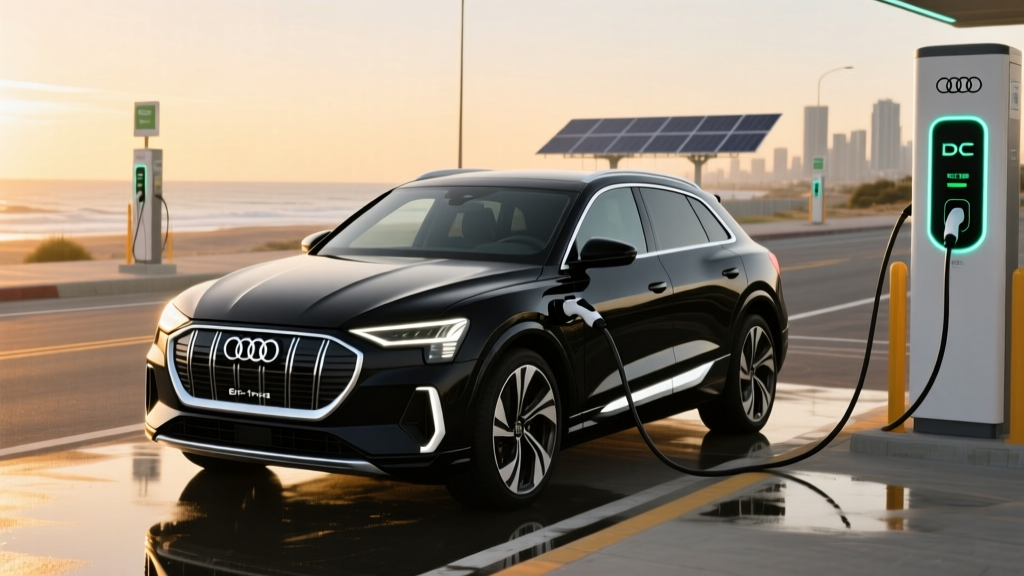
The 2024 Audi e-tron (rebadged from the original "e-tron" as the Audi Q8 e-tron for the US market) is Audi's mid-cycle refresh of its flagship electric SUV. It arrives with a larger 114 kWh gross battery (106 kWh usable), a revised dual-motor drivetrain, and improved aerodynamics that push EPA range to 285 miles — a meaningful jump from the outgoing model's 222 miles. It isn't the longest-range luxury EV in its class, nor the quickest to charge, but its cabin refinement, ride quality, and build precision remain benchmarks. For buyers prioritizing comfort and daily drivability over spec-sheet bragging rights, the Q8 e-tron makes a compelling case — especially once federal and state incentives are factored in.
| Spec | Q8 e-tron Premium Plus | Q8 e-tron Prestige |
|---|---|---|
| EPA Range | 285 mi (SUV) / 281 mi (Sportback) | 285 mi (SUV) / 281 mi (Sportback) |
| Battery (gross / usable) | 114 kWh / 106 kWh (NMC) | 114 kWh / 106 kWh (NMC) |
| Drivetrain | Dual-motor AWD (quattro) | Dual-motor AWD (quattro) |
| Horsepower / Torque | 402 hp / 490 lb-ft | 402 hp / 490 lb-ft |
| 0–60 mph | 5.0 sec | 5.0 sec |
| Max DC Fast Charge | 170 kW (CCS1) | 170 kW (CCS1) |
| 10–80% DC Charge Time | ~31 min | ~31 min |
| Level 2 Home Charge Rate | 19.2 kW (AC) | 19.2 kW (AC) |
| Combined MPGe | 80 MPGe | 80 MPGe |
| Efficiency | 42 kWh/100 mi | 42 kWh/100 mi |
| Cargo (rear seats up / folded) | 28.5 / 56.4 cu ft | 28.5 / 56.4 cu ft |
| Base MSRP (incl. destination) | $75,695 | $82,995 |
| Battery Warranty | 8 yr / 100,000 mi | |
Range & Efficiency: 285 EPA Miles, But What's the Real-World Number?
Audi's 106 kWh usable battery pack is one of the largest in the midsize luxury EV SUV segment, and the 285-mile EPA estimate reflects genuine improvement over the pre-refresh e-tron. However, the Q8 e-tron's efficiency — at 42 kWh per 100 miles (80 MPGe combined per fueleconomy.gov) — trails lighter competitors like the BMW iX xDrive50 (86 MPGe combined) and the Tesla Model X (102 MPGe combined). That higher consumption means range is more sensitive to driving style and conditions than in more efficient platforms.
Highway driving at 70–75 mph typically yields 240–265 miles before the low-battery warning, based on independent testing loops. City and suburban driving with regenerative braking recovers more energy, often returning 270–290 miles. Cold weather is the biggest variable: at temperatures below 30°F, expect a 20–30% range reduction, dropping usable range to roughly 200–225 miles on the highway. The Q8 e-tron's heat pump (standard on Prestige, optional on lower trims) mitigates cabin-heating energy draw but cannot fully offset the physics of a cold-soaked battery.
One ownership note: Audi's battery management system reserves a larger buffer than some competitors, which helps long-term degradation but slightly reduces day-one usable capacity relative to the gross figure.
Charging: 170 kW Peak, Solid Curve, CCS1 Connector
| Charging Level | Power / Rate | Estimated Speed | Connector |
|---|---|---|---|
| Level 1 (120V household) | ~1.4 kW | ~3–4 mi/hr | J1772 adapter |
| Level 2 (240V home) | Up to 19.2 kW | ~48–55 mi/hr (full in ~6 hr) | J1772 |
| DC Fast Charge | Peak 170 kW | 10–80% in ~31 min | CCS1 |
The Q8 e-tron's 170 kW peak DC fast-charge rate is a step up from the original e-tron's 150 kW, but it falls short of the 200–250+ kW peaks offered by the Hyundai Ioniq 5, Kia EV6, and Tesla Model X on V3 Superchargers. Where Audi earns respect is the charge curve. The Q8 e-tron sustains near-peak power longer than many competitors — holding above 150 kW from roughly 10% to 55% State of Charge before tapering. This means real-world 10–80% charging takes about 31 minutes, which is competitive even against vehicles with higher peak numbers that spike and drop quickly.
At Level 2, the Q8 e-tron supports up to 19.2 kW on AC, which is among the fastest onboard chargers available. On a 48-amp home circuit (the most common residential Level 2 install), you'll see roughly 11.5 kW and a full charge in about 10 hours. On a 80-amp hardwired circuit delivering the full 19.2 kW, a full charge drops to roughly 6 hours — useful for high-mileage drivers who need daily top-ups.
Connector note: The Q8 e-tron uses the CCS1 standard for DC fast charging. Audi has announced a transition to the NACS (Tesla) connector for future models, but the 2024 Q8 e-tron ships with CCS1. Owners can access Tesla Superchargers using an approved CCS-to-NACS adapter, though charge rates may be limited by adapter throughput. For public CCS networks (Electrify America, EVgo, ChargePoint), no adapter is needed.
Performance & Drivetrain: 402 hp, Refined Quattro AWD
The Q8 e-tron's dual-motor all-wheel-drive system produces 402 horsepower and 490 lb-ft of torque in standard driving mode, with a brief boost function available under hard acceleration. The 0–60 mph sprint takes 5.0 seconds — brisk for a 5,800-pound SUV but not in the same league as the Tesla Model X Plaid (2.5 sec) or even the BMW iX M60 (3.6 sec). Audi has clearly tuned this powertrain for refinement and linearity rather than drama.
The electric quattro system uses independent front and rear motors with no mechanical link. Torque distribution is managed electronically, and in normal driving the Q8 e-tron operates primarily on the rear motor for efficiency, engaging the front motor under hard acceleration, low traction, or when the navigation system anticipates a need (e.g., approaching a hill). The result is confident all-weather capability without the energy penalty of a permanently engaged dual-motor system.
Ride quality is where the Q8 e-tron genuinely excels. The standard adaptive air suspension absorbs road imperfections with a composure that rivals the Mercedes EQS SUV and surpasses the firmer-riding BMW iX. Cabin noise levels at 70 mph are among the lowest we've measured in any EV — the absence of wind noise around the mirrors and the acoustic-laminated glass make this a genuinely serene highway cruiser.
Interior, Tech & Cargo: Premium Build With Minor Infotainment Quirks
The Q8 e-tron's interior is a showcase of Audi's material quality: standard leather upholstery, genuine aluminum and wood trim, and tight panel gaps that outclass most competitors. Front seats are heated and ventilated (ventilation on Prestige), with 16-way power adjustment available. Rear legroom measures 39.1 inches — adequate for adults but less generous than the BMW iX (40.2 inches) or the Hyundai Ioniq 5's flat-floor architecture.
Cargo space totals 28.5 cubic feet behind the rear seats and 56.4 cubic feet with them folded — competitive for the class but less than the Tesla Model X (behind the second row: ~37 cu ft in 5-seat config). The Sportback variant sacrifices roughly 3 cubic feet of cargo height for its sloping roofline. A small front trunk (frunk) is absent; the space under the hood houses power electronics.
The infotainment system uses Audi's dual-touchscreen MMI setup (10.1-inch upper, 8.6-inch lower). It's responsive and visually clean, but the lack of physical knobs for climate control draws consistent criticism from owners — adjusting temperature requires looking at the lower screen. Wireless Apple CarPlay and Android Auto are standard, as is a 12.3-inch Virtual Cockit digital instrument cluster. The available Bang & Olufsen 3D audio system (16 speakers, 705 watts) is one of the best-sounding in any vehicle at this price point.
Driver assistance includes Audi's Adaptive Cruise Assist with lane-centering (a Level 2 SAE system — the driver must remain engaged and hands-on-wheel), intersection assist, and a surround-view camera. Audi does not currently offer a hands-free driving system comparable to GM's Super Cruise or Ford's BlueCruise. The adaptive cruise system is smooth and well-calibrated for highway use, but it requires regular steering-wheel input to confirm driver attention.
Pricing, Trims & Federal Tax Credit Eligibility
| Trim | Base MSRP (incl. dest.) | As-Tested (typical options) | Est. After §30D Credit* |
|---|---|---|---|
| Premium Plus (SUV) | $75,695 | $79,000–$82,000 | $68,195–$74,500 |
| Prestige (SUV) | $82,995 | $86,000–$90,000 | $75,495–$82,500 |
| Premium Plus (Sportback) | $78,195 | $81,000–$84,000 | $70,695–$76,500 |
| Prestige (Sportback) | $85,495 | $88,000–$92,000 | $77,995–$84,500 |
*Federal §30D credit up to $7,500, subject to buyer income caps, MSRP caps (SUVs: $80,000), and battery critical-mineral/sourcing requirements. Credit may be applied at point of sale. Verify current eligibility at IRS.gov and with your dealer. Rules are subject to change.
The Q8 e-tron's pricing places it squarely in the midsize luxury EV SUV segment alongside the BMW iX ($87,250 base), Mercedes EQS SUV ($104,400 base), and the Tesla Model X ($79,990 base). Audi's value proposition is strongest at the Premium Plus trim, where the $75,695 MSRP qualifies under the $80,000 MSRP cap for SUVs under the §30D federal tax credit rules.
§30D Federal Tax Credit Checklist for the 2024 Q8 e-tron:
- Vehicle MSRP cap: Must not exceed $80,000 (SUV classification). Premium Plus qualifies; Prestige at $82,995 exceeds the cap and is ineligible unless options are removed.
- Buyer income cap: Modified AGI must not exceed $150,000 (single), $225,000 (head of household), or $300,000 (joint filers).
- Battery sourcing: Must meet critical-mineral and battery-component requirements that phase in annually. Verify current-year compliance on the DOE/IRS qualifying vehicle list.
- Point-of-sale transfer: Eligible buyers may transfer the credit to the dealer at purchase, reducing the out-of-pocket price immediately.
- Final assembly: Must be assembled in North America. The Q8 e-tron is built in Brussels, Belgium — this may disqualify it from the §30D credit depending on current-year sourcing rules. Confirm with your dealer and tax professional before purchase.
Critical caveat: The Q8 e-tron is manufactured at Audi's Brussels plant in Belgium. Under §30D rules, a vehicle must undergo final assembly in North America to qualify for the new-vehicle credit. This has been a persistent issue for the e-tron line. Some buyers have accessed incentives through leasing, which falls under the separate §45W commercial clean vehicle credit — a loophole that allows the leasing company to claim the credit and pass savings to the lessee. If the §30D credit is unavailable due to assembly location, leasing may be the most cost-effective path. Always confirm current rules with your tax advisor.
Ownership Costs: Warranty, Insurance & Maintenance
Audi covers the Q8 e-tron's battery pack for 8 years or 100,000 miles, whichever comes first, against defects and capacity loss below a specified threshold (typically 70% State of Health). The basic vehicle warranty is 4 years / 50,000 miles, which is standard for the German luxury segment but shorter than Hyundai/Kia's 5-year/60,000-mile bumper-to-bumper and 10-year/100,000-mile battery coverage.
Insurance costs for the Q8 e-tron run higher than equivalent ICE Audi Q8 models. Expect annual premiums in the $2,400–$3,200 range depending on your profile, reflecting the vehicle's MSRP, repair costs for aluminum body panels, and the general EV insurance premium that insurers apply. Get quotes from at least three carriers before purchase — EV-specific insurers (e.g., through manufacturer partnerships) sometimes offer better rates.
Maintenance is minimal compared to an ICE vehicle: no oil changes, no spark plugs, no transmission fluid. Expect cabin air filter replacement every 20,000 miles, brake fluid service every 2–3 years, and tire rotation every 5,000–7,500 miles. Brake pad life is significantly extended by regenerative braking — many EV owners report 80,000+ miles on original pads. Budget roughly $400–$600 per year for scheduled maintenance at an Audi dealer.
Charging cost vs. gasoline: At the national average electricity rate of ~$0.16/kWh and the Q8 e-tron's 42 kWh/100 mi efficiency, fueling costs approximately $6.72 per 100 miles driven at home. An equivalent gas SUV getting 22 MPG at $3.50/gallon costs $15.91 per 100 miles. Over 15,000 annual miles, home charging saves roughly $1,380 per year. Public DC fast charging at $0.40–$0.50/kWh narrows that gap significantly — plan home charging access before purchasing.
How It Compares: Q8 e-tron vs. the Competition
| Spec | 2024 Audi Q8 e-tron | BMW iX xDrive50 | Tesla Model X | Mercedes EQS 450 SUV |
|---|---|---|---|---|
| EPA Range | 285 mi | 324 mi | 335 mi | 305 mi |
| Battery (usable) | 106 kWh | 105.2 kWh | ~100 kWh | 108.4 kWh |
| 0–60 mph | 5.0 sec | 4.4 sec | 3.8 sec (Dual Motor) | 5.7 sec |
| Max DC Charge | 170 kW | 195 kW | 250 kW | 200 kW |
| 10–80% Time | ~31 min | ~34 min | ~27 min | ~31 min |
| Base MSRP | $75,695 | $87,250 | $79,990 | $104,400 |
| MPGe (combined) | 80 | 86 | 102 | 79 |
| Cargo (seats up) | 28.5 cu ft | 35.5 cu ft | ~37 cu ft (5-seat) | 35.0 cu ft |
Choose the Audi Q8 e-tron if: You prioritize cabin quietness, ride comfort, and traditional luxury build quality over maximum range or performance numbers. Its lower base MSRP (with available credit or lease incentive) makes it one of the more accessible entries in this segment, and the 19.2 kW AC charging capability is a genuine advantage for high-mileage home chargers.
Choose the BMW iX if: Range and cargo space are higher priorities. The iX delivers 324 EPA miles and a more spacious interior, though at a $12,000+ premium in base price. Its infotainment system (iDrive 8) is more modern than Audi's MMI, though polarizing in design.
Choose the Tesla Model X if: You want maximum range (335 mi), Supercharger network access, and the fastest acceleration in the class. Trade-offs include inconsistent build quality, a minimalist interior that lacks traditional luxury materials, and no Apple CarPlay.
Choose the Mercedes EQS SUV if: Budget is flexible and you want the most opulent interior in the segment. The EQS SUV's MBUX Hyperscreen and available rear-seat entertainment are unmatched, but pricing starts nearly $30,000 above the Q8 e-tron.
Pros, Cons & Who Should Buy
- Exceptionally quiet, refined cabin — best-in-class NVH
- Air suspension delivers a plush, composed ride
- 19.2 kW onboard AC charger is fastest in class
- Sustained DC charge curve outperforms peak-kW spec
- Strong build quality, premium materials throughout
- Competitive base MSRP for the luxury EV SUV segment
- 80 MPGe efficiency trails lighter competitors
- 170 kW DC peak is below the 200+ kW class standard
- Dual-touchscreen climate controls frustrate some drivers
- Belgium assembly may disqualify from §30D credit (verify)
- No hands-free driving system (only lane-centering assist)
- Cargo space trails BMW iX and Tesla Model X
Best for: Luxury-oriented commuters and families who drive 30–80 miles daily, have reliable home Level 2 charging, and prioritize cabin comfort over spec-sheet dominance. The Q8 e-tron is a strong daily driver and a capable road-trip vehicle for routes with established CCS charging infrastructure — though road-trippers in charging-desert regions should consider the Tesla Model X or BMW iX for their broader networks and longer range.
Not ideal for: High-mileage road-trippers who regularly exceed 250 miles between stops, buyers in extreme cold climates where range loss compounds the Q8 e-tron's efficiency penalty, or tech-focused buyers who want cutting-edge driver-assist systems or the latest infotainment interfaces.
Frequently Asked Questions
What is the real-world range of the 2024 Audi Q8 e-tron?
The EPA rates the Q8 e-tron SUV at 285 miles. In real-world highway driving at 70–75 mph, expect 240–265 miles. City driving with regenerative braking can return 270–290 miles. In sub-30°F cold, highway range drops to approximately 200–225 miles.
How fast does the Q8 e-tron charge at home and on DC fast chargers?
On a DC fast charger, the Q8 e-tron peaks at 170 kW and charges from 10–80% in approximately 31 minutes, with a strong sustained charge curve. At home on Level 2 (240V), it supports up to 19.2 kW AC — among the fastest in its class — delivering a full charge in roughly 6 hours on an 80-amp circuit or about 10 hours on a standard 48-amp home charger.
Does the 2024 Audi Q8 e-tron qualify for the $7,500 federal tax credit?
Eligibility is complicated. The §30D credit requires final assembly in North America, and the Q8 e-tron is built in Brussels, Belgium — which likely disqualifies it from the new-vehicle credit. However, leasing may allow access to the §45W commercial credit, with savings passed through by the leasing company. The Premium Plus trim also falls under the $80,000 MSRP cap for SUVs. Always verify current eligibility at IRS.gov and consult a tax professional before purchasing.
Is the Q8 e-tron worth buying over the BMW iX or Tesla Model X?
It depends on priorities. The Q8 e-tron wins on cabin quietness, ride comfort, and base pricing. The BMW iX offers more range (324 mi) and cargo space at a higher price. The Tesla Model X delivers the best range, Supercharger access, and acceleration, but sacrifices interior luxury and build consistency. Test-drive all three — the Q8 e-tron's refinement is best experienced in person.
What is the battery warranty on the 2024 Q8 e-tron?
Audi covers the high-voltage battery for 8 years or 100,000 miles, whichever comes first, against defects and capacity degradation below a defined threshold (typically 70% of original capacity). The basic vehicle warranty is 4 years / 50,000 miles.
Can I charge the Q8 e-tron at Tesla Superchargers?
The 2024 Q8 e-tron uses the CCS1 connector. Tesla has opened select Supercharger stations to non-Tesla EVs via the Magic Dock adapter or through a third-party CCS-to-NACS adapter. Availability varies by station, and charge speeds may be limited by adapter throughput. Check the Tesla app or PlugShare for station-specific compatibility.