Quick Verdict: Acura's First EV Borrows Heavily From GM's Playbook
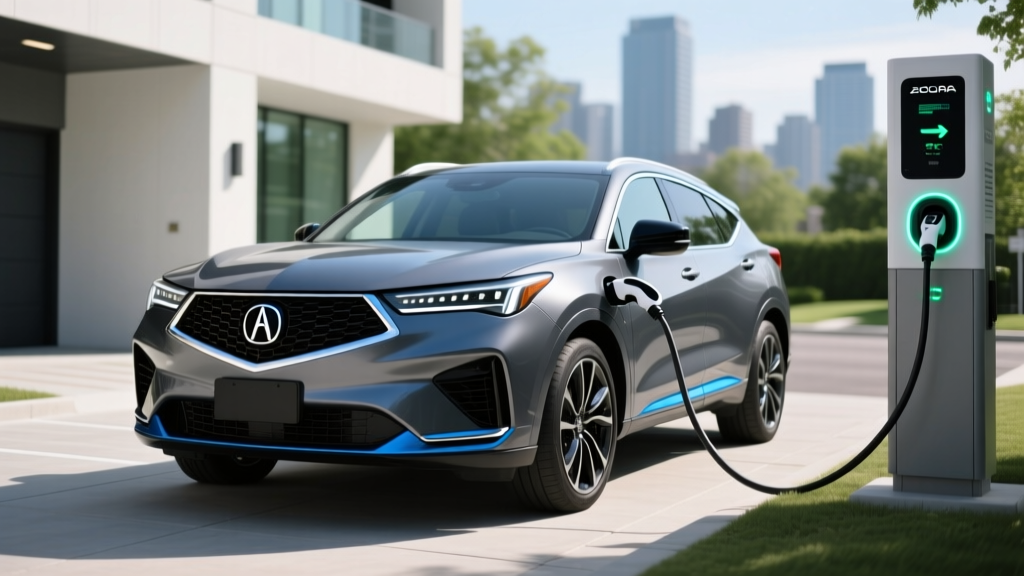
The 2024 Acura ZDX Type S is a luxury electric SUV built on General Motors' Ultium platform — the same architecture underpinning the Cadillac Lyriq and GMC Hummer EV. With 500 horsepower, dual-motor all-wheel drive, and a 102 kWh usable battery pack, the Type S variant sits at the top of the ZDX lineup as the performance flagship. But beneath the Acura badge and Precision Crafted Performance marketing lies a vehicle that demands careful evaluation against both its platform sibling and established luxury EV rivals like the BMW iX, Audi e-tron GT, and Tesla Model X.
After examining EPA data, real-world driving behavior, charging performance, and total ownership cost, the ZDX Type S delivers credible performance and range but faces headwinds on charging speed, tax credit eligibility, and interior execution relative to its $69,000+ starting price.
Range, Battery, and Efficiency: The Numbers That Matter
| Specification | 2024 Acura ZDX Type S |
|---|---|
| EPA Estimated Range | 278 miles |
| Battery Capacity (Usable) | 102 kWh |
| Battery Chemistry | NMC (Nickel Manganese Cobalt) |
| MPGe (City / Highway / Combined) | 94 / 80 / 87 MPGe |
| Energy Consumption | 39 kWh/100 miles |
| Drivetrain | Dual-motor AWD |
The 102 kWh NMC battery pack is sourced from GM's Ultium Cells joint venture with LG Energy Solution. NMC chemistry provides high energy density necessary for the Type S's performance targets but requires more careful thermal management and avoids the 100% daily charging tolerance of LFP packs. Acura recommends charging to 80–90% for daily use and reserving 100% charges for road trips.
According to fueleconomy.gov, the ZDX Type S returns 87 MPGe combined — competitive with the BMW iX xDrive50 (86 MPGe) but trailing the more efficient Audi Q8 e-tron (87–90 MPGe depending on trim). At the national average electricity rate of $0.17/kWh, fully charging the 102 kWh battery costs approximately $17.34, yielding a per-mile energy cost of roughly $0.066.
Charging Speed: DC Fast Charging and Home Level 2
| Charging Method | Max Power | Speed / Time |
|---|---|---|
| DC Fast Charging (Peak) | 190 kW | 10–80% in ~42 minutes |
| DC Fast Charging (Sustained Avg) | ~130 kW | ~180 miles added in 30 min |
| Level 2 Home (240V / 48A) | 11.5 kW | ~28 miles per hour |
| Level 2 Home (240V / 32A) | 7.7 kW | ~19 miles per hour |
| Level 1 (120V / 12A) | 1.4 kW | ~3.5 miles per hour |
The ZDX Type S peaks at 190 kW on a DC fast charger — adequate but not class-leading. The Hyundai Ioniq 5 charges at up to 240 kW, and the Lucid Air exceeds 300 kW. More critically, the ZDX's charge curve tapers significantly above 80% State of Charge (SoC), meaning that final 20% can take nearly as long as the 10–80% portion. On a road trip, plan your stops around the 10–80% window for optimal time efficiency.
At home on a Level 2 charger (the recommended daily charging method), the ZDX Type S accepts up to 11.5 kW via its onboard charger. A full 0–100% charge takes approximately 10.5 hours on a 48-amp circuit. Most owners will plug in overnight and wake to a full battery. Home charger installation typically runs $500–$2,000 depending on electrical panel proximity and whether a panel upgrade from 100A to 200A service is needed.
The ZDX uses the CCS1 connector for DC fast charging. With Acura's commitment to adopting the NACS (Tesla Supercharger) standard for future models, current 2024 ZDX owners may eventually access Tesla's Supercharger network via adapter, though Acura has not confirmed adapter availability or timeline for the 2024 model year.
Performance: 500 HP Dual-Motor AWD in Practice
| Performance Metric | ZDX Type S |
|---|---|
| Horsepower | 500 HP |
| Torque | 542 lb-ft |
| 0–60 mph | 4.5 seconds |
| Top Speed | 130 mph (electronically limited) |
| Drivetrain | Dual-motor AWD |
| Curb Weight | ~5,900 lbs |
The Type S's 500 horsepower and 542 lb-ft of torque deliver confident acceleration, with the 4.5-second 0–60 mph time placing it in the same bracket as the BMW iX xDrive50 (4.6 seconds) and well ahead of the standard ZDX A-Spec's 7.5-second run. Dual-motor AWD provides excellent traction in wet and light snow conditions, and the torque-vectoring rear motor adds a degree of cornering agility unusual for a 5,900-pound SUV.
However, the Type S falls short of the Tesla Model X Plaid (2.5 seconds to 60 mph) and even the Audi e-tron GT (3.9 seconds). For buyers prioritizing outright performance, the Type S is brisk rather than exotic. Its sport-tuned air suspension and adaptive dampers provide composed ride quality, though the 22-inch wheels transmit more road imperfections than the smaller wheels on the A-Spec trim.
Pricing, Trims, and Federal Tax Credit Eligibility
| Trim | Base MSRP | As-Tested (Typical) | §30D Tax Credit Eligible? |
|---|---|---|---|
| ZDX A-Spec (Standard) | $59,650 | $62,000–$64,000 | Potentially (see rules) |
| ZDX Type S | $69,150 | $72,000–$74,500 | No — exceeds MSRP cap |
The 2024 Acura ZDX Type S starts at $69,150 (including destination), placing it above the $55,000 MSRP cap that the IRS applies to SUVs under the §30D federal EV tax credit. This means the Type S does not qualify for the up-to-$7,500 federal credit regardless of buyer income or battery sourcing.
- SUV MSRP Cap: Vehicle must have an MSRP at or below $80,000 for SUVs/pickups/vans — the ZDX Type S at $69,150 clears this cap. However, the vehicle must also meet battery component and critical mineral sourcing thresholds.
- Buyer Income Cap: Modified AGI must not exceed $150,000 (single), $225,000 (head of household), or $300,000 (joint).
- Battery Sourcing: Increasingly strict percentages of battery components must be manufactured/assembled in North America, and critical minerals must be sourced from the US or FTA partners. GM's Ultium Cells battery sourcing has been under scrutiny.
- Point-of-Sale Transfer: Eligible buyers can transfer the credit to the dealer for an upfront price reduction rather than claiming it at tax time.
- Verify at IRS.gov before purchase — rules and eligible vehicle lists update frequently.
The standard ZDX A-Spec at $59,650 has a stronger case for credit eligibility, though final determination depends on the specific battery batch's sourcing compliance at time of delivery. Consult your tax professional and cross-reference the fueleconomy.gov tax credit tracker before signing.
Interior, Cargo, and Technology
The ZDX Type S cabin features an 11.3-inch touchscreen infotainment system running Acura's latest interface built on Google Built-In, providing native Google Maps navigation, Google Assistant voice control, and Play Store app access. An 11-inch digital instrument cluster sits behind the steering wheel. Wireless Apple CarPlay and Android Auto are standard, along with a wireless phone charging pad.
| Dimension | Measurement |
|---|---|
| Cargo Volume (Behind 2nd Row) | 28.4 cu ft |
| Cargo Volume (Seats Folded) | 56.7 cu ft |
| Front Legroom | 41.7 inches |
| Rear Legroom | 38.2 inches |
| Seating Capacity | 5 passengers |
Cargo space is competitive with the Cadillac Lyriq (28.0 / 60.8 cu ft) but trails the BMW iX (35.5 / 77.9 cu ft). The ZDX lacks a front trunk (frunk), a missed opportunity given the Ultium platform's packaging flexibility. Rear legroom is adequate for adults but tighter than the Model X's generous second row.
Driver-assistance technology includes AcuraWatch with adaptive cruise control, lane-keeping assist, blind-spot monitoring, and traffic sign recognition. This is an SAE Level 2 system — the driver must remain fully engaged with hands on the wheel and eyes on the road. It is not autonomous driving. Acura does not currently offer a hands-free highway driving system comparable to GM's Super Cruise or Ford's BlueCruise, which is a notable omission in a luxury EV at this price point.
Pros, Cons, and Ownership Considerations
- 500 HP and 4.5-second 0–60 provide genuine performance credentials
- 278-mile EPA range is practical for most commutes and moderate road trips
- GM Ultium platform brings proven battery architecture and service network
- Google Built-In infotainment is responsive and well-integrated
- Air suspension with adaptive dampers delivers composed ride quality
- Acura/Honda dealer network provides broad service access
- 190 kW peak DC charging is slower than Hyundai/Kia/Lucid competitors
- No frunk — missed cargo opportunity
- 22-inch wheels hurt ride comfort and reduce range vs. A-Spec
- No hands-free highway driving assist (no Super Cruise equivalent)
- Tax credit eligibility uncertain or unavailable depending on trim and sourcing
- Cabin materials and execution don't quite match BMW/Mercedes at this price
- Heavy at ~5,900 lbs — efficiency suffers vs. lighter competitors
Warranty Coverage
| Coverage | Terms |
|---|---|
| Basic Vehicle Warranty | 4 years / 50,000 miles |
| Powertrain Warranty | 6 years / 70,000 miles |
| Battery Warranty | 8 years / 100,000 miles (retains ≥70% capacity) |
| Corrosion Perforation | 5 years / unlimited miles |
| Roadside Assistance | 4 years / 50,000 miles |
Acura's battery warranty guarantees the Ultium pack will retain at least 70% of its original capacity over 8 years or 100,000 miles — the industry standard threshold. NMC chemistry typically degrades 1–2% per year under normal use, meaning most owners should retain 85–90% capacity at the 5-year mark. Battery replacement cost for a 102 kWh Ultium pack, if needed out of warranty, is estimated at $15,000–$22,000 based on current GM service pricing.
Who Should Buy the 2024 Acura ZDX Type S?
- You want a luxury performance EV SUV with Acura/Honda dealer proximity for service
- Your daily commute is under 100 miles round-trip and you can charge at home
- You value dual-motor AWD for four-season driving confidence
- You prefer a traditional luxury SUV driving position and styling over Tesla's minimalism
- Fastest possible DC charging is a priority (consider Hyundai Ioniq 5 or Kia EV6 at 240+ kW)
- You need maximum cargo space (BMW iX offers significantly more)
- Hands-free highway driving matters (Cadillac Lyriq offers Super Cruise availability)
- Federal tax credit eligibility is a dealbreaker — verify before committing
Frequently Asked Questions
What is the real-world range of the 2024 Acura ZDX Type S?
The EPA rates the ZDX Type S at 278 miles, but real-world highway driving at 70–75 mph typically yields 230–255 miles. Cold weather (below freezing) can reduce range to 190–220 miles. City driving with regenerative braking can approach or slightly exceed the EPA figure.
How fast does the ZDX Type S charge?
On a DC fast charger, it peaks at 190 kW and charges from 10–80% in approximately 42 minutes. At home on a Level 2 charger (48A / 11.5 kW), a full charge takes about 10.5 hours, adding roughly 28 miles of range per hour of charging.
Does the ZDX Type S qualify for the $7,500 federal EV tax credit?
Possibly, but it depends. At $69,150 MSRP, the Type S clears the $80,000 SUV cap, but it must also meet battery component sourcing and critical mineral requirements that shift periodically. Buyer income must also fall below IRS thresholds ($300,000 joint / $150,000 single). Verify current eligibility on IRS.gov and with your tax professional before purchase.
Is the ZDX Type S worth buying over the Cadillac Lyriq or BMW iX?
The ZDX Type S offers more horsepower than the Lyriq (500 vs. 340–500 depending on Lyriq trim) and Acura's brand cachet, but the Lyriq offers available Super Cruise hands-free driving. The BMW iX provides superior cargo space, a more premium interior, and comparable performance. Test-drive all three — the ZDX's value proposition depends heavily on whether your local Acura dealer provides better service access than BMW or Cadillac alternatives.
Does the ZDX Type S have a frunk (front trunk)?
No. The ZDX does not include a front trunk, despite the Ultium platform's packaging flexibility. All cargo must go in the rear compartment (28.4 cu ft behind the second row, 56.7 cu ft with seats folded).
What is the battery warranty on the ZDX Type S?
Acura covers the 102 kWh Ultium battery for 8 years or 100,000 miles, guaranteeing it will retain at least 70% of its original capacity. NMC batteries typically degrade 1–2% per year under normal charging habits.