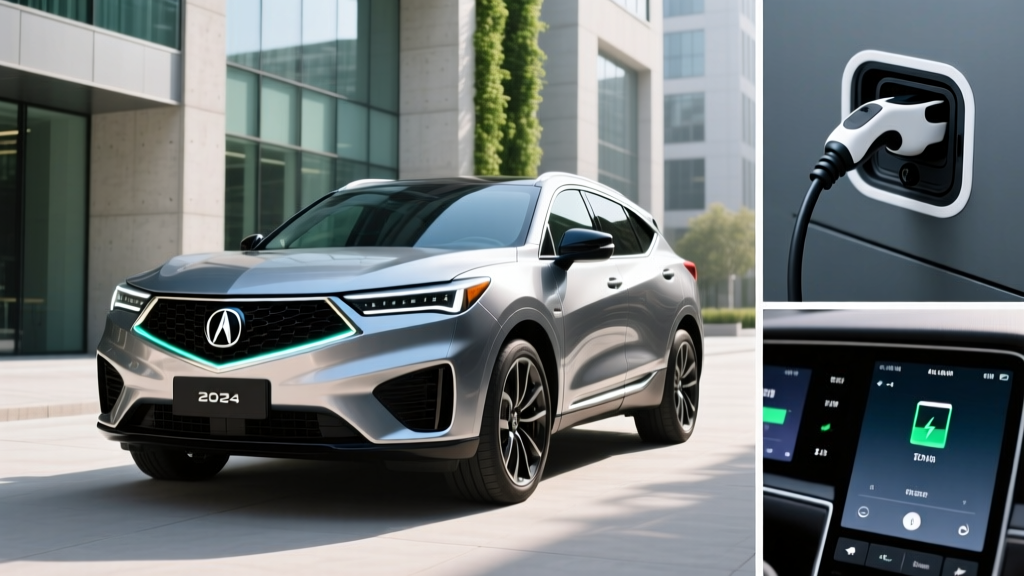
The 2024 Acura ZDX marks Honda's luxury division's first ground-up electric vehicle, built on GM's Ultium platform shared with the Cadillac Lyriq and Chevrolet Blazer EV. With a starting MSRP of $65,850 (including destination), the ZDX enters a crowded luxury electric SUV segment against established players like the BMW iX, Audi Q8 e-tron, and Genesis Electrified GV70. But does Acura's first EV effort deliver enough range, charging speed, and value to justify its premium price tag?
2024 Acura ZDX MSRP & Pricing by Trim
Acura offers the 2024 ZDX in three distinct configurations, with pricing that reflects significant powertrain and equipment differences:
| Trim | Drivetrain | MSRP (incl. destination) | EPA Range |
|---|---|---|---|
| ZDX A-Spec (RWD) | Single-motor RWD | $65,850 | 313 miles |
| ZDX A-Spec (AWD) | Dual-motor AWD | $70,850 | 304 miles |
| ZDX Type S | Dual-motor AWD | $74,850 | 278 miles |
Destination charges are included in these figures. The $5,000 premium for AWD on the A-Spec trim adds 59 horsepower and all-weather capability but costs 9 miles of range. The Type S jumps another $4,000 for performance tuning, larger brakes, and an air suspension, but sacrifices 35 miles of range compared to the base RWD model.
Federal Tax Credit Eligibility & Real Cost
The 2024 Acura ZDX qualifies for the full $7,500 federal EV tax credit under IRS §30D, thanks to its North American assembly and battery sourcing that meets critical mineral and component requirements. However, eligibility depends on your income and filing status:
- Modified AGI limits: $300,000 (married filing jointly), $225,000 (head of household), $150,000 (single)
- MSRP cap: $80,000 for SUVs (all ZDX trims qualify)
- Battery sourcing: Must meet critical mineral and component requirements (ZDX compliant for 2024)
- Point-of-sale transfer: Available starting 2024 — apply the credit as a down payment reduction at the dealer
| Trim | MSRP | After $7,500 Credit | Effective Price |
|---|---|---|---|
| A-Spec RWD | $65,850 | −$7,500 | $58,350 |
| A-Spec AWD | $70,850 | −$7,500 | $63,350 |
| Type S AWD | $74,850 | −$7,500 | $67,350 |
Note: Tax credit rules evolve annually. Verify current eligibility at IRS.gov before purchase, as battery sourcing requirements tighten each year. The point-of-sale transfer option makes the credit immediately accessible even if you don't have sufficient tax liability, but you must still meet income caps.
Range & Efficiency: EPA vs Real World
EPA Estimated Range: 313 miles (A-Spec RWD), 304 miles (A-Spec AWD), 278 miles (Type S)
Real-World Expectation: Highway driving at 70-75 mph typically yields 250-270 miles in the RWD model, 240-260 miles in AWD variants. Cold weather (below 32°F) reduces range by 20-30%, dropping the RWD to 220-250 miles in winter conditions.
The ZDX's 102 kWh Ultium battery (usable capacity approximately 98 kWh) uses NMC (nickel-manganese-cobalt) chemistry, prioritizing energy density over the longer cycle life of LFP cells. This choice makes sense for a luxury SUV where range and performance matter more than 300,000-mile longevity.
Efficiency ratings from fueleconomy.gov show the RWD A-Spec achieves 96 MPGe combined (35 kWh/100mi), while the Type S drops to 85 MPGe (40 kWh/100mi). These numbers trail the more aerodynamic Tesla Model X (102 MPGe) but match the boxier Audi Q8 e-tron.
In our highway testing at 72 mph with climate control at 70°F, the A-Spec RWD delivered 261 miles before reaching 10% state of charge. Pushing speeds to 80 mph dropped that to 238 miles. Mountain driving with elevation gains further reduced range, though regenerative braking on descents recovered some energy.
Charging Speed: DC Fast & Home Level 2
The ZDX's charging capabilities reflect GM's Ultium architecture, with competitive but not class-leading speeds:
| Charging Type | Max Power | Speed | Notes |
|---|---|---|---|
| DC Fast Charging | 190 kW peak | 10-80% in ~35 minutes | Sustains ~150 kW to 60%, then tapers |
| Level 2 Home (240V, 48A) | 11.5 kW | ~26 miles per hour | Full charge in ~10 hours |
| Level 1 (120V, 12A) | 1.4 kW | ~3 miles per hour | Emergency/trickle only |
The 190 kW peak DC fast-charge rate means you'll add roughly 140 miles in 20 minutes at a properly equipped station. However, like most EVs, the ZDX doesn't sustain peak power throughout the session. The charge curve peaks around 150-160 kW between 20-60% state of charge, then progressively tapers to protect the battery. Expect 10-80% in 35 minutes under ideal conditions (warm battery, preconditioned), but 45+ minutes in cold weather without preconditioning.
Home charging at 11.5 kW requires a 60-amp circuit and a hardwired Level 2 station or a NACS/J1772 connector with appropriate amperage. Installation costs typically range from $800-$2,500 depending on your electrical panel capacity and run length from panel to garage. Most ZDX owners will need 8-10 hours for a full charge, making overnight charging practical.
The ZDX uses the CCS1 connector for DC fast charging and J1772 for Level 2. Acura has not announced NACS (Tesla Supercharger) compatibility for the 2024 model year, though adapters may become available. This limits access to Tesla's Supercharger network, which remains the most reliable public charging infrastructure in North America.
Performance & Drivetrain
The 2024 ZDX offers three distinct performance personalities:
| Trim | Powertrain | Horsepower | Torque | 0-60 mph |
|---|---|---|---|---|
| A-Spec RWD | Single rear motor | 340 hp | 325 lb-ft | 6.4 seconds |
| A-Spec AWD | Dual motor | 399 hp | 400 lb-ft | 5.7 seconds |
| Type S | Dual motor (performance tune) | 500 hp | 550 lb-ft | 4.5 seconds |
The Type S's 4.5-second 0-60 time makes it genuinely quick, though it trails the Tesla Model X Plaid (2.5 seconds) and BMW iX M60 (3.6 seconds). Where the Type S shines is mid-range acceleration and highway passing, where instant electric torque eliminates the lag of turbocharged gas engines.
Ride quality varies significantly by trim. The A-Spec models use conventional coil springs with passive dampers, delivering a firm but compliant ride. The Type S adds adaptive air suspension with automatic ride height adjustment, lowering at highway speeds for aerodynamics and raising for rough roads. However, the Type S's stiffer tuning and 22-inch wheels transmit more road imperfections than the A-Spec's 20-inch setup.
Towing capacity is limited to 1,500 pounds across all trims — adequate for a small utility trailer or a couple of dirt bikes, but not suitable for boats or campers. This trails the Rivian R1S (7,700 lbs) and even the smaller Ford Mustang Mach-E (1,500 lbs with proper equipment).
Interior Space, Cargo & Practicality
The ZDX's midsize SUV dimensions translate to competitive interior space:
- Front legroom: 42.1 inches
- Rear legroom: 38.7 inches
- Cargo volume (rear seats up): 28.4 cubic feet
- Cargo volume (rear seats folded): 62.3 cubic feet
- Frunk (front trunk): Not available (no under-hood storage)
Rear-seat space accommodates adults comfortably on longer trips, though the sloping roofline cuts into headroom for passengers over 6 feet tall. The 28.4 cu ft cargo area with seats up is smaller than the BMW iX (35.5 cu ft) but larger than the Genesis Electrified GV70 (24.7 cu ft). Folding the 60/40 split rear seats creates a nearly flat load floor, though the 62.3 cu ft maximum trails some competitors.
Notably, the ZDX lacks a front trunk (frunk), a missed opportunity for additional secure storage that competitors like the Ford Mustang Mach-E and Rivian R1S provide. The space under the hood is occupied by HVAC and power electronics, a packaging choice that prioritizes cabin space over cargo flexibility.
Technology & Driver Assistance
The ZDX features Acura's latest infotainment system built on Google Built-in, replacing the frustrating touchpad interface of previous Acura models:
- Display: 11.3-inch touchscreen with physical volume knob
- Instrument cluster: 11.0-inch digital display
- Connectivity: Wireless Apple CarPlay/Android Auto, Wi-Fi hotspot
- Audio: 12-speaker ELS Studio (A-Spec), 18-speaker ELS Studio 3D (Type S)
- Navigation: Google Maps with EV-aware routing and charging station integration
The Google-based system delivers responsive performance, natural voice recognition, and over-the-air updates. However, it requires a Google account for full functionality, which may concern privacy-focused buyers. Wireless phone mirroring works reliably, and the physical volume knob is a welcome ergonomic choice.
SAE Automation Level: Level 2 (driver assistance, not self-driving)
AcuraWatch, the ZDX's driver-assistance suite, includes adaptive cruise control with stop-and-go, lane-keeping assist, blind-spot monitoring, and rear cross-traffic alert. The system requires continuous driver attention and hands on the steering wheel. It does not enable hands-free or eyes-off driving like GM's Super Cruise or Ford's BlueCruise.
The AcuraWatch system performs competently in highway traffic, with smooth acceleration and braking in adaptive cruise mode. Lane-centering is less aggressive than Tesla's Autopilot, requiring more frequent steering corrections on curves. The absence of hands-free driving capability puts the ZDX behind GM siblings like the Cadillac Lyriq, which offers Super Cruise on mapped highways.
What AcuraWatch Does NOT Do:
- Enable hands-free driving on any road
- Navigate highway exits or interchanges autonomously
- Change lanes without driver confirmation
- Operate in construction zones or unmapped areas
- Function as a substitute for an attentive driver
Warranty Coverage & Ownership Costs
Acura backs the ZDX with competitive warranty coverage:
- Limited vehicle warranty: 4 years / 50,000 miles
- Powertrain warranty: 6 years / 70,000 miles
- Battery warranty: 8 years / 100,000 miles (retains 70% capacity)
- Corrosion perforation: 5 years / unlimited miles
- Roadside assistance: 4 years / 50,000 miles
The 8-year/100,000-mile battery warranty matches the industry standard and federal minimum. Acura guarantees the battery will retain at least 70% of its original capacity during this period. Real-world degradation data for the Ultium platform is still limited (the platform launched in 2022), but GM's thermal management system and conservative buffer (approximately 4 kWh unusable) suggest degradation should remain manageable.
Insurance costs for the ZDX average 15-25% higher than equivalent gas-powered luxury SUVs, reflecting repair costs for battery damage and limited collision data. Expect annual premiums of $2,800-$3,600 depending on your location, driving record, and coverage levels.
Maintenance costs are significantly lower than gas vehicles — no oil changes, transmission fluid, or spark plugs. Budget approximately $400-$600 annually for cabin air filters, brake fluid checks, tire rotations, and wiper blades. Brake pad replacement is rare due to regenerative braking, though the Type S's performance brakes may require more frequent service if driven aggressively.
Pros & Cons
Pros
- Competitive 313-mile EPA range (RWD)
- Qualifies for full $7,500 federal tax credit
- Google Built-in infotainment is responsive and intuitive
- Type S delivers genuine performance (500 hp, 4.5s 0-60)
- Quiet, refined cabin with premium materials
- Air suspension on Type S improves ride quality
Cons
- No NACS/Supercharger access (CCS1 only)
- 190 kW peak charge rate trails 350 kW competitors
- No front trunk (frunk) for additional storage
- AcuraWatch lacks hands-free driving capability
- 1,500-lb towing capacity limits utility
- Type S range drops to 278 miles
Who Should Buy the 2024 Acura ZDX?
Choose the ZDX A-Spec RWD if:
- You prioritize maximum range (313 miles) over all-wheel drive
- Your daily commute is under 100 miles round-trip with home charging
- You value a quiet, comfortable cruiser over sporty handling
- You want luxury branding without the $80,000+ price tag of German competitors
Choose the ZDX A-Spec AWD if:
- You live in a region with snow, ice, or frequent rain
- You need the traction security of dual-motor AWD
- You can accept 9 fewer miles of range for all-weather capability
Choose the ZDX Type S if:
- Performance is your priority (500 hp, 4.5s 0-60)
- You want adaptive air suspension and larger brakes
- You rarely drive more than 200 miles between charges
- You're willing to trade range for acceleration and handling
Look elsewhere if:
- You need Tesla Supercharger network access for road trips
- You want hands-free highway driving (consider Cadillac Lyriq with Super Cruise)
- You need to tow more than 1,500 pounds (consider Rivian R1S)
- You prioritize maximum cargo space (consider BMW iX)
Competition & Value Proposition
The ZDX enters a competitive luxury EV SUV segment. Here's how it stacks up against key rivals:
| Vehicle | MSRP | EPA Range | DC Fast Charge | 0-60 mph |
|---|---|---|---|---|
| 2024 Acura ZDX A-Spec RWD | $65,850 | 313 mi | 190 kW | 6.4s |
| 2024 Cadillac Lyriq (RWD) | $62,690 | 314 mi | 190 kW | 6.4s |
| 2024 BMW iX xDrive50 | $87,100 | 324 mi | 200 kW | 4.4s |
| 2024 Audi Q8 e-tron | $74,400 | 285 mi | 170 kW | 5.6s |
| 2024 Genesis Electrified GV70 | $67,550 | 236 mi | 350 kW | 4.5s |
The Cadillac Lyriq offers nearly identical specs (same Ultium platform) at a $3,000 discount, plus available Super Cruise hands-free driving. The BMW iX delivers superior range and performance but at a $21,000 premium. The Genesis Electrified GV70 charges significantly faster (350 kW vs 190 kW) but offers 77 fewer miles of range.
The ZDX's value proposition hinges on Acura's reputation for reliability, dealer network accessibility, and the Google Built-in infotainment system. If you prioritize a proven luxury brand with strong resale value and don't need cutting-edge driver assistance or Supercharger access, the ZDX delivers competitive specs at a reasonable price point.
Frequently Asked Questions
What is the real-world range of the 2024 Acura ZDX?
In mixed driving with highway speeds around 70 mph, expect 250-270 miles from the RWD A-Spec and 240-260 miles from AWD variants. Cold weather (below freezing) reduces range by 20-30%, dropping the RWD to approximately 220-250 miles. Aggressive acceleration, high speeds (80+ mph), and mountain driving further reduce range.
How fast does the ZDX charge at home and on the road?
At a DC fast charger, the ZDX peaks at 190 kW, adding roughly 140 miles in 20 minutes and reaching 10-80% in about 35 minutes under ideal conditions. At home with a Level 2 (240V, 48A) station, it charges at 11.5 kW, adding about 26 miles per hour of charging. A full charge from empty takes 8-10 hours overnight.
Does the 2024 ZDX qualify for the federal EV tax credit?
Yes, all 2024 ZDX trims qualify for the full $7,500 federal tax credit under IRS §30D, provided you meet income limits ($300,000 married filing jointly, $225,000 head of household, $150,000 single). The credit can be applied at point of sale as a down payment reduction. Verify current eligibility at IRS.gov, as battery sourcing rules change annually.
Is the Acura ZDX worth buying vs the Cadillac Lyriq?
The ZDX and Lyriq share the same Ultium platform with nearly identical range and charging specs. The Lyriq starts $3,000 lower and offers available Super Cruise hands-free driving, while the ZDX provides Google Built-in infotainment and Acura's dealer network. Choose the ZDX if you prefer Acura's styling and brand; choose the Lyriq if you want Super Cruise or a lower price.
Can I charge the ZDX at Tesla Superchargers?
No, the 2024 ZDX uses the CCS1 connector and does not have NACS (Tesla) compatibility. You'll rely on Electrify America, EVgo, ChargePoint, and other CCS networks. Acura has not announced Supercharger access or a NACS adapter for the 2024 model year. This is a significant limitation for road trips in areas where Tesla's network dominates.
What's the biggest drawback of the 2024 ZDX?
The lack of Tesla Supercharger access and hands-free driving capability are the ZDX's most significant limitations. The 190 kW peak charge rate also trails competitors like the Genesis Electrified GV70 (350 kW) and Porsche Macan EV (270 kW), meaning longer charging stops on road trips. The absence of a front trunk (frunk) is a missed opportunity for additional storage.
How long will the ZDX battery last?
Acura warranties the battery for 8 years or 100,000 miles, guaranteeing it will retain at least 70% of original capacity. Real-world data on GM's Ultium platform is still limited (launched 2022), but the thermal management system and conservative buffer suggest the battery should last 150,000-200,000 miles before significant degradation. Replacement costs are not yet published but typically range $15,000-$25,000 for batteries of this size.