Quick Verdict: Acura's First EV Leans on GM's Ultium Bones
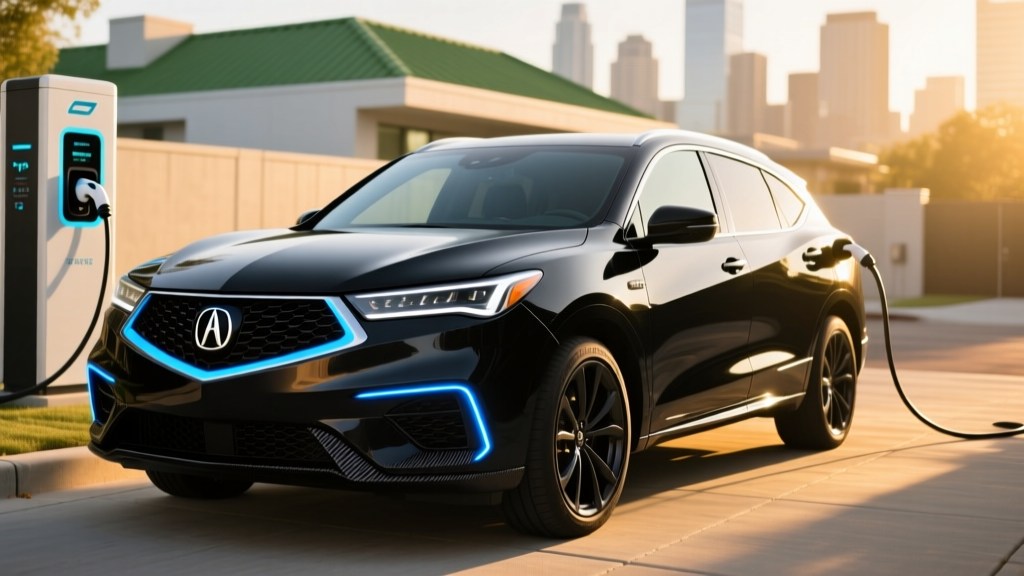
The 2024 Acura ZDX A-Spec marks the brand's entry into the battery-electric arena, and it arrives with a clear strategy: wrap General Motors' Ultium platform in Acura styling, premium materials, and a more accessible price point than the Type S flagship. With a single-motor rear-wheel-drive layout, a 102 kWh (usable) battery, and an EPA-estimated 313 miles of range, the ZDX A-Spec targets luxury EV buyers who want a midsize crossover without the six-figure price tag of a BMW iX or Mercedes EQE SUV.
But the A-Spec trim is just the starting point. It's also where the ZDX makes its strongest value argument—particularly for buyers who can claim the full federal tax credit. Here's everything you need to know before signing on the dotted line.
Range, Battery, and Efficiency: The Numbers That Matter
The 2024 ZDX A-Spec pairs a 102 kWh usable Ultium battery pack (NMC lithium-ion chemistry, the nickel-manganese-cobalt variant GM favors for energy density) with a single rear-mounted electric motor producing 340 horsepower and 325 lb-ft of torque. That combination yields an EPA-estimated 313 miles of combined range and an efficiency rating of 87 MPGe (39 kWh/100 mi).
EPA sticker: 313 miles (combined)
Real-world highway (70 mph, moderate temps): ~265–285 miles
Cold-weather (below 32°F, highway): ~220–250 miles
City/regenerative-heavy driving: Can match or slightly exceed EPA
Like most large EV crossovers, the ZDX A-Spec loses range at sustained highway speeds due to aerodynamic drag and the absence of a heat pump on some early-build configurations. Cold weather compounds this—expect a 20–30% range reduction in freezing conditions, particularly on longer trips where cabin heating runs continuously.
| Spec | Value |
|---|---|
| EPA Range | 313 miles |
| Battery (Usable) | 102 kWh, NMC (Ultium) |
| Efficiency | 87 MPGe / 39 kWh/100 mi |
| Motor / Drivetrain | Single motor, RWD |
| Horsepower / Torque | 340 hp / 325 lb-ft |
| 0–60 mph | ~7.1 seconds |
| Max DC Fast Charge | 190 kW (peak) |
| 10–80% DC Charge | ~42 minutes |
| Level 2 Charge Rate | 11.5 kW (~27 mi/hr) |
| Base MSRP | $65,850 (incl. destination) |
| Battery/Powertrain Warranty | 8 years / 100,000 miles |
For context, the dual-motor A-Spec AWD variant drops range to an EPA-estimated 304 miles but adds a front motor for 358 combined horsepower and a 0–60 time closer to 5.7 seconds. If you want maximum range, stick with the single-motor RWD A-Spec.
Charging Speed: DC Fast and Home Level 2
The ZDX uses a CCS1 connector for DC fast charging and a standard J1772 inlet for Level 2 AC charging. (Acura has confirmed future NACS adapter compatibility for Tesla Supercharger access, but as of the 2024 model year, CCS remains the native standard.)
| Level | Power | Miles Added per Hour | Notes |
|---|---|---|---|
| Level 1 (120V) | ~1.4 kW | ~3–4 mi/hr | Emergency/top-up only |
| Level 2 (240V, 48A) | 11.5 kW | ~27 mi/hr | Full charge in ~9.5 hrs |
| DC Fast (CCS) | 190 kW peak | ~120+ mi in 10 min | 10–80% in ~42 min |
A few practical notes on the charging curve: the ZDX peaks near 190 kW at low state-of-charge (roughly 10–25% SoC) and tapers progressively above 60%. By the time you hit 80%, charge speed drops significantly—which is why the 10–80% time stretches to roughly 42 minutes. This is typical for a 102 kWh pack on a 400V architecture; vehicles on 800V platforms (Hyundai Ioniq 5, Kia EV6) charge faster in absolute time thanks to sustained higher power.
For home charging, a 48-amp Level 2 wallbox on a 60-amp circuit will replenish about 27 miles of range per hour. Overnight charging easily covers daily driving needs for most owners. Expect a Level 2 installation cost of $800–$2,000 depending on panel capacity and run length—budget for a potential panel upgrade if your home still has a 100-amp service.
Performance and Driving Impressions
The single-motor RWD A-Spec delivers its 340 hp through the rear wheels with a linear, responsive feel. The 0–60 mph time of approximately 7.1 seconds is brisk but not thrilling—this is a luxury cruiser, not a performance EV. The dual-motor AWD version shaves that to roughly 5.7 seconds, which better matches the ZDX's sporty styling.
Ride quality benefits from the Ultium platform's low center of gravity and Acura's tuning. The cabin stays well-isolated from road noise, and regenerative braking offers multiple levels via steering-wheel paddles—though true one-pedal driving isn't as aggressive as what you'll find in a Tesla or BMW iX. Acura's integration of Google Built-in for infotainment (Google Maps, Google Assistant, Play Store) works well, and the 11.3-inch touchscreen is responsive.
Interior Space, Cargo, and Technology
The ZDX is a midsize two-row SUV, and interior volume reflects that. Front passengers enjoy generous headroom and legroom, while rear-seat space is competitive but not class-leading—taller adults will find adequate but not expansive knee room.
- Cargo volume (rear seats up): ~28.4 cu ft
- Cargo volume (rear seats folded): ~56.9 cu ft
- Front legroom: ~41.7 inches
- Rear legroom: ~36.3 inches
The 11.3-inch infotainment screen runs Google Built-in, and an 11-inch digital instrument cluster faces the driver. Wireless Apple CarPlay and Android Auto are standard, along with a wireless phone charger. Acura's suite of driver-assistance features—branded AcuraWatch—includes adaptive cruise control, lane-keeping assist, blind-spot monitoring, and front/rear automatic emergency braking. These are SAE Level 2 driver-assist features; the driver must remain fully engaged at all times.
One notable drawback: the ZDX lacks a front trunk (frunk). The Ultium platform in this configuration uses that space for HVAC and power electronics, which limits utility for a vehicle in this price range.
Pricing, Trims, and Federal Tax Credit Eligibility
The 2024 ZDX lineup starts with the A-Spec single-motor RWD at $65,850 (including destination). The dual-motor A-Spec AWD steps up to approximately $68,850, while the performance-oriented Type S (dual-motor, 500 hp) starts around $74,850. All trims fall under the IRS §30D MSRP cap of $80,000 for SUVs, making them potentially eligible for the full $7,500 federal tax credit—subject to buyer income limits and battery-sourcing requirements.
| Trim | MSRP | Est. After $7,500 Credit* |
|---|---|---|
| A-Spec (RWD) | $65,850 | ~$58,350 |
| A-Spec (AWD) | $68,850 | ~$61,350 |
| Type S (AWD) | $74,850 | ~$67,350 |
*Federal credit eligibility depends on multiple factors. Verify current rules at IRS.gov §30D.
- MSRP cap: Vehicle must be under $80,000 (SUVs/vans/pickups) — all ZDX trims qualify ✓
- Buyer income cap: AGI ≤ $150,000 (single), $225,000 (head of household), $300,000 (joint)
- Battery sourcing: Critical minerals and battery components must meet phased-in thresholds — GM's Ultium sourcing has evolved; confirm current-year compliance at purchase
- Point-of-sale transfer: As of 2024, buyers can transfer the credit to the dealer for an upfront price reduction
- Final assembly: Must be in North America — the ZDX is assembled in Spring Hill, Tennessee ✓
Always confirm eligibility with your tax professional before purchase. Rules change annually, and battery-sourcing compliance can shift mid-year.
Warranty and Long-Term Ownership
Acura backs the ZDX's battery pack and electric powertrain with an 8-year/100,000-mile warranty, consistent with the industry standard for EV traction batteries. The warranty guarantees the battery will retain a minimum capacity (typically 60–70% of original, though Acura's specific threshold should be confirmed with your dealer). The limited vehicle warranty covers 4 years/50,000 miles.
The NMC Ultium chemistry in the ZDX offers strong energy density but is generally considered slightly more susceptible to long-term degradation than LFP (lithium iron phosphate) packs found in some competitors. That said, GM's thermal management system is robust, and real-world Ultium degradation data from the Cadillac Lyriq and Chevrolet Blazer EV suggests modest capacity loss over typical ownership periods.
Pros, Cons, and Who Should Buy
- 313-mile EPA range (RWD) reduces range anxiety for most commutes and road trips
- All trims under $80K MSRP cap — strong tax-credit potential
- Google Built-in infotainment is fast and intuitive
- Comfortable, quiet ride with premium materials
- Competitive pricing vs. German luxury EV SUVs
- 42-minute 10–80% DC charge time trails 800V competitors
- No frunk — lost utility for the segment
- Rear-seat legroom is adequate but not generous
- Single-motor RWD may not satisfy buyers expecting AWD in this class
- CCS-only (no native NACS); Supercharger access requires adapter
- Choose the ZDX A-Spec if: You want a premium midsize EV SUV under $60K (after credit), prioritize comfort over performance, and mostly drive in moderate climates with home charging access.
- Look elsewhere if: You need maximum fast-charging speed for frequent road trips (consider Ioniq 5 or EV6), require three rows (Kia EV9), or demand AWD as standard (step up to the dual-motor A-Spec AWD or a Tesla Model X).
Frequently Asked Questions
What is the real-world range of the 2024 Acura ZDX A-Spec?
The EPA rates the single-motor RWD ZDX A-Spec at 313 miles combined. In real-world highway driving at 70 mph, expect roughly 265–285 miles. In cold weather (below freezing), plan for 220–250 miles on longer trips. City driving with frequent regenerative braking can match or slightly exceed the EPA figure.
How fast does the ZDX A-Spec charge at home and on the road?
On a 48-amp Level 2 home charger, the ZDX adds about 27 miles of range per hour, reaching a full charge in roughly 9.5 hours. At a DC fast charger, it peaks at 190 kW and charges from 10–80% in approximately 42 minutes. The CCS connector provides access to Electrify America, EVgo, and other major networks.
Does the 2024 Acura ZDX qualify for the $7,500 federal EV tax credit?
All ZDX trims fall under the $80,000 MSRP cap for SUVs, and the vehicle is assembled in North America. However, full credit eligibility depends on your income (AGI limits apply), the battery's critical-mineral and component sourcing at the time of purchase, and current IRS rules. Check IRS.gov and consult a tax professional before purchasing. As of 2024, you can transfer the credit to the dealer for an upfront price reduction.
Is the ZDX A-Spec worth buying vs. the Cadillac Lyriq or Tesla Model Y?
The ZDX shares its Ultium platform with the Cadillac Lyriq but offers a lower starting price and Acura's interior design language. Compared to the Lyriq, the ZDX A-Spec is slightly more affordable but has a slower DC charge time. Against the Tesla Model Y Long Range, the ZDX offers a quieter ride, more traditional luxury styling, and better build quality—but the Model Y charges faster, has access to the Supercharger network natively, and offers more cargo volume. The ZDX is the pick if you value traditional luxury comfort and can charge at home.
What are the biggest drawbacks of the ZDX A-Spec?
The 42-minute 10–80% DC charge time is the most significant limitation for road-trippers. The lack of a frunk, CCS-only charging (no native NACS), and rear-seat space that's merely adequate for the class are also worth considering. If fast charging and maximum utility are priorities, competitors on 800V architectures or with native NACS ports may serve you better.
What is the battery warranty on the 2024 ZDX?
Acura covers the ZDX's high-voltage battery and electric powertrain for 8 years or 100,000 miles, whichever comes first. This is the industry-standard warranty duration and aligns with competitors like the Cadillac Lyriq, BMW iX, and Hyundai Ioniq 5.
Sources: EPA Fuel Economy, IRS §30D Clean Vehicle Credits, Acura Official Specifications.