Quick Verdict: The ID.4 Pro at a Glance
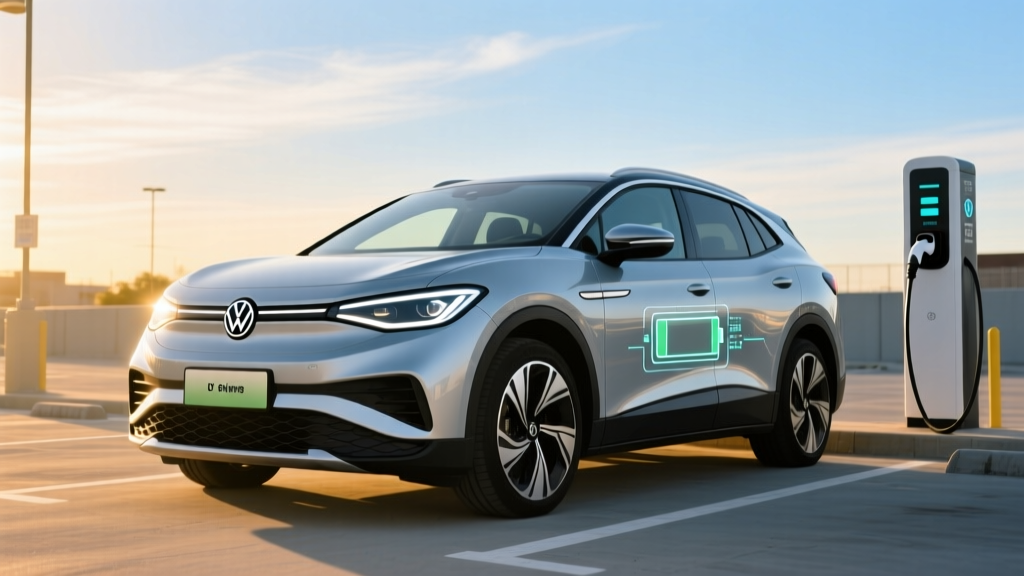
The 2023 Volkswagen ID.4 Pro occupies a specific niche in the compact electric SUV segment: a comfortable, practical, and family-oriented battery-electric vehicle that prioritizes ride quality and interior space over raw performance or cutting-edge infotainment. Built at VW's Chattanooga, Tennessee plant, the rear-wheel-drive ID.4 Pro pairs an 82 kWh (usable: ~77 kWh) NMC lithium-ion battery with a single rear-mounted electric motor producing 201 horsepower. It delivers an EPA-estimated 275 miles of range and qualifies for the full federal tax credit — a combination that made it one of the most compelling value propositions in the EV market during the 2023 model year.
From a 2026 vantage point, the 2023 ID.4 Pro remains a strong contender on the used EV market, especially for buyers who can leverage the IRS §25E used-EV credit (up to $4,000) or who purchased new during its production year. Below, we break down every spec that matters — from real-world range and charging curves to cargo dimensions and warranty coverage.
| Spec | Value |
|---|---|
| EPA Range | 275 miles |
| Battery (Usable / Gross) | ~77 kWh / 82 kWh |
| Battery Chemistry | NMC (Nickel Manganese Cobalt) |
| Drivetrain | Rear-Wheel Drive (single motor) |
| Horsepower / Torque | 201 hp / 229 lb-ft |
| 0–60 mph | ~7.7 seconds |
| Max DC Fast-Charge Rate | 170 kW (peak) |
| 10–80% DC Charge Time | ~30 minutes (claimed) |
| Level 2 Home Charge Rate | 11 kW (AC) |
| EPA Efficiency | 107 MPGe combined (31 kWh/100 mi) |
| Cargo Volume (rear seats up / folded) | 30.3 / 64.2 cu ft |
| Rear Legroom | 37.6 inches |
| Base MSRP (2023) | $43,995 (before incentives) |
| Battery / Powertrain Warranty | 8 years / 100,000 miles |
Range and Efficiency: EPA vs. Real World
Real-World Expectation: ~230–255 miles on highway-heavy trips (70–80 mph); ~260–275 miles in mixed city/suburban driving. In cold weather (below 32°F), expect 15–25% range loss, dropping effective range to ~200–230 miles without preconditioning.
The 2023 ID.4 Pro's 275-mile EPA rating placed it squarely in the middle of the compact electric SUV pack for the model year. For context, the single-motor Hyundai Ioniq 5 achieved 303 miles EPA, while the base RWD Ford Mustang Mach-E Select managed 247 miles. The ID.4 Pro sits between them — adequate for most daily commutes and moderate road trips, but not a class leader.
According to fueleconomy.gov, the ID.4 Pro earns a combined 107 MPGe rating, translating to 31 kWh per 100 miles of driving. That's respectable efficiency for a 4,600-pound vehicle, though the Ioniq 5's 114 MPGe combined and Tesla Model Y's 122 MPGe show there's room for improvement in the ID.4's aerodynamics and powertrain calibration.
In real-world testing by multiple outlets, the ID.4 Pro demonstrated predictable behavior: city driving with frequent regenerative braking opportunities often matched or slightly exceeded the EPA number, while sustained highway cruising at 75+ mph pulled the figure down to roughly 240 miles. The ID.4's heat pump (standard on all 2023 trims) helps mitigate cold-weather losses compared to EVs without one, but any NMC battery will shed range when temperatures plunge. Preconditioning the battery while plugged in — using the VW Car-Net app to set a departure time — is essential for maximizing winter range and enabling peak DC charging speeds.
Charging Speed: DC Fast Charging and Home Level 2
| Charging Level | Power / Connector | Speed (Approx.) |
|---|---|---|
| Level 1 (120V household) | ~1.4 kW / J1772 | ~3–4 miles per hour |
| Level 2 (240V home/public) | Up to 11 kW / J1772 | ~30–33 miles per hour (~7–8 hrs for full charge) |
| DC Fast Charge | Up to 170 kW / CCS | 10–80% in ~30 min; ~70% in ~20 min under ideal conditions |
The ID.4 Pro's onboard charger accepts up to 11 kW on Level 2 AC power — a competitive rate that means a full charge from near-empty takes roughly 7 to 8 hours on a properly installed 48-amp home charger. On a standard 32-amp Level 2 unit (common in older installations), expect closer to 9–10 hours. Either way, overnight charging is easily achievable for daily use.
On DC fast charging, the ID.4 Pro peaks at 170 kW via its CCS1 connector. This was competitive for 2023, though the Hyundai Ioniq 5 and Kia EV6 (both built on 800V architectures) could peak at 235–240 kW and sustain higher rates deeper into the charge curve. The ID.4 Pro's charging curve is a key nuance: it holds near peak power from roughly 10% to about 40% SoC, then tapers progressively. From 80% to 100%, charging slows dramatically — a common trait among NMC batteries managed conservatively to preserve long-term health. Plan your road-trip stops to charge from 10–80% and move on; topping off past 80% at a DC station is rarely time-efficient.
One notable perk: Volkswagen included three years of unlimited 30-minute charging sessions on the Electrify America network with every new 2023 ID.4. For original purchasers, this benefit substantially reduced early ownership costs. On the used market, check whether the complimentary charging period has expired or transfers to subsequent owners — it typically does not.
Performance and Driving Dynamics
The 2023 ID.4 Pro's single rear-mounted permanent-magnet synchronous motor produces 201 horsepower and 229 lb-ft of torque. That translates to a 0–60 mph time of approximately 7.7 seconds — perfectly adequate for merging and passing, but noticeably relaxed compared to the dual-motor AWD Pro S variant (295 hp, ~5.4 seconds) or competitors like the Tesla Model Y Long Range (5.0 seconds).
Where the ID.4 Pro earns its keep is ride quality. VW tuned the suspension for comfort over sportiness, resulting in a composed, quiet highway cruiser that absorbs bumps with a maturity uncommon in this price segment. The steering is light and low-effort — ideal for parking lots but devoid of feedback on winding roads. Regenerative braking is adjustable via steering-wheel paddles or a "B" mode on the shifter, though the ID.4 does not offer true one-pedal driving that brings the car to a complete stop without touching the brake pedal. This is a deliberate design choice that frustrates some EV veterans but feels natural to drivers transitioning from ICE vehicles.
The turning circle is impressively tight at 31.5 feet — a benefit of the rear-wheel-drive layout with no front axle driveshaft — making the ID.4 Pro surprisingly maneuverable in urban environments despite its compact-SUV footprint.
Interior, Cargo, and Technology
The ID.4 Pro's cabin emphasizes space and simplicity over flash. Rear-seat legroom measures 37.6 inches — generous for the class and enough to accommodate adults comfortably on longer trips. Cargo volume behind the second row is 30.3 cubic feet, expanding to 64.2 cubic feet with the 60/40 split rear seats folded. There is no front trunk (frunk); the space under the hood houses electronics and the cabin HVAC system.
The infotainment system is the ID.4's most frequently criticized element. A 10-inch touchscreen (upgraded to 12 inches on Pro S and above) runs VW's ID. Software 3.x, which drew widespread complaints at launch for sluggish response times, confusing menu structures, and touch-sensitive slider controls for volume and temperature that lack backlighting. VW issued multiple over-the-air updates during 2023–2024 that improved stability and responsiveness, but the system still trails competitors like Tesla's, Hyundai's, and even Ford's SYNC 4 in usability. Wireless Apple CarPlay and Android Auto are standard and, frankly, the preferred way to interact with navigation and media.
Driver-assistance features on the Pro trim include:
- Adaptive cruise control with stop-and-go
- Lane-keeping assist (Lane Assist)
- Front Assist with automatic emergency braking and pedestrian detection
- Blind-spot monitor with rear traffic alert
- Park Distance Control (front and rear sensors)
These systems constitute an SAE Level 2 driver-assistance suite — the driver must remain fully engaged with hands on the wheel and eyes on the road at all times. VW's Travel Assist combines adaptive cruise and lane-keeping into a single highway-driving mode, but it does not approach hands-free operation like GM's Super Cruise or Ford's BlueCruise.
Pricing, Tax Credits, and Ownership Cost
| Item | Amount |
|---|---|
| Base MSRP (ID.4 Pro RWD) | $43,995 |
| Destination Charge | $1,295 |
| As-Tested Price (typical with options) | $45,500–$47,000 |
| Federal Tax Credit (§30D, new purchase in 2023) | Up to $7,500 (full amount — see eligibility below) |
| Effective Price After Full Credit | ~$36,495–$39,705 |
| Used EV Credit (§25E, 2026 purchase) | Up to $4,000 (30% of sale price, capped) |
The 2023 ID.4 Pro's MSRP of $43,995 (before destination) sat comfortably under the IRS §30D MSRP cap of $80,000 for SUVs. Because it was assembled in Chattanooga, Tennessee, and met the critical-mineral and battery-component sourcing requirements in effect during 2023, the ID.4 Pro qualified for the full $7,500 federal tax credit for eligible buyers.
- MSRP Cap: Vehicle MSRP must not exceed $80,000 (SUVs, vans, trucks) or $55,000 (sedans) — ID.4 Pro qualifies ✓
- Buyer Income Cap: Modified AGI must not exceed $150,000 (single), $225,000 (head of household), or $300,000 (joint) — verify against your tax return
- Assembly: Final assembly in North America — Chattanooga, TN ✓
- Battery Sourcing: Critical minerals and battery component thresholds phased in over 2023–2024; 2023 ID.4 Pro met the requirements in effect at time of sale
- Point-of-Sale Transfer: Beginning in 2024, buyers can transfer the credit to the dealer for an upfront price reduction. For 2023 purchases, the credit was claimed on the buyer's federal tax return (Form 8936).
Always consult a tax professional and verify current rules at irs.gov. Eligibility depends on your individual circumstances and the specific vehicle's VIN.
For 2026 buyers looking at the used market, the IRS §25E used clean vehicle credit offers up to $4,000 (30% of the sale price, capped at $4,000) on vehicles priced at $25,000 or less, purchased from a licensed dealer. A 2023 ID.4 Pro on the used market in 2026 may fall within or near this price range depending on mileage and condition, making it a potentially strong value play. Income caps for §25E are lower: $75,000 (single), $112,500 (head of household), $150,000 (joint).
Warranty and Battery Longevity
Volkswagen backs the 2023 ID.4 Pro with a competitive warranty package:
- Limited Vehicle Warranty: 4 years / 50,000 miles
- Battery & Powertrain Warranty: 8 years / 100,000 miles (covers battery capacity below 70% of original)
- Roadside Assistance: 4 years / 50,000 miles
The 70% capacity retention threshold is industry-standard, matching Tesla, Hyundai, and Ford. In practice, NMC batteries in liquid-cooled packs like the ID.4's tend to degrade slowly under normal use — most owners report 90–95% state of health after the first 50,000 miles based on data aggregated from EV owner communities. The ID.4's thermal management system actively heats and cools the battery pack, which is critical for long-term health in both extreme heat and cold climates.
A full battery replacement on the ID.4, should it ever be needed outside warranty, is estimated at $15,000–$20,000 based on current VW parts pricing — a figure worth noting for long-term ownership planning, though the vast majority of EV batteries outlast their vehicles.
Pros and Cons
- Comfortable, composed ride quality that outclasses many rivals
- Spacious rear seat and generous cargo area (30.3 cu ft)
- Full $7,500 federal tax credit eligibility (when new); strong used-EV credit potential
- Standard heat pump for cold-weather efficiency
- Tight turning circle (31.5 ft) for easy city driving
- Three years of Electrify America charging included (original owners)
- Competitive 8-year / 100,000-mile battery warranty
- Infotainment system is slow and unintuitive (improved via OTA but still lagging)
- Touch-sensitive volume/temp sliders are unlit and frustrating
- No one-pedal driving mode (regenerative braking doesn't bring car to full stop)
- DC charging at 170 kW is slower than 800V competitors (Ioniq 5, EV6)
- No front trunk (frunk) for extra storage
- Modest 201 hp feels underpowered for the price point
- Driver-assist is competent but not class-leading
Who Should Buy the 2023 VW ID.4 Pro?
- You want a comfortable, practical daily driver for commuting and family duties
- Ride quality and cabin quietness matter more than acceleration or sporty handling
- You can charge at home overnight and need DC fast charging only for occasional road trips
- You value a strong warranty and proven manufacturer support network
- You're shopping the used market in 2026 and can leverage the §25E credit
- You prioritize infotainment UX and software polish (consider Tesla Model Y or Ioniq 5)
- You need the fastest DC charging for frequent long-distance travel (Ioniq 5/EV6 at 235+ kW)
- You want one-pedal driving as a core experience (Chevy Equinox EV, Tesla, Ford Mach-E)
- You need AWD for snow-belt winters (step up to the ID.4 Pro S AWD or consider the Mach-E Premium AWD)
Frequently Asked Questions
What is the real-world range of the 2023 VW ID.4 Pro?
The EPA rates the ID.4 Pro at 275 miles. In real-world mixed driving, expect 240–260 miles. Highway-heavy trips at 75+ mph typically yield 230–250 miles. In freezing temperatures without preconditioning, range can drop to 200–220 miles. Preconditioning the battery while plugged in recovers much of that loss.
How fast does the 2023 ID.4 Pro charge?
On DC fast charging, it peaks at 170 kW and charges from 10–80% in approximately 30 minutes under ideal conditions. On a home Level 2 charger at 11 kW, a full charge takes about 7–8 hours. Level 1 (120V) trickle charging adds roughly 3–4 miles per hour — suitable only for emergencies or very low daily mileage.
Does the 2023 ID.4 Pro qualify for the federal EV tax credit?
When purchased new in 2023, the ID.4 Pro qualified for the full $7,500 §30D federal tax credit, provided the buyer met income caps ($150K single / $300K joint) and the vehicle's MSRP stayed under the $80,000 SUV cap. On the 2026 used market, it may qualify for the §25E used-EV credit of up to $4,000 if purchased from a dealer for $25,000 or less and the buyer meets lower income thresholds. Always verify with a tax professional and the IRS §25E page.
Is the 2023 ID.4 Pro worth buying vs. the Ioniq 5 or Model Y?
It depends on priorities. The Ioniq 5 offers more range (303 mi EPA), faster charging (235 kW peak), and a more engaging drive. The Model Y delivers superior software, more Supercharger access, and faster acceleration. The ID.4 Pro counters with better ride comfort, a more traditional driving feel, strong tax-credit eligibility, and often a lower effective price on the used market. For comfort-focused buyers who don't need cutting-edge tech, the ID.4 Pro is a rational choice.
What are the biggest drawbacks of the ID.4 Pro?
The infotainment system is the most common complaint — sluggish, with poorly designed touch controls. The lack of one-pedal driving frustrates experienced EV owners. DC charging speed (170 kW peak) trails 800V rivals. And 201 horsepower feels modest for a $44,000 vehicle. None of these are dealbreakers for the right buyer, but they're real trade-offs.
Does the ID.4 Pro have a frunk?
No. The ID.4 has no front trunk. The space under the hood is occupied by power electronics, the HVAC compressor, and related components. All cargo must go in the rear cargo area (30.3 cu ft behind the second row).
What battery chemistry does the ID.4 Pro use?
The 2023 ID.4 Pro uses an NMC (nickel manganese cobalt) lithium-ion battery pack with a gross capacity of 82 kWh and approximately 77 kWh usable. NMC offers higher energy density than LFP (lithium iron phosphate), enabling the ID.4's 275-mile range in a relatively compact pack. The trade-off is that NMC batteries are more sensitive to sustained high states of charge — VW recommends setting a daily charge limit of 80% and only charging to 100% before long trips.