Quick Verdict: A Luxury Plug-In Hybrid That Bridges Two Worlds
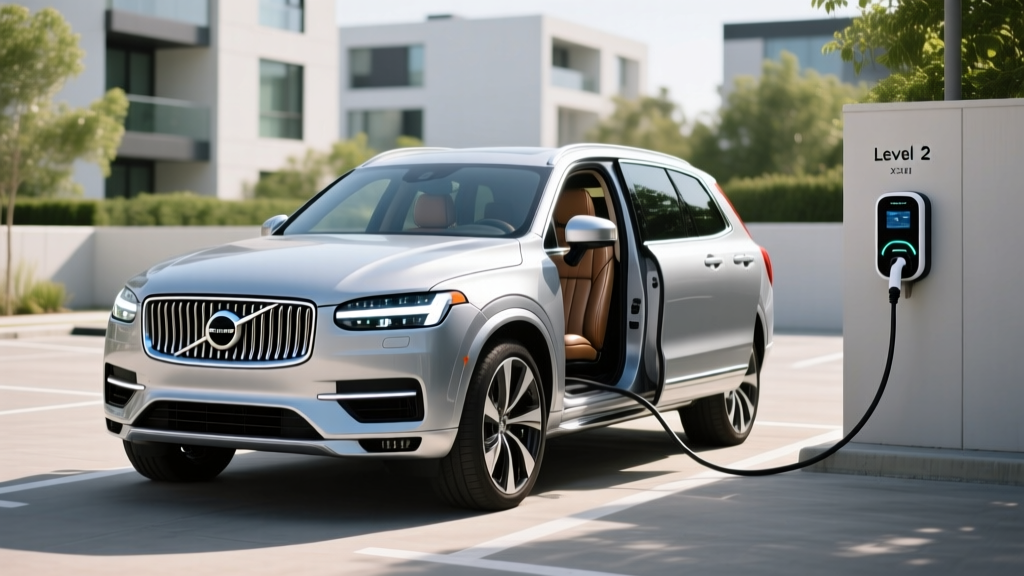
The 2023 Volvo XC90 Recharge occupies a specific niche: three-row luxury SUV buyers who want electric commuting during the week and gas-powered road-trip freedom on weekends. With 35 miles of EPA-estimated electric-only range, 455 combined horsepower, and Volvo's hallmark safety engineering, it's a compelling option for households not yet ready to commit to a full battery-electric vehicle.
But at a starting MSRP near $71,900, the XC90 Recharge faces stiff competition from rivals like the BMW X5 xDrive50e and the fully electric Kia EV9. This review breaks down the real-world efficiency, charging practicality, and total ownership cost to help you decide if Volvo's flagship PHEV earns a spot in your garage.
Electric Range, Battery, and Real-World Efficiency
The 2023 XC90 Recharge pairs a 2.0-liter turbocharged and supercharged four-cylinder engine with an electric motor integrated into the eight-speed automatic transmission. The high-voltage battery stores 18.6 kWh total (approximately 14.9 kWh usable) using NMC (nickel-manganese-cobalt) lithium-ion chemistry — chosen for its higher energy density over LFP, which matters in a vehicle packaging seven seats.
Real-World Expectation: Expect 28–32 miles in mixed city/highway driving at moderate temperatures. In cold weather (below 32°F), plan for 20–25 miles due to cabin heating demand and reduced battery efficiency. Highway-only driving at 70+ mph will drop electric range to roughly 22–26 miles. When the battery depletes, the hybrid powertrain delivers an EPA-estimated 27 MPG combined.
MPGe (charge-sustaining + electric): 55 MPGe combined
The 35-mile electric figure is competitive for the luxury PHEV segment. For context, the BMW X5 xDrive50e (2024 model year) offers roughly 38–40 miles of electric range on a slightly larger battery, while the Lincoln Aviator Grand Touring manages about 21 miles. If your daily round-trip commute is under 30 miles and you charge at home nightly, you could go weeks without visiting a gas station.
According to fueleconomy.gov, the XC90 Recharge achieves 55 MPGe when operating in combined electric-gas mode and 27 MPG once the battery is depleted — respectable for a 5,000+ lb three-row SUV.
Charging Speed: Level 1, Level 2, and the DC Fast-Charging Gap
Understanding the XC90 Recharge's charging profile requires distinguishing between kW (power, or how fast energy flows) and kWh (energy, or battery capacity). This PHEV's 18.6 kWh battery is small compared to a full BEV's 75–100+ kWh pack, so charging dynamics differ significantly.
| Charging Level | Power (kW) | Connector | 0–100% Time | Practical Notes |
|---|---|---|---|---|
| Level 1 (120V household) | ~1.4 kW | J1772 | ~12–14 hours | Overnight top-up adds ~5 miles/hr; adequate for light commuters |
| Level 2 (240V home/public) | 3.7 kW (onboard charger limit) | J1772 | ~5 hours (0–100%) | Fully replenishes overnight; ~9 miles of range per hour of charging |
| DC Fast Charging | Not supported | N/A | N/A | No CCS or CHAdeMO port — a key limitation for road-trip flexibility |
The most important takeaway: the XC90 Recharge does not support DC fast charging. The onboard AC charger is capped at 3.7 kW, meaning even at a public Level 2 station rated for 7.2 kW or 11 kW, the vehicle will only draw 3.7 kW. This is typical for PHEVs — their smaller batteries don't justify the cost and weight of DC fast-charge hardware — but it means road-trip charging strategy relies entirely on the gas engine.
For daily use, a standard 240V Level 2 home charger (like a ChargePoint Home Flex or Wallbox Pulsar Plus) will fully recharge the battery in about five hours. Most owners plug in when they get home and wake up to a full battery every morning. A dedicated 40-amp or 48-amp Level 2 circuit is more than sufficient; the car's 3.7 kW draw means even a 16-amp circuit will max out the onboard charger.
Performance: 455 HP From a Four-Cylinder PHEV Powertrain
| Specification | 2023 Volvo XC90 Recharge |
|---|---|
| Powertrain | 2.0L turbo+supercharged I4 + electric motor (PHEV) |
| Combined Horsepower | 455 hp |
| Combined Torque | 523 lb-ft |
| 0–60 mph | 4.5 seconds (manufacturer est.) |
| Drivetrain | AWD (eAWD — engine drives front wheels, electric motor drives rear) |
| Transmission | 8-speed automatic |
| Towing Capacity | 5,000 lbs (braked) |
| Battery (total / usable) | 18.6 kWh / ~14.9 kWh (NMC) |
| EPA Electric Range | 35 miles |
| EPA Combined MPG (gas-only) | 27 MPG |
| MPGe (combined) | 55 MPGe |
| Fuel Tank | 18.8 gallons |
The 2023 model year brought a significant powertrain upgrade to the XC90 Recharge. Volvo increased output from the prior generation's 400 hp to 455 hp, primarily through a more powerful rear electric motor (now 143 hp, up from 87 hp). The result is a 0–60 mph time of approximately 4.5 seconds — genuinely quick for a three-row family hauler.
The eAWD system is worth explaining: the gas engine drives the front wheels through the eight-speed automatic, while the electric motor independently powers the rear axle. There's no mechanical connection between front and rear, which means all-wheel-drive engagement is instant and seamless. In Pure mode, the vehicle runs rear-wheel drive on electric power alone. In Power mode, both powertrains combine for maximum acceleration.
Driving dynamics are composed rather than sporty. The XC90 Recharge prioritizes comfort, with a well-damped air suspension available on higher trims that soaks up rough pavement. Body roll is controlled but present in corners — this is a luxury cruiser, not a track car. The regenerative braking system offers mild one-pedal-like behavior in B mode, but it won't bring the vehicle to a complete stop like a full BEV's system.
Interior Space, Technology, and Driver Assistance
The XC90 remains one of the most spacious vehicles in the luxury midsize SUV segment. Volvo lists the following cargo volumes:
- Behind third row: 15.8 cu ft
- Behind second row (third row folded): 41.8 cu ft
- Behind front seats (all rear rows folded): 85.7 cu ft
- Third-row legroom: 31.9 inches (tight for adults on longer trips)
- Second-row legroom: 37.4 inches
The third row is best suited for children or occasional adult use on short trips. If you regularly carry six or seven adults, the larger BMW X7 or Mercedes-Benz GLS offer more third-row space, though neither offers a plug-in hybrid variant in the US market.
Technology centers on Volvo's Sensus infotainment system with a 9-inch portrait-oriented touchscreen. It supports Apple CarPlay and Android Auto (wired), and includes Google built-in services (Google Maps, Google Assistant, Google Play Store) on higher trims. The system is functional but starting to show its age compared to the newer Android Automotive OS found in Volvo's all-electric models like the XC40 Recharge and C40 Recharge.
Driver assistance is a Volvo strong suit. Every XC90 Recharge includes the Pilot Assist system — a SAE Level 2 driver-assistance feature combining adaptive cruise control with lane-centering steering. Pilot Assist works well on highways and in stop-and-go traffic, but it requires the driver to keep hands on the wheel and remain fully engaged. This is not autonomous driving; it's a sophisticated cruise-and-steering aid. Volvo also includes Run-off Road Protection, intersection auto-braking, and oncoming lane mitigation as standard safety features.
Pricing, Trims, and Federal Tax Credit Eligibility
The 2023 XC90 Recharge is offered in three main trim levels, with pricing that places it firmly in the luxury tier:
| Trim | Base MSRP | Key Features | Est. §30D Credit | Effective Price |
|---|---|---|---|---|
| Core (T8 eAWD) | $71,900 | 19" wheels, Pilot Assist, panoramic roof, power third row | Up to $7,500* | ~$64,400* |
| Plus Bright/Dark | $76,500 | 20" wheels, head-up display, 360° camera, Harman Kardon audio | Up to $7,500* | ~$69,000* |
| Ultimate | $81,900 | 21" wheels, Nappa leather, air suspension, Bowers & Wilkins audio | Up to $7,500* | ~$74,400* |
*Tax credit eligibility is subject to IRS §30D requirements and varies by buyer. See checklist below.
- MSRP cap: SUVs must have a base MSRP ≤ $80,000 — the Core and Plus trims qualify; the Ultimate trim may exceed the cap depending on options
- Buyer income cap: Modified AGI ≤ $300,000 (joint filers), $225,000 (head of household), $150,000 (single)
- Battery component sourcing: Must meet North American assembly requirements for battery components and critical minerals — eligibility has shifted frequently; confirm on the IRS qualified vehicles list at time of purchase
- Point-of-sale transfer: As of 2024, buyers can transfer the credit to the dealer at purchase for an immediate price reduction rather than waiting for tax filing
- Tax liability: The credit is non-refundable — you must owe at least as much in federal income tax as the credit amount
A critical note: PHEV tax credit amounts are calculated based on battery capacity. The XC90 Recharge's 18.6 kWh battery is large enough to qualify for the maximum credit under the capacity formula, but the final amount depends on meeting all critical-mineral and battery-component sourcing thresholds. Always verify current eligibility on the IRS qualified vehicles list before signing a purchase agreement, as these requirements have changed multiple times since 2023.
Warranty Coverage and Long-Term Battery Durability
Volvo provides the following warranty coverage for the 2023 XC90 Recharge:
- New vehicle limited warranty: 4 years / 50,000 miles
- Powertrain warranty: 4 years / 50,000 miles
- Hybrid/EV battery components: 8 years / 100,000 miles (covers defects and capacity loss below a defined threshold, typically 70% state of health)
- Corrosion warranty: 12 years, unlimited miles
- Roadside assistance: 4 years / unlimited miles
The 8-year/100,000-mile hybrid battery warranty is federally mandated and matches what you'll find from BMW, Audi, and Mercedes-Benz on their PHEV models. Real-world degradation data on the XC90 Recharge's NMC pack is still limited given the 2023 model year's relative newness, but Volvo's thermal management system (liquid cooling) should help preserve long-term battery health. Best practice for NMC chemistry: avoid routinely charging to 100% or letting the battery sit at 0% for extended periods. The vehicle's software buffer protects the pack from true full-empty extremes, but moderate state-of-charge habits (20–80% for daily use) extend lifespan.
If the battery does require out-of-warranty replacement, expect a cost in the $8,000–$14,000 range based on current PHEV pack pricing, though this figure is highly variable and may decrease as battery costs continue their long-term decline.
Pros, Cons, and How It Compares
- 35-mile electric range covers most daily commutes
- 455 hp and 4.5-sec 0–60 — genuinely quick for a 7-seater
- Standard Pilot Assist and comprehensive safety suite
- Comfortable, well-built interior with quality materials
- 5,000-lb towing capacity (rare for PHEVs)
- Eligible for up to $7,500 federal tax credit (trim-dependent)
- No DC fast charging — road trips run on gas only
- 3.7 kW onboard charger is slow for public Level 2 stations
- Third row is tight for adults
- Sensus infotainment feels dated vs. newer systems
- High starting price; well-equipped models push $85K+
- Only 27 MPG combined once the battery depletes (heavy vehicle)
Key Competitors
BMW X5 xDrive50e (2024+): Offers ~38–40 miles of electric range, 483 hp, and a more engaging driving experience. Starting around $73,000. Also lacks DC fast charging. A close rival that edges the Volvo on electric range and performance.
Lincoln Aviator Grand Touring: More powerful (494 hp) but only ~21 miles of electric range and a less refined PHEV system. Priced similarly. Falls behind on efficiency.
Kia EV9 (full BEV): If you're ready to go fully electric, the EV9 offers 279–304 miles of EPA range, DC fast charging up to 236 kW, three rows, and a starting price around $54,900. The trade-off is reliance on charging infrastructure for road trips.
- You want electric commuting but can't install a DC fast-charge-dependent lifestyle
- You need three rows and 5,000-lb towing in a luxury package
- Your daily driving is under 35 miles and you can charge at home nightly
- Safety is your top priority and you value Volvo's crash-test pedigree
- You want a fully electric experience — consider the Kia EV9 or Tesla Model X
- You need frequent fast-charging on road trips — PHEVs don't support this
- Third-row adult comfort is essential — look at the BMW X7 or Mercedes GLS
- Budget is a primary concern — the Mazda CX-90 PHEV starts ~$20K lower
Frequently Asked Questions
What is the real-world electric range of the 2023 Volvo XC90 Recharge?
The EPA rates it at 35 miles of electric-only range. In real-world mixed driving at moderate temperatures, expect 28–32 miles. Cold weather (below freezing) can reduce this to 20–25 miles, and sustained highway driving at 70+ mph typically yields 22–26 miles on a full charge.
How fast does the XC90 Recharge charge at home?
On a 240V Level 2 home charger, the onboard 3.7 kW AC charger replenishes the battery from empty to full in approximately 5 hours, adding about 9 miles of electric range per hour of charging. A standard 120V outlet (Level 1) takes 12–14 hours for a full charge.
Does the XC90 Recharge support DC fast charging?
No. The 2023 XC90 Recharge does not have a DC fast-charge port (CCS or CHAdeMO). This is typical for plug-in hybrids with smaller batteries. On road trips, the gasoline engine handles all propulsion once the battery is depleted.
Does the 2023 Volvo XC90 Recharge qualify for the federal EV tax credit?
It can qualify for up to $7,500 under IRS §30D, but eligibility depends on the buyer's income (≤$300K joint), the vehicle's MSRP (≤$80K for SUVs — limiting the Ultimate trim), and current battery-sourcing requirements. Always verify on the IRS qualified vehicles list before purchasing, as rules change frequently.
Is the XC90 Recharge worth buying over a full EV like the Kia EV9?
It depends on your use case. If you have reliable home charging, drive under 35 miles daily, but regularly take road trips to areas with sparse charging infrastructure, the XC90 Recharge's gas-engine backup is a genuine advantage. If you drive mostly in urban/suburban areas with good charging access and want lower running costs, a full BEV like the EV9 will save more on fuel and maintenance over time.
How does the XC90 Recharge perform in cold weather?
Cold weather impacts all electrified vehicles. Expect a 20–30% reduction in electric-only range (down to roughly 22–28 miles) in freezing temperatures. The gas engine will engage more frequently to provide cabin heat unless you precondition the vehicle while plugged in. The AWD system provides confident traction in snow, and the vehicle's overall winter capability is a strength.
What maintenance does the XC90 Recharge require?
As a PHEV, it requires standard gasoline-engine maintenance (oil changes, spark plugs, air filters) in addition to EV-specific checks (battery health monitoring, brake fluid). However, regenerative braking reduces brake pad wear, and electric-mode driving reduces engine wear. Expect annual maintenance costs of $600–$1,200 at a Volvo dealer — higher than a mainstream brand but typical for the luxury segment.