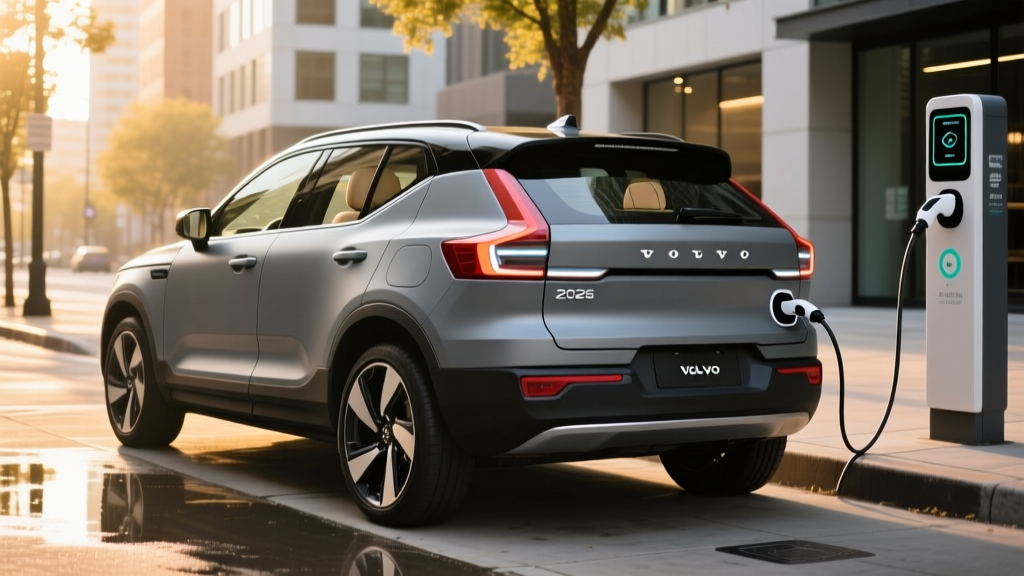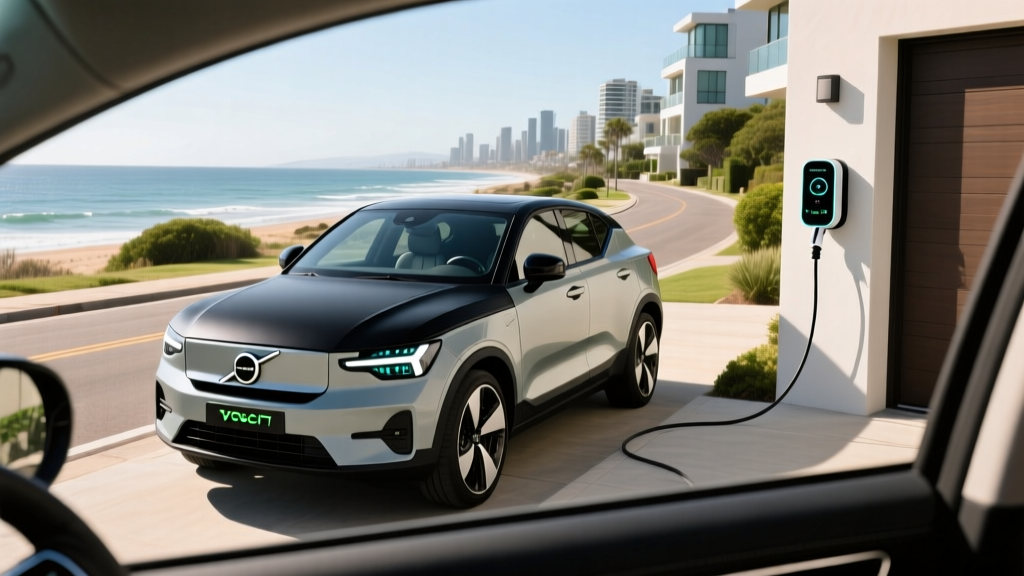
The 2023 Volvo C40 Recharge is the coupe-styled sibling of the XC40 Recharge, trading a few cubic feet of cargo space for a sleeker roofline and marginally better range. Underneath, it shares the same Compact Modular Architecture (CMA) platform, the same 78 kWh (usable) NMC lithium-ion battery, and the same 402-horsepower dual-motor all-wheel-drive powertrain that made the XC40 Recharge a quick, compelling entry in the luxury compact EV segment. For 2023, Volvo also introduced a single-motor rear-wheel-drive variant, broadening the lineup's appeal to buyers who prioritize efficiency over straight-line speed.
This review covers every spec that matters to an EV buyer: real-world range expectations, charging speeds at home and on the road, federal tax credit eligibility under current IRS §30D rules, and how the C40 stacks up against rivals like the Tesla Model Y, Ford Mustang Mach-E, and Hyundai Ioniq 5. If you're shopping for a used 2023 model or evaluating leftover inventory, this is the data you need.
Range, Efficiency, and Real-World Expectations
The EPA rates the 2023 Volvo C40 Recharge Twin Motor (AWD) at 226 miles of combined range. The single-motor RWD variant, introduced for 2023, pushes that figure to 256 miles thanks to reduced drivetrain losses and slightly different gearing. Efficiency for the AWD model lands at 87 MPGe combined (94 city / 80 highway), translating to roughly 39 kWh per 100 miles — respectable for a 4,800-pound luxury crossover, though not class-leading.
The 256-mile RWD model is the clear choice for range-conscious buyers. Its 97 MPGe combined rating and lower curb weight mean less energy consumed per mile, and real-world highway figures hover around 220–240 miles in temperate conditions. If your commute is under 40 miles round-trip and you charge at home nightly, either variant covers daily needs with substantial margin — but road trippers should plan charging stops carefully with the AWD model.
Battery Chemistry, Capacity, and Longevity
The 2023 C40 Recharge uses a 78 kWh usable (82 kWh gross) lithium-ion battery with NMC (nickel manganese cobalt) chemistry, supplied primarily by LG Energy Solution. NMC offers higher energy density than LFP (lithium iron phosphate), which is why Volvo can package this capacity in a compact crossover footprint. The trade-off: NMC cells degrade slightly faster over time and are more sensitive to sustained high state-of-charge (above 90%) and extreme heat.
Volvo provides a battery warranty of 8 years or 100,000 miles, guaranteeing at least 70% capacity retention over that period. This is competitive with BMW and Audi but trails Hyundai/Kia's 10-year/100,000-mile battery warranty. Real-world degradation data from early XC40 Recharge owners (which shares the same pack) suggests approximately 5–8% capacity loss over the first 50,000 miles with typical charging habits — well within warranty thresholds.
| Specification | Twin Motor AWD | Single Motor RWD |
|---|---|---|
| Battery Capacity (Usable) | 78 kWh | 69 kWh |
| Chemistry | NMC | NMC |
| Battery Warranty | 8 yr / 100,000 mi (70% SoH) | 8 yr / 100,000 mi (70% SoH) |
| Powertrain Warranty | 4 yr / 50,000 mi | 4 yr / 50,000 mi |
| Thermal Management | Liquid-cooled + heat pump | Liquid-cooled + heat pump |
The RWD model uses a smaller 69 kWh usable pack, which reduces weight and cost while still delivering 256 miles of EPA range through its more efficient drivetrain. Both packs feature active liquid thermal management, critical for preserving battery health during DC fast charging and extreme temperatures.
Charging Speeds: DC Fast, Level 2, and Level 1
Charging speed is where the C40 Recharge reveals one of its few competitive weaknesses. The Twin Motor AWD model peaks at 150 kW on a DC fast charger, while the single-motor RWD caps at 135 kW. In a segment where the Hyundai Ioniq 5 can sustain 240 kW and the Tesla Model Y can pull 250 kW at V3 Superchargers, the C40 falls noticeably behind on long road trips.
| Charging Level | Power / Rate | Time or Miles Added |
|---|---|---|
| DC Fast Charge (Twin Motor peak) | 150 kW | 10–80% in ~37 minutes |
| DC Fast Charge (Single Motor peak) | 135 kW | 10–80% in ~34 minutes |
| Level 2 (240V, 48A home charger) | 11 kW | ~25 miles per hour of charging |
| Level 2 (240V, 32A) | 7.7 kW | ~18 miles per hour of charging |
| Level 1 (120V, 12A) | 1.4 kW | ~3–4 miles per hour of charging |
On a 150 kW DC fast charger, the Twin Motor model reaches 10–80% in approximately 37 minutes. The charge curve is relatively conservative: peak rate holds only briefly between 15–40% state of charge before tapering. Above 60%, expect speeds to drop to 80–100 kW, and above 80%, charging slows dramatically to protect cell health. This taper is normal for NMC chemistry but means you'll spend more time at a rest stop than you would in an Ioniq 5 or Model Y.
At home on a Level 2 charger wired to a 60-amp circuit (48A continuous), the C40's 11 kW onboard charger replenishes the battery at roughly 25 miles of range per hour. A full overnight charge from 20% to 100% takes about 8–9 hours. For most owners who plug in nightly and charge between 20–80% daily, this is more than adequate. Installation of a home Level 2 charger typically costs $500–$2,000 depending on panel capacity and run length — consult a licensed electrician for your specific setup.
The C40 Recharge uses a CCS1 connector for DC fast charging and a J1772 connector for Level 1/Level 2 AC charging. As of 2025, Volvo has committed to adopting the NACS (Tesla-style) connector on new models, and adapters are available for C40 owners to access Tesla Supercharger V3/V4 stations. This significantly expands the C40's road-trip charging network, though sustained charge rates will still be limited by the vehicle's 150 kW ceiling.
Performance and Drivetrain
The Twin Motor C40 Recharge delivers 402 horsepower and 486 lb-ft of torque from its dual permanent-magnet motors, launching the 4,824-pound crossover from 0–60 mph in approximately 4.5 seconds. That's genuinely quick — faster than a BMW X3 M40i and only a few tenths behind the Tesla Model Y Performance. Power delivery is instant and linear, with no turbo lag or gear-shift interruption.
The single-motor RWD variant produces 231 horsepower and 243 lb-ft of torque, with a 0–60 time of roughly 6.9 seconds. It's less thrilling but still brisk for daily driving, and the rear-biased weight distribution gives it a slightly more engaging feel in corners. Both models feature one-pedal driving with adjustable regenerative braking intensity, though Volvo's regen is gentler than Tesla's or Nissan's — some drivers appreciate the smoother deceleration, while others wish for stronger one-pedal capability.
Ride quality is firm but composed, with well-damped suspension tuning that handles rough pavement without crashing. The steering is precise but light, and the low center of gravity (thanks to the under-floor battery) minimizes body roll. The C40 is not a sports car, but it's a competent, confidence-inspiring daily driver that rewards smooth inputs.
Interior, Tech, and Cargo Space
Inside, the C40 Recharge runs Volvo's Android Automotive OS (developed with Google), which means Google Maps navigation, Google Assistant voice control, and Google Play Store apps are built natively into the 9-inch touchscreen. The system is responsive and integrates seamlessly with Android phones, though Apple CarPlay was initially absent at launch — it was added via an over-the-air update in late 2022 and is standard on all 2023 models. The digital instrument cluster is a 12.3-inch display that shows speed, range, and navigation directions.
Volvo's Pilot Assist driver-assistance system is standard, offering adaptive cruise control, lane-centering steering, and automatic emergency braking. This is a SAE Level 2 system — it requires the driver to keep hands on the wheel and eyes on the road at all times. It's competent for highway cruising but doesn't match the hands-free capability of GM's Super Cruise or Ford's BlueCruise on mapped highways.
Cargo space is the C40's most obvious compromise compared to the XC40 Recharge. The sloping roofline reduces rear cargo volume to 15.3 cubic feet behind the rear seats (versus 20.7 cu ft in the XC40). Fold the rear seats and you get 48.4 cubic feet — still less than the XC40's 57.6 cu ft. There's also a small front trunk (1.1 cu ft) suitable for charging cables and a laptop bag, but don't expect to fit a carry-on suitcase.
Passenger space is adequate for four adults, though the coupe roofline cuts into rear headroom. Rear legroom measures 36.1 inches — enough for a 6-foot passenger behind a similarly sized driver, but tighter than the Model Y or Ioniq 5. Front seats are heated and power-adjustable across all trims, with available Nappa leather or Volvo's wool-blend upholstery (a nice sustainable option).
| Measurement | Value |
|---|---|
| Cargo Volume (rear seats up) | 15.3 cu ft |
| Cargo Volume (rear seats folded) | 48.4 cu ft |
| Frunk Volume | 1.1 cu ft |
| Front Headroom | 39.4 in |
| Rear Headroom | 36.7 in |
| Rear Legroom | 36.1 in |
| Curb Weight (Twin Motor) | 4,824 lbs |
Pricing, Trims, and Federal Tax Credit Eligibility
The 2023 Volvo C40 Recharge was offered in three trim levels for the Twin Motor AWD and two for the single-motor RWD. Here's the original MSRP breakdown:
| Trim | Drivetrain | MSRP (incl. destination) |
|---|---|---|
| Core | Single Motor RWD | $55,300 |
| Plus | Single Motor RWD | $58,300 |
| Core | Twin Motor AWD | $59,850 |
| Plus | Twin Motor AWD | $62,850 |
| Ultimate | Twin Motor AWD | $65,850 |
The Ultimate trim adds a panoramic glass roof, Harman Kardon premium audio, 360-degree surround camera, and pilot assist with enhanced features. Most buyers found the Plus trim to be the sweet spot, offering heated rear seats, a power liftgate, and upgraded interior materials without the Ultimate's premium.
Federal Tax Credit: §30D Eligibility
Under current IRS §30D rules, the 2023 Volvo C40 Recharge faces a complex eligibility picture. The vehicle's MSRP falls under the $80,000 SUV cap (the C40 qualifies as an SUV per EPA classification), so the price ceiling is not an issue. However, several other requirements apply:
- Battery component sourcing: The C40's LG Energy Solution battery cells contain components that may not meet the North American assembly threshold for the full $3,750 battery component credit. Eligibility for this half of the credit varies by production batch.
- Critical minerals sourcing: The NMC cathode requires nickel, manganese, and cobalt. Whether these minerals meet the §30D sourcing requirements (from the U.S. or a free-trade-agreement partner) depends on the specific supply chain batch for the vehicle in question.
- Buyer income caps: Modified adjusted gross income must not exceed $300,000 (joint filers), $225,000 (head of household), or $150,000 (single filers).
- Point-of-sale transfer: As of 2024, buyers can transfer the credit to the dealer for an upfront price reduction rather than waiting to claim it on their tax return.
In practice, many 2023 C40 Recharge units qualified for $3,750 (half credit) rather than the full $7,500, depending on battery sourcing documentation. Volvo's official Clean Vehicle Report for each VIN specifies eligibility. If you're buying a used 2023 C40, the used EV credit (§25E) offers up to $4,000 or 30% of the sale price (whichever is less), with lower income caps ($150,000 joint / $75,000 single) and a $25,000 maximum vehicle price — a threshold most used C40s will exceed, making this credit difficult to claim.
How It Compares to Key Competitors
The compact luxury EV crossover segment is crowded, and the C40 Recharge faces stiff competition. Here's how it stacks up on the metrics that matter most:
| Spec | Volvo C40 Recharge (AWD) | Tesla Model Y LR | Ford Mustang Mach-E ER AWD | Hyundai Ioniq 5 AWD |
|---|---|---|---|---|
| EPA Range | 226 mi | 330 mi | 290 mi | 256 mi |
| Battery (usable) | 78 kWh | 75 kWh | 91 kWh | 77.4 kWh |
| Peak DC Fast Charge | 150 kW | 250 kW | 150 kW | 240 kW |
| 10–80% DCFC Time | ~37 min | ~25 min | ~45 min | ~18 min |
| 0–60 mph | 4.5 sec | 4.8 sec | 5.1 sec | 5.0 sec |
| Horsepower | 402 hp | 384 hp | 346 hp | 320 hp |
| Cargo (rear up) | 15.3 cu ft | 30.2 cu ft | 29.7 cu ft | 27.2 cu ft |
| Base MSRP (2023) | $59,850 | $52,990 | $56,995 | $48,500 |
The data tells a clear story: the C40 Recharge is the quickest and most powerful vehicle in this comparison, but it sacrifices range, cargo space, and charging speed to get there. The Tesla Model Y dominates on range and cargo volume. The Hyundai Ioniq 5 charges dramatically faster. The Mach-E offers the most range for the money among traditional automakers. The C40's advantages are its Scandinavian design, Google-native infotainment, build quality, and the emotional appeal of the Volvo brand — factors that don't show up in a spec table but matter to many luxury buyers.
- 402 hp and 4.5-second 0–60 make it genuinely quick
- Google Automotive OS is intuitive and well-integrated
- Standard heat pump improves cold-weather efficiency
- Premium interior materials and quiet cabin
- Competitive pricing for a luxury-branded EV
- Strong safety ratings (IIHS Top Safety Pick+)
- 226-mile EPA range is below segment average
- 150 kW peak DC charging is slow vs. Ioniq 5 and Model Y
- Cargo space (15.3 cu ft) is tight for a crossover
- Rear headroom compromised by coupe roofline
- Federal tax credit eligibility uncertain due to battery sourcing
- No hands-free driving capability (Level 2 only)
Who Should Buy the 2023 Volvo C40 Recharge?
The C40 Recharge is best suited for urban and suburban commuters who charge at home, prioritize design and build quality over maximum range, and don't regularly haul large cargo or take road trips exceeding 200 miles between charging stops. It's an excellent choice for a two-car household where the C40 handles daily duties and a second vehicle covers long-distance travel.
If your commute is under 50 miles round-trip, you have reliable home Level 2 charging, and you value a premium cabin with Google-native tech, the C40 delivers a refined ownership experience. The single-motor RWD variant at $55,300 MSRP is particularly compelling for efficiency-focused buyers who don't need all-wheel drive.
This EV is not ideal for frequent road trippers (the 150 kW charge rate adds too much time at DC fast stations), families needing maximum cargo space (look at the XC40 Recharge or Model Y instead), or buyers in states without reliable public charging infrastructure. It's also not the right pick if maximizing federal tax credit is a priority — the sourcing uncertainty is a real financial consideration.
Frequently Asked Questions
What is the real-world range of the 2023 Volvo C40 Recharge?
The EPA rates the Twin Motor AWD at 226 miles and the Single Motor RWD at 256 miles. In real-world highway driving at 70–75 mph, expect 190–210 miles (AWD) or 220–240 miles (RWD) in mild weather. Cold weather (below freezing) reduces range by 20–30%, bringing the AWD model down to roughly 160–180 highway miles. City driving with regenerative braking can slightly exceed the EPA combined figure in temperate conditions.
How fast does the 2023 C40 Recharge charge?
On a DC fast charger, the Twin Motor peaks at 150 kW (10–80% in ~37 minutes) and the Single Motor peaks at 135 kW (10–80% in ~34 minutes). At home on a 48A Level 2 charger, the 11 kW onboard charger adds about 25 miles of range per hour, fully replenishing the battery overnight. Level 1 (120V) charging adds only 3–4 miles per hour and is best used for occasional top-ups.
Does the 2023 Volvo C40 Recharge qualify for the federal EV tax credit?
Eligibility depends on battery component and critical mineral sourcing per IRS §30D rules. Many 2023 C40 units qualified for $3,750 (half credit) rather than the full $7,500. The vehicle's MSRP is under the $80,000 SUV cap, but buyers must also meet income limits ($300K joint / $150K single). Check the specific VIN's Clean Vehicle Report for definitive eligibility. Consult a tax professional before relying on credit claims.
Is the C40 Recharge worth buying over the Tesla Model Y or Hyundai Ioniq 5?
It depends on your priorities. The C40 offers superior acceleration (4.5 sec 0–60), a premium Scandinavian interior, and Google-native tech. But the Model Y delivers 330 miles of range and vastly more cargo space, while the Ioniq 5 charges at 240 kW (10–80% in ~18 minutes). If range, cargo, and charging speed top your list, the C40 is not the segment leader. If design, build quality, and performance matter most, it's a compelling choice.
What are the biggest drawbacks of the 2023 C40 Recharge?
The three main compromises are range (226 miles AWD, below segment average), DC fast-charging speed (150 kW peak, significantly slower than the Ioniq 5's 240 kW), and cargo space (15.3 cu ft behind the rear seats). The coupe roofline also reduces rear headroom, and federal tax credit eligibility is uncertain due to battery sourcing requirements. These are trade-offs for the C40's performance, design, and premium cabin.
Sources: EPA Fuel Economy – 2023 Volvo C40 Recharge, IIHS Safety Ratings, IRS §30D Clean Vehicle Credit.