Quick Verdict: Stylish but Compromised
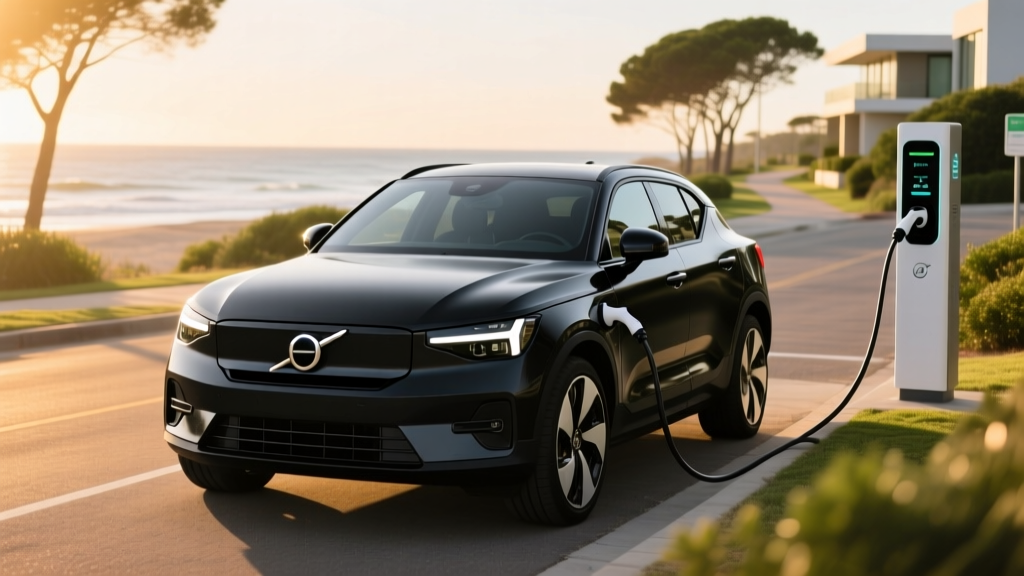
The 2023 Volvo C40 Recharge Pure Electric is Volvo's first ground-up EV body style — a sleek coupe-SUV variant of the XC40 Recharge. It delivers brisk acceleration, premium Scandinavian design, and Google Built-in infotainment. But its sloping roofline sacrifices cargo space, and its 226-mile EPA range trails rivals like the Hyundai Ioniq 5 (303 mi) and Tesla Model Y (303 mi). For urban commuters who prioritize design and daily comfort over road-trip range, the C40 Recharge is a compelling luxury compact EV. For cross-country drivers or families needing maximum utility, there are better options.
| Spec | Value |
|---|---|
| EPA Range | 226 miles (Twin Motor AWD) |
| Real-World Range | ~180–210 mi highway; ~150–170 mi in cold weather |
| Battery (Usable) | 78 kWh (NMC lithium-ion) |
| DC Fast Charge (Peak) | 150 kW (CCS) |
| 10–80% DC Charge Time | ~37 minutes |
| Level 2 Home Charge | 11 kW (~33 mi/hr) |
| 0–60 mph | 4.5 seconds (Twin Motor) |
| Horsepower | 402 hp / 486 lb-ft torque |
| Drivetrain | Dual-motor AWD |
| EPA Efficiency | 87 MPGe combined (39 kWh/100 mi) |
| Cargo (Behind Rear Seats) | 15.3 cu ft |
| Cargo (Seats Folded) | 49.0 cu ft |
| Frunk | 1.1 cu ft |
| Base MSRP | $55,300 (Core trim) |
| Battery Warranty | 8 years / 100,000 miles |
Range and Efficiency: EPA vs. Reality
The 2023 C40 Recharge carries a 78 kWh usable NMC (nickel manganese cobalt) battery pack. The EPA rates the Twin Motor AWD variant at 226 miles of combined range. Volvo also introduced a Single Motor RWD variant for 2023 with an EPA rating of 226 miles on a slightly different tune, though real-world results differ between the two drivetrains.
Real-World Range Expectations: In mild weather (60–75°F) with mixed city/highway driving, expect 200–215 miles from a full charge. Sustained highway speeds above 70 mph drop range to roughly 180–195 miles due to the C40's boxy aerodynamics (drag coefficient ~0.32). In freezing temperatures (below 32°F), range loss of 25–35% is typical — plan for 150–170 miles per charge in winter conditions. The C40 does not include a standard heat pump in the US market for 2023, which exacerbates cold-weather losses compared to rivals like the Ioniq 5 or BMW iX.
Efficiency lands at 87 MPGe combined (39 kWh/100 mi) per fueleconomy.gov. That's competitive within the luxury compact EV segment but noticeably behind the Tesla Model Y Long Range (122 MPGe) and Hyundai Ioniq 5 RWD (114 MPGe). At a national average electricity rate of $0.16/kWh, charging the C40 costs roughly $6.24 per 100 miles — about one-third the cost of a 25-MPG gas SUV at $3.50/gallon.
Charging Speed: DC Fast and Level 2 at Home
The C40 Recharge uses a CCS1 connector for DC fast charging and a J1772 inlet for Level 1/Level 2 AC charging. Peak DC charge rate is 150 kW, which was respectable for 2023 but now trails competitors — the Ioniq 5 peaks at 240 kW, the Tesla Model Y at 250 kW, and the Porsche Macan Electric at 270 kW.
| Charge Level | Power | Speed | Notes |
|---|---|---|---|
| Level 1 (120V outlet) | ~1.4 kW | ~4 mi/hr | Emergency/top-up only; ~57 hrs for full charge |
| Level 2 (240V home) | 11 kW (48A) | ~33 mi/hr | Full charge in ~8 hrs; requires NEMA 14-50 or hardwired 60A circuit |
| DC Fast Charge | Peak 150 kW | 10–80% in ~37 min | Tapers to ~50 kW above 80%; full 0–100% takes ~55 min |
Charging curve reality: The C40 sustains near-peak power from roughly 10–40% State of Charge, then tapers progressively. From 80–100%, charge speed drops sharply — a common trait of NMC batteries managed for longevity. On road trips, plan stops around the 30-minute mark to stay in the fast-charging sweet spot. On a 300-mile trip with DC fast chargers available, you'll need two stops of roughly 30–35 minutes each.
For home charging, Volvo supports up to 11 kW on a Level 2 wallbox, which fully replenishes the battery overnight. A typical 48-amp Level 2 home charger installation runs $800–$2,000 including equipment and electrician labor, depending on whether your electrical panel needs an upgrade.
Performance and Driving Dynamics
The Twin Motor AWD C40 Recharge produces 402 horsepower and 486 lb-ft of torque from its dual permanent-magnet motors. The result is a 4.5-second 0–60 mph time — genuinely quick for a compact crossover and noticeably faster than the BMW iX xDrive50 (4.6s) or Audi Q4 e-tron (5.8s).
On the road, the C40 feels planted and composed. The low center of gravity from the under-floor battery minimizes body roll, and the steering is precise if slightly numb. One-pedal driving with strong regenerative braking is available via a toggle in the settings menu, though the regen isn't quite as aggressive as Tesla's or Nissan's implementations. The ride quality is firm but well-damped — you'll feel sharp bumps, but they're never jarring.
The Single Motor RWD variant (introduced mid-2023) produces 231 hp and 243 lb-ft, with a 0–60 time around 7.2 seconds. It's adequate for commuting but lacks the punch that makes the Twin Motor feel effortless. If performance matters, the Twin Motor is worth the premium.
Interior, Cargo, and Technology
The C40's cabin reflects Volvo's minimalist Scandinavian ethos. Materials are premium — Volvo has eliminated leather across the C40 lineup, using a wool-blend and synthetic microfiber instead. The 12-inch digital instrument cluster and 9-inch portrait touchscreen running Google Built-in (Google Maps, Google Assistant, Google Play Store) are intuitive. Wireless Apple CarPlay is standard; Android Auto is integrated natively via Google.
The sloping coupe roofline defines the C40's trade-off. Behind the rear seats, you get 15.3 cubic feet of cargo space — significantly less than the XC40 Recharge (20.7 cu ft) and far behind the Model Y (30.2 cu ft). Fold the rear seats and space expands to 49.0 cu ft, which is usable but still trails the Model Y's 72.1 cu ft. The tiny 1.1 cu ft frunk holds charging cables but little else.
Rear-seat headroom is tighter than the XC40 due to the coupe roofline. Adults over 6 feet will notice the slope on longer rides. Legroom is adequate at 36.1 inches in the rear.
Driver assistance: The C40 includes Volvo's Pilot Assist (SAE Level 2) as standard — adaptive cruise control with lane-centering that works well on highways but requires hands-on-wheel supervision. This is not self-driving. Blind-spot monitoring, rear cross-traffic alert, and automatic emergency braking with pedestrian/cyclist detection are all standard. The C40 earned a 2023 IIHS Top Safety Pick+ rating.
Pricing, Trims, and Federal Tax Credit
The 2023 C40 Recharge launched in three trims:
| Trim | Drivetrain | MSRP | Est. After §30D Credit |
|---|---|---|---|
| Core | Twin Motor AWD | $55,300 | Varies — see eligibility below |
| Plus | Twin Motor AWD | $58,150 | Varies |
| Ultimate | Twin Motor AWD | $62,350 | Varies |
| Core (Single Motor) | RWD | $53,550 | Varies |
Federal tax credit (§30D) eligibility is complex for the C40 Recharge. Under current IRS rules, the vehicle must meet battery-component and critical-mineral sourcing requirements, which have tightened significantly since 2023. The C40's battery is manufactured by CATL/SK Innovation with supply chains that may not satisfy the latest domestic-content thresholds. Additionally:
- MSRP cap: SUVs must be under $80,000 — the C40 qualifies on price.
- Buyer income cap: AGI must not exceed $150,000 (single) / $300,000 (joint).
- Point-of-sale transfer: Eligible buyers can apply the credit as an instant rebate at the dealer.
Check the latest sourcing requirements on IRS.gov's qualified vehicle list before purchasing. Eligibility changes quarterly as supply chains shift. A tax professional should confirm your specific situation.
Warranty and Long-Term Ownership
Volvo covers the C40 Recharge's battery and drive unit with an 8-year / 100,000-mile warranty, guaranteeing the battery retains at least 70% of its original capacity during that period. The bumper-to-bumper warranty is 4 years / 50,000 miles — standard for the luxury segment but shorter than Hyundai/Kia's 5-year / 60,000-mile coverage.
NMC batteries in the C40's configuration typically show 10–15% degradation over 100,000 miles based on fleet data from similar Volvo/Polestar packs. That means a 226-mile new battery could deliver roughly 195–200 miles after five years of normal use. To maximize longevity, avoid frequent 100% charges and minimize DC fast-charging sessions — Volvo recommends setting a daily charge limit of 80–90% for routine use.
Insurance costs for the C40 run 15–25% higher than an equivalent gas-powered XC40, reflecting EV repair costs and battery-replacement risk. Expect annual premiums of $1,800–$2,400 depending on your profile and state.
How It Compares: C40 Recharge vs. Key Rivals
Pros
- Quick 4.5-second 0–60 with Twin Motor AWD
- Premium, leather-free Scandinavian interior
- Google Built-in with excellent navigation and voice assistant
- Standard comprehensive safety suite (IIHS TSP+)
- Distinctive coupe-SUV styling stands out in the segment
- Strong regenerative braking with one-pedal option
Cons
- 226-mile EPA range trails Ioniq 5 (303 mi) and Model Y (303 mi)
- 150 kW peak DC charging is slow vs. 800V rivals (Ioniq 5: 240 kW)
- No heat pump standard in US — significant cold-weather range loss
- Cargo space (15.3 cu ft) is tight for the class
- Sloping roofline reduces rear headroom for taller passengers
- Federal tax credit eligibility uncertain due to battery sourcing rules
Choose the C40 Recharge if: You want a distinctive, well-built luxury compact EV for daily commuting under 100 miles round-trip, value Scandinavian design and safety, and have reliable home Level 2 charging. The C40 shines as a premium urban runabout.
Look elsewhere if: You regularly drive more than 200 miles between charges, need maximum cargo space, live in a cold climate where range loss matters, or want the fastest possible DC charging for road trips. The Hyundai Ioniq 5, Tesla Model Y, or Kia EV6 all surpass the C40 in range, charging speed, and practicality — though they sacrifice some of the Volvo's design distinction and interior refinement.
Frequently Asked Questions
What is the real-world range of the 2023 Volvo C40 Recharge?
In mild weather with mixed driving, expect 200–215 miles. Highway-only driving at 70+ mph drops this to 180–195 miles. In freezing winter conditions without a heat pump, plan for 150–170 miles. Always budget a 15–20% buffer below the 226-mile EPA sticker for trip planning.
How fast does the C40 Recharge charge at home and on the road?
On a Level 2 home charger (11 kW / 48A), the C40 gains roughly 33 miles of range per hour, fully charging overnight in about 8 hours. On DC fast chargers, it peaks at 150 kW and charges from 10–80% in approximately 37 minutes. Above 80%, charging slows dramatically to protect the battery.
Does the 2023 C40 Recharge qualify for the $7,500 federal tax credit?
It depends on current battery-sourcing rules under IRS §30D. The C40 meets the MSRP cap (under $80,000 for SUVs), but battery component and critical-mineral sourcing requirements may disqualify it in certain model-year quarters. Check the IRS qualified vehicle list for the most current status, and consult a tax professional for your specific income and filing situation.
Is the C40 Recharge worth buying over the Tesla Model Y or Ioniq 5?
For range, charging speed, and cargo space, the Model Y and Ioniq 5 are objectively better EVs. The C40 wins on interior material quality, distinctive design, and Volvo's safety reputation. If you drive under 150 miles daily and value premium aesthetics over maximum efficiency, the C40 is worth considering. If road trips and practicality top your list, choose the Model Y or Ioniq 5.
What's the biggest drawback of the C40 Recharge?
The combination of limited range (226 mi EPA), slow DC charging (150 kW peak), and no standard heat pump creates a triple penalty for road trips and cold-weather driving. The C40 is an excellent daily commuter but requires more planning than longer-range rivals for anything beyond your regular commute.
Does the C40 have a heat pump?
The 2023 US-market C40 Recharge does not include a heat pump as standard equipment. This means cabin heating in cold weather draws directly from the traction battery, accelerating range loss by 25–35% in sub-freezing temperatures. Some European-market C40s include a heat pump, but US buyers should factor this into winter range expectations.
Sources: EPA fueleconomy.gov, Volvo Cars USA, IRS §30D Qualified Vehicles, IIHS.