Quick Verdict: The 2023 VW ID.4 in 2026
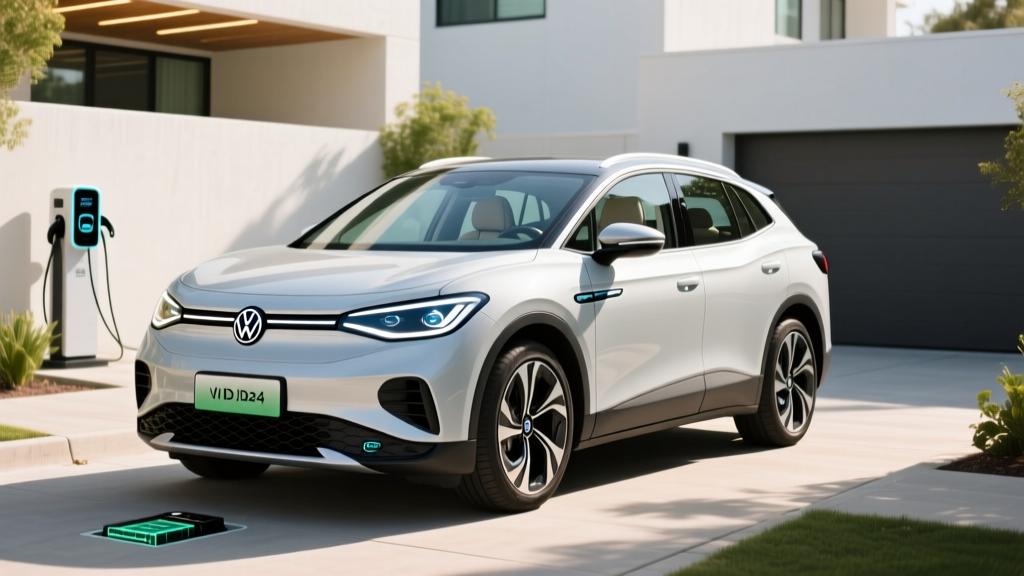
Even three years after its model year, the 2023 Volkswagen ID.4 remains a practical, comfortable compact electric SUV — especially on the used-EV market. Its curb weight, efficiency, and charging profile tell a story of a vehicle designed for comfort over sportiness, with enough range for daily commuting and moderate road trips. If you're researching the 2023 Volkswagen ID.4 curb weight and what it means for real-world efficiency, charging, and handling, this review covers every number that matters.
The ID.4 was Volkswagen's first dedicated battery-electric vehicle for the U.S. market, built on the MEB platform. The 2023 model year introduced a larger 82 kWh battery pack (up from 77 kWh in 2021–2022), an updated infotainment system, and a new Pro S Plus trim with dual-motor AWD. Let's get into the specs.
Spec Table: 2023 VW ID.4 at a Glance
| Spec | Pro (RWD) | Pro S (RWD) | Pro S Plus (AWD) |
|---|---|---|---|
| EPA Range | 275 mi | 275 mi | 245 mi |
| Battery (usable) | 77 kWh (NMC) | 82 kWh (NMC) | 82 kWh (NMC) |
| Curb Weight | 4,682 lbs | 4,780 lbs | 4,951 lbs |
| Motor / Drivetrain | Single RWD | Single RWD | Dual-motor AWD |
| Horsepower | 201 hp | 201 hp | 295 hp |
| 0–60 mph | ~7.7 sec | ~7.7 sec | ~5.4 sec |
| Max DC Fast Charge | 135 kW | 170 kW | 170 kW |
| 10–80% DC Time | ~36 min | ~30 min | ~30 min |
| Level 2 Home Rate | 11 kW (~37 mi/hr) | 11 kW (~37 mi/hr) | 11 kW (~37 mi/hr) |
| EPA MPGe (combined) | 107 MPGe | 104 MPGe | 100 MPGe |
| kWh / 100 mi | 31 | 32 | 34 |
| Base MSRP (2023) | $38,995 | $43,995 | $47,795 |
| Battery Warranty | 8 yr / 100,000 mi (70% capacity retention) | ||
Sources: EPA / fueleconomy.gov, Volkswagen of America press specifications.
Curb Weight Breakdown: What the Numbers Mean
The 2023 Volkswagen ID.4 curb weight ranges from 4,682 lbs (Pro RWD) to 4,951 lbs (Pro S Plus AWD). That's roughly 500–700 lbs heavier than a comparably sized gas SUV like the Toyota RAV4 (~3,614 lbs), which is typical for EVs carrying large lithium-ion packs.
Here's why curb weight matters for EV buyers:
- Efficiency: Heavier vehicles require more energy per mile. The AWD Pro S Plus, at 4,951 lbs, consumes 34 kWh/100 mi versus 31 for the lighter RWD Pro — a ~10% penalty.
- Tire wear: The ID.4's mass, combined with instant torque, accelerates tire wear. Expect to replace tires every 25,000–35,000 miles rather than the 40,000–50,000 typical for lighter ICE vehicles.
- Braking: Regenerative braking handles most deceleration, reducing brake pad wear significantly. Many ID.4 owners report original brake pads at 60,000+ miles.
- Handling: The low center of gravity (battery pack under the floor) mitigates body roll, but the mass is noticeable in quick lane changes and on winding roads. This is a comfort cruiser, not a corner carver.
- Towing: The AWD variant is rated for 2,700 lbs towing capacity (braked trailer). The RWD models are rated at 2,200 lbs. The curb weight contributes to stable towing, but range drops 30–50% when towing near max capacity.
For context, the ID.4's curb weight is competitive within its class. The 2023 Hyundai Ioniq 5 (AWD) weighs ~4,800 lbs, and the 2023 Ford Mustang Mach-E (Extended Range AWD) weighs ~4,900 lbs. The ID.4 sits in the middle — not the lightest, not the heaviest.
Real-World Range: Beyond the EPA Sticker
EPA estimate: 275 mi (Pro/Pro S RWD) | 245 mi (Pro S Plus AWD)
Real-world highway (70–75 mph, mild weather): ~220–245 mi (RWD) | ~195–215 mi (AWD)
Real-world city/suburban mixed driving: ~250–270 mi (RWD) | ~225–240 mi (AWD)
Cold weather (below 32°F, highway): ~175–200 mi (RWD) | ~155–175 mi (AWD)
The ID.4's EPA range figures are achievable in moderate conditions with mixed driving. However, highway speeds above 70 mph and cold temperatures significantly impact range — as they do for all EVs. The ID.4 uses a resistive PTC heater rather than a heat pump (which VW introduced in later model years for some markets), meaning cold-weather cabin heating draws substantially from the battery.
In real-world testing by EV reviewers and owners, the RWD Pro S with the 82 kWh pack typically delivers 230–250 miles on a highway road trip in 60–75°F weather. Below freezing, expect a 25–35% range reduction. If you live in northern climates and lack home charging, the AWD model's 245-mile EPA rating may feel tight in winter.
Charging Speeds: DC Fast and Home Level 2
Charging is where the 2023 ID.4 shows its age slightly compared to newer rivals. Here's the full breakdown:
| Charging Level | Power / Rate | Speed | Notes |
|---|---|---|---|
| Level 1 (120V) | ~1.4 kW | ~4–5 mi/hr | Emergency/trickle only |
| Level 2 (240V, 48A) | 11 kW | ~37 mi/hr | Full charge overnight (~9 hrs, 10–100%) |
| DC Fast Charge (Pro) | 135 kW peak | 10–80% in ~36 min | CCS1 connector |
| DC Fast Charge (Pro S / Pro S Plus) | 170 kW peak | 10–80% in ~30 min | CCS1 connector; sustained ~130 kW average to 80% |
Charging curve reality: The 170 kW peak on Pro S and Pro S Plus trims is achievable at low state of charge (10–20%) on a capable 350 kW charger. The curve tapers progressively: expect ~150 kW through 40%, ~120 kW through 60%, and ~80 kW approaching 80%. The average rate from 10–80% is closer to 120–130 kW, which is respectable but trails the Hyundai Ioniq 5's 800V architecture (which sustains higher rates and achieves 10–80% in ~18 minutes).
For home charging, the 11 kW onboard charger is a strong point. On a 48-amp Level 2 circuit, you'll add roughly 37 miles of range per hour — enough to fully replenish the battery overnight. Installation of a 240V/60A circuit typically costs $500–$1,500 depending on panel proximity (source: HomeAdvisor EV charger install data). A panel upgrade to 200A can add $1,500–$3,000 if needed.
Performance and Driving Dynamics
The RWD models produce 201 hp and 229 lb-ft of torque from a single rear-mounted permanent-magnet synchronous motor. The 0–60 mph time of roughly 7.7 seconds is adequate for merging and passing but won't thrill enthusiasts. The AWD Pro S Plus adds a front induction motor for a combined 295 hp and 339 lb-ft, dropping the 0–60 to approximately 5.4 seconds — noticeably quicker and more confidence-inspiring on highway ramps.
Ride quality is where the ID.4 excels. The MEB platform delivers a smooth, compliant ride with excellent noise isolation. The 4,780–4,951 lb curb weight contributes to a planted, substantial feel on the highway. Steering is light and precise but offers minimal feedback — this is a vehicle tuned for comfort, not engagement.
The turning circle is a standout: just 31.5 feet curb-to-curb, making it remarkably maneuverable in parking lots and city streets — a benefit of the rear-wheel-drive architecture and the wheels pushed to the corners.
Pricing, Trims, and Federal Tax Credit Eligibility
The 2023 ID.4 launched with aggressive pricing, and on the used market in 2026, it's even more compelling. Here's the original MSRP structure:
| Trim | 2023 MSRP | Est. Used Price (2026) | Key Features |
|---|---|---|---|
| Standard (RWD, 62 kWh) | $38,995 | $22,000–$26,000 | 209 mi range, basic infotainment |
| Pro (RWD, 77 kWh) | $40,295 | $24,000–$28,000 | 275 mi range, heated seats, adaptive cruise |
| Pro S (RWD, 82 kWh) | $43,995 | $27,000–$31,000 | Panoramic roof, power liftgate, 12" display |
| Pro S Plus (AWD, 82 kWh) | $47,795 | $29,000–$34,000 | Dual motor, 295 hp, ventilated front seats |
Buying a used 2023 ID.4 in 2026 qualifies for the Used Clean Vehicle Credit (§25E): up to $4,000 or 30% of the sale price (whichever is less), provided:
- The vehicle is at least 2 model years old (2023 qualifies in 2026) ✓
- Sale price is $25,000 or less (varies by trim/condition — check dealer pricing)
- Buyer income: ≤$75,000 single / ≤$112,500 head of household / ≤$150,000 joint
- Purchased from a licensed dealer (private sales excluded)
- Must be for personal use, primarily in the U.S.
The original $7,500 new-vehicle credit (§30D) no longer applies to new purchases of this model year. Always verify current rules at IRS.gov and consult a tax professional.
Interior, Cargo, and Technology
The ID.4's interior is spacious and minimalist, though not without controversy:
- Passenger space: 41.1 inches front legroom, 37.6 inches rear legroom — competitive with the RAV4 and CR-V. The flat floor (no transmission tunnel) makes the rear middle seat genuinely usable.
- Cargo volume: 30.3 cu ft behind the rear seats, 64.2 cu ft with seats folded. No front trunk (frunk) — the space is occupied by HVAC components and the 12V battery.
- Infotainment: The 2023 model year brought VW's updated ID. Software 3.1 with a 12-inch touchscreen (Pro S and above). Response times improved over the launch-year software, but the capacitive touch sliders for volume and temperature remain frustrating for many owners — no physical knobs.
- Driver assistance: IQ.DRIVE suite includes adaptive cruise control with stop-and-go, lane-keeping assist, front assist (AEB), and Travel Assist (a SAE Level 2 system requiring hands-on-wheel supervision). It's competent for highway cruising but does not offer hands-free driving like Ford BlueCruise or GM Super Cruise.
The ID.4's Travel Assist is an SAE Level 2 driver-assistance system. It combines adaptive cruise and lane centering but requires continuous driver supervision. This is not autonomous or self-driving. The driver must keep hands on the wheel and eyes on the road at all times.
Warranty and Long-Term Ownership
Volkswagen provides solid warranty coverage for the ID.4:
- Battery: 8 years / 100,000 miles — guarantees at least 70% capacity retention. If the pack degrades below 70% within that window, VW will repair or replace it.
- Powertrain (e-motor, power electronics): 8 years / 100,000 miles
- Bumper-to-bumper: 4 years / 50,000 miles
- Roadside assistance: 3 years / 36,000 miles
NMC battery chemistry in the ID.4 has shown moderate degradation in real-world use. Based on owner-reported data and testing by outlets like Recurrent Auto, typical degradation is approximately 5–8% over the first 60,000 miles, with the curve flattening significantly afterward. Most owners should expect 85–90% state of health at 100,000 miles — well within VW's 70% warranty threshold.
Pros and Cons
✅ Pros
- Comfortable, quiet ride quality
- Spacious interior with flat rear floor
- Tight turning circle (31.5 ft)
- Competitive 11 kW Level 2 home charging
- Strong used-market value in 2026
- Eligible for $4,000 used-EV tax credit
- 8-yr/100k-mi battery warranty
❌ Cons
- DC fast charging trails rivals (30 min vs. Ioniq 5's 18 min)
- No heat pump — cold-weather range suffers
- Frustrating capacitive touch sliders (no knobs)
- No frunk for extra cargo
- Infotainment still feels dated vs. competitors
- AWD range drops to 245 mi EPA
- Software update history has been inconsistent
Who Should Buy the 2023 VW ID.4?
Decision Framework
Choose the 2023 ID.4 if:
- You prioritize ride comfort and cabin quietness over sporty handling
- Your daily commute is under 80 miles round-trip (any trim)
- You have access to home Level 2 charging and rarely road-trip more than 200 miles one-way
- You want a used EV under $30,000 that qualifies for the $4,000 federal credit
- You need a tight turning radius for urban driving
Look elsewhere if:
- You frequently road-trip in cold climates (consider an EV with a heat pump like the Ioniq 5 or Model Y)
- You need fast DC charging for high-mileage days (Ioniq 5 / EV6 with 800V)
- You want hands-free highway driving (Ford BlueCruise or GM Super Cruise vehicles)
- You need a frunk or maximum cargo flexibility
Frequently Asked Questions
What is the curb weight of the 2023 Volkswagen ID.4?
The 2023 VW ID.4 curb weight ranges from 4,682 lbs (Standard/Pro RWD) to 4,951 lbs (Pro S Plus AWD). The Pro S RWD weighs approximately 4,780 lbs. This is typical for a compact electric SUV with a 77–82 kWh battery pack.
What is the real-world range of the 2023 ID.4?
Expect 220–250 miles in mixed real-world driving for RWD models (EPA 275 mi) and 195–225 miles for AWD (EPA 245 mi). Highway driving at 75 mph and cold weather below freezing can reduce these figures by 15–35%.
How fast does the 2023 ID.4 charge at home and on DC fast chargers?
On a 48-amp Level 2 home charger, the ID.4 charges at 11 kW, adding about 37 miles of range per hour (full charge in ~9 hours). DC fast charging peaks at 135 kW (Pro) or 170 kW (Pro S / Pro S Plus), achieving 10–80% in approximately 30–36 minutes on a capable charger.
Does a used 2023 ID.4 qualify for any federal tax credit in 2026?
Yes — as a used vehicle, the 2023 ID.4 may qualify for the §25E Used Clean Vehicle Credit of up to $4,000, provided the sale price is $25,000 or less, the buyer meets income caps, and the purchase is through a licensed dealer. Verify eligibility at IRS.gov.
Is the 2023 VW ID.4 worth buying in 2026 vs. competitors?
At used prices of $22,000–$34,000 (before credits), the ID.4 offers strong value for buyers who prioritize comfort and practicality. The Hyundai Ioniq 5 charges faster and has a heat pump, while the Tesla Model Y offers longer range and a Supercharger network. The ID.4 wins on ride quality, interior space, and used-market affordability.
What battery chemistry does the 2023 ID.4 use?
The 2023 ID.4 uses NMC (nickel manganese cobalt) lithium-ion cells supplied primarily by LG Energy Solution and SK On. NMC offers higher energy density than LFP, contributing to the ID.4's competitive range in a moderate-size pack. VW's 8-year/100,000-mile battery warranty covers degradation below 70% capacity.