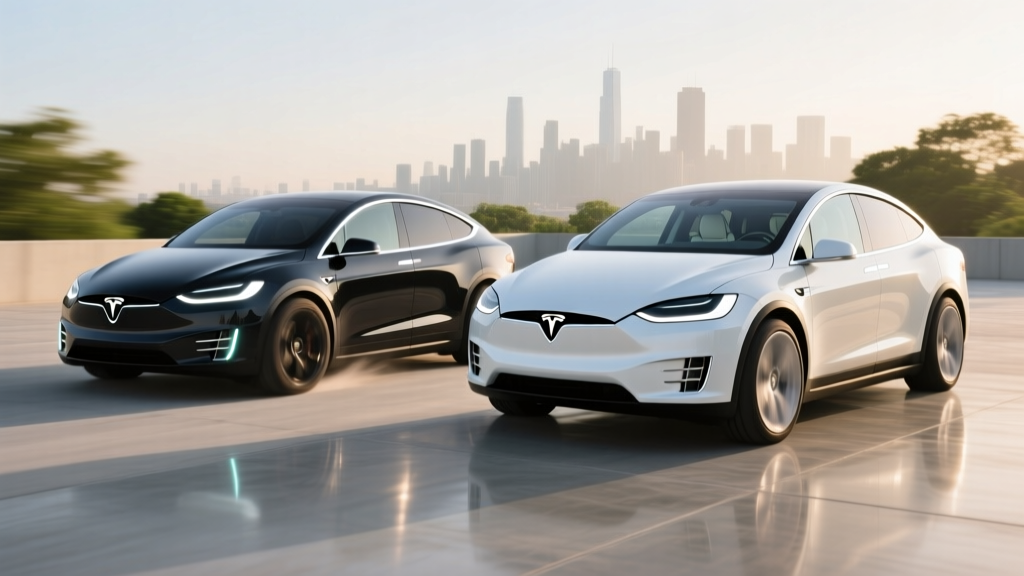
The 2023 Tesla Model Y remains one of the most consequential electric vehicles ever sold in the United States. As the best-selling EV globally through its production run, it defined what a mainstream electric crossover could be: spacious, efficient, and backed by the most reliable DC fast-charging network in North America. Now, in 2026, the 2023 Model Y has migrated almost entirely to the used and certified pre-owned market, where it represents one of the strongest value propositions in electrified transportation — especially for buyers navigating the used-EV federal tax credit.
This review examines the 2023 Model Y through a 2026 ownership lens: what the real-world range looks like after two to three years of battery degradation, how the LFP and NMC battery packs compare, what charging actually costs, and whether a used 2023 Model Y still outclasses newer competitors from Hyundai, Ford, and BMW.
2023 Tesla Model Y: Core Specifications at a Glance
| Specification | Long Range AWD | Performance | Rear-Wheel Drive (Standard) |
|---|---|---|---|
| EPA Range | 330 mi | 303 mi | 260 mi |
| Battery Capacity (usable) | ~75 kWh (NMC) | ~75 kWh (NMC) | ~57.5 kWh (LFP) |
| Battery Chemistry | NMC (Nickel Manganese Cobalt) | NMC | LFP (Lithium Iron Phosphate) |
| Drivetrain | Dual-Motor AWD | Dual-Motor AWD | Single-Motor RWD |
| Horsepower | 384 hp | 456 hp | 295 hp |
| 0–60 mph | 4.8 sec | 3.5 sec | 6.6 sec |
| MPGe (combined) | 117 MPGe | 111 MPGe | 129 MPGe |
| Efficiency (kWh/100 mi) | 28 kWh/100 mi | 30 kWh/100 mi | 26 kWh/100 mi |
| Max DC Fast Charge | 250 kW | 250 kW | 170 kW |
| 10–80% DC Charge Time | ~27 min | ~27 min | ~30 min |
| Level 2 Home Charge Rate | 11.5 kW (~44 mi/hr) | 11.5 kW (~44 mi/hr) | 11.5 kW (~44 mi/hr) |
| Original Base MSRP (2023) | $52,990 | $65,990 | $47,740 |
| Battery/Powertrain Warranty | 8 yr / 120,000 mi | 8 yr / 120,000 mi | 8 yr / 120,000 mi |
Sources: EPA Fuel Economy, Tesla Owner's Manual. Efficiency figures per fueleconomy.gov. Original MSRPs reflect pricing at time of 2023 sale and may have fluctuated during the model year.
Real-World Range: What the EPA Sticker Doesn't Tell You
EPA Estimated: 330 miles
Real-World Highway (70–75 mph, moderate temps): ~270–290 miles
Real-World City/Suburban (mixed regen): ~300–320 miles
Cold Weather (below 32°F, highway): ~220–250 miles
Cold Weather with Heat Pump Active (city): ~260–280 miles
The 2023 Model Y Long Range's 330-mile EPA rating was among the best in its class at launch. But as any experienced EV owner knows, the EPA test cycle favors low-speed, moderate-temperature driving with generous regenerative braking recovery. In sustained highway driving at 70–75 mph — the scenario that matters most for road-trip planning — expect to extract roughly 270 to 290 miles from a full charge in mild weather.
The 2023 Model Y is equipped with a heat pump (Tesla's "Octovalve" thermal management system), which significantly reduces cold-weather range loss compared to EVs using resistive cabin heating. In freezing temperatures, you'll still lose 20–30% of rated range on the highway, but city driving with the heat pump recovers some of that deficit. Preconditioning the battery while plugged in — a feature accessible through the Tesla app — is essential for preserving range and enabling fast DC charging speeds in cold weather.
For the RWD variant with the LFP battery, the 260-mile EPA rating translates to approximately 215–235 miles highway and 175–200 miles in cold conditions. This trim is best suited for commuters with home charging rather than frequent road trippers.
Degradation note for 2026 buyers: A 2023 Model Y purchased used in 2026 will have approximately 2–3 years of battery aging. Tesla's NMC packs typically lose 5–8% capacity in the first 30,000–50,000 miles before the degradation curve flattens. LFP packs tend to degrade more slowly but show a slightly steeper initial drop. Check the vehicle's State of Health (SoH) through the Tesla service menu or a third-party diagnostic before purchasing.
Charging Performance: DC Fast, Level 2, and the Supercharger Advantage
| Charging Level | Power / Rate | Miles Added per Hour | Notes |
|---|---|---|---|
| Level 1 (120V household) | ~1.4 kW | ~5 mi/hr | Emergency/trickle only |
| Level 2 (240V, 48A home charger) | 11.5 kW | ~44 mi/hr | Full charge overnight (~7–8 hrs) |
| Level 2 (public, variable) | 7.2–19.2 kW | 28–72 mi/hr | Depends on station and vehicle acceptance |
| DC Fast Charge (Long Range/Perf) | Peak 250 kW | ~1,000 mi/hr (peak) | 10–80% in ~27 min; tapers above 60% |
| DC Fast Charge (RWD/LFP) | Peak 170 kW | ~680 mi/hr (peak) | 10–80% in ~30 min; LFP can charge to 100% daily |
The 2023 Model Y Long Range and Performance trims accept up to 250 kW at a V3 or V4 Tesla Supercharger. However, peak charge rate is not sustained charge rate. The charging curve peaks around 250 kW between 10–20% State of Charge (SoC), then progressively tapers. From 10–80%, expect roughly 27 minutes at a V3 Supercharger under ideal conditions (battery preconditioned, moderate ambient temperature). Above 80%, charging slows dramatically — from 80–100% can take an additional 20+ minutes, which is why Tesla's navigation system typically recommends charging to 80% on road trips.
The RWD model's LFP battery has a distinct charging advantage: Tesla recommends charging LFP packs to 100% at least once per week for optimal battery calibration and longevity. This means the RWD owner can use the full 57.5 kWh daily, whereas NMC owners should set their daily charge limit to 80% (yielding roughly 264 usable miles on the Long Range) and reserve 100% charges for road trips.
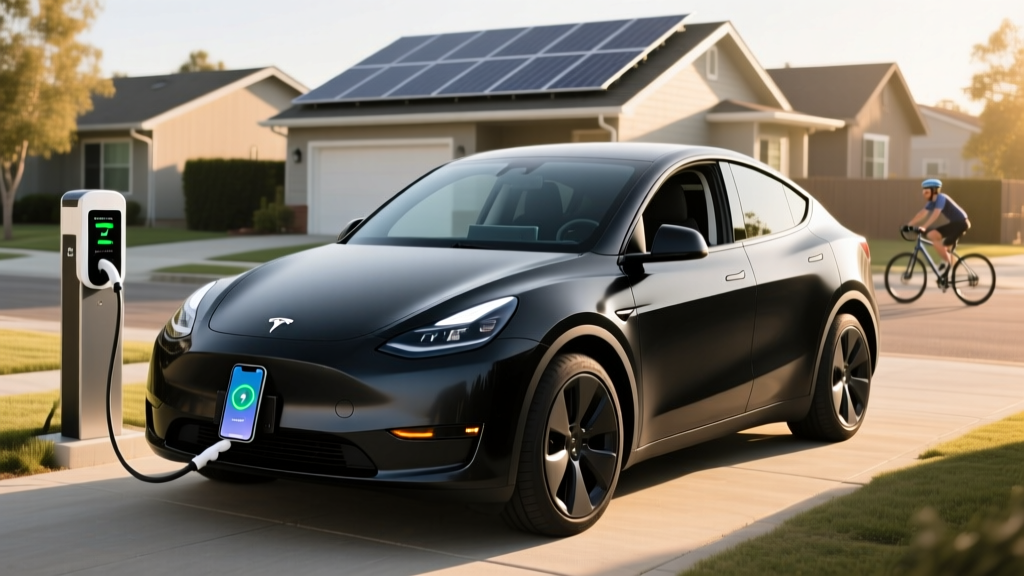
For home Level 2 charging, the 2023 Model Y's onboard charger accepts up to 11.5 kW (48 amps) on a 60-amp circuit. A Tesla Wall Connector installed on a dedicated 60A/240V circuit will deliver a full overnight charge in approximately 7–8 hours for the Long Range and about 5 hours for the RWD. Installation costs typically range from $800–$2,000 depending on panel proximity and whether a panel upgrade is needed.
Connector note: The 2023 Model Y was built with Tesla's proprietary connector (now standardized as NACS). As of 2026, the NACS connector is the dominant North American charging standard, adopted by Ford, GM, Rivian, Hyundai, and most major automakers. The 2023 Model Y has native access to the full Tesla Supercharger network — over 25,000 stalls in North America — without adapters, which remains a significant practical advantage over CCS-equipped competitors still relying on third-party networks with variable uptime.
Performance, Efficiency, and Driving Dynamics
Even the base RWD Model Y delivers 295 horsepower and a 6.6-second 0–60 mph time — quicker than most gas-powered compact SUVs. The Long Range AWD's 4.8-second sprint is genuinely fast for a family crossover, and the Performance trim's 3.5-second 0–60 puts it in sports-car territory. All trims feature instant torque delivery from standstill, regenerative braking strong enough for one-pedal driving in most conditions, and a low center of gravity from the underfloor battery pack that minimizes body roll.
Efficiency is where the Model Y truly excels. The RWD model achieves 129 MPGe combined (26 kWh/100 mi), making it one of the most efficient electric SUVs ever sold. The Long Range AWD returns 117 MPGe (28 kWh/100 mi). For context, this translates to roughly $0.04–$0.06 per mile when charging at home on a national-average electricity rate of $0.16/kWh — compared to $0.12–$0.15 per mile for a 25-MPG gas SUV at $3.50/gallon.
Interior Space, Cargo, and Practicality
The 2023 Model Y offers seating for five (an optional third row was available but is extremely cramped and best suited for small children on short trips). Key interior dimensions:
- Cargo volume (rear seats up): 30.2 cu ft
- Cargo volume (rear seats folded): 72.1 cu ft
- Front trunk (frunk): 4.1 cu ft
- Front legroom: 41.8 in
- Rear legroom: 39.4 in
- Ground clearance: 6.6 in
- Towing capacity: 3,500 lbs (when equipped with tow hitch)
The cargo area is one of the Model Y's strongest selling points. With rear seats folded, the 72.1 cu ft of space rivals midsize SUVs and accommodates full-size furniture, camping gear, or bicycle transport without a roof rack. The frunk adds useful space for charging cables, groceries, or a small carry-on. The panoramic glass roof creates an airy cabin but does reduce rear headroom slightly compared to competitors with conventional roofs.
Technology, Autopilot, and Driver Assistance
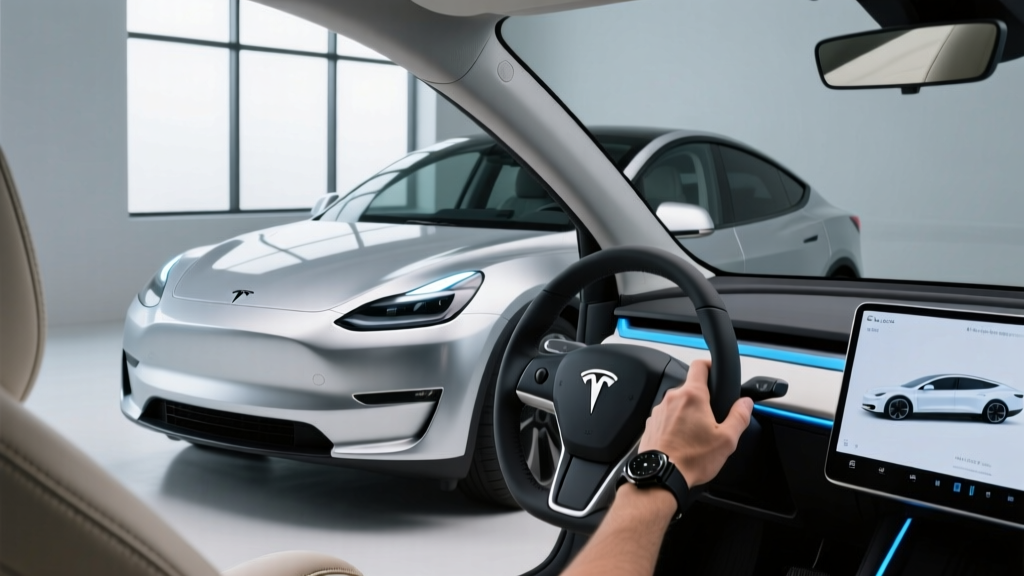
The 2023 Model Y features Tesla's minimalist interior dominated by a 15-inch landscape touchscreen that controls virtually all vehicle functions — climate, navigation, media, vehicle settings, and even the glovebox release. There is no traditional instrument cluster; speed and driving information are displayed on the upper-left corner of the main screen.
Standard driver-assistance features include:
- Autopilot: Traffic-Aware Cruise Control + Autosteer (lane centering) — standard on all trims
- Automatic Emergency Braking, Forward Collision Warning, Side Collision Warning
- Blind-spot monitoring (via cameras, displayed on screen)
- 360-degree camera views
- Dashcam and Sentry Mode (surveillance recording)
Full Self-Driving (FSD) Supervised was available as a $15,000 one-time purchase or $199/month subscription in 2023. FSD adds Navigate on Autopilot (automatic highway interchanges), Auto Lane Change, Autopark, Summon, and traffic light/stop sign recognition.
Both Autopilot and FSD (Supervised) are SAE Level 2 driver-assistance systems. The driver must remain fully engaged, keep hands on the steering wheel, and monitor the road at all times. These systems do NOT make the vehicle self-driving. Tesla's "Full Self-Driving" name has been widely criticized as misleading. Only Level 4 services like Waymo operate without a human driver in defined geofenced areas.
Notable tech drawbacks include the lack of Apple CarPlay and Android Auto — Tesla uses its proprietary infotainment system exclusively. While the native system is responsive and feature-rich (Netflix, YouTube, Spotify, arcade games while parked), drivers who prefer phone-mirroring integration will find this omission frustrating. There are also no physical buttons for climate or volume, which some drivers find distracting.
Pricing, Used Market Value, and Federal Tax Credit Eligibility
As of early 2026, the 2023 Model Y is no longer sold new. Used-market pricing varies significantly based on mileage, condition, trim, and battery health:
| Trim | Original MSRP (2023) | Est. Used Price (2026) | Used-EV Federal Credit (§25E) | Effective Price After Credit |
|---|---|---|---|---|
| RWD (Standard Range) | $47,740 | $27,000–$32,000 | Up to $4,000 | $23,000–$28,000 |
| Long Range AWD | $52,990 | $30,000–$37,000 | Up to $4,000 | $26,000–$33,000 |
| Performance | $65,990 | $35,000–$42,000 | Up to $4,000 | $31,000–$38,000 |
Used-EV tax credit (§25E): Under current IRS rules, buyers of qualifying used EVs may claim a credit equal to 30% of the sale price, up to a maximum of $4,000. Key eligibility requirements per IRS.gov:
- Sale price cap: Vehicle must be sold for $25,000 or less to qualify for the full credit (partial credit may apply at higher prices up to the cap calculation)
- Buyer income limits: Modified AGI must not exceed $75,000 (single), $112,500 (head of household), or $150,000 (married filing jointly)
- Vehicle age: Must be at least 2 model years old (2023 models qualify in 2025 and beyond)
- Dealer requirement: Must be purchased from a licensed dealer (private-party sales do not qualify)
- First-time transfer: The vehicle must not have been previously transferred to a qualified buyer after August 16, 2022 (check vehicle history)
- Claim frequency: Buyer can only claim the used-EV credit once every 3 years
Note: Tax credit rules are subject to legislative change. Consult a tax professional and verify current IRS guidance before relying on credit eligibility for your purchase decision. The new-vehicle §30D credit (up to $7,500) no longer applies to the 2023 Model Y as it is no longer sold new.
2023 Model Y vs. Key 2026 Competitors: Is It Still Worth It?
The used 2023 Model Y competes in a very different landscape in 2026 than it did at launch. Here's how it stacks up against common alternatives:
Native NACS/Supercharger access remains unmatched for reliability and coverage. Competitors using CCS still face fragmented public charging networks, though the NACS transition is closing this gap by 2026.
The Model Y's minimalist interior draws criticism for sparse materials and panel-gap inconsistency. The Ioniq 5 offers a more refined cabin; the iX is in a luxury tier above.
A used RWD Model Y with the §25E credit can drop below $25,000, which is extraordinary value for a 260-mile EV with Supercharger access.
At 129 MPGe / 26 kWh/100 mi, the RWD Model Y remains one of the most efficient electric SUVs available, used or new.
The Model Y's 72.1 cu ft cargo volume edges the EV6, but the Kia's 800V architecture charges faster on compatible infrastructure.
Tesla's 8-year/120,000-mile battery warranty means a 2023 model retains coverage through 2031 — a strong safety net for used buyers.
Pros and Cons of the 2023 Model Y in 2026
- Class-leading efficiency (26–28 kWh/100 mi)
- Native access to 25,000+ Tesla Superchargers (NACS)
- Spacious cargo area (72.1 cu ft max)
- Strong battery warranty (8 yr / 120,000 mi, transferable)
- Over-the-air updates continue to add features
- Used-EV tax credit (§25E) can reduce price by up to $4,000
- Heat pump standard — better cold-weather range retention
- One-pedal driving with strong regenerative braking
- No Apple CarPlay or Android Auto
- Minimalist interior lacks physical controls; some find it distracting
- Ride quality is firm; road noise noticeable at highway speeds
- Panel gaps and paint quality inconsistent on some 2023 units
- FSD name is misleading — still Level 2, requires full driver attention
- RWD/LFP range (260 mi EPA) is limiting for road trips
- No spare tire — tire repair kit only
- Insurance premiums tend to be above segment average
Who Should Buy a Used 2023 Model Y?
- You take regular road trips and need 270+ real-world highway miles between charges
- You want dual-motor AWD for snow/rain traction
- You value Supercharger network reliability above all else
- You need maximum cargo space for family gear, bikes, or camping
- Your primary use is commuting and city/suburban driving
- You have reliable home Level 2 charging
- You want the lowest entry price and best efficiency
- You prefer LFP chemistry for its longer cycle life and 100% daily charging
- You need Apple CarPlay/Android Auto (consider Hyundai Ioniq 5, Ford Mustang Mach-E)
- You prioritize a quiet, luxury-grade interior (consider BMW iX, Genesis GV60)
- You need a third row with real adult seating (consider Kia EV9, Rivian R1S)
- You frequently tow more than 3,500 lbs (consider Rivian R1T, Ford F-150 Lightning)
Frequently Asked Questions
What is the real-world range of the 2023 Tesla Model Y?
The Long Range AWD achieves approximately 270–290 miles on the highway and 300–320 miles in city driving under moderate temperatures. In freezing weather, expect 220–250 miles highway. The RWD model delivers roughly 215–235 miles highway and 240–255 miles in city driving.
How fast does the 2023 Model Y charge at home and on the road?
At home on a Level 2 (240V/48A) charger, the Model Y adds approximately 44 miles of range per hour, achieving a full charge in 5–8 hours depending on trim. On a Tesla V3 Supercharger, the Long Range and Performance trims peak at 250 kW and charge from 10–80% in approximately 27 minutes. The RWD model peaks at 170 kW with a 10–80% time of about 30 minutes.
Does a used 2023 Model Y qualify for a federal tax credit?
Yes — under the §25E used clean vehicle credit, eligible buyers can claim up to $4,000 (30% of sale price). The vehicle must be sold for $25,000 or less by a licensed dealer, and the buyer must meet income caps ($75K single / $150K married filing jointly). The new-vehicle §30D credit no longer applies since the 2023 Model Y is no longer sold new. Verify current rules at IRS.gov.
What's the difference between the LFP and NMC batteries in the 2023 Model Y?
The RWD trim uses an LFP (lithium iron phosphate) battery (~57.5 kWh), which offers longer cycle life, greater thermal stability, and the ability to charge to 100% daily without accelerated degradation. The Long Range and Performance trims use NMC (nickel manganese cobalt) batteries (~75 kWh), which provide higher energy density and more range but should be charged to 80% daily for longevity. LFP is generally preferred for daily commuters; NMC suits road-trippers who need maximum range.
Is the 2023 Model Y still worth buying in 2026 vs. newer EVs?
Yes, for the right buyer. A used 2023 Model Y Long Range in the $30,000–$37,000 range (potentially $26,000–$33,000 after the §25E credit) offers a compelling combination of range, efficiency, Supercharger access, and cargo space that newer competitors at similar price points struggle to match. The main trade-offs are interior quality (below Hyundai/Kia/BMW) and the absence of CarPlay. For buyers prioritizing charging reliability and value, the 2023 Model Y remains a top-tier choice.
How long will the battery last on a used 2023 Model Y?
Tesla warranties the battery for 8 years or 120,000 miles (whichever comes first) against defects and capacity loss below 70%. Real-world data from high-mileage Teslas suggests NMC packs retain approximately 85–90% capacity at 100,000 miles, with degradation slowing significantly after the initial 30,000–50,000 miles. LFP packs show similar or slightly better longevity. A 2023 model purchased in 2026 will typically have 4–5 years of factory battery warranty remaining.
What does it cost to charge a 2023 Model Y?
At a national-average residential electricity rate of ~$0.16/kWh, fully charging the Long Range (75 kWh) costs approximately $12 at home. Supercharger pricing varies by location and time of day but averages $0.25–$0.35/kWh, making a 10–80% charge roughly $13–$19. Per-mile fuel cost is approximately $0.04–$0.06 at home, compared to $0.12–$0.15 per mile for a comparable gas SUV.
Editorial note: This review reflects data available as of early 2026. Used-market prices, tax credit eligibility, and Tesla's software features are subject to change. Always verify vehicle history, battery health, and current IRS rules before purchasing. For official safety ratings, consult NHTSA and IIHS.