Quick Verdict: The Benchmark Compact Electric SUV
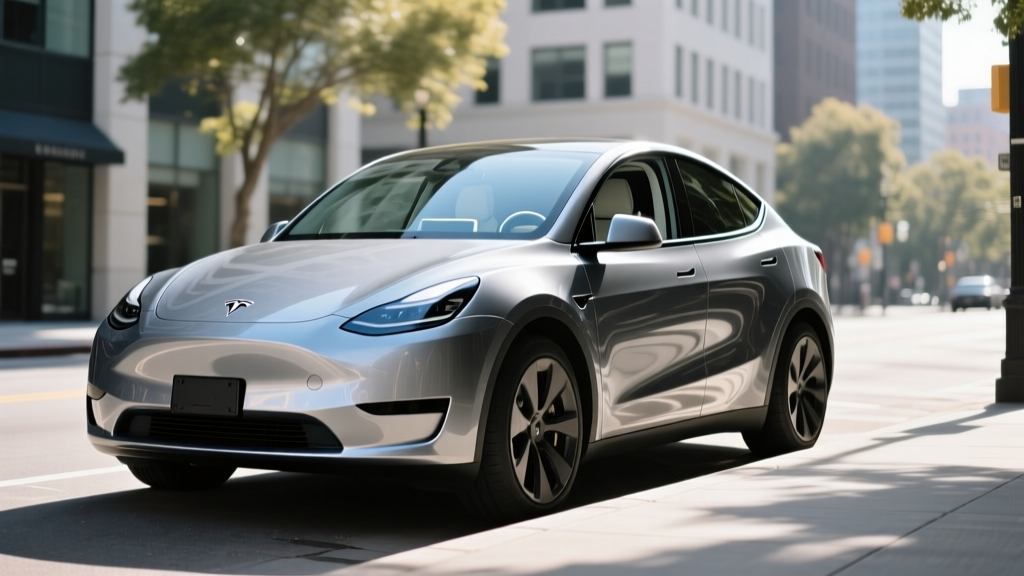
The 2023 Tesla Model Y remains the compact electric SUV to beat—not because it's flawless, but because its combination of interior volume, charging speed, and Supercharger network access is still unmatched at its price point. For buyers researching 2023 Tesla Model Y dimensions, the headline is a cabin that swallows 76.2 cubic feet of cargo with seats folded, rivaling midsize SUVs while consuming electricity at a rate that keeps road-trip costs low. Below, we break down every spec that matters for ownership, from real-world range to federal tax credit eligibility under IRS §30D rules.
| Spec | Long Range AWD | Performance | Standard Range (RWD) |
|---|---|---|---|
| EPA Range | 330 mi | 303 mi | 260 mi |
| Battery (usable) | ~75 kWh, NMC | ~75 kWh, NMC | ~57.5 kWh, LFP |
| MPGe (combined) | 117 MPGe | 111 MPGe | 123 MPGe |
| Efficiency | 28 kWh/100 mi | 30 kWh/100 mi | 26 kWh/100 mi |
| 0-60 mph | 5.0 sec | 3.5 sec | 6.6 sec |
| Horsepower | 384 hp | 456 hp | 295 hp |
| Drivetrain | Dual-motor AWD | Dual-motor AWD | Rear-wheel drive |
| Top Speed | 135 mph | 155 mph | 135 mph |
| Base MSRP (2023) | $47,740 | $54,740 | $43,990 |
Exterior and Interior Dimensions: What the Numbers Mean
Understanding 2023 Tesla Model Y dimensions is essential for garage fitment, car-seat installation, and road-trip packing. The Model Y rides on the same platform as the Model 3 sedan but with a taller roofline and a hatchback rear that unlocks dramatically more utility.
| Dimension | Measurement |
|---|---|
| Overall Length | 187.0 in |
| Overall Width (mirrors folded) | 77.9 in (83.8 in extended) |
| Overall Height | 63.9 in |
| Wheelbase | 113.8 in |
| Ground Clearance | 6.6 in |
| Front Headroom | 41.0 in |
| Rear Headroom | 39.4 in |
| Front Legroom | 41.8 in |
| Rear Legroom | 39.4 in |
| Cargo (rear seats up) | 30.2 cu ft |
| Cargo (rear seats folded) | 76.2 cu ft |
| Front Trunk (Frunk) | 4.1 cu ft |
| Curb Weight (Long Range) | 4,398 lbs |
Owner insight: The 77.9-inch width (mirrors folded) fits comfortably in standard US garage bays (typically 96+ inches wide), but the 83.8-inch mirror-extended width can be tight in older parking structures. The 76.2 cu ft maximum cargo volume exceeds the Ford Mustang Mach-E (59.7 cu ft) and Hyundai Ioniq 5 (56.2 cu ft), making the Model Y a legitimate alternative to midsize gas SUVs for family hauling.
An optional third row was available on 2023 Long Range models, adding seating for seven, though the rearmost seats are realistically usable only for small children—legroom drops to roughly 26 inches in the third row.
Real-World Range vs. EPA Sticker: What to Actually Expect
EPA Estimated Range: 330 miles (Long Range AWD) | 303 miles (Performance) | 260 miles (Standard Range RWD)
Real-World Expectation: Plan for 250–280 miles on highway road trips at 70-80 mph in the Long Range. In cold weather (below 32°F), expect a 15–30% reduction, dropping effective range to 200–240 miles without preconditioning. City driving with regenerative braking can match or slightly exceed EPA figures.
The EPA combined cycle blends city and highway driving at moderate temperatures. In our experience and consistent with third-party testing, highway-only driving at sustained speeds above 70 mph reduces range by roughly 15–20% versus the sticker. Cold weather compounds this: lithium-ion cells experience increased internal resistance below freezing, and cabin heating (even with the Model Y's heat pump) draws significant energy.
The Long Range AWD's 117 MPGe combined (28 kWh per 100 miles) is among the most efficient in the compact electric SUV segment. For context, the Hyundai Ioniq 5 AWD achieves 110 MPGe combined, and the Ford Mustang Mach-E Extended Range AWD achieves 101 MPGe. This efficiency advantage means cheaper per-mile charging costs and fewer stops on road trips.
Chemistry matters: The Long Range and Performance trims use NMC (nickel manganese cobalt) chemistry, which offers higher energy density but Tesla recommends daily charging to 80% for longevity. The Standard Range RWD uses LFP (lithium iron phosphate) chemistry, which Tesla recommends charging to 100% regularly—partially offsetting its smaller battery. LFP cells also tolerate deeper discharge cycles with less degradation over time.
Charging Speed: DC Fast, Level 2, and Level 1
| Charging Level | Power | Speed (miles added) | Notes |
|---|---|---|---|
| DC Fast Charge (peak) | 250 kW | ~175 mi in 15 min | Supercharger V3; peak rate tapers above 50% SoC |
| DC Fast Charge 10-80% | Varies | ~200 mi added | Long Range: ~25 minutes; Standard Range: ~30 minutes |
| Level 2 (home, 48A) | 11.5 kW | ~37 mi/hr | Full charge in ~8 hours (Long Range) |
| Level 2 (home, 32A) | 7.7 kW | ~25 mi/hr | Common with NEMA 14-50 outlet on 40A circuit |
| Level 1 (120V) | ~1.4 kW | ~4 mi/hr | Emergency/trickle only; ~55 hours for full charge |
The Model Y's peak 250 kW DC fast-charging capability is only achievable at Tesla Supercharger V3 stalls (and select CCS-equipped public chargers via adapter). In practice, the charge curve tapers significantly: you'll see 250 kW only between roughly 10–30% state of charge. By 50%, the rate drops to approximately 150 kW, and by 80% it's under 60 kW. This is normal for NMC chemistry but means the advertised "175 miles in 15 minutes" is a best-case scenario from a low state of charge.
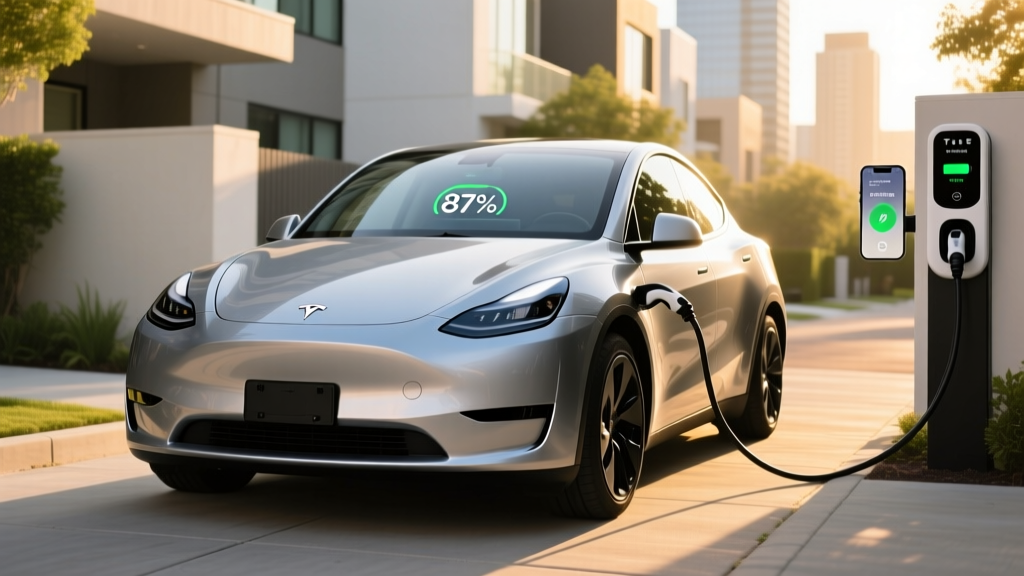
Home charging reality: Most owners install a Tesla Wall Connector on a 60-amp circuit, delivering 48 amps (11.5 kW) to the vehicle. This adds roughly 37 miles of range per hour—enough to fully replenish a Long Range battery overnight in about 8 hours. If your electrical panel supports only a 40-amp circuit, you'll get 32 amps (7.7 kW) and roughly 25 miles per hour. A panel upgrade to 200 amps can cost $1,500–$4,000 depending on your home's existing infrastructure—budget for this when planning installation.
For 2023 models, Tesla included the NACS (North American Charging Standard) connector natively. This gives access to the entire Supercharger network—over 16,000 stalls in North America as of early 2026—and starting in 2024, Tesla opened select Superchargers to non-Tesla EVs via a built-in CCS adapter. For public charging on networks like Electrify America or EVgo, Tesla sells a CCS adapter (approximately $250) that enables compatibility.
Performance, Ride, and Daily Driving
The 2023 Model Y Long Range AWD hits 60 mph in 5.0 seconds with 384 combined horsepower from its dual-motor setup. That's genuinely quick for a family SUV—quicker than most gas-powered competitors in the segment. The Performance trim drops that to 3.5 seconds with 456 hp, putting it in sports-car territory off the line.
The ride quality improved for 2023, with Tesla implementing what it calls a "comfort suspension" update that softens low-speed impacts compared to 2022 models. However, the Model Y still rides firmer than a Hyundai Ioniq 5 or Volkswagen ID.4, and road noise at highway speeds is noticeable. The low center of gravity (battery pack under the floor) keeps body roll minimal through corners.
Driver assistance: Every 2023 Model Y ships with Tesla's Basic Autopilot, which includes adaptive cruise control and lane-keeping assist. Full Self-Driving (FSD) capability was a $15,000 add-on (or $199/month) in 2023. FSD is an SAE Level 2 system—despite the name, it requires continuous driver supervision and does not make the vehicle autonomous. Tesla's camera-only vision system (no radar or ultrasonic sensors on 2023 models) handles most highway scenarios competently but can struggle in heavy rain, construction zones, and poorly marked roads.
SAE Automation Level: Tesla Autopilot and FSD (Supervised) are Level 2 driver-assistance systems. The driver must keep hands on the wheel and eyes on the road at all times. This is fundamentally different from Level 4 robotaxi services like Waymo, which operate without a human driver in geofenced areas.
Pricing, Trims, and Federal Tax Credit Eligibility
| Trim | 2023 Base MSRP | Destination | Est. After §30D Credit* |
|---|---|---|---|
| Standard Range RWD | $43,990 | $1,390 | ~$37,880 |
| Long Range AWD | $47,740 | $1,390 | ~$41,630 |
| Performance | $54,740 | $1,390 | ~$48,630 |
*Tax credit amounts shown are maximums. Actual eligibility depends on buyer income, battery sourcing, and MSRP caps. See checklist below.
Federal tax credit eligibility for the 2023 Model Y is governed by IRS §30D rules, which underwent significant changes under the Inflation Reduction Act. The Model Y qualifies as an SUV under the IRS vehicle classification, which sets its MSRP cap at $80,000 (versus $55,000 for sedans)—meaning all 2023 Model Y trims clear the price ceiling.
Federal §30D Tax Credit Checklist for 2023 Model Y:
- MSRP Cap: Must be under $80,000 (SUV classification) — ✅ All trims qualify
- Buyer Income Cap: AGI must not exceed $150,000 (single), $225,000 (head of household), or $300,000 (joint filing)
- Battery Component Sourcing: Percentage of battery components manufactured or assembled in North America must meet annual thresholds (50% for 2023, increasing yearly)
- Critical Minerals: Percentage of critical minerals sourced from the US or FTA partners must meet thresholds (40% for 2023)
- Credit Amount: Up to $7,500 total ($3,750 for components + $3,750 for minerals); partial credit possible if only one threshold is met
- Point-of-Sale Transfer: Starting 2024, buyers can transfer the credit to the dealer for an upfront price reduction; for 2023 purchases, it was claimed on tax return
Source: IRS.gov. Consult a tax professional for your specific situation. Sourcing requirements tighten annually—eligibility may differ for 2024+ model years.
Important caveat: Tesla has periodically adjusted pricing throughout 2023, and the figures above reflect MSRP at time of order. Actual delivery pricing may have varied. As a 2023 model purchased new in 2023, the credit was claimed when filing taxes. If you're purchasing a remaining 2023 Model Y as new-old-stock in 2026, current-year sourcing rules apply, which are stricter than 2023 thresholds.
Warranty, Longevity, and Ownership Costs
Tesla provides the following warranty coverage for the 2023 Model Y:
- Basic Vehicle: 4 years / 50,000 miles, whichever comes first
- Battery & Drive Unit (Long Range/Performance): 8 years / 120,000 miles, whichever comes first, with minimum 70% capacity retention
- Battery & Drive Unit (Standard Range): 8 years / 100,000 miles, minimum 70% retention
The 70% retention threshold means Tesla will repair or replace the battery if it drops below 70% of original capacity within the warranty period. Real-world data from high-mileage Tesla owners suggests typical degradation of approximately 10–12% over the first 100,000 miles for NMC packs, with the curve flattening significantly thereafter. LFP packs in the Standard Range model tend to show even less degradation but start with lower total capacity.
Insurance costs for the Model Y are above average for the segment. Expect annual premiums of $2,000–$3,200 depending on your location, driving record, and trim level. The Performance variant commands the highest rates. Tesla Insurance, available in select states, can sometimes undercut traditional carriers by 5–15%, but availability and pricing vary widely.
Maintenance is minimal compared to gas vehicles: no oil changes, no spark plugs, no transmission fluid. Primary recurring costs are tire replacement (every 25,000–40,000 miles depending on driving style—the Model Y's weight and instant torque accelerate tire wear), cabin air filter replacement ($30–$50 annually), and brake fluid checks. Regenerative braking significantly extends brake pad life; many owners report original pads lasting 80,000+ miles.
Pros, Cons, and How It Compares
✅ Pros
- Best-in-class cargo volume (76.2 cu ft) for the compact electric SUV segment
- Access to Tesla Supercharger network—most reliable DC fast-charging infrastructure in North America
- Excellent efficiency (28 kWh/100 mi Long Range) keeps charging costs low
- Strong performance across all trims; 5.0-second 0-60 even on base AWD
- Over-the-air updates continuously add features and refinements
- Heat pump standard—better cold-weather range retention than resistive heating
❌ Cons
- Firm ride quality; road noise noticeable at highway speeds
- Camera-only vision system lacks radar redundancy for driver assist
- No Apple CarPlay or Android Auto; Tesla's proprietary infotainment only
- Optional third row is impractical for anyone but small children
- Insurance premiums above segment average
- Build quality inconsistencies reported (panel gaps, paint) though improving
Who Should Buy the 2023 Model Y?
Choose the Model Y Long Range if: You need maximum range and cargo space for family road trips, want the security of the Supercharger network, and value efficiency. The 330-mile EPA range and 76.2 cu ft cargo volume make it the most versatile pick.
Choose the Model Y Performance if: Acceleration and handling are priorities, and you're willing to sacrifice 27 miles of range and accept higher insurance for 3.5-second 0-60 times and track-mode capability.
Choose the Standard Range RWD if: Your daily commute is under 100 miles, you charge at home, and you want the lowest entry price. The LFP battery can be charged to 100% daily without degradation concerns, effectively stretching the 260-mile EPA rating for routine use.
Look at competitors if: You need Apple CarPlay (Hyundai Ioniq 5, Ford Mustang Mach-E), prefer a softer ride (Volkswagen ID.4), or want a more traditional dealership service experience.
Key Competitors at a Glance
| Attribute | 2023 Model Y LR | Hyundai Ioniq 5 AWD | Ford Mach-E ER AWD | VW ID.4 AWD Pro S |
|---|---|---|---|---|
| EPA Range | 330 mi | 266 mi | 290 mi | 275 mi |
| Cargo (max) | 76.2 cu ft | 59.7 cu ft | 59.7 cu ft | 64.2 cu ft |
| DC Fast Charge Peak | 250 kW | 233 kW | 150 kW | 175 kW |
| 0-60 mph | 5.0 sec | 5.1 sec | 5.1 sec | 5.4 sec |
| Efficiency | 28 kWh/100 mi | 30 kWh/100 mi | 33 kWh/100 mi | 32 kWh/100 mi |
| Base MSRP (2023) | $47,740 | $48,390 | $53,995 | $46,875 |
| Apple CarPlay | No | Yes | Yes | Yes |
The Model Y's advantages in range, efficiency, cargo volume, and charging infrastructure are clear. Its disadvantages—no smartphone integration, firmer ride, and proprietary ecosystem—are dealbreakers for some buyers. According to fueleconomy.gov, the Model Y Long Range's 117 MPGe combined leads the segment.
Frequently Asked Questions
What is the real-world range of the 2023 Tesla Model Y?
Expect 250–280 miles on highway road trips in the Long Range AWD under normal conditions. City driving with regenerative braking can approach or match the 330-mile EPA estimate. In cold weather below freezing, plan for 200–240 miles unless you precondition the battery while plugged in.
How fast does the 2023 Model Y charge at home and on the road?
On a DC fast charger (Tesla Supercharger V3), the Long Range charges from 10-80% in approximately 25 minutes, peaking at 250 kW but tapering significantly above 50% SoC. At home on a 48-amp Level 2 charger, it adds about 37 miles of range per hour, fully charging in roughly 8 hours.
Does the 2023 Tesla Model Y qualify for the federal EV tax credit?
Yes, the 2023 Model Y qualifies for up to $7,500 under IRS §30D, provided the buyer meets income limits ($150K single / $300K joint), the vehicle MSRP is under $80,000 (it is, as an SUV), and battery sourcing requirements are met. Consult IRS.gov or a tax professional for your specific eligibility, as sourcing rules change annually.
What are the exact dimensions of the 2023 Tesla Model Y?
The 2023 Model Y measures 187.0 inches long, 77.9 inches wide (mirrors folded), and 63.9 inches tall, with a 113.8-inch wheelbase. Cargo volume is 30.2 cu ft behind the rear seats and 76.2 cu ft with seats folded, plus a 4.1 cu ft frunk.
Is the 2023 Model Y worth buying versus competitors?
If range, cargo space, and charging infrastructure are your top priorities, the Model Y Long Range remains the strongest choice in the segment. If you prefer a softer ride, Apple CarPlay, or a traditional dealer service network, the Hyundai Ioniq 5 or Volkswagen ID.4 are compelling alternatives—though both sacrifice roughly 50–70 miles of EPA range.
How long will the 2023 Model Y battery last?
Tesla warranties the Long Range/Performance battery for 8 years or 120,000 miles (100,000 for Standard Range) with a minimum 70% capacity retention. Real-world data from high-mileage owners suggests NMC packs degrade approximately 10–12% over 100,000 miles, with degradation slowing significantly afterward. Many Tesla batteries remain functional well beyond 200,000 miles.
Can I charge a 2023 Model Y at non-Tesla charging stations?
Yes, with a CCS adapter (sold separately by Tesla for approximately $250), the 2023 Model Y can charge at Electrify America, EVgo, ChargePoint, and other CCS-equipped public networks. The native NACS connector provides direct access to the Tesla Supercharger network without an adapter.