2023 Tesla Model 3 Overview: Tires, Range, and the Complete EV Picture
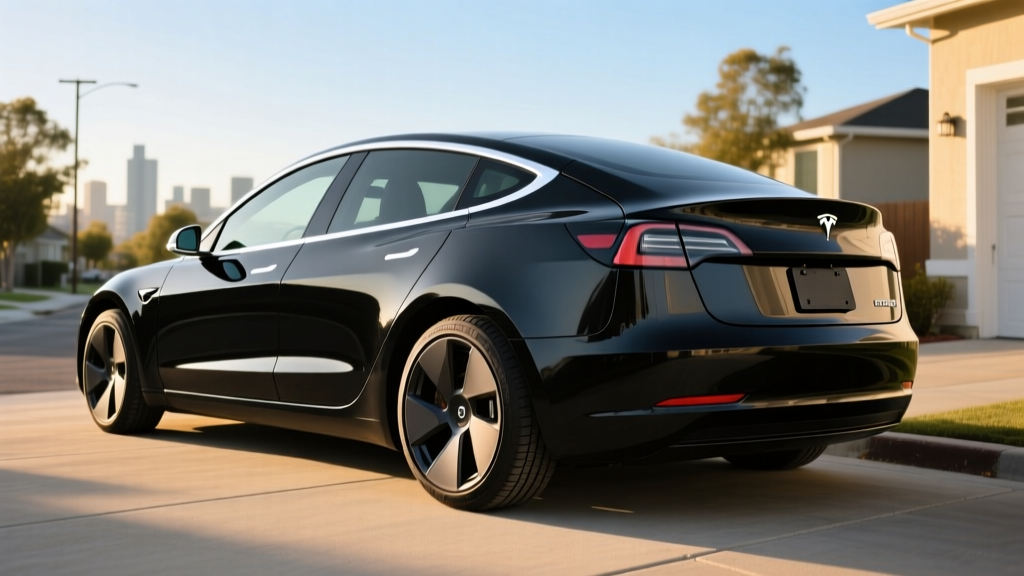
The 2023 Tesla Model 3 occupies a unique space in the used-EV market in 2026. As Tesla transitioned to the refreshed "Highland" Model 3 for the 2024 model year, the 2023 version represents the final iteration of the original design — a proven platform with well-documented characteristics, widely available service parts, and a mature Supercharger ecosystem behind it. For buyers researching everything from 2023 Tesla Model 3 tires to long-term battery health, this guide covers the exact specifications, ownership economics, and practical realities you need before purchasing.
The 2023 Model 3 was offered in three primary trims: the base Rear-Wheel Drive, the Long Range AWD, and the Performance AWD. Each carries distinct range, tire, and charging profiles that directly affect your daily driving experience.
| Spec | RWD (Base) | Long Range AWD | Performance AWD |
|---|---|---|---|
| EPA Range | 272 miles | 358 miles | 315 miles |
| Battery (Usable) | ~57.5 kWh (LFP) | ~75 kWh (NMC) | ~75 kWh (NMC) |
| Drivetrain | Rear-Wheel Drive | Dual-Motor AWD | Dual-Motor AWD |
| Horsepower | 283 hp | 346 hp | 450 hp |
| 0-60 mph | 5.8 sec | 4.2 sec | 3.1 sec |
| MPGe (Combined) | 132 MPGe | 131 MPGe | 113 MPGe |
| kWh/100 mi | 25 kWh | 26 kWh | 30 kWh |
| Peak DC Charge | 170 kW | 250 kW | 250 kW |
| 10-80% DC Time | ~30 min | ~30 min | ~30 min |
| Level 2 Rate | 11.5 kW (~44 mi/hr) | 11.5 kW (~44 mi/hr) | 11.5 kW (~44 mi/hr) |
| Original MSRP | $40,240 | $47,740 | $53,240 |
| Cargo Volume | 23 cu ft (trunk + frunk combined) | ||
| Rear Legroom | 35.2 inches | ||
| Battery Warranty | 8 years / 100,000 miles (min 70% retention) — Long Range & Performance; 8 yr / 120,000 mi — RWD | ||
Sources: fueleconomy.gov, Tesla archived spec sheets.
2023 Tesla Model 3 Tires: Sizes, Types, and Replacement Costs
Tire selection directly impacts an EV's range, ride comfort, and road noise — and because EVs are heavier and deliver instant torque, they wear tires faster than comparable gas cars. Here's exactly what shipped on the 2023 Model 3 from the factory:
| Trim / Wheel Option | Wheel Size | OEM Tire | Type | Approx. Replacement Cost (per tire) |
|---|---|---|---|---|
| RWD — 18" Aero | 18 × 8.5" | Michelin Primacy MXM4 235/45R18 | All-season touring | $230–$280 |
| Long Range — 18" Aero | 18 × 8.5" | Michelin Primacy MXM4 235/45R18 | All-season touring | $230–$280 |
| Long Range — 19" Sport | 19 × 8.5" | Michelin Pilot Sport 4S 235/40R19 | Summer performance | $280–$340 |
| Performance — 20" Überturbine | 20 × 9" | Michelin Pilot Sport 4S 235/35R20 | Summer performance | $320–$400 |
Key tire ownership insights:
- EV-specific wear: Expect 25,000–35,000 miles from OEM tires on a Model 3, compared to 40,000–60,000 on a gas sedan. The instant torque and ~4,000-lb curb weight accelerate tread wear, especially on the drive axle.
- Foam-lined tires: Tesla spec'd many OEM tires with acoustic foam inserts to reduce cabin road noise. When replacing, look for Michelin Acoustic, Continental ContiSilent, or Pirelli PNCS equivalents to maintain the quiet ride.
- Range impact: Switching from the 18" Aero wheels with low-rolling-resistance Michelin Primacy tires to an aggressive all-season or winter compound can reduce range by 5–10%. The EPA range figures above assume the OEM 18" wheel/tire combo.
- Rotation schedule: Tesla recommends rotating every 6,250 miles. On AWD trims, uneven front/rear wear is less pronounced than RWD, but rotation still extends tire life meaningfully.
Real-World Range: What the EPA Sticker Doesn't Tell You
EPA vs. Real-World Range — 2023 Model 3
| Trim | EPA Range | Real-World Highway (70 mph) | Real-World Cold (32°F, mixed) |
|---|---|---|---|
| RWD | 272 mi | ~230–245 mi | ~195–220 mi |
| Long Range | 358 mi | ~300–320 mi | ~260–290 mi |
| Performance | 315 mi | ~265–285 mi | ~230–255 mi |
Highway driving at sustained 70+ mph reduces range by roughly 10–15% vs. the EPA combined cycle. Cold weather (below 40°F) compounds this with an additional 10–20% loss due to battery resistance and cabin heating demands. The 2023 Model 3 uses a resistive PTC heater on RWD trims, while Long Range and Performance trims feature a heat pump, which significantly reduces cold-weather energy consumption.
The RWD trim's LFP (lithium iron phosphate) battery has a notable real-world advantage: Tesla recommends charging it to 100% regularly, unlike NMC batteries where 80–90% daily limits are recommended for longevity. This means RWD owners can use the full 272-mile EPA window daily, while Long Range and Performance owners effectively operate with a ~286–322 mile daily usable range at 80% state of charge.
Charging Speed: DC Fast Charging and Home Level 2
| Charging Level | Power / Rate | Miles Added per Hour | Notes |
|---|---|---|---|
| Level 1 (120V household) | ~1.4 kW | ~5 mi/hr | Emergency / overnight trickle only |
| Level 2 (240V, 48A) | 11.5 kW | ~44 mi/hr | Full charge in ~6–8 hours (varies by trim battery size) |
| DC Fast (RWD peak) | 170 kW | ~750 mi/hr (peak) | 10-80% in ~30 min; tapers sharply above 80% |
| DC Fast (LR / Perf peak) | 250 kW | ~1,000 mi/hr (peak) | 10-80% in ~30 min; peak rate sustained only to ~50% SoC |
Charging curve reality: The 250 kW peak on Long Range and Performance trims is a momentary maximum, achievable only between roughly 10–50% state of charge when the battery is properly preconditioned. Above 60%, the curve tapers significantly — expect ~100 kW at 70% and ~50 kW above 85%. This means a 10-90% session takes closer to 40–45 minutes, not 30.
Preconditioning matters: Navigate to a Supercharger using the car's built-in navigation, and the Model 3 will automatically warm the battery to optimal charging temperature. Without preconditioning — for example, arriving at a third-party CCS charger with a cold battery — peak rates may be cut by 30–50%.
Home charging setup: A Tesla Wall Connector installed on a 60-amp circuit delivers the full 48A / 11.5 kW. Expect a professional installation to cost $500–$2,000 depending on panel proximity and local permit requirements. A 200-amp electrical panel is generally sufficient; older homes with 100-amp service may need a panel upgrade ($1,500–$3,000).
Interior, Technology, and Driver Assistance
The 2023 Model 3's interior remains minimalist: a single 15-inch center touchscreen handles all controls, navigation, media, and climate. There is no instrument cluster — speed and driving data appear on the upper-left corner of the main screen.
Standout tech features:
- Autopilot (standard): SAE Level 2 driver assistance including Traffic-Aware Cruise Control and Autosteer (lane centering). Requires hands on wheel and continuous driver supervision.
- Full Self-Driving (Supervised) — optional ($15,000 or $199/mo in 2023): Adds Navigate on Autopilot, Auto Lane Change, Autopark, Summon, and Traffic Light/Stop Sign Control. Despite the name, this remains SAE Level 2 — the driver must remain fully engaged at all times.
- Over-the-air updates: Tesla regularly pushes software improvements, including UI refinements, efficiency optimizations, and new features.
- Sentry Mode: 360-degree camera recording when parked, with motion-triggered alerts.
- Dashcam: Built-in multi-camera recording with USB export.
SAE Automation Level: Level 2
Both Autopilot and Full Self-Driving (Supervised) on the 2023 Model 3 are SAE Level 2 systems. The driver must maintain full situational awareness, keep hands on the steering wheel, and be prepared to take over instantly. These are not autonomous or self-driving systems. Only Level 4 services like Waymo operate without a human driver in defined areas.
Notable drawbacks of the 2023 design:
- No physical buttons or stalks for wipers/turn signals (all screen-based or steering-wheel buttons)
- Rear-seat space is tight for tall adults (35.2" legroom vs. ~38-39" in midsize competitors)
- No heads-up display
- Ride quality on the 2023 pre-Highland model is notably firm, especially with 19" or 20" wheels — the refreshed 2024+ model addressed this with revised suspension and acoustic glass
Pricing, Tax Credits, and Used-EV Value in 2026
| Trim | Original MSRP (2023) | Typical Used Price (2026) | Federal Credit (New in 2023) | Federal Used-EV Credit (§25E, 2026) |
|---|---|---|---|---|
| RWD | $40,240 | $22,000–$27,000 | Up to $7,500 (if eligible) | Up to $4,000 (30% of sale price, max $4,000; income caps apply) |
| Long Range | $47,740 | $28,000–$34,000 | Up to $7,500 (if eligible) | Up to $4,000 |
| Performance | $53,240 | $32,000–$38,000 | Up to $7,500 (if eligible) | Up to $4,000 |
IRS §30D new-vehicle credit (as it applied in 2023): The full $7,500 credit required meeting critical-mineral and battery-component sourcing thresholds, which shifted throughout 2023. The Model 3's eligibility varied by build date and trim. The RWD trim, with its CATL-sourced LFP battery, faced different sourcing outcomes than the Long Range with its Panasonic NMC cells. Always verify historical eligibility via IRS.gov §30D guidance.
IRS §25E used-EV credit (available in 2026): Buyers purchasing a qualifying used 2023 Model 3 from a licensed dealer may be eligible for 30% of the sale price, up to $4,000. Requirements include:
- Sale price must be $25,000 or less (this limits eligibility primarily to the RWD trim in 2026)
- Buyer income caps: $75,000 single / $112,500 head of household / $150,000 joint MAGI
- Vehicle must be at least 2 model years old (2023 qualifies in 2026)
- Purchased from a licensed dealer (private-party sales excluded)
- First §25E transfer for this specific VIN
Consult a tax professional to confirm personal eligibility. Rules and qualifying vehicle lists are subject to change.
Pros, Cons, and Who Should Buy
Pros
- Class-leading efficiency: 25–30 kWh/100 mi is among the lowest in the segment
- Access to Tesla Supercharger network (17,000+ stalls in North America) — the most reliable DC fast-charging network available
- LFP battery (RWD) allows 100% daily charging with minimal degradation concerns
- Over-the-air updates keep a 2023 vehicle current with new software features
- Strong performance even in base trim (283 hp, 5.8s 0-60)
- Low operating cost: ~$0.04–$0.06/mile on home electricity vs. ~$0.12–$0.15/mile for gas equivalent
Cons
- Firm ride quality, especially on 19" and 20" wheels — the pre-Highland suspension is notably stiff
- Tight rear seat for a car in this price range
- No Apple CarPlay or Android Auto
- Summer performance tires (19"/20") are not suitable for snow/ice — a dedicated winter set is necessary in cold climates
- Insurance premiums run 15–30% higher than comparable gas sedans
- Panel gap quality and interior material quality were common complaints before the Highland refresh
Who the 2023 Model 3 suits best:
- Daily commuters: The RWD trim at ~272 miles EPA is ideal for round-trip commutes under 100 miles with home charging. LFP chemistry means zero range-management anxiety for daily 100% charges.
- Tech-forward solo drivers or couples: The minimalist cabin and strong driver-assist suite appeal to those who value software integration over traditional luxury materials.
- Road-trip enthusiasts (Long Range / Performance): 358 miles EPA on the Long Range, paired with Supercharger access, makes the Model 3 one of the most capable EVs for multi-state trips.
Who should look elsewhere:
- Families needing rear-seat space: Consider the Model Y, Hyundai Ioniq 5, or Kia EV6 for more passenger and cargo room.
- Buyers in harsh-winter climates who don't want a second tire set: The OEM summer tires on 19"/20" wheels are unsafe below 45°F — budget for dedicated winter tires and wheels (~$1,200–$1,800 for a set).
- Those who prefer physical controls: The screen-only interface is polarizing; test-drive before committing.
2023 Model 3 vs. Key Competitors (Used Market, 2026)
| Attribute | 2023 Tesla Model 3 LR | 2023 Hyundai Ioniq 6 SE | 2023 BMW i4 eDrive40 |
|---|---|---|---|
| EPA Range | 358 mi | 361 mi | 301 mi |
| Peak DC Charge | 250 kW | 235 kW | 205 kW |
| Charging Network | Supercharger (NACS) | CCS (EA, etc.) + NACS adapter available | CCS + NACS adapter available |
| Rear Legroom | 35.2" | 36.0" | 35.7" |
| Typical Used Price (2026) | $28,000–$34,000 | $25,000–$31,000 | $32,000–$40,000 |
| Apple CarPlay | No | Yes | Yes |
The Model 3 Long Range wins on Supercharger access and software integration. The Ioniq 6 matches or beats it on range and offers CarPlay plus a slightly roomier back seat. The i4 delivers a more traditional luxury experience at a higher used price. Your decision should hinge on charging-network priority, interior-preference, and whether CarPlay is non-negotiable.
Frequently Asked Questions
What size tires does a 2023 Tesla Model 3 use?
The 2023 Model 3 uses 235/45R18 on 18-inch Aero wheels (standard on RWD and Long Range), 235/40R19 on optional 19-inch Sport wheels, and 235/35R20 on the Performance trim's 20-inch Überturbine wheels. Always confirm your specific wheel option when ordering replacements.
How often do Tesla Model 3 tires need replacing?
Expect 25,000–35,000 miles from OEM tires due to the vehicle's weight (~4,000 lbs) and instant electric torque. Rotating every 6,250 miles and maintaining proper tire pressure (typically 42 psi cold, check the door jamb sticker) can extend tire life toward the upper end of that range.
Does the 2023 Tesla Model 3 qualify for any federal tax credit in 2026?
As a used vehicle in 2026, the 2023 Model 3 may qualify for the IRS §25E used clean vehicle credit — up to $4,000 (30% of sale price). Key requirements: sale price ≤$25,000, purchased from a licensed dealer, buyer income under $75K single / $150K joint, and the VIN hasn't previously been claimed under §25E. The $25,000 price cap means primarily the RWD trim qualifies. Always verify at IRS.gov §25E and consult a tax professional.
What is the real-world range of the 2023 Model 3 Long Range?
The EPA rates it at 358 miles. In real-world highway driving at 70 mph, expect approximately 300–320 miles. In cold weather (below 32°F), plan for 260–290 miles. The heat pump on the Long Range trim helps mitigate cold-weather losses compared to resistive heating.
Is the 2023 Tesla Model 3 worth buying over a 2024+ Highland model?
The pre-Highland 2023 model trades at a meaningful discount — often $8,000–$12,000 less than a comparable 2024 Highland. You sacrifice the refreshed suspension (better ride comfort), acoustic glass (quieter cabin), ventilated seats, and rear touchscreen. If ride quality and cabin noise are top priorities, the Highland is worth the premium. If value and proven reliability are paramount, the 2023 is a strong buy in 2026.
Can I use non-Tesla chargers with a 2023 Model 3?
The 2023 Model 3 has a NACS (Tesla) charge port. Tesla provides a CCS adapter (sold separately, ~$200–$250) that allows access to Electrify America, EVgo, and other CCS networks. As of 2025–2026, Tesla Superchargers are also opening to non-Tesla vehicles, but your 2023 Model 3 has native access to the full Supercharger network — the primary advantage of the Tesla ecosystem.