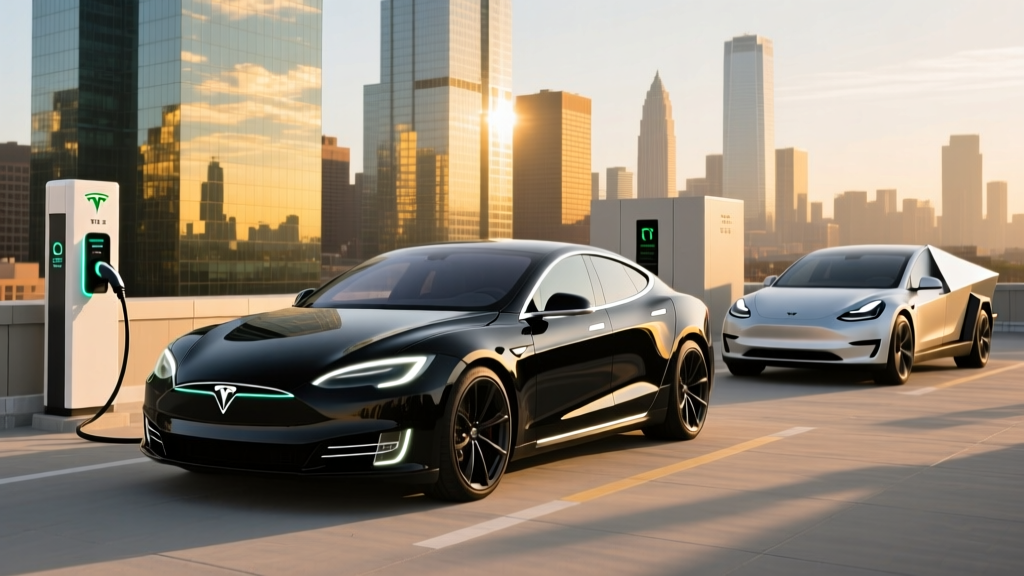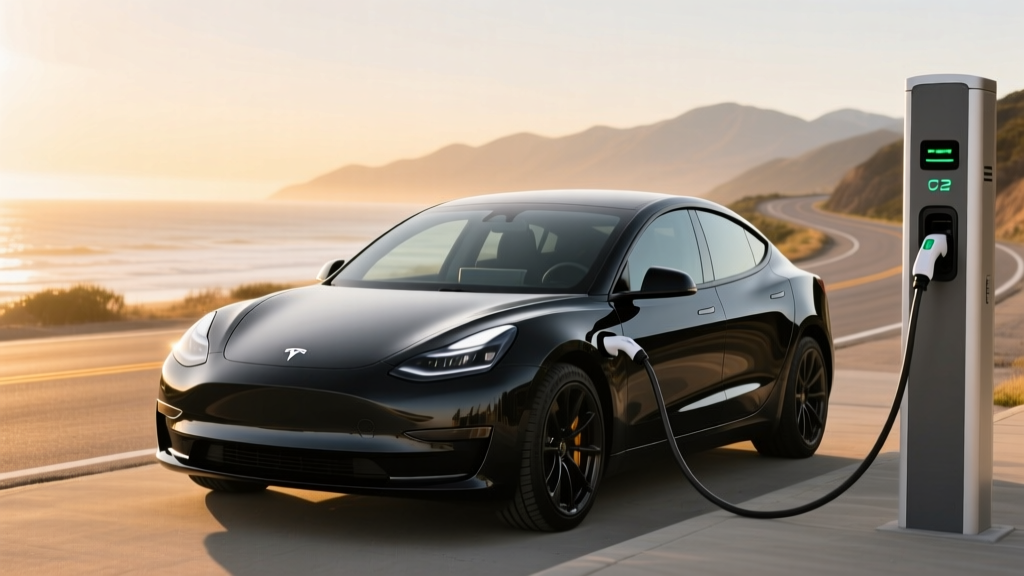
The 2023 Tesla Model 3 Performance occupies a specific niche that few electric vehicles can claim: genuine sports-sedan acceleration wrapped in a daily-driver package with over 300 miles of EPA-rated range. Now that the refreshed "Highland" Model 3 has replaced it on Tesla's production line, the 2023 Performance variant has shifted firmly into the used-EV market — where it represents one of the most compelling value propositions in electrified performance driving. This review covers every spec, real-world ownership reality, and buying consideration you need before pulling the trigger on a pre-owned 2023 Model 3 Performance.
2023 Tesla Model 3 Performance: Spec Sheet at a Glance
| Specification | 2023 Model 3 Performance |
|---|---|
| EPA Range | 315 miles |
| Battery (Usable) | ~75 kWh, NMC (nickel manganese cobalt) |
| Drivetrain | Dual-motor AWD |
| Horsepower | ~450 hp (combined) |
| 0–60 mph | 3.1 seconds (Tesla-claimed, rollout subtracted) |
| Top Speed | 162 mph |
| Max DC Fast Charge | 250 kW (peak) |
| 10–80% DC Charge Time | ~27 minutes |
| Level 2 Home Charge Rate | 11.5 kW (~44 mi/hr) |
| EPA Efficiency | 125 MPGe combined / 27 kWh/100 mi |
| Cargo Volume | 23 cu ft (trunk 15 + frunk 3.1 + folded rear) |
| Rear Legroom | 35.2 inches |
| Curb Weight | 4,065 lbs |
| Original MSRP (2023) | $53,990 (before incentives) |
| Battery/Drive Unit Warranty | 8 years / 120,000 miles |
Sources: EPA fueleconomy.gov, Tesla 2023 Model 3 owner's manual and press specifications.
Range Reality: EPA Sticker vs. the Real World
Real-world expectation: Expect 260–285 miles on highway road trips at 70–75 mph in moderate temperatures. In winter conditions (below 32°F), plan for 210–245 miles depending on cabin heating demand and preheating habits. City driving with regenerative braking can exceed the EPA figure, reaching 320+ miles in mild weather.
The 2023 Model 3 Performance uses an NMC (nickel manganese cobalt) chemistry pack with approximately 75 kWh of usable capacity. NMC offers higher energy density than LFP (lithium iron phosphate), which is why Tesla reserved it for the Long Range and Performance trims — the base RWD Model 3 switched to LFP for 2023. The trade-off is that NMC batteries benefit more from daily charge limits of 80–90% to preserve long-term health, whereas LFP packs tolerate regular 100% charges.
Independent real-world highway tests by outlets like Edmunds and InsideEVs have consistently shown the pre-Highland Model 3 Performance delivering 270–290 miles at sustained highway speeds in 65–75°F conditions. The dual-motor AWD system adds weight and mechanical drag compared to the RWD variant, costing roughly 15–20 miles of range versus the Long Range RWD model.
Cold weather is the equalizer for all EVs. Without a dedicated heat pump in the 2023 Model 3 (Tesla used resistive PTC heating in the pre-Highland Model 3), cabin warmth draws significantly from the pack. Expect 25–35% range reduction in sub-freezing conditions if you don't precondition while plugged in. Always precondition — the battery thermal management system warms the cells for both efficiency and charge acceptance.
Charging Speed: DC Fast, Level 2, and the Charge Curve
| Charging Level | Power / Rate | Miles Added per Hour | Notes |
|---|---|---|---|
| Level 1 (120V household) | ~1.4 kW | ~5 mi/hr | Emergency/trickle only |
| Level 2 (240V home, 48A) | 11.5 kW | ~44 mi/hr | Full charge in ~7 hours |
| Level 2 (240V, 32A Mobile Connector) | 7.7 kW | ~30 mi/hr | Standard Tesla Mobile Connector |
| DC Fast Charge (V3 Supercharger) | 250 kW peak | Up to ~1,000 mi/hr (at peak) | 10–80% in ~27 min |
| DC Fast Charge (CCS adapter, 150 kW station) | ~150 kW | ~580 mi/hr (at peak) | Requires Tesla CCS adapter |
The 2023 Model 3 Performance peaks at 250 kW on a V3 Tesla Supercharger, but — and this is critical — that peak only holds between roughly 10% and 25% State of Charge. The charge curve tapers progressively: by 50% SoC, you're pulling around 150 kW; by 80%, it drops below 60 kW. This is normal lithium-ion behavior, and it's why the 10–80% time of approximately 27 minutes is the meaningful metric, not the peak number.
For home charging, a Tesla Wall Connector on a 60-amp circuit delivers up to 11.5 kW (48 amps continuous). This adds roughly 44 miles of range per hour and fully replenishes the pack overnight in about 7 hours. If your electrical panel can't support a 60-amp circuit, a 40-amp circuit still delivers a usable 9.6 kW (~37 mi/hr). Budget $500–$1,500 for a licensed electrician to install a 240V outlet or hardwired Wall Connector, plus $475 for the Wall Connector itself. Older homes may require a panel upgrade ($1,500–$3,000) — get a quote before committing.
The 2023 Model 3 uses Tesla's proprietary connector (now being adopted industry-wide as NACS). For non-Tesla DC fast-charging networks like Electrify America or EVgo, you'll need Tesla's CCS adapter ($175 from Tesla) — though the expanding Supercharger network, with over 5,000 V3/V4 stalls in North America, makes this less of a concern for most owners.
Performance: The Number That Defines This Trim
With approximately 450 combined horsepower from dual permanent-magnet motors (front and rear), the 2023 Model 3 Performance hits 60 mph in a claimed 3.1 seconds. In independent testing with rollout subtracted, that figure holds — and with full rollout (the first 12 inches of movement excluded, as drag racing timers do), some testers have recorded 2.9-second runs. Either way, this is supercar territory from a four-door sedan weighing over 4,000 pounds.
The dual-motor AWD system provides torque vectoring and traction that single-motor EVs can't match off the line. Acceleration remains brutally linear through the mid-range, though it tapers above 100 mph as electric motors lose their torque advantage at high RPM.
Track Mode, exclusive to the Performance trim, adjusts stability control, regen blending, and cooling prioritization for closed-course driving. It also enables adjustable front/rear torque distribution. The Performance model includes larger brakes, a lowered sport suspension, and 20-inch Überturbine wheels with performance tires — all contributing to sharper handling than the Long Range variant, at the cost of some ride comfort and roughly 20 miles of range versus the Long Range AWD.
Pricing, Tax Credits, and Used-EV Value
The 2023 Model 3 Performance carried an original MSRP of $53,990 (including destination). With options like FSD capability ($15,000 at the time) or premium paint colors, as-tested prices frequently reached $60,000–$69,000.
Because this is now a used vehicle, the relevant incentive is the Used Clean Vehicle Credit (IRS §25E), which offers up to $4,000 — but with strict limits:
- Credit amount: 30% of the sale price, capped at $4,000
- Sale price cap: The used vehicle must sell for $25,000 or less to qualify
- Income caps (MAGI): $75,000 single / $112,500 head of household / $150,000 joint
- Vehicle age: Must be at least 2 model years old (2023 model qualifies starting in 2025)
- Dealer requirement: Must be purchased from a licensed dealer, not private party
Here's the reality: a 2023 Model 3 Performance in good condition typically sells for $30,000–$38,000 in the used market as of early 2026. That means most listings exceed the $25,000 price cap, making the used-EV credit unavailable for this specific trim. Higher-mileage or cosmetically challenged examples may dip to $25,000 — check IRS §25E rules before assuming eligibility.
For reference, the new-vehicle §30D credit ($7,500) is no longer applicable to 2023 Model 3 purchases, as it only applies to new vehicles. Tesla's new Model 3 variants may or may not qualify depending on current battery-sourcing and critical-mineral requirements — always verify on the IRS clean vehicle credit page.
Interior, Tech, and Daily Livability
The 2023 Model 3 interior follows Tesla's minimalist philosophy: a single 15-inch center touchscreen handles virtually every function — climate, navigation, media, vehicle settings, and even the glovebox release. There is no instrument cluster; speed and range info appear in the top-left corner of the main screen. This is polarizing. Some owners adapt within a week; others never stop missing a dedicated speedometer directly in their sightline.
Cargo space totals approximately 23 cubic feet when combining the rear trunk (15 cu ft) and front trunk/frunk (3.1 cu ft), with the remainder available by folding the 60/40 split rear seats. Rear legroom measures 35.2 inches — adequate for adults on shorter trips but tight for anyone over 6 feet on longer drives. The panoramic glass roof creates an airy cabin but contributes to noticeable heat gain in summer; many owners add an aftermarket sunshade.
Driver Assistance (SAE Level 2): Basic Autopilot comes standard and includes Traffic-Aware Cruise Control and Autosteer (lane centering). Full Self-Driving (Supervised) was a $15,000 option (or $199/month subscription) on 2023 models and adds Navigate on Autopilot, Auto Lane Change, Autopark, and Smart Summon. Critically, FSD remains an SAE Level 2 system — the driver must remain fully attentive, hands on or near the wheel, and legally responsible at all times. It is not autonomous driving. Only Level 4 services like Waymo operate without a human driver.
The 2023 Model 3 earned a 5-star overall safety rating from NHTSA and was an IIHS Top Safety Pick+ (when equipped with specific headlights), making it one of the safest sedans in its class regardless of powertrain.
Ownership Costs: Warranty, Efficiency, and Running Costs
Tesla covers the 2023 Model 3 Performance's battery and drive units for 8 years or 120,000 miles, whichever comes first, with a guaranteed minimum 70% capacity retention. The basic vehicle limited warranty covers 4 years or 50,000 miles. Compared to Hyundai's 10-year/100,000-mile battery warranty, Tesla's coverage is mid-pack — but the real-world degradation data is encouraging. Data aggregated from Tesla fleet telemetry and owner reports suggests typical NMC degradation of 8–12% over the first 100,000 miles, meaning most packs retain 88–92% of original capacity at the 8-year mark.
Efficiency is a genuine strength. At 125 MPGe combined (27 kWh per 100 miles), the Model 3 Performance is remarkably efficient for a 4,000-lb AWD performance sedan. At a national average electricity rate of $0.16/kWh, fueling costs approximately $4.32 per 100 miles. Compare that to a BMW M340i xDrive at roughly 25 MPG combined — at $3.50/gallon, that's $14.00 per 100 miles. Over 15,000 annual miles, the Tesla saves roughly $1,450 in energy costs alone.
Insurance is the offset. The Model 3 Performance carries higher premiums than average — expect $2,200–$3,200 annually depending on your profile and state, roughly 30–50% more than a comparable non-performance EV. Tesla Insurance (available in select states) can sometimes undercut traditional carriers, but get quotes from multiple providers before purchase.
Pros, Cons, and Who Should Buy
Pros
- 3.1-second 0–60 mph — supercar acceleration, sedan practicality
- 315-mile EPA range covers most road trips comfortably
- 250 kW DC fast charging on Supercharger network
- Best-in-class efficiency (125 MPGe combined)
- Over-the-air updates continue to add features
- Top safety ratings (NHTSA 5-star, IIHS TSP+)
- Low running costs vs. gas performance sedans
Cons
- No heat pump (pre-Highland) — cold-weather range hit is significant
- Minimalist interior not for everyone; no instrument cluster
- Rear seat is tight for tall adults on long trips
- Firm ride from sport suspension and 20-inch wheels
- FSD is expensive and remains Level 2 (not autonomous)
- Insurance premiums higher than average
- Used-market prices often exceed the $25K used-EV credit cap
Who this EV suits best: The 2023 Model 3 Performance is ideal for the driving enthusiast who also needs a practical daily commuter. If you want a single vehicle that delivers weekend canyon-carving thrills, a 300+ mile road-trip range, and $4-per-100-mile fueling costs, nothing else in the used EV market matches this combination at this price point. It's less ideal for families needing spacious rear seats (look at the Model Y or Hyundai Ioniq 5) or buyers in extreme cold climates who'd benefit from a heat pump-equipped EV (the refreshed 2024+ Highland Model 3 or Hyundai/Kia E-GMP vehicles).
Frequently Asked Questions
What is the real-world range of the 2023 Tesla Model 3 Performance?
The EPA rates it at 315 miles. In real-world highway driving at 70–75 mph in moderate temperatures, expect 260–285 miles. In winter below freezing, plan for 210–245 miles without preconditioning. City driving with regen can exceed 320 miles in mild weather.
How fast does the 2023 Model 3 Performance charge?
On a V3 Tesla Supercharger, it peaks at 250 kW and charges from 10–80% in approximately 27 minutes. At home on a 48-amp Level 2 Wall Connector, it adds about 44 miles per hour (full charge in ~7 hours). The charge curve tapers significantly above 50% SoC — don't expect the full 250 kW for the entire session.
Does the 2023 Model 3 Performance qualify for any federal tax credit?
As a used vehicle, it may qualify for the §25E Used Clean Vehicle Credit of up to $4,000 — but only if the sale price is $25,000 or less, the buyer meets income caps ($75K single / $150K joint), and the purchase is through a licensed dealer. Most 2023 Model 3 Performance listings sell above $25,000, making the credit difficult to claim. Check current IRS guidelines before purchasing.
Is the 2023 Model 3 Performance worth buying vs. competitors?
Against the used BMW i4 M50 (similar performance, less range, higher price), the Model 3 Performance wins on range, charging speed, and running costs. Against the Polestar 2 (less powerful, similar price), it wins on acceleration and Supercharger access. Against the used Hyundai Ioniq 5 N (more powerful, less range), it wins on efficiency and daily practicality. The Model 3 Performance remains the best all-around performance EV value in the $30,000–$38,000 used market.
How long will the battery last?
Tesla warranties the battery for 8 years or 120,000 miles with a minimum 70% capacity retention. Real-world fleet data suggests NMC packs in the Model 3 typically lose 8–12% capacity over 100,000 miles. With proper charging habits (daily limit of 80–90%, avoiding prolonged 100% SoC), most owners report strong battery health well beyond the warranty period. A full battery replacement outside warranty currently costs $12,000–$16,000 at Tesla service centers.
Does Full Self-Driving make it a self-driving car?
No. FSD (Supervised) is an SAE Level 2 driver-assistance system. You must remain fully engaged, monitor the road, and be prepared to take over at any moment. It handles highway lane-keeping, navigation-guided lane changes, and some city-street scenarios, but it is not autonomous. Tesla's own branding includes "Supervised" to emphasize this requirement.