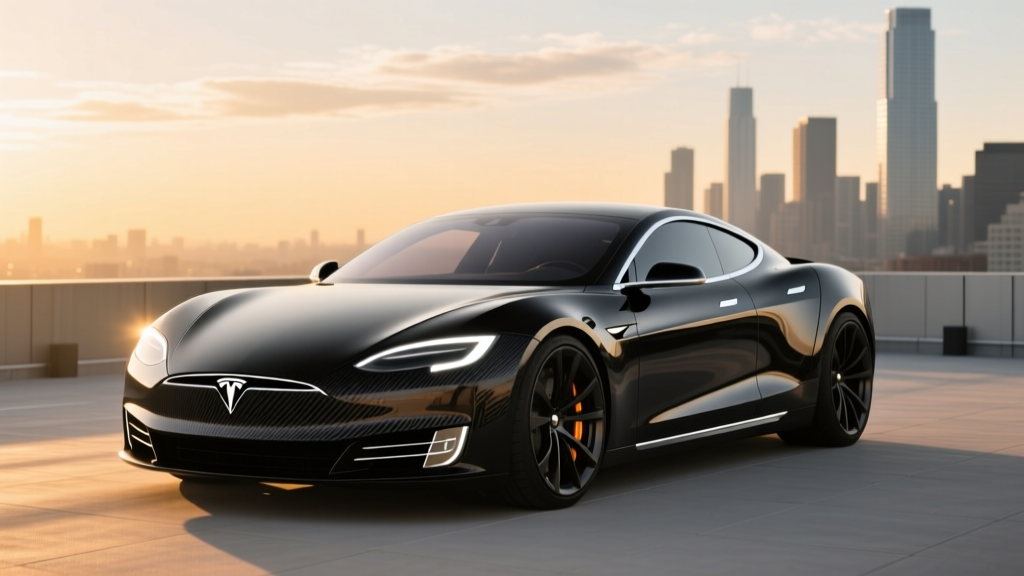
The 2023 Tesla Model 3 Performance remains one of the most compelling sport sedans on the market, electrified or otherwise. Buyers searching for 2023 Tesla Model 3 Performance hp figures are usually cross-shopping against the BMW M3, Audi S4, or Polestar 2—and on paper, Tesla's flagship compact sedan holds its own with ferocious acceleration, a usable real-world range, and access to the most reliable DC fast-charging network in North America. But specs only tell half the story. Below, we break down every number that matters—from battery chemistry and charge-curve behavior to the actual cost after federal tax credits—so you can decide whether a 2023 Model 3 Performance (now available on the used and certified-pre-owned market) is the right move in 2026.
2023 Model 3 Performance Horsepower, Acceleration, and Drivetrain
The 2023 Tesla Model 3 Performance uses a dual-motor all-wheel-drive layout with a permanent-magnet synchronous motor on the rear axle and an induction motor up front. Combined system output is rated at 450 horsepower and 471 lb-ft of torque. That power is routed through a single-speed reduction gear—no multi-speed transmission, no turbo lag, just instant torque from 0 rpm.
| Spec | Value |
|---|---|
| Drivetrain | Dual-motor AWD |
| Horsepower (combined) | 450 hp |
| Torque | 471 lb-ft |
| 0–60 mph | 3.1 seconds |
| Top Speed | 162 mph |
| Battery Capacity (usable) | ~75 kWh (NMC) |
| EPA Range | 315 miles |
| MPGe (city / hwy / combined) | 134 / 121 / 128 |
| Energy Consumption | 26 kWh / 100 mi |
| Max DC Fast Charge | 250 kW (peak) |
| Level 2 Home Charge | 11.5 kW (~44 mi/hr) |
| Cargo Volume | 23 cu ft (trunk + frunk) |
| Base MSRP (2023) | $53,990 |
| Battery Warranty | 8 yr / 120,000 mi |
For context, the 3.1-second 0–60 mph time puts the Model 3 Performance in supercar territory from a decade ago. It's quicker to 60 than a contemporary BMW M3 Competition (3.4 sec) and matches the Porsche Taycan 4S. The dual-motor setup also means confident all-weather traction without the efficiency penalty of a mechanical AWD system.
Battery Chemistry, Capacity, and What It Means for Longevity
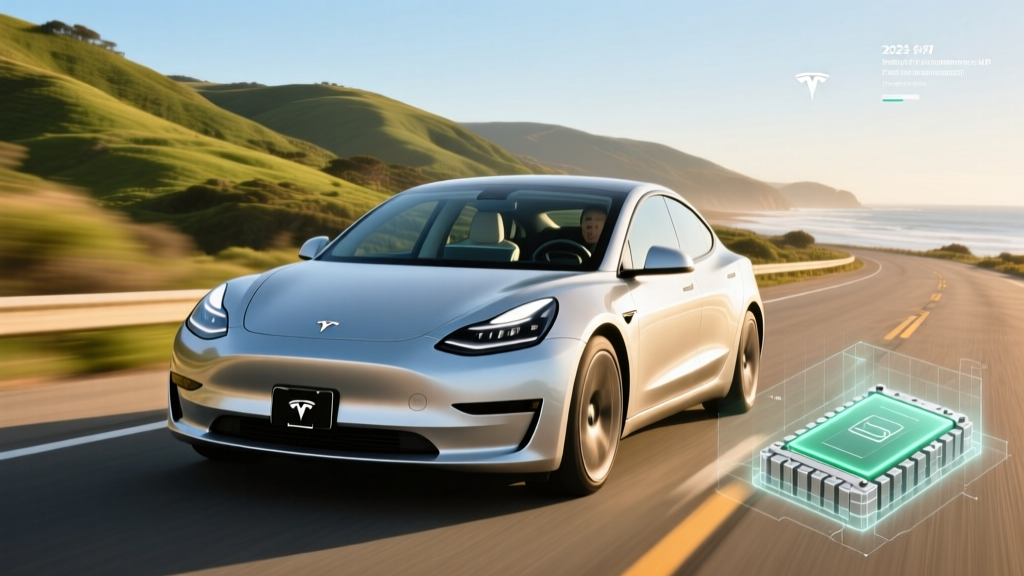
The 2023 Model 3 Performance uses an NMC (nickel manganese cobalt) lithium-ion battery pack manufactured by Panasonic at the Gigafactory in Nevada. Usable capacity is approximately 75 kWh from a gross pack size near 82 kWh. Tesla maintains a top and bottom buffer to protect the cells from extreme states of charge.
NMC chemistry offers higher energy density than LFP (lithium iron phosphate), which is why Tesla reserves it for Long Range and Performance trims. The trade-off: NMC degrades slightly faster over time and is more sensitive to sustained 100% state-of-charge storage. Tesla recommends daily charging to 80–90% for NMC packs and only charging to 100% before long trips. Over a typical 150,000-mile ownership cycle, expect roughly 8–12% capacity loss, based on aggregated fleet data from sources like Teslanomics and Recurrent Auto. The battery is warrantied for 8 years or 120,000 miles (whichever comes first) with a minimum 70% capacity retention threshold—stronger coverage than the industry-standard 8 yr/100,000 mi.
Real-World Range: Beyond the EPA Sticker
Real-World Highway (70 mph, 65°F): ~265–280 miles
Real-World Highway (32°F or below): ~220–245 miles
City / Mixed Commute (moderate climate): ~290–310 miles
The EPA's 315-mile figure is achievable in mild conditions at moderate speeds, but highway driving at 75+ mph and cold weather significantly reduce range. The Model 3 Performance comes equipped with a heat pump (standard since 2021), which mitigates cold-weather losses compared to older EVs using resistive cabin heaters. Even so, plan for roughly a 20–25% range reduction in sustained sub-freezing temperatures. On a 300-mile winter road trip, that means one DC fast-charge stop—manageable on the Supercharger network, but worth budgeting for.
Efficiency on the EPA cycle is rated at 128 MPGe combined (26 kWh per 100 miles), which remains among the best in the sport-sedan segment. For comparison, the Polestar 2 Long Range Dual Motor returns 98 MPGe combined.
Charging Speed: DC Fast, Level 2, and Charge-Curve Reality
Charging speed is where the Model 3 Performance still excels, thanks to its 250 kW peak DC fast-charge capability on V3 Superchargers and compatible CCS stations (via Tesla's included CCS adapter, standard on 2023 models).
| Charging Level | Power (kW) | Rate | Notes |
|---|---|---|---|
| Level 1 (120V outlet) | ~1.4 kW | ~3–4 mi/hr | Emergency/top-up only |
| Level 2 (240V, 48A) | 11.5 kW | ~44 mi/hr | Full charge in ~8 hours |
| DC Fast (V3 Supercharger) | 250 kW peak | ~175 mi in 15 min | 10–80% in ~25–28 min |
| DC Fast (50 kW station) | 50 kW | ~18–20 mi/hr | Older public chargers |
Charge-curve reality check: The 250 kW peak only holds between roughly 10–30% state of charge. Above 50%, the rate tapers to ~100 kW, and above 80% it drops below 50 kW to protect the battery. A 10–80% session takes approximately 25–28 minutes at a V3 Supercharger. If you're planning road trips, preconditioning the battery (automatic when navigating to a Supercharger) is essential—it warms the pack to optimal temperature so you hit peak charge rate immediately upon plugging in.
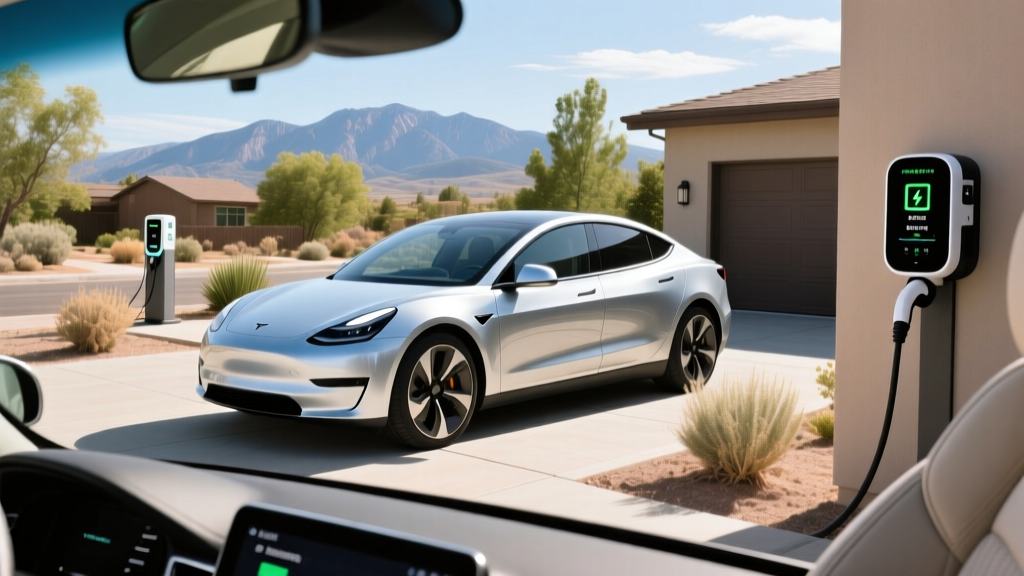
At home, a Tesla Wall Connector on a 60-amp circuit delivers 11.5 kW (48 amps), adding about 44 miles of range per hour. Most owners plug in overnight and wake up to a full or near-full battery. Installation typically costs $500–$1,500 depending on panel proximity and local permitting, per licensed electrician estimates.
Pricing, Trims, and Federal Tax Credit Eligibility
When new, the 2023 Model 3 Performance carried an MSRP of $53,990 (including destination). With common options—Midnight Cherry Red paint ($2,000), 19" Sport Wheels ($1,500), and Full Self-Driving (Supervised) capability ($15,000 at the time)—as-tested prices could reach $72,490.
In 2026, the 2023 Model 3 Performance is available on the used and Tesla Certified Pre-Owned market. Expect pricing between $32,000 and $42,000 depending on mileage, condition, and region.
Federal Tax Credit (Used EV — IRS §25E)
Because the 2023 Model 3 is now a used vehicle, buyers may qualify for the Used Clean Vehicle Credit (IRS §25E), which provides up to $4,000 or 30% of the sale price (whichever is less). Key eligibility requirements per IRS.gov:
- Sale price must be $25,000 or less (this is the cap for used EVs—not the new-vehicle MSRP cap)
- Buyer AGI limits: $75,000 (single), $112,500 (head of household), $150,000 (joint)
- Vehicle must be at least 2 model years old (2023 qualifies in 2026)
- Must purchase from a licensed dealer (private-party sales excluded)
- Credit is non-refundable; point-of-sale transfer available at participating dealers
Important caveat: The $25,000 sale-price cap for the used-EV credit is a significant hurdle. Most 2023 Model 3 Performance listings exceed this threshold, meaning many buyers will not qualify for the $4,000 credit. If you find a high-mileage example under $25,000 from a licensed dealer, the credit can apply. Always verify eligibility with a tax professional before relying on the credit in your purchase decision.
Interior, Cargo, and Technology
The 2023 Model 3 interior follows Tesla's minimalist philosophy: a single 15-inch landscape touchscreen handles all infotainment, climate, and vehicle controls. There is no traditional instrument cluster—speed and navigation appear on the left side of the main display. Build quality on the 2023 model year improved noticeably over earlier Fremont-built cars, with tighter panel gaps and better sound insulation.
Passenger space is adequate for four adults, though the rear seat is snug for anyone over 6 feet tall:
- Front legroom: 42.7 inches
- Rear legroom: 35.2 inches
- Front headroom: 40.3 inches
- Rear headroom: 37.1 inches
Cargo volume totals 23 cubic feet when combining the 15 cu-ft trunk (with a wide hatchback opening) and the 8 cu-ft front trunk (frunk). That's competitive with compact luxury sedans but falls short of the Hyundai Ioniq 5 or Tesla Model Y for family hauling.
Standout tech features:
- Over-the-air (OTA) software updates that add features post-purchase
- Tesla Supercharger network access (17,000+ stalls in North America as of 2026)
- Sentry Mode dashcam surveillance while parked
- Dog Mode / Camp Mode climate settings
- Autopilot standard (Traffic-Aware Cruise Control + Autosteer, SAE Level 2)
Notable drawbacks:
- No Apple CarPlay or Android Auto—Tesla's native interface only
- Turn signals on the steering wheel (2023 refresh) take adjustment
- Rear visibility is limited; relies heavily on backup camera
- Insurance premiums run 15–30% higher than comparable ICE sedans
Autopilot and Driver Assistance: SAE Level 2, Not Self-Driving
Autopilot and Full Self-Driving (Supervised) require continuous driver supervision. The driver must keep hands on the wheel and eyes on the road at all times. These systems do not make the vehicle autonomous. Only Level 4 services like Waymo operate without a human driver in defined geographic zones.
Every 2023 Model 3 Performance ships with Basic Autopilot, which includes Traffic-Aware Cruise Control and Autosteer (lane centering). The optional Full Self-Driving (Supervised) package adds automatic lane changes, Navigate on Autopilot (highway on/off-ramp routing), Autopark, and Smart Summon. As of 2026, FSD (Supervised) has improved significantly but remains a Level 2 system—you are the driver, and you are liable.
Safety ratings are strong: the Model 3 earned a 5-star overall rating from NHTSA and was an IIHS Top Safety Pick+ for the 2023 model year.
How the 2023 Model 3 Performance Stacks Up Against Competitors
If you're weighing the 2023 Model 3 Performance against alternatives, here's how the key numbers compare:
| Spec | Tesla Model 3 Perf. | Polestar 2 LR DM | BMW i4 M50 | Hyundai Ioniq 6 Limited |
|---|---|---|---|---|
| Horsepower | 450 hp | 476 hp | 536 hp | 320 hp |
| 0–60 mph | 3.1 sec | 4.1 sec | 3.7 sec | 5.1 sec |
| EPA Range | 315 mi | 276 mi | 270 mi | 361 mi |
| Max DC Charge | 250 kW | 205 kW | 200 kW | 240 kW |
| MPGe (combined) | 128 | 98 | 97 | 140 |
| Used Price Range (2026) | $32K–$42K | $28K–$38K | $38K–$50K | $28K–$36K |
The Model 3 Performance wins on acceleration, efficiency, and charging infrastructure access. The Ioniq 6 offers more range and a lower used price but can't match the Tesla's performance. The BMW i4 M50 delivers more horsepower and a more traditional luxury interior but costs significantly more on the used market and charges slower.
Pros
- Supercar-level 3.1-second 0–60 mph acceleration
- 315-mile EPA range with excellent 128 MPGe efficiency
- 250 kW peak DC charging; 10–80% in ~25 minutes
- Access to the Tesla Supercharger network (most reliable in the US)
- OTA updates keep the car current years after purchase
- 8 yr / 120,000 mi battery warranty (better than most competitors)
- Strong NHTSA 5-star and IIHS Top Safety Pick+ ratings
Cons
- No Apple CarPlay or Android Auto
- Rear seat is tight for tall passengers (35.2" legroom)
- Used-EV tax credit ($4,000) hard to qualify for due to $25K price cap
- Insurance costs 15–30% more than comparable gas sedans
- Minimalist interior isn't for everyone (no physical buttons)
- FSD (Supervised) remains Level 2 and costs extra
Who Should Buy the 2023 Model 3 Performance?
Choose the 2023 Model 3 Performance if:
- You want sports-sedan acceleration with daily-driver practicality and 300+ mile range
- You road-trip regularly and value the Supercharger network's reliability
- You have access to home Level 2 charging (the backbone of convenient EV ownership)
- You appreciate OTA software updates and a tech-forward cabin
Look elsewhere if:
- You need spacious rear seating for tall passengers or car seats (consider Model Y or Ioniq 5)
- You want Apple CarPlay / Android Auto integration (consider Polestar 2 or BMW i4)
- You can't install a Level 2 charger at home and lack reliable public charging nearby
- You're counting on the used-EV tax credit and can't find one under $25,000
Frequently Asked Questions
What is the real-world range of the 2023 Tesla Model 3 Performance?
The EPA rates it at 315 miles, but real-world highway driving at 70 mph yields roughly 265–280 miles in moderate temperatures. In freezing weather, expect 220–245 miles on the highway. City driving with regenerative braking recovers energy and can approach the EPA figure.
How fast does the 2023 Model 3 Performance charge?
On a V3 Supercharger (250 kW peak), it charges from 10–80% in approximately 25–28 minutes. At home on a Level 2 Wall Connector (11.5 kW), it adds about 44 miles per hour, fully charging overnight in roughly 8 hours. Peak charge rate only holds between 10–30% SoC; it tapers significantly above 50%.
How much does a 2023 Model 3 Performance cost in 2026?
On the used and CPO market, expect to pay between $32,000 and $42,000 depending on mileage, condition, and region. The original MSRP was $53,990 when new. The federal used-EV credit (up to $4,000) is available only if the sale price is $25,000 or less and buyer income falls under IRS thresholds—most listings exceed the price cap.
Does the 2023 Model 3 Performance qualify for the federal EV tax credit?
As a used vehicle in 2026, it may qualify for the IRS §25E Used Clean Vehicle Credit (up to $4,000), but only if purchased from a licensed dealer for $25,000 or less and the buyer meets income limits ($75K single / $150K joint). Most 2023 Model 3 Performance examples sell above $25,000, making credit eligibility uncommon. Consult a tax professional and verify on IRS.gov.
Is the 2023 Model 3 Performance worth buying vs. the competition?
If acceleration, efficiency, and charging infrastructure top your priorities, yes. The 3.1-second 0–60, 315-mile range, and Supercharger access are difficult to match at its used-market price. If you prefer a traditional luxury interior, rear-seat space, or phone integration, the BMW i4 or Polestar 2 may serve you better.
What is the battery warranty on the 2023 Model 3 Performance?
Tesla covers the battery and drive unit for 8 years or 120,000 miles (whichever comes first) with a guaranteed minimum 70% capacity retention. This is above the industry standard of 8 years/100,000 miles and provides meaningful long-term peace of mind.
How many horsepower does the 2023 Tesla Model 3 Performance have?
The 2023 Model 3 Performance produces 450 horsepower and 471 lb-ft of torque from its dual-motor AWD powertrain, enabling a 3.1-second 0–60 mph time.