2023 Tesla Model 3: Powertrain, Horsepower, and the Complete Spec Sheet
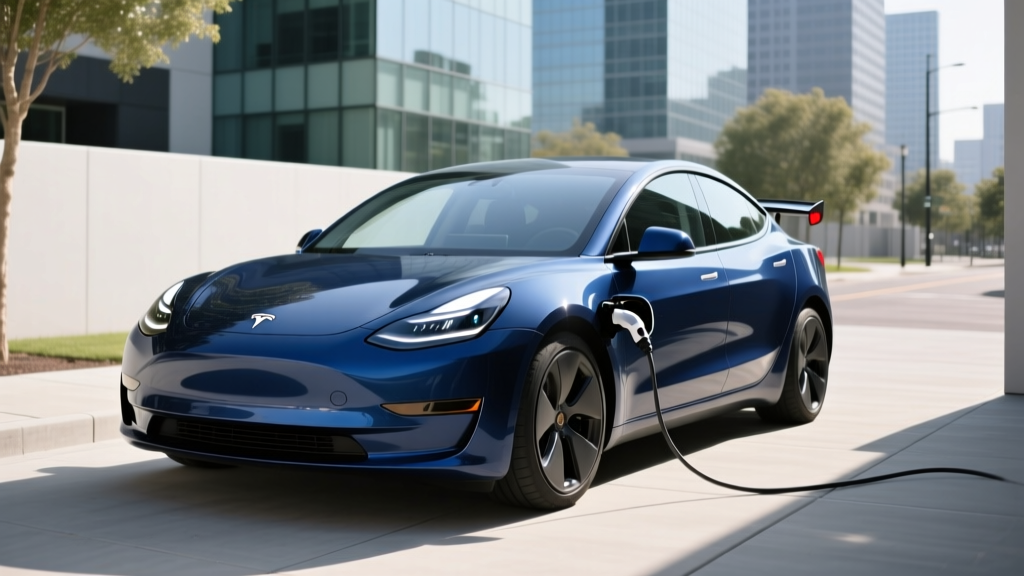
The 2023 Tesla Model 3 remains one of the most efficient and widely adopted electric sedans on the road. While Tesla has since refreshed the platform for the 2024 model year (internally dubbed "Highland"), the 2023 version continues to circulate heavily in both new-old-stock and certified pre-owned markets. For buyers evaluating a 2023 Model 3 today, the critical questions revolve around powertrain output, real-world range, charging infrastructure compatibility, and whether federal tax incentives still apply. This review covers every trim with exact figures — no marketing fluff.
The 2023 Model 3 was offered in three primary configurations in the US market: the Standard Range Rear-Wheel Drive (RWD), the Long Range All-Wheel Drive (AWD), and the Performance AWD. Each carries distinct horsepower ratings, battery chemistries, and charging profiles that materially affect ownership.
| Spec | RWD (Standard Range) | Long Range AWD | Performance AWD |
|---|---|---|---|
| Horsepower | 283 hp | 346 hp | 346 hp (tuned for torque) |
| 0-60 mph | 5.8 sec | 4.2 sec | 3.1 sec |
| EPA Range | 272 mi | 358 mi | 315 mi |
| Battery (usable) | ~57.5 kWh (LFP) | ~75 kWh (NMC) | ~75 kWh (NMC) |
| Drivetrain | Rear-Wheel Drive | Dual-Motor AWD | Dual-Motor AWD |
| MPGe (combined) | 132 MPGe | 134 MPGe | 125 MPGe |
| kWh/100 mi | 25 kWh | 25 kWh | 27 kWh |
| Base MSRP (2023) | $40,240 | $47,740 | $53,240 |
| Battery Warranty | 8 yr / 100,000 mi | 8 yr / 120,000 mi | 8 yr / 120,000 mi |
Sources: EPA fueleconomy.gov, Tesla Battery Warranty.
Real-World Range: What the EPA Sticker Doesn't Tell You
- RWD (272 mi EPA): Expect ~230–250 mi on mixed highway driving at 70 mph. In sub-30°F weather without preconditioning, range can drop to ~190–210 mi.
- Long Range AWD (358 mi EPA): Real-world highway testing yields ~290–320 mi. Cold weather (20°F) reduces this to ~250–280 mi.
- Performance (315 mi EPA): Aggressive driving and larger 20" wheels push real-world figures to ~250–280 mi, with cold-weather drops to ~210–240 mi.
The 2023 Model 3's efficiency is genuinely class-leading. The RWD variant's 25 kWh/100 mi figure translates to roughly 4 miles per kWh — among the best of any production EV. However, EPA test cycles include substantial low-speed city driving, which inflates range figures compared to sustained highway travel. On a 300-mile road trip at 75 mph with climate control active, Long Range owners should plan one DC fast-charge stop. RWD owners will need to charge more strategically, especially in cold corridors.
The LFP (lithium iron phosphate) battery in the RWD model tolerates regular 100% charging better than NMC chemistry, meaning daily commuters can charge to full without accelerating degradation. Tesla's in-app charge limit recommendation reflects this: 100% for LFP, 80–90% for NMC daily use.
Charging Speed: DC Fast Charge, Level 2, and the Charge Curve Reality
Charging speed is often more consequential than total range for road-trip viability. The 2023 Model 3 uses the proprietary Tesla connector (now being adopted industry-wide as NACS) and accesses the Supercharger network — consistently the most reliable DC fast-charging infrastructure in the US.
| Charging Level | RWD (LFP) | Long Range / Performance (NMC) |
|---|---|---|
| Level 1 (120V, 12A) | ~3 mi/hr (1.4 kW) | ~3 mi/hr (1.4 kW) |
| Level 2 (240V, 48A) | ~30 mi/hr (11.5 kW) | ~44 mi/hr (11.5 kW) |
| DC Fast Charge (peak) | 170 kW | 250 kW |
| 10–80% DCFC time | ~30 min | ~25 min |
| Sustained rate (10–80%) | ~95 kW avg | ~140 kW avg |
A critical nuance: peak kW is not sustained kW. The Long Range Model 3 hits 250 kW only between roughly 10–25% state of charge, then tapers progressively. By 60% SoC, the rate drops to ~120 kW, and above 80%, it slows dramatically to ~50 kW or less. This is why Tesla (and all manufacturers) quote 10–80% times — charging past 80% is so slow that it's impractical for road-trip stops.
For home Level 2 charging, the onboard charger accepts up to 11.5 kW (48 amps at 240V). This requires a 60-amp dedicated circuit and a Tesla Wall Connector or compatible NACS/J1772 adapter setup. Most owners install a 14-50 NEMA outlet (50-amp circuit, yielding ~40 amps continuous / 9.6 kW), which adds roughly 30–37 miles of range per hour of charging — sufficient to fully replenish overnight for all trims.
Performance: Horsepower, Acceleration, and Drivetrain Behavior
The 2023 Model 3's horsepower figures reflect Tesla's dual-motor architecture. The RWD model uses a single permanent-magnet synchronous motor on the rear axle producing 283 hp and 307 lb-ft of torque. The Long Range and Performance trims add a front induction motor for a combined 346 hp, but the Performance variant's torque mapping and thermal management allow it to sustain higher power delivery during repeated hard launches.
On the road, the difference between 283 hp (RWD) and 346 hp (Long Range) is less dramatic than the 0-60 times suggest. The RWD's 5.8-second sprint is brisk by any sedan standard, and instant electric torque means passing power at highway speeds is effortless regardless of trim. The Performance model's 3.1-second 0-60 is supercar territory, enabled by dual-motor torque vectoring and Tesla's traction control software.
Regenerative braking on the 2023 Model 3 is aggressive enough to enable true one-pedal driving in most conditions. Tesla removed the user-adjustable regen setting in earlier software builds but restored limited configurability in later OTA updates. The heat pump (standard on all 2023 trims) significantly improves cold-weather efficiency by scavenging waste heat from the powertrain rather than relying solely on resistive cabin heating.
Pricing, Trim Levels, and Federal Tax Credit Eligibility
| Trim | Original MSRP | Current CPO/Used Range (2026) | §30D Credit Eligibility |
|---|---|---|---|
| RWD | $40,240 | $22,000–$28,000 | Used EV credit up to $4,000 (income + dealer rules apply) |
| Long Range AWD | $47,740 | $28,000–$35,000 | Used EV credit up to $4,000 (income + dealer rules apply) |
| Performance AWD | $53,240 | $33,000–$40,000 | Used EV credit up to $4,000 (income + dealer rules apply) |
Because the 2023 Model 3 is no longer sold new, buyers in 2026 are evaluating pre-owned or certified pre-owned (CPO) examples. The federal IRS §30D new-vehicle credit no longer applies, but the used EV tax credit (§25E) may offer up to $4,000 or 30% of the sale price (whichever is less) if:
- The vehicle is purchased from a licensed dealer (private-party sales do not qualify)
- The sale price is $25,000 or below (this eliminates most Long Range and Performance CPO examples)
- Buyer AGI does not exceed $75,000 (single), $112,500 (head of household), or $150,000 (joint)
- The vehicle is at least two model years old (2023 qualifies in 2025 and beyond)
- The buyer has not claimed the used EV credit in the prior 3 years
In practice, the $25,000 price cap means most 2023 Model 3 RWD examples from Tesla CPO will hover just above the threshold, while private-market deals may fall under it. Always verify current IRS rules with a tax professional before relying on credit eligibility.
Interior, Cargo Space, and Daily-Use Practicality
The 2023 Model 3 interior follows Tesla's minimalist philosophy: a single 15-inch touchscreen handles all infotainment, climate, and vehicle settings. There is no traditional instrument cluster — speed and navigation appear on the left third of the central display. Build quality on 2023 Fremont-built cars improved markedly over 2018–2020 examples, with tighter panel gaps and better interior material consistency.
Passenger and cargo dimensions:
- Front legroom: 42.7 inches
- Rear legroom: 35.2 inches
- Trunk (rear): 23 cu ft (including under-floor storage)
- Frunk (front trunk): 3.1 cu ft
- Total cargo volume (seats folded): ~56 cu ft
The rear seat is comfortable for two adults on longer trips, though the sloping roofline limits headroom for passengers over 6 feet. The 23 cu ft trunk is competitive with compact sedans like the Honda Accord, and the frunk adds useful space for charging cables or a small bag. There is no spare tire — Tesla provides a tire repair kit and roadside assistance during the warranty period.
Tech, Driver Assistance, and Software
Every 2023 Model 3 includes Tesla's Basic Autopilot: adaptive cruise control and lane-centering on highways. This is an SAE Level 2 driver-assistance system — it does not make the vehicle self-driving, and the driver must maintain hands-on-wheel awareness and visual attention at all times.
Tesla's Full Self-Driving (Supervised) capability, available as a $15,000 add-on or $199/month subscription on 2023 models, handles highway lane changes, on/off-ramp navigation, and some city-street driving. However, it remains a Level 2 system requiring continuous driver supervision. It does not handle construction zones, unmapped roads, severe weather, or erratic traffic reliably. The "Supervised" designation is legally significant: the driver is liable for all vehicle actions.
The 2023 Model 3's infotainment system includes native Spotify, Tidal, and podcast apps, a built-in web browser, and over-the-air software updates that have historically added features post-purchase (such as improved battery preconditioning algorithms and Sentry Mode enhancements). Navigation is Tesla's proprietary system with real-time Supercharger routing — widely regarded as the best EV route planner for charging-stop optimization.
Pros, Cons, and Verdict: Who Should Buy a 2023 Model 3?
Pros
- Class-leading efficiency (25 kWh/100 mi)
- Access to Tesla Supercharger network (most reliable DCFC in the US)
- Strong real-world range on Long Range trim (~300+ mi highway)
- LFP battery (RWD) tolerates daily 100% charging with minimal degradation
- OTA updates continue to improve the vehicle post-purchase
- Excellent safety ratings (IIHS Top Safety Pick+, 5-star NHTSA)
Cons
- Rear seat headroom tight for tall passengers
- No Apple CarPlay or Android Auto
- Touchscreen-only climate controls can be distracting while driving
- Ride quality firm on 19"/20" wheels, especially on rough pavement
- Insurance premiums 20–40% higher than comparable non-EV sedans
- FSD subscription cost adds up; most buyers don't need it
Who This EV Suits Best
Choose the RWD if: You commute under 60 miles daily, have reliable home Level 2 charging, and want the lowest entry price with a degradation-resistant LFP battery.
Choose the Long Range AWD if: You take regular road trips (200+ miles), live in a cold climate, or need dual-motor traction for snow and rain.
Choose the Performance if: Acceleration thrills matter and you accept the range and ride-quality trade-offs of larger wheels and sport-tuned suspension.
Look elsewhere if: You need Apple CarPlay, prefer physical buttons for climate control, or require a spacious rear seat for three adults.
Frequently Asked Questions
What is the real-world range of the 2023 Tesla Model 3?
The EPA rates the RWD at 272 miles, the Long Range at 358 miles, and the Performance at 315 miles. In real-world highway driving at 70–75 mph, expect roughly 230–250 mi (RWD), 290–320 mi (Long Range), and 250–280 mi (Performance). Cold weather below freezing reduces these figures by 15–25% unless you precondition the battery while plugged in.
How fast does the 2023 Model 3 charge at home and on the road?
On a home Level 2 charger (240V, 48A), all trims charge at up to 11.5 kW, adding roughly 30–44 miles of range per hour. A full overnight charge takes 6–9 hours depending on trim. On DC fast chargers, the RWD peaks at 170 kW (10–80% in ~30 min) and the Long Range/Performance peak at 250 kW (10–80% in ~25 min). Sustained average rates are lower due to charge-curve taper above 50% SoC.
Does a used 2023 Model 3 qualify for any federal tax credit?
Not the $7,500 new-vehicle credit. However, the IRS §25E used EV credit may provide up to $4,000 if the purchase price is $25,000 or less, you buy from a licensed dealer, and your adjusted gross income falls below IRS thresholds ($75K single / $150K joint). Many CPO Model 3s exceed the $25K price cap, so verify the final sale price before counting on the credit. Consult a tax professional for your specific situation.
How much horsepower does the 2023 Tesla Model 3 have?
The RWD produces 283 hp from a single rear motor. The Long Range and Performance trims produce 346 hp from a dual-motor AWD configuration. The Performance variant's torque delivery is optimized for launch, achieving 0-60 mph in 3.1 seconds versus 4.2 seconds for the Long Range.
Is the 2023 Model 3 still worth buying vs. newer competitors?
Yes, if priced right. The 2023 Model 3's efficiency, Supercharger access, and software ecosystem remain competitive against newer offerings like the Hyundai Ioniq 6 (361 mi EPA) and BMW i4 eDrive40 (301 mi EPA). The Model 3's advantage is the mature Supercharger network and lower CPO pricing. Its disadvantages are the aging interior design (pre-Highland refresh) and lack of Apple CarPlay. For under $28,000, a CPO RWD is one of the best value-per-mile EVs available.
What is the battery warranty on a 2023 Model 3?
The RWD battery is warrantied for 8 years or 100,000 miles (whichever comes first) with a minimum 70% capacity retention. The Long Range and Performance batteries carry an 8-year/120,000-mile warranty, also with 70% retention. Tesla's battery degradation data across its fleet shows most Model 3 packs retain 88–92% capacity at 100,000 miles, well above the warranty threshold.