Quick Verdict: The Entry-Point EV That Still Sets the Bar
The 2023 Tesla Model 3 Base (officially the Rear-Wheel Drive trim) remains one of the most efficient, tech-forward, and value-dense electric sedans on the used and remaining-new market. With an EPA-estimated 272 miles of range, a 0–60 mph time of 5.8 seconds, and access to Tesla's Supercharger network, it delivers a package that competitors still struggle to match at its price point. But the LFP battery chemistry, minimalist interior, and evolving tax-credit rules mean buyers need to go in with eyes wide open.
This review breaks down the real-world ownership experience — from highway range in winter to charging-curve behavior at a 150 kW DC fast charger — so you can decide whether the 2023 Tesla Model 3 Base fits your commute, budget, and lifestyle.
Range, Efficiency, and the Real-World Reality Check
| Spec | Value |
|---|---|
| EPA Range | 272 miles |
| Battery (usable) | ~57.5 kWh (60 kWh gross), LFP |
| EPA Efficiency | 132 MPGe combined / 25 kWh/100 mi |
| Drivetrain | Rear-Wheel Drive, single motor |
| Horsepower | 283 hp |
| 0–60 mph | 5.8 seconds |
| Max DC Fast Charge | 170 kW |
| 10–80% DC Charge | ~30 minutes |
| Level 2 Home Charge | 11.5 kW (~44 mi/hr) |
| Cargo Volume | 23 cu ft (trunk + frunk) |
| Rear Legroom | 35.2 inches |
| Battery Warranty | 8 years / 100,000 miles |
| Base MSRP (2023) | $40,240 (incl. destination) |
The EPA rates the 2023 Model 3 RWD at 272 miles on a full charge, drawing from its ~57.5 kWh usable LFP (lithium iron phosphate) battery pack. That efficiency figure — 25 kWh per 100 miles — is among the best in the EV sedan segment, thanks to Tesla's heat pump, low drag coefficient (0.23 Cd), and aggressive regenerative braking.
Real-World Range Expectations
EPA Sticker: 272 miles
Mixed driving (city + suburban): 255–275 miles — LFP cells reward steady, moderate-speed driving, and regen recovers significant energy in stop-and-go traffic.
Highway (70–75 mph sustained): 220–245 miles. Aerodynamic drag dominates at speed, and the single-motor RWD lacks the coasting efficiency tricks of some dual-motor setups.
Cold weather (below 32°F / 0°C): 185–220 miles. LFP chemistry is more susceptible to cold-weather range loss than NMC, and cabin heating draws heavily from the pack. Preconditioning while plugged in recovers 10–15% of that loss.
The LFP battery is a defining characteristic of the Base trim. Unlike the Long Range and Performance variants (which use NMC/NCA chemistry), LFP offers a longer cycle life and can — and should — be charged to 100% regularly. Tesla's own recommendation for this trim is to charge to 100% at least once per week for accurate state-of-charge calibration. This offsets the lower energy density: you get fewer total miles per charge, but you use more of what's in the pack day-to-day.
Charging Speed: DC Fast, Level 2, and the Supercharger Advantage
Charging is where the 2023 Tesla Model 3 Base shines — not for its peak kW number, but for the breadth and reliability of the network it connects to.
| Level | Power / Rate | Miles Added | Notes |
|---|---|---|---|
| Level 1 (120V outlet) | ~1.4 kW | ~5 mi/hr | Emergency/top-up only; full charge takes 40+ hours |
| Level 2 (240V, Wall Connector) | 11.5 kW | ~44 mi/hr | Full charge in ~6 hours; ideal for daily home use |
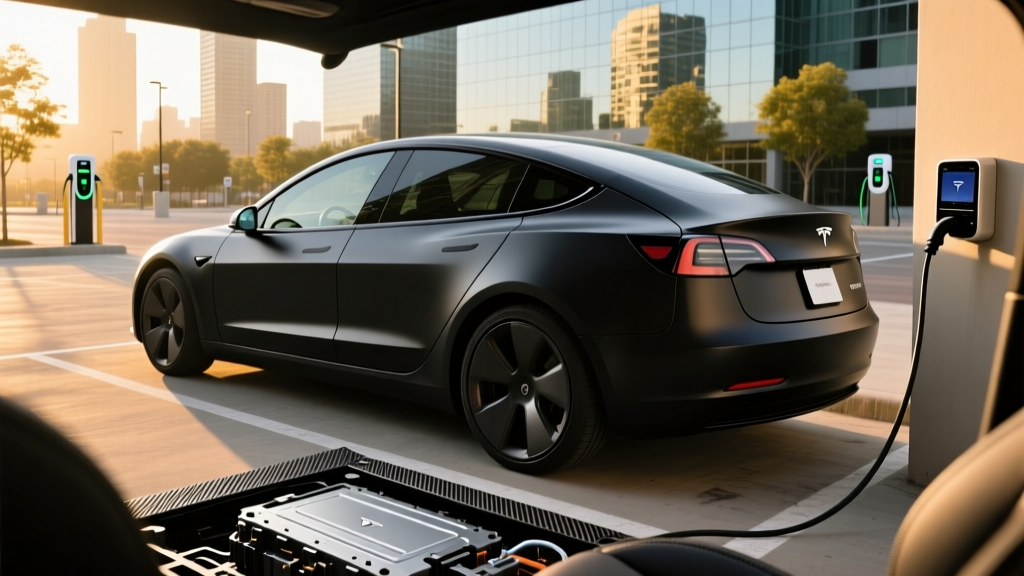
| DC Fast (Tesla Supercharger V3) | Peak 170 kW | ~175 mi in 15 min | 10–80% in ~30 min; tapers significantly above 80% |
| DC Fast (CCS adapter, EA/others) | Up to 150 kW | Varies by station | Requires Tesla CCS adapter (included with 2023 models) |
The peak 170 kW DC fast-charge rate is modest compared to the 250 kW peaks of the Long Range/Performance trims or the 350 kW capability of a Hyundai Ioniq 5. However, the sustained charging curve matters more than the headline number. On a V3 Supercharger (250 kW capable), the Base Model 3 pulls its peak rate from roughly 10% to 40% SoC, then gradually tapers. The 10–80% charge takes approximately 30 minutes — competitive, if not class-leading.
One real-world ownership note: LFP batteries charge more slowly in cold temperatures. If you arrive at a Supercharger without preconditioning the battery (which the car does automatically when you navigate to a charger), expect the initial charge rate to be 40–60 kW until the pack warms. Always navigate to the charger through the car's touchscreen to trigger preconditioning — it's the single biggest charging-speed tip for LFP owners.
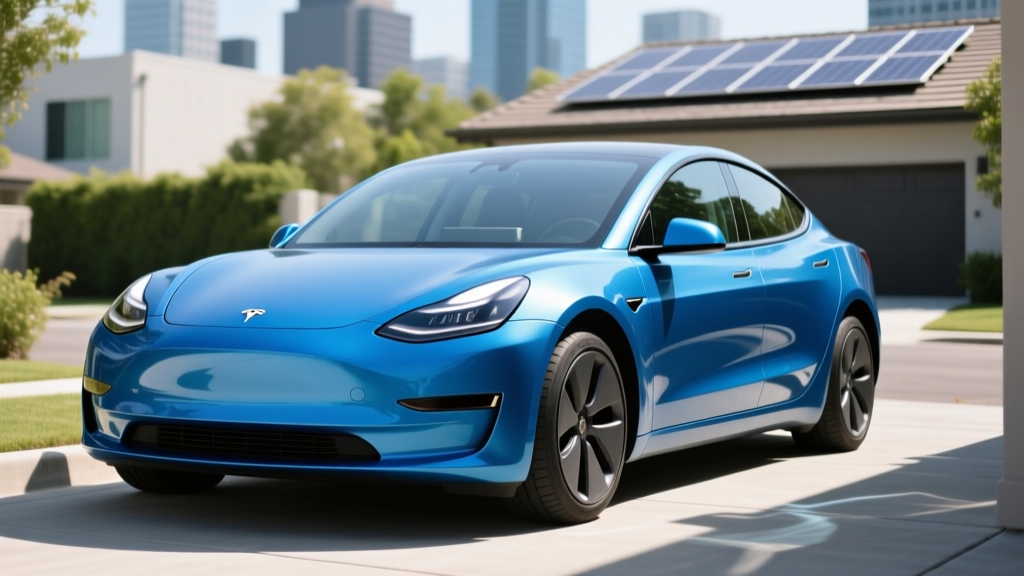
For home charging, the Tesla Wall Connector at 11.5 kW (48 amps on a 60-amp circuit) adds roughly 44 miles of range per hour. A full overnight charge from 20% to 100% takes about 6 hours, which is ample for any daily commute. Installation costs for a 240V/60A circuit typically run $800–$2,000 depending on panel proximity and local permitting, per data from HomeAdvisor. If your electrical panel is at capacity, a 200-amp panel upgrade can add $1,500–$3,000.
Performance and Driving Dynamics
The single rear-mounted motor produces 283 horsepower and launches the Model 3 Base to 60 mph in 5.8 seconds — a time that would have been sports-car territory a decade ago. Throttle response is instant, as with all EVs, and the low center of gravity (battery pack under the floor) keeps body roll minimal through corners.
The RWD layout means the Base trim is lighter than the dual-motor variants (roughly 3,862 lbs vs. 4,034+ lbs for Long Range), which translates to slightly more nimble handling and better efficiency. The trade-off: no all-wheel drive. If you live in a region with heavy snow or ice, the Long Range AWD or a set of dedicated winter tires becomes essential.
Regenerative braking is strong and effectively enables one-pedal driving in most conditions. Tesla removed the user-adjustable regen setting in recent software updates, so the car manages regen intensity based on speed and conditions. Most owners adapt within a week, but it's worth noting if you're coming from an EV with customizable regen levels.
Interior, Tech, and Daily Livability
The 2023 Model 3 interior is famously minimalist: a single 15-inch landscape touchscreen handles climate, navigation, media, vehicle settings, and even the speedometer. There is no instrument cluster, no head-up display, and no physical buttons beyond steering-wheel scroll wheels and window switches.
Whether this is a pro or a con depends entirely on your tolerance for screen-based controls. Adjusting the side mirrors, opening the glovebox, and changing the cabin vent direction all require touchscreen taps. For some, this is clean and futuristic; for others, it's a frustrating distraction.
Standout tech features:
- Over-the-air (OTA) updates: Tesla routinely adds features, UI improvements, and even performance tweaks post-purchase. The 2023 Model 3 received UI refreshes and new media apps throughout its lifecycle.
- Autopilot (standard): Includes Traffic-Aware Cruise Control and Autosteer (lane centering). This is an SAE Level 2 driver-assist system — you must keep your hands on the wheel and eyes on the road at all times.
- Sentry Mode: External cameras record activity around the parked car, triggered by proximity or impact. A unique security feature few competitors offer.
- Phone-as-key: Bluetooth proximity unlocks and starts the car without fumbling for a fob.
- Heat pump: Standard on all 2023 Model 3 trims, significantly improving cold-weather efficiency and range preservation vs. resistive heating.
Cargo and passenger space: The trunk offers 19.8 cu ft of volume, supplemented by a 3.1 cu ft frunk (front trunk), for a total of ~23 cu ft. Rear legroom is 35.2 inches — adequate for adults on shorter trips but tighter than a Toyota Camry or Hyundai Ioniq 6. The panoramic glass roof creates an airy cabin feel, though it does reduce headroom slightly and can make the cabin warm in direct summer sun (a sunshade is a common aftermarket add).
Pros
- Best-in-class efficiency (25 kWh/100 mi)
- Access to Tesla Supercharger network (most reliable DC network in the US)
- LFP battery: long cycle life, charge to 100% daily
- OTA updates keep the car current years after purchase
- Strong resale value relative to EV segment average
- Standard Autopilot is one of the smoothest Level 2 systems
- Heat pump standard for cold-weather efficiency
Cons
- No physical buttons — all controls via touchscreen
- Rear seat is snug for tall adults on long trips
- RWD only — no AWD option on the Base trim
- 170 kW peak DC charge rate trails competitors (Ioniq 5: 350 kW)
- LFP battery loses more range in extreme cold vs. NMC
- No Apple CarPlay or Android Auto
- Ride quality can feel firm on rough pavement
Pricing, Tax Credits, and Total Cost of Ownership
The 2023 Tesla Model 3 Base (RWD) launched with an MSRP of $40,240 including the $1,250 destination fee. With no additional trims below it, this was the most affordable Tesla you could buy new. Popular add-ons included:
- Premium paint colors: $1,000–$2,000 (Pearl White was the only free color)
- 19-inch Sport Wheels: $1,500 (reduces EPA range to 267 miles)
- Full Self-Driving (FSD) capability: $15,000 one-time or $199/month (note: FSD Supervised remains an SAE Level 2 system requiring active driver engagement)
- Black and white interior: $1,000
A typical as-tested configuration — Pearl White, no wheel upgrade, standard interior — came in around $40,240. Add Midnight Silver paint and 19-inch wheels and you're at roughly $43,740 before any incentives.
Federal Tax Credit Eligibility (§30D)
The 2023 Tesla Model 3 Base qualifies for the IRS §30D federal clean vehicle credit, but eligibility depends on several factors that shifted during the 2023 model year:
- Credit amount: Up to $7,500, split into $3,750 for critical-minerals sourcing and $3,750 for battery-component sourcing. As of 2023, the Model 3 RWD with its CATL-sourced LFP battery typically qualified for $3,750 (half credit), though sourcing rules evolved throughout the year.
- MSRP cap: Sedans must be under $55,000. The Model 3 Base clears this easily.
- Buyer income cap: Adjusted gross income must not exceed $150,000 (single), $225,000 (head of household), or $300,000 (joint filers).
- Point-of-sale transfer: Starting January 1, 2024, buyers can transfer the credit to the dealer for an immediate price reduction. For 2023 purchases, the credit was claimed on your federal tax return (Form 8936).
- Assembly: Must be assembled in North America. The Model 3 is built in Fremont, CA and Austin, TX — both qualify.
Important: Tax credit rules are subject to change and depend on your individual tax situation. Consult a tax professional and verify current eligibility on irs.gov before purchasing.
| Scenario | Amount |
|---|---|
| Base MSRP (incl. destination) | $40,240 |
| Federal tax credit (typical 2023 qualification) | −$3,750 |
| Effective price after federal credit | ~$36,490 |
| Estimated state/local incentives (varies) | −$0 to $5,000 |
| Best-case effective price | ~$31,490 |
On the ownership-cost side, the Model 3 Base is among the cheapest EVs to fuel. At the US average electricity rate of ~$0.16/kWh (EIA), charging costs roughly $4.00 per 100 miles — compared to $12–$15 per 100 miles for a 30 MPG gas sedan at $3.50/gallon. Over five years and 75,000 miles, that's a fuel savings of approximately $6,000–$8,000.
Insurance premiums for the Model 3 tend to run 15–30% higher than comparable gas sedans due to repair costs and parts pricing. Budget $150–$250/month depending on your profile and location. Tesla offers its own insurance product in many states, which can be competitive — get quotes from both Tesla Insurance and traditional carriers before committing.
Warranty and Long-Term Battery Outlook
Tesla covers the 2023 Model 3 with:
- Basic vehicle warranty: 4 years / 50,000 miles
- Battery and drive unit warranty: 8 years / 100,000 miles, with a guaranteed minimum 70% capacity retention
The LFP chemistry in the Base trim is a long-term durability advantage. LFP cells typically tolerate more charge cycles (2,000–3,000+) before significant degradation compared to NMC (~1,000–1,500 cycles). Real-world data from high-mileage Model 3 owners suggests LFP packs retain 90%+ capacity at 100,000 miles when charged to 100% regularly — which is exactly what Tesla recommends for this chemistry.
If the battery does need replacement outside of warranty, Tesla's current out-of-pocket pricing for a Model 3 pack ranges from $12,000 to $16,000 including labor, depending on pack size and service center. However, the likelihood of needing a full pack replacement within the vehicle's practical lifespan is low based on current degradation data.
Who Should Buy the 2023 Tesla Model 3 Base?
Choose the 2023 Model 3 Base if:
- You commute 40–100 miles round-trip and can charge at home overnight
- You want the lowest cost-per-mile EV sedan with access to the best DC charging network
- You value OTA software updates and tech-forward features over traditional luxury materials
- You live in a mild-to-moderate climate where LFP cold-weather loss is manageable
- You want to charge to 100% daily without worrying about NMC degradation concerns
Look elsewhere if:
- You regularly drive 250+ miles in a single trip (consider the Long Range with 333 mi EPA)
- You need AWD for harsh winters (Long Range or a competitor like the Ioniq 6 AWD)
- You want physical buttons, Apple CarPlay, or a traditional instrument cluster
- You need rear-seat space for tall adults on long journeys (Ioniq 6 or BMW i4 offer more room)
- You frequently tow — the Model 3 is not rated for towing
How Does It Compare to Key Competitors?
At the ~$36,000–$40,000 effective price point, the 2023 Model 3 Base competes with the Hyundai Ioniq 6 SE ($42,715 MSRP, 361 mi EPA), BMW i4 eDrive35 ($52,200 MSRP, 256 mi EPA), and Chevrolet Bolt EUV (discontinued, but available used at ~$28,000, 247 mi EPA). The Ioniq 6 offers more range and faster 350 kW charging but lacks Supercharger access (until Hyundai's NACS transition completes). The BMW i4 delivers a more premium interior but at a significant price premium. The Model 3's combination of efficiency, Supercharger access, and software remains uniquely compelling.
Frequently Asked Questions
What is the real-world range of the 2023 Tesla Model 3 Base?
Expect 255–275 miles in mixed city/suburban driving, 220–245 miles on sustained highway trips at 70–75 mph, and 185–220 miles in freezing temperatures. The EPA rates it at 272 miles. Preconditioning and moderate speeds are your best tools for maximizing range.
How fast does the 2023 Model 3 Base charge at home and on the road?
At home on a Level 2 Tesla Wall Connector (11.5 kW), it adds ~44 miles per hour and fully charges in about 6 hours. On a DC fast charger, it peaks at 170 kW and charges from 10–80% in roughly 30 minutes. Always precondition the battery by navigating to the charger via the touchscreen.
Does the 2023 Tesla Model 3 Base qualify for the federal EV tax credit?
It typically qualifies for $3,750 of the $7,500 §30D credit due to battery-sourcing rules (the LFP cells are CATL-sourced). Eligibility depends on your income (under $150K single / $300K joint), the vehicle's MSRP (under $55K for sedans), and North American assembly (confirmed). Always verify on irs.gov and consult a tax professional.
Is the 2023 Model 3 Base worth buying vs. the Long Range or competitors?
If your daily driving is under 100 miles round-trip and you charge at home, the Base trim offers the best value per mile in the Tesla lineup. The Long Range adds 61 miles of EPA range, AWD, and 250 kW DC charging for roughly $7,000 more — worth it for road-trippers and cold-climate drivers. Against competitors, the Model 3 Base wins on Supercharger access and efficiency but trails on interior space and charging speed.
What are the biggest drawbacks of the 2023 Model 3 Base?
The touchscreen-only controls take adjustment and can be distracting. The rear seat is tighter than midsize-sedan competitors. There's no AWD option on the Base trim. LFP range loss in extreme cold is more pronounced than NMC. And there's no Apple CarPlay or Android Auto — you're locked into Tesla's native infotainment ecosystem.
Can I charge a 2023 Tesla Model 3 at non-Tesla chargers?
Yes. The 2023 Model 3 ships with a CCS adapter (or one can be purchased from Tesla), allowing access to Electrify America, EVgo, ChargePoint, and other CCS-equipped networks. The native port is Tesla's proprietary connector (now called NACS), which works with all Superchargers and destination chargers.
Is Autopilot on the 2023 Model 3 self-driving?
No. Autopilot and even the optional Full Self-Driving (FSD) Supervised are SAE Level 2 driver-assist systems. They can steer, accelerate, and brake within lanes under specific conditions, but you must remain fully engaged, keep your hands on the wheel, and monitor the road at all times. True self-driving (SAE Level 4) is currently limited to geofenced robotaxi services like Waymo in select cities.