Quick Verdict: The 2023 Rivian EDV at a Glance
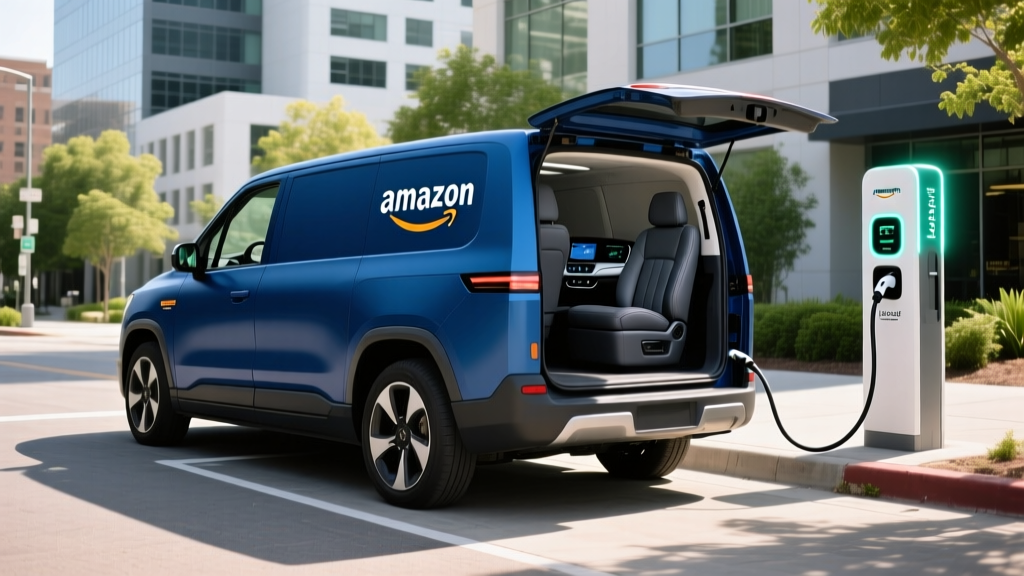
The 2023 Rivian EDV (Electric Delivery Van) is not a vehicle you can walk into a dealership and buy. Built exclusively for Amazon's last-mile delivery fleet under an exclusivity agreement that ran through 2023, the EDV was engineered around a single mission: replace diesel step vans with a purpose-built electric platform optimized for dense urban and suburban delivery routes. With a massive 149 kWh battery pack, an EPA-estimated range of up to 150 miles on the largest variant, and a cargo-first design shaped entirely around driver ergonomics and package throughput, the EDV is one of the most consequential commercial EVs ever deployed — even if most consumers will never sit behind its wheel.
This review breaks down everything we know from fleet data, Rivian filings, and driver reports: real-world range, charging behavior, battery chemistry, operating costs, and what the EDV's existence means for Rivian's broader platform strategy. If you're a fleet manager evaluating the EDV on the secondary market, an EV enthusiast tracking Rivian's engineering DNA, or a logistics professional benchmarking electric last-mile solutions, this is the spec-driven reference you need.
| Specification | EDV-500 | EDV-700 | EDV-900 |
|---|---|---|---|
| EPA Est. Range | ~150 mi | ~150 mi | ~150 mi |
| Battery Capacity (usable) | ~149 kWh (NMC lithium-ion) | ||
| Max DC Fast Charge | ~150 kW (peak) | ||
| 10–80% DC Charge Time | ~60–75 minutes | ||
| Level 2 Charge Rate | ~19.2 kW (AC) | ||
| Drivetrain | Single-motor FWD | ||
| Horsepower | ~230 hp | ||
| 0–60 mph | N/A (governed, est. 10+ sec) | ||
| Cargo Volume | ~500 cu ft | ~700 cu ft | ~900 cu ft |
| GVWR | ~9,500 lbs | ~10,500 lbs | ~14,000 lbs |
| Base MSRP | Not publicly listed (fleet contract pricing) | ||
Real-World Range: What 150 EPA Miles Means on a Delivery Route
EPA Estimated Range: ~150 miles (varies by EDV variant and payload)
Real-World Expectation: 100–130 miles on a typical stop-heavy urban delivery route with full payload, HVAC use, and frequent door openings. In cold climates (below 32°F), expect a further 20–35% reduction, dropping effective range to 70–100 miles.
The EDV's ~150-mile EPA figure sounds modest next to consumer EVs like the Rivian R1T (up to 352 miles EPA) or the Tesla Model 3 Long Range (341 miles EPA). But context is everything. Last-mile delivery vans average 60–90 miles per day across dense suburban routes with 150–200 stops. The EDV was engineered with a substantial range buffer above Amazon's typical daily mileage, allowing for detours, weather delays, and route changes without triggering mid-shift charging.
The 149 kWh NMC (nickel manganese cobalt) battery pack is enormous by any standard — roughly 50% larger than a Ford F-150 Lightning Extended Range pack. That capacity is necessary to offset the EDV's considerable weight (curb weight exceeds 7,000 lbs on the EDV-900) and the aerodynamic penalty of its boxy cargo profile. Efficiency works out to roughly 1.0–1.2 kWh per mile under typical loaded conditions, or about 83–100 kWh/100mi — high for a passenger EV but competitive for a Class 2/3 commercial step van.
Regenerative braking plays a significant role in extending real-world range. Delivery routes with frequent stops allow the EDV to recapture energy aggressively, and drivers report that one-pedal driving mode is particularly effective in stop-and-go urban environments. On highway-heavy transfer routes (less common for last-mile), range drops more sharply due to the van's tall frontal area and lack of active aero features.
Charging Speeds: DC Fast Charging and Depot-Level 2
| Charging Level | Power | Estimated Time | Typical Use Case |
|---|---|---|---|
| Level 1 (120V) | ~1.4 kW | 100+ hours (0–100%) | Not practical for fleet ops |
| Level 2 (240V AC) | ~19.2 kW | ~8–9 hours (0–100%) | Overnight depot charging |
| DC Fast Charge | ~150 kW peak | ~60–75 min (10–80%) | Mid-shift top-up or opportunity charging |
The EDV charges via CCS1 connector at Amazon delivery stations equipped with depot-level DC fast chargers and Level 2 infrastructure. At peak, the van accepts approximately 150 kW on a DC fast charger. However, as with all large battery packs, the charge curve matters more than the peak number. The 149 kWh pack's C-rate (charge rate relative to capacity) is relatively conservative — roughly 1C at peak — meaning the battery can sustain moderate charge rates for longer but never achieves the blistering 10–80% times of smaller packs like the Hyundai Ioniq 5's 18-minute sprint.
For Amazon's operational model, this is largely irrelevant. The EDV is designed to return to its delivery station each evening and charge overnight on Level 2 infrastructure. At ~19.2 kW, a full 0–100% charge takes roughly 8–9 hours, perfectly aligned with overnight depot schedules. DC fast charging serves as a contingency for split-shift operations, unexpected route extensions, or vehicles that return with a lower state of charge than planned.
Fleet operators evaluating the EDV on the secondary market should note that the van requires significant electrical infrastructure. A depot with 20 EDVs charging simultaneously at 19.2 kW each demands roughly 384 kW of continuous AC power — likely requiring a dedicated transformer and potentially a utility service upgrade. This is a capital cost that must be factored into any fleet electrification business case.
Performance and Drivetrain: Purpose-Built, Not Performance-Built
The EDV uses a single front-mounted electric motor producing approximately 230 horsepower, driving the front wheels. This is a deliberate engineering choice: front-wheel drive provides better traction when the van is loaded (weight shifts rearward, but the motor's placement keeps the driven axle predictable), and a single motor simplifies maintenance and reduces cost. There is no dual-motor or AWD option.
Acceleration is not a priority for a delivery van, and the EDV reflects that. Zero-to-60 times are well over 10 seconds, and the van's top speed is electronically governed. What matters for delivery drivers is low-speed torque for pulling away from stops with a full load, and here the EDV delivers — electric motors provide peak torque from 0 RPM, making the van feel responsive in the 0–30 mph range that dominates urban delivery driving.
Ride quality is firm but compliant, tuned for the heavy payloads the EDV carries daily. The suspension uses a solid rear axle with leaf springs — a traditional commercial-vehicle setup chosen for durability and load capacity rather than comfort. Drivers report that the van is noticeably more comfortable and quieter than the diesel Mercedes-Benz Sprinter or Ram ProMaster vans it replaces, with zero vibration at idle and dramatically reduced noise at speed.
Cargo Space, Ergonomics, and the Driver Experience
The EDV comes in three cargo-volume variants, each tailored to different route densities:
- EDV-500: ~500 cubic feet of cargo space, suited for dense urban routes with tight streets and parking constraints.
- EDV-700: ~700 cubic feet, the mid-size workhorse for suburban routes.
- EDV-900: ~900 cubic feet, the largest variant for high-volume suburban and exurban routes.
The cargo area is accessed through a curbside sliding door and a rear roll-up door. The bulkhead between the driver's compartment and the cargo area is designed for rapid pass-through access — drivers can move from the cab to the cargo area without exiting the vehicle, a critical time-saver across 150+ daily stops.
The driver's compartment is where the EDV diverges most dramatically from legacy step vans. The 360-degree camera system, large central touchscreen, and digital instrument cluster are borrowed from Rivian's consumer-vehicle playbook. The infotainment system runs a commercial variant of Rivian's in-house software, optimized for route navigation, package scanning integration, and vehicle diagnostics. There is no Apple CarPlay or Android Auto — the system is purpose-built for Amazon's workflow.
Driver assistance features include adaptive cruise control, automatic emergency braking, blind-spot monitoring, and a surround-view camera system. These are SAE Level 1–2 driver-assistance features — the driver must remain fully engaged at all times. There is no hands-free or autonomous driving capability.
Important: The EDV's driver-assistance features (adaptive cruise, lane-keeping, AEB) are SAE Level 1–2 systems. They assist the driver but do not replace active attention and control. The driver is legally and operationally responsible for the vehicle at all times.
Battery Chemistry, Degradation, and Warranty
The EDV's 149 kWh pack uses NMC (nickel manganese cobalt) lithium-ion cells. NMC chemistry was chosen for its high energy density — critical for fitting enough capacity into a vehicle that must also maximize cargo volume. The trade-off versus LFP (lithium iron phosphate) is a somewhat shorter cycle life and greater sensitivity to sustained high states of charge, though Rivian's battery management system includes active thermal management and conservative charge/discharge windows to mitigate degradation.
For fleet buyers, battery degradation is a total-cost-of-ownership question. Amazon's own operational data (reported in sustainability filings) suggests the EDV fleet has experienced degradation rates in line with industry norms — roughly 1–2% capacity loss per year under typical daily cycling. Over a projected 10-year fleet life, this implies a battery that retains approximately 80–85% of its original capacity, still sufficient for the van's designed daily mileage with buffer.
Rivian's commercial vehicle warranty covers the battery pack and electric powertrain for 8 years or 100,000 miles (whichever comes first), with a capacity retention threshold of approximately 70% during the warranty period. The vehicle limited warranty is 5 years or 100,000 miles. Fleet operators should confirm specific warranty terms with Rivian's commercial division, as fleet contracts may include extended or customized coverage.
Pricing, Tax Credits, and the Fleet Economics Question
The EDV was never sold at a public MSRP. Pricing was negotiated directly between Rivian and Amazon under their exclusive fleet contract, and the figures have not been disclosed. Industry analysts have estimated a per-unit cost in the range of $100,000–$130,000, depending on variant and volume — broadly comparable to a fully upfitted diesel step van when accounting for the battery pack cost.
For fleet operators acquiring EDVs on the secondary market (a growing possibility as Amazon's exclusivity period has expired and Rivian has signaled interest in selling the EDV to other commercial customers), the federal Commercial Clean Vehicle Credit (IRC §45W) — not the consumer §30D credit — is the relevant incentive. This credit provides up to $40,000 for qualifying commercial electric vehicles, with the credit amount equal to the lesser of 15% of the vehicle's basis (or 30% if the vehicle is not subject to depreciation limits) or the incremental cost versus a comparable ICE vehicle. Eligibility depends on the vehicle's GVWR, battery sourcing, and the purchasing entity's tax situation. Consult IRS guidance on §45W and a qualified tax professional before projecting credit amounts.
| Item | Estimate |
|---|---|
| Estimated Per-Unit Cost (secondary market) | $100,000–$130,000 |
| Max Federal Commercial Credit (§45W) | Up to $40,000 |
| Estimated Net Cost After Credit | $60,000–$90,000 |
| Estimated Annual Fuel Savings vs. Diesel | $4,000–$7,000/year |
| Estimated Annual Maintenance Savings | $2,000–$4,000/year |
| Depot Charging Infrastructure (per stall) | $15,000–$30,000 |
Operating cost savings are the EDV's strongest financial argument. Electricity costs for a van driven 80 miles/day at ~1.1 kWh/mile average roughly $8–$12 per day (depending on commercial electricity rates), versus $25–$40 per day in diesel fuel for a comparable Sprinter. Maintenance savings are also significant: no oil changes, no diesel particulate filter replacements, no transmission fluid, and dramatically reduced brake wear thanks to regenerative braking.
Pros, Cons, and Who the EDV Suits Best
Pros
- Purpose-built for delivery ergonomics — bulkhead pass-through, curbside door, low load floor
- Massive 149 kWh battery provides ample range buffer for daily routes
- Quiet, smooth, zero-emission operation improves driver experience and community air quality
- Regenerative braking extends range and reduces brake maintenance
- Advanced 360-degree camera and driver-assist suite for a commercial vehicle
- Significant operating cost savings versus diesel step vans
Cons
- Not available for individual purchase — fleet/contract only
- ~150-mile range is limiting for long-haul or inter-facility transfer routes
- DC fast charging at ~150 kW is slow relative to the battery size (60–75 min 10–80%)
- Requires substantial depot electrical infrastructure investment
- Single-motor FWD only — no AWD option for snow/ice routes
- Long-term parts and service network still developing outside Amazon's captive fleet
Who the EDV suits best: High-volume last-mile delivery fleet operators running predictable daily routes under 100 miles with access to overnight depot charging. The EDV is ideal for urban and suburban parcel delivery, grocery delivery, and similar stop-dense applications. It is not suited for long-haul freight, rural routes exceeding its range, or operators without the capital to invest in charging infrastructure.
Frequently Asked Questions
Can I buy a 2023 Rivian EDV as a private consumer?
No. The EDV was built exclusively for Amazon under a fleet contract. As of 2026, Rivian has begun offering the EDV to other commercial fleet customers, but it remains a commercial-only vehicle with no consumer retail channel. Individual buyers looking for a Rivian should consider the R1S SUV or R1T pickup.
What is the real-world range of the 2023 Rivian EDV?
The EPA-estimated range is approximately 150 miles. In real-world delivery operations with full payload, frequent stops, and HVAC use, expect 100–130 miles. In cold weather (below 32°F), effective range can drop to 70–100 miles. This is sufficient for most last-mile routes but requires careful route planning in extreme conditions.
How fast does the EDV charge?
On a DC fast charger, the EDV peaks at approximately 150 kW, with a 10–80% charge taking roughly 60–75 minutes. On Level 2 (240V AC at ~19.2 kW), a full charge takes about 8–9 hours — designed for overnight depot charging. Level 1 charging is not practical for fleet operations.
Does the Rivian EDV qualify for a federal tax credit?
The EDV does not qualify for the consumer §30D credit (it's not sold at retail). However, commercial fleet buyers may qualify for the IRC §45W Commercial Clean Vehicle Credit, which provides up to $40,000 per vehicle depending on GVWR, incremental cost versus ICE, and battery sourcing requirements. Always consult IRS §45W guidance and a tax professional.
Is the Rivian EDV worth buying versus competing electric vans?
For last-mile delivery, the EDV is arguably the most refined purpose-built electric van in operation, with superior driver ergonomics and Amazon-proven reliability at scale. Competitors include the Ford E-Transit (lower range at 126 miles EPA, but broader retail availability and dealer service network) and the Mercedes-Benz eSprinter (150 miles EPA, premium pricing). The EDV's advantage is its ground-up design for delivery workflows; its disadvantage is limited availability and service infrastructure outside Amazon's network.
What battery chemistry does the EDV use?
The EDV uses NMC (nickel manganese cobalt) lithium-ion cells in a ~149 kWh usable pack. NMC offers high energy density, important for maximizing range in a large, heavy van. The trade-off versus LFP is somewhat shorter cycle life and greater sensitivity to high state-of-charge storage, though Rivian's BMS manages this actively.