Quick Verdict: The Budget EV That Still Has a Niche
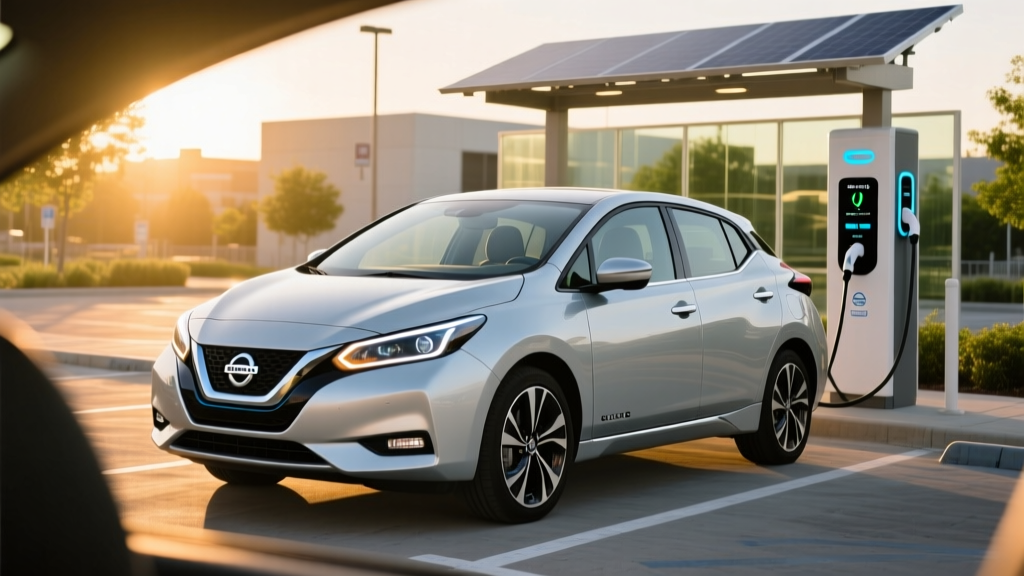
The 2023 Nissan Leaf S occupies a specific lane in the used EV market: it's one of the cheapest ways to get into a new-ish electric car, especially if you qualify for the used-vehicle tax credit. With a 40 kWh battery and 149 miles of EPA range, it's not a road-trip machine — but for a predictable commuter who can charge at home, the Leaf S delivers honest, no-drama electrification at a bargain price. In 2026, with newer EVs pushing 300+ miles, the Leaf S requires you to know exactly what you're signing up for.
EPA Range: 149 miles | Battery: 40 kWh (NMC) | Motor: 147 hp FWD
DC Fast Charge: 50 kW peak (CHAdeMO) | 0–60 mph: ~7.9 sec
Original MSRP: $28,140 | Used Market (2026): ~$14,000–$18,000
Range, Battery, and Real-World Efficiency
| Spec | Value |
|---|---|
| EPA Range | 149 miles |
| Battery Capacity | 40 kWh (usable), NMC chemistry |
| Efficiency | 111 MPGe combined / 30 kWh/100 mi |
| Motor Output | 147 hp / 236 lb-ft torque |
| 0–60 mph | ~7.9 seconds |
| Drivetrain | FWD, single-speed reduction |
| Max DC Charge | 50 kW (CHAdeMO) |
| Level 2 Rate | 6.6 kW onboard charger |
| Cargo Volume | 23.6 cu ft (rear seats up) / 30.0 cu ft (folded) |
| Original MSRP | $28,140 (before incentives) |
| Battery Warranty | 8 years / 100,000 miles |
The EPA rates the 2023 Leaf S at 149 miles. In real-world mixed driving at moderate temperatures (60–75°F), expect 130–145 miles. On sustained highway driving at 70+ mph, range drops to roughly 110–125 miles due to the Leaf's lack of a heat pump and its aerodynamic profile. In cold weather (below 32°F), plan for 95–115 miles — the resistive cabin heater and battery thermal losses take a significant toll on a 40 kWh pack. This is a city-and-suburb commuter, not a cross-country cruiser.
The Leaf S uses an NMC (nickel manganese cobalt) lithium-ion battery. Unlike the larger 62 kWh Leaf SV Plus, the S trim's 40 kWh pack prioritizes affordability over range. Efficiency is respectable at 111 MPGe combined, which translates to about 30 kWh per 100 miles — competitive with other compact EVs. However, the small battery means you'll charge more frequently, and the usable window between 20% and 80% gives you only about 90 miles of comfortable daily range.
Charging Speeds: The CHAdeMO Reality
The 2023 Leaf S uses the CHAdeMO DC fast-charging connector — a standard that has been losing ground in North America to CCS and, increasingly, Tesla's NACS. This is the single biggest ownership consideration for anyone buying a Leaf in 2026.
| Level | Connector | Max Rate | Speed |
|---|---|---|---|
| Level 1 (120V) | J1772 | 1.4 kW | ~4 mi/hr |
| Level 2 (240V) | J1772 | 6.6 kW | ~22 mi/hr (full charge ~7 hrs) |
| DC Fast | CHAdeMO | 50 kW peak | 10–80% in ~40 min |
At a 50 kW CHAdeMO station, the Leaf S charges from 10% to 80% in approximately 40 minutes. That's significantly slower than modern 800V-architecture EVs that can do the same in under 20 minutes. The Leaf's air-cooled battery also means charging speeds taper aggressively if the pack is warm — on a hot day or after back-to-back fast charges, you may see peak rates closer to 30–35 kW. Nissan does not include active liquid thermal management on the Leaf, which is a known limitation for sustained fast charging and long-term battery health in extreme climates.
For home charging, the 6.6 kW onboard charger is adequate. A full charge from empty takes about 7 hours on a Level 2 home station, which works fine for overnight replenishment. If you're relying on a standard 120V outlet (Level 1), expect over 30 hours for a full charge — not practical for daily use if you deplete the battery significantly.
Performance and Driving Dynamics
The Leaf S's front-mounted AC synchronous motor produces 147 horsepower and 236 lb-ft of torque. The instant electric torque gives it punchy off-the-line acceleration in city traffic, and the 0–60 mph time of roughly 7.9 seconds is adequate for merging and passing. It's not quick by 2026 EV standards — a base Tesla Model 3 or Hyundai Ioniq 5 will outrun it handily — but it's perfectly competent for its commuter mission.
Ride quality is a genuine strength. The Leaf's suspension is tuned for comfort, soaking up potholes and rough pavement better than many sportier EVs. Cabin noise is well-managed at city speeds, though wind and tire noise become noticeable above 65 mph. The e-Pedal regenerative braking system allows near-one-pedal driving, though it doesn't bring the car to a complete hold without touching the brake — a quirk compared to competitors that offer true one-pedal stopping.
The Leaf S comes equipped with Nissan's ProPILOT Assist (adaptive cruise control with lane centering). This is an SAE Level 2 driver-assistance system, meaning you must keep your hands on the wheel and eyes on the road at all times. It works well on highways and reduces fatigue on longer drives, but it is not autonomous driving.
Interior, Tech, and Practicality
Inside, the 2023 Leaf S is functional rather than flashy. The 8-inch touchscreen infotainment system supports Apple CarPlay and Android Auto (wired), and the interface is straightforward if dated compared to the large tablet-style displays in newer EVs. Physical buttons for climate and volume are a welcome ergonomic choice. The instrument cluster uses a mix of analog and digital displays — clear and readable, if not cutting-edge.
Passenger space is generous for a compact hatchback: 42.1 inches of front legroom and 33.5 inches of rear legroom accommodate adults comfortably in both rows. The rear seat folds in a 60/40 split, expanding cargo from 23.6 to 30.0 cubic feet — useful for grocery runs, luggage, or a folded bicycle. There is no front trunk (frunk); the space under the hood houses conventional drivetrain components.
Notable drawbacks include the absence of a heat pump (hurting cold-weather efficiency), no DC fast-charging port upgrade to CCS/NACS, and the air-cooled battery's vulnerability to thermal throttling. The interior materials are hard plastics in places, acceptable for the price point but noticeable compared to a Chevrolet Bolt EUV or Volkswagen ID.4.
Pricing, Tax Credits, and Total Cost
The 2023 Nissan Leaf S had an original MSRP of $28,140 (including destination). In the 2026 used-EV market, expect to pay between $14,000 and $18,000 depending on mileage, condition, and region — making it one of the most affordable entry points into EV ownership.
As a used vehicle purchased from a dealer in 2026, the Leaf S may qualify for the up-to-$4,000 used clean vehicle credit (30% of the sale price, capped at $4,000). Key requirements per IRS §25E rules:
- Sale price must be $25,000 or less
- Buyer income caps: $75,000 single / $112,500 head of household / $150,000 joint
- Vehicle must be at least 2 model years old (2023 qualifies in 2026)
- Must purchase from a licensed dealer (private sales excluded)
- Credit is non-refundable — you must have tax liability to claim it
Running costs are low. At the U.S. average electricity rate of ~$0.16/kWh, fully charging the 40 kWh battery costs about $6.40, giving you roughly 130 real-world miles — or about $0.05 per mile. Compare that to a 30 MPG gas car at $3.50/gallon ($0.12/mi) and the Leaf cuts fuel costs by more than half. Insurance rates tend to be moderate, and maintenance is minimal (no oil changes, fewer brake replacements due to regen).
Warranty and Battery Longevity
Nissan covers the 2023 Leaf's battery with an 8-year/100,000-mile warranty against capacity loss below 9 bars (out of 12) on the battery health gauge — roughly equivalent to 70% state of health. The powertrain carries a 5-year/60,000-mile warranty, and the basic vehicle warranty is 3 years/36,000 miles.
The air-cooled battery design is the Leaf's long-term vulnerability. Data from older Leaf generations shows measurable degradation in hot climates (Arizona, Texas, Southern California) after 5–7 years. The 2023 model benefits from improved cell chemistry compared to early Leafs, but without liquid cooling, owners in hot regions should monitor the battery health gauge closely and avoid frequent DC fast charging in high temperatures. Nissan's owner resources provide guidance on battery care best practices.
Pros, Cons, and Who Should Buy
- Extremely affordable on the used market ($14K–$18K)
- Up to $4,000 used-EV tax credit brings cost below $12K
- Low running costs (~$0.05/mile)
- Comfortable ride quality for a compact EV
- ProPILOT Assist included on S trim
- Spacious cabin and cargo area for its class
- Simple, proven drivetrain with minimal maintenance
- 149-mile EPA range limits road-trip utility
- CHAdeMO connector — declining DC fast-charge infrastructure
- 50 kW max DC charge rate is slow by 2026 standards
- Air-cooled battery — thermal throttling in heat, degradation risk
- No heat pump — significant cold-weather range loss
- Dated infotainment and interior materials
- No frunk; limited storage versatility
- Ideal: Budget-conscious commuters with home charging, driving under 80 miles/day round-trip, in moderate climates.
- Workable: Second-car households needing a cheap, zero-emission daily driver for errands and school runs.
- Not recommended: Road-trippers, apartment dwellers without charging access, hot-climate buyers planning long-term ownership, or anyone needing DC fast-charge convenience on the CCS/NACS networks.
How the 2023 Leaf S Stacks Up Against Competitors
In the used-EV market at similar price points, the Leaf S faces stiff competition:
- Chevrolet Bolt EV/EUV (2022–2023): 247–259 miles EPA, CCS charging, 65 kWh battery, liquid-cooled. A significantly better road-trip and fast-charge option, often found used for $18,000–$22,000.
- Hyundai Kona Electric (2022–2023): 258 miles EPA, CCS, 64 kWh, liquid-cooled. More range and faster charging, but typically costs more on the used market.
- Tesla Model 3 Standard Range (2020–2021): 263+ miles, NACS/Supercharger access, superior charging speed. Higher used prices ($22,000+) and potentially higher mileage.
The Leaf S wins purely on entry price. If your budget is firm at $15,000 and your commute is short, it's hard to beat. If you can stretch to $20,000, the Bolt EUV or Kona Electric are substantially more capable vehicles.
Frequently Asked Questions
What is the real-world range of the 2023 Nissan Leaf S?
The EPA estimates 149 miles. In real-world mixed driving at moderate temperatures, expect 130–145 miles. Highway driving at 70+ mph drops this to 110–125 miles, and cold weather (below freezing) can reduce range to 95–115 miles due to the resistive heater and battery losses.
How fast does the Leaf S charge at home and on DC fast chargers?
On a Level 2 home charger (240V), the 6.6 kW onboard charger adds about 22 miles per hour, reaching a full charge in roughly 7 hours. On a DC fast charger (CHAdeMO), it peaks at 50 kW, reaching 10–80% in about 40 minutes — but real-world speeds may be slower due to the air-cooled battery's thermal management.
Does the 2023 Nissan Leaf S qualify for a federal tax credit?
As a used vehicle in 2026, it may qualify for the §25E used clean vehicle credit — up to $4,000 (30% of sale price, capped). The sale price must be $25,000 or less, buyer income must fall below IRS thresholds, and you must purchase from a licensed dealer. It does not qualify for the new-vehicle §30D credit since it is no longer sold new. Always verify current rules at IRS.gov and consult a tax professional.
Is the 2023 Leaf S worth buying vs. a Chevy Bolt or Kona Electric?
If your priority is the lowest possible purchase price and your driving is limited to short commutes with home charging, the Leaf S is a strong value — especially with the used-EV credit. If you need more range, faster DC charging, or CCS/NACS infrastructure access, the Bolt EV/EUV or Kona Electric are better choices at a slightly higher used price.
What are the biggest risks of owning a Leaf S long-term?
The air-cooled battery is the primary concern. In hot climates, degradation may be accelerated compared to liquid-cooled competitors. CHAdeMO charging infrastructure is shrinking as the industry moves to NACS and CCS, which could limit your DC fast-charging options over time. Plan your ownership around home charging and moderate climates for the best experience.
Can I road-trip in the 2023 Leaf S?
Technically yes, but it requires careful planning. With 110–125 miles of real-world highway range and 40-minute DC fast-charge stops (at the dwindling number of CHAdeMO stations), a 300-mile trip will take significantly longer than in a 250+ mile EV with CCS or NACS charging. It's doable for occasional trips, but not ideal as a primary road-trip vehicle.