Quick Verdict: The Budget EV That Still Has a Niche
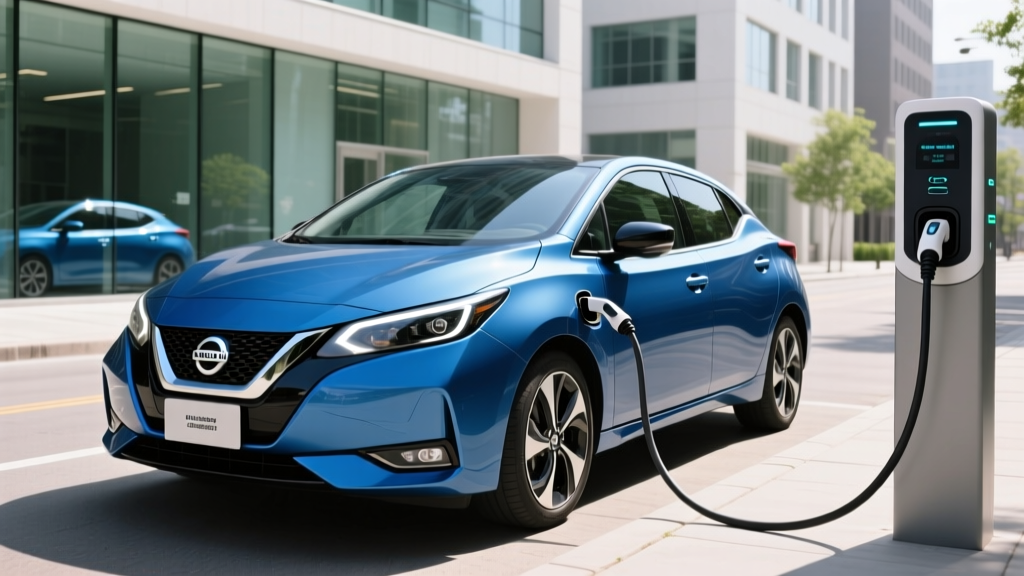
The 2023 Nissan Leaf remains one of the most affordable new electric vehicles ever sold in the United States, with a starting MSRP that undercut nearly every rival. But affordability comes with engineering trade-offs that matter in daily ownership: a CHAdeMO DC fast-charging connector (in a market that has overwhelmingly adopted NACS), passive air-cooled battery thermal management, and a maximum DC charge rate that peaks around 50 kW even on the larger pack. For a disciplined city commuter with reliable home Level 2 charging, the Leaf still delivers honest, low-cost electric miles. For anyone planning regular road trips or living in hot climates, the limitations compound quickly.
Leaf S (40 kWh): EPA 149 miles — expect ~120-130 miles highway at 70 mph; ~100-110 miles in freezing weather with cabin heat.
Leaf SV Plus (60 kWh): EPA 212 miles — expect ~175-190 miles highway at 70 mph; ~145-160 miles in freezing weather with cabin heat.
Nissan's passive battery cooling means sustained high-speed driving or repeated DC fast charges in hot weather will throttle charge speed and reduce usable range further.
Full Specifications at a Glance
| Spec | Leaf S | Leaf SV / SV Plus |
|---|---|---|
| EPA Range | 149 mi (S 40 kWh) | 212 mi (SV Plus 60 kWh) |
| Battery (usable) | 40 kWh, NMC | 60 kWh, NMC |
| Motor Output | 110 kW / 147 hp | 160 kW / 214 hp |
| Drivetrain | FWD, single motor | FWD, single motor |
| 0-60 mph | ~7.9 sec | ~6.5 sec |
| DC Fast Charge (peak) | ~50 kW (CHAdeMO) | ~100 kW peak, ~50 kW sustained (CHAdeMO) |
| 10-80% DC Time | ~40 min | ~45 min |
| Level 2 Onboard Charger | 6.6 kW (J1772) | 6.6 kW (J1772) |
| MPGe (combined) | 111 MPGe | 109 MPGe |
| kWh/100 mi | 30 kWh | 31 kWh |
| Cargo Volume | 23.6 cu ft (rear seats up) / 30.0 cu ft (folded) | 23.6 / 30.0 cu ft |
| Rear Legroom | 33.5 in | 33.5 in |
| Battery Warranty | 8 yr / 100,000 mi (capacity) | 8 yr / 100,000 mi (capacity) |
| Base MSRP (2023) | $28,140 | $36,190 (SV Plus) |
Range and Efficiency: Two Very Different Leaves
Nissan offered the 2023 Leaf in two distinct battery configurations, and the gap between them defines the ownership experience. The base Leaf S uses a 40 kWh NMC (nickel manganese cobalt) lithium-ion pack delivering an EPA-estimated 149 miles. The SV Plus steps up to a 60 kWh NMC pack rated at 212 miles EPA. Both use the same battery chemistry; the difference is cell count and module configuration.
Efficiency is respectable but not class-leading. The S achieves 111 MPGe combined (30 kWh per 100 miles), while the SV Plus lands at 109 MPGe (31 kWh/100 mi). For context, the 2023 Tesla Model 3 RWD achieves 132 MPGe combined — the Leaf's older platform and less aerodynamic shape cost it roughly 15-20% in efficiency.
Real-world range reconciliation: On a 70 mph highway drive in moderate temperatures (65-75°F), expect the SV Plus to deliver approximately 175-190 miles before needing a charge. In winter conditions (below 32°F) with resistive cabin heating active, that figure drops to 145-160 miles — a 25-30% reduction typical of EVs without a heat pump. The Leaf does not offer a heat pump; it uses a conventional PTC resistive heater, which draws heavily from the traction battery in cold weather.
Charging: The CHAdeMO Problem
This is the single most consequential factor in a 2026 buying decision on a used or remaining 2023 Leaf. Nissan uses the CHAdeMO DC fast-charging standard, while Tesla, Ford, GM, Rivian, Hyundai/Kia, and nearly every other major automaker have committed to NACS (North American Charging Standard). Electrify America still supports CHAdeMO at many stations, but new installations increasingly favor NACS and CCS1. CHAdeMO infrastructure is not growing — it is effectively in managed decline.
| Charging Level | Leaf S (40 kWh) | SV Plus (60 kWh) | Miles Added/Hour (approx.) |
|---|---|---|---|
| Level 1 (120V, 12A) | ~1.4 kW | ~1.4 kW | ~4-5 mi/hr |
| Level 2 (240V, 6.6 kW onboard) | 6.6 kW | 6.6 kW | ~22-25 mi/hr |
| DC Fast (CHAdeMO 50 kW) | 50 kW peak | 50 kW sustained | ~150-180 mi/hr (at peak) |
| DC Fast (CHAdeMO 100 kW)* | N/A (limited to ~50 kW) | ~100 kW peak, tapers to ~50 kW after 50% SoC | ~200+ mi/hr (brief peak only) |
*100 kW CHAdeMO stations are rare in the US; most public CHAdeMO chargers max at 50 kW.
The SV Plus can accept up to ~100 kW at a compatible CHAdeMO station, but the passive thermal management means the battery heats up quickly during DC charging. In warm weather, expect the charge rate to taper significantly after 50-60% State of Charge (SoC). A 10-80% session typically takes ~45 minutes on the SV Plus and ~40 minutes on the S — competitive with other 2023-era EVs at 50 kW stations, but far behind vehicles on 800V architectures (Hyundai Ioniq 5, Kia EV6) that achieve 10-80% in 18 minutes at 350 kW chargers.
Home charging on a Level 2 (240V) circuit at the Leaf's maximum 6.6 kW onboard rate adds roughly 22-25 miles of range per hour. A full overnight charge from 20% to 100% takes about 7-8 hours on the SV Plus — perfectly adequate for daily commuting if you have a garage or dedicated outlet.
Performance and Driving Dynamics
The Leaf was never designed to be a performance EV, and that shows. The base S produces 147 hp and 236 lb-ft of torque from a single front-mounted motor, reaching 60 mph in approximately 7.9 seconds. The SV Plus bumps output to 214 hp and 250 lb-ft, cutting the 0-60 time to roughly 6.5 seconds. Both are front-wheel drive only — no AWD option exists.
Ride quality is compliant and comfortable around town. The low center of gravity from the floor-mounted battery pack gives it reasonable composure in corners, though the steering is numb and the suspension tuning prioritizes comfort over engagement. At highway speeds, wind and road noise are more noticeable than in newer competitors like the Chevrolet Bolt EUV or Hyundai Kona Electric.
One genuinely useful feature: e-Pedal, Nissan's one-pedal driving mode. When engaged, lifting off the accelerator provides strong regenerative braking — enough to bring the car to a complete stop without touching the brake pedal in most city driving scenarios. It reduces brake wear and makes stop-and-go commuting noticeably less fatiguing.
Pricing, Tax Credits, and Total Cost
The 2023 Leaf launched with aggressive pricing that made it the cheapest new EV in America at the time:
| Trim | 2023 MSRP | Federal Credit (§30D) | Effective Price* |
|---|---|---|---|
| S (40 kWh) | $28,140 | $3,750 | ~$24,390 |
| SV (40 kWh) | $29,130 | $3,750 | ~$25,380 |
| SV Plus (60 kWh) | $36,190 | $3,750 | ~$32,440 |
*Effective price assumes full credit eligibility. Actual credit varies based on IRS §30D rules including battery component and critical mineral sourcing requirements, buyer income caps ($150K single / $300K joint), and MSRP caps ($55K for sedans/hatchbacks). The Leaf's MSRP falls well under the cap. Consult a tax professional or IRS guidance for your specific eligibility. The 2023 Leaf qualifies for a partial $3,750 credit under §30D sourcing rules — not the full $7,500 — due to battery component and critical mineral sourcing requirements.
For buyers purchasing a used 2023 Leaf in 2026, the Used Clean Vehicle Credit (§25E) may apply: up to $4,000 or 30% of the sale price (whichever is lower), subject to income caps and a $25,000 maximum sale price. This makes a used Leaf S potentially available for under $20,000 after credit — extraordinary value for a compliant daily commuter.
Interior, Tech, and Practicality
The 2023 Leaf's interior is functional but dated relative to newer EV platforms. An 8-inch touchscreen with Apple CarPlay and Android Auto is standard across all trims. The SV Plus adds Nissan ProPILOT Assist, a Level 2 driver-assistance system that combines adaptive cruise control with lane-centering — useful for highway commuting but requiring continuous driver supervision (this is not autonomous driving).
ProPILOT Assist is a Level 2 system. The driver must keep hands on the wheel and eyes on the road at all times. It does not handle construction zones, stopped traffic in adjacent lanes, or complex intersections. Never treat it as self-driving.
Cargo space measures 23.6 cubic feet behind the rear seats and 30.0 cubic feet with the 60/40 split rear seats folded. Rear legroom is 33.5 inches — adequate for adults on shorter trips but tighter than a Bolt EUV or Model 3. There is no front trunk (frunk); the space under the hood houses the motor and power electronics.
Notable tech drawbacks: no vehicle-to-load (V2L) capability, no over-the-air (OTA) software updates for powertrain or battery management, and the infotainment system lacks the responsiveness of newer competitors. The instrument cluster uses a mix of analog and digital displays rather than a full digital driver screen.
Battery Longevity and Warranty
Nissan's battery warranty covers 8 years or 100,000 miles against capacity loss below 9 bars out of 12 on the battery health gauge (approximately 70-75% state of health). This is the same warranty structure Nissan has used since the original Leaf, and it is less transparent than competitors who specify a percentage threshold (most guarantee 70% capacity retention over 8 years/100,000 miles).
The bigger concern is long-term degradation in hot climates. The Leaf's passive (air-cooled) thermal management system does not actively cool the battery during charging or hot-weather driving. Owners in Arizona, Texas, and the Southeast have historically reported faster degradation than EVs with liquid-cooled packs. A 2023 model will not show the full effects of this until 2028-2030, but the physics are well-established: sustained high temperatures accelerate lithium-ion cell degradation.
If you live in a moderate or cool climate and charge primarily at home on Level 2 (avoiding daily DC fast charging), the Leaf's battery should provide reliable service well beyond the warranty period. If you live in a hot climate or rely on frequent DC fast charging, consider the degradation risk carefully.
Pros, Cons, and Who Should Buy
- Lowest-cost entry into new EV ownership (2023 MSRP from $28,140)
- Comfortable ride, easy to drive, good visibility
- e-Pedal one-pedal driving is excellent for city commuting
- Strong used-market value with §25E credit eligibility in 2026
- Proven, simple platform with widely available service
- CHAdeMO connector — shrinking public charging network
- Passive air-cooled battery — degradation risk in hot climates
- Slow DC fast charging vs. modern 800V competitors
- No heat pump — significant winter range loss
- Dated interior tech and no OTA updates
- No AWD option, no frunk, no V2L
- You commute under 80 miles round-trip and charge at home nightly
- You live in a moderate climate (Pacific Northwest, Northeast, Midwest)
- You want the lowest possible cost per electric mile
- You're buying used in 2026 and can access the §25E used-EV credit
- You take regular road trips (CHAdeMO infrastructure is declining)
- You live in a hot climate (Arizona, Texas, Florida summers)
- You need fast DC charging for apartment/condo living without home charging
- You want modern infotainment, OTA updates, or V2L capability
Frequently Asked Questions
What is the real-world range of the 2023 Nissan Leaf?
The Leaf S (40 kWh) is EPA-rated at 149 miles; expect 120-130 miles on the highway in mild weather and 100-110 miles in freezing temperatures. The SV Plus (60 kWh) is EPA-rated at 212 miles; expect 175-190 miles highway and 145-160 miles in winter. Cold-weather losses are amplified by the lack of a heat pump.
How fast does the 2023 Leaf charge at home and on DC fast chargers?
On a Level 2 home charger (240V), the Leaf charges at up to 6.6 kW, adding roughly 22-25 miles of range per hour — a full charge overnight. On DC fast chargers (CHAdeMO), the S peaks at ~50 kW (10-80% in ~40 min) and the SV Plus peaks at ~100 kW but sustains ~50 kW due to thermal limits (10-80% in ~45 min).
Does the 2023 Nissan Leaf qualify for the federal EV tax credit?
The 2023 Leaf qualifies for a partial $3,750 federal credit under IRS §30D, not the full $7,500, due to battery component and critical mineral sourcing requirements. Eligibility also depends on buyer income (under $150K single / $300K joint) and MSRP (under $55K for hatchbacks — the Leaf qualifies). For used purchases in 2026, the §25E Used Clean Vehicle Credit may provide up to $4,000. Always verify current rules at irs.gov.
Is the 2023 Leaf worth buying vs. the Chevrolet Bolt EV or Hyundai Kona Electric?
The Bolt EV/EUV (259 mi EPA, CCS1 connector, ~$26,500 MSRP) offers more range, faster DC charging, and a growing charging network — making it the stronger all-around choice for most buyers. The Kona Electric (258 mi EPA, CCS1) is also more capable. The Leaf's primary advantage is the lowest used-market entry price, especially with the §25E credit. If your use case is strictly short-distance commuting with home charging, the Leaf's lower cost may justify its limitations.
Will CHAdeMO charging stations disappear?
Not immediately, but the network is not growing. Electrify America maintains existing CHAdeMO connectors at many stations, but new deployments prioritize NACS and CCS1. If you rely on public DC fast charging, the shrinking CHAdeMO footprint is a genuine ownership risk over a 5-10 year horizon.
How long will the 2023 Leaf battery last?
Nissan warranties the battery for 8 years/100,000 miles against capacity loss below ~70-75%. In moderate climates with primarily Level 2 home charging, Leaf batteries routinely last 150,000+ miles before significant degradation. In hot climates with frequent DC fast charging, degradation accelerates. Battery replacement cost (if needed out of warranty) is estimated at $6,500-$9,000 for the 40 kWh pack and $9,000-$12,000 for the 60 kWh pack, based on current aftermarket and dealer pricing.