Quick Verdict: A Practical Electric Crossover That Still Punches Above Its Weight
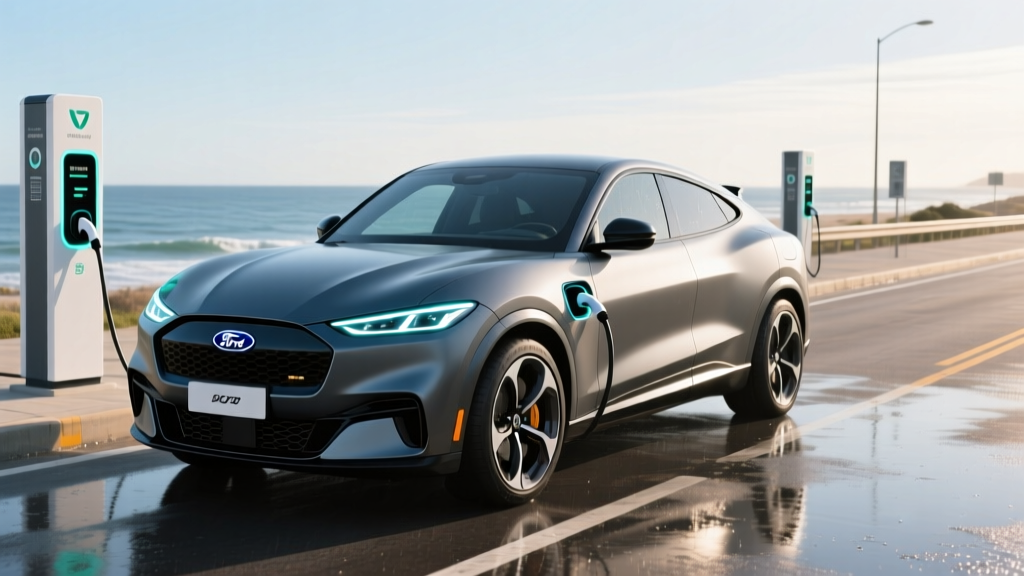
The 2023 Ford Mustang Mach-E occupies a rare middle ground in the EV market: it offers the cargo versatility of a compact crossover, genuinely engaging driving dynamics, and a starting price that — depending on your tax situation — can undercut a similarly equipped Tesla Model Y. Ford updated the 2023 model year with faster DC charging on extended-range variants (now peaking at 150 kW, up from 115 kW in 2021–2022) and expanded BlueCruise hands-free coverage. It remains one of the most balanced EVs for buyers who want usable range, reasonable charging times, and a conventional crossover shape without paying luxury-badge premiums.
But the Mach-E isn't flawless. Real-world highway range falls noticeably short of the EPA sticker on extended-range trims, the standard-range battery's 70 kWh pack limits long-distance practicality, and the touchscreen-heavy interior leaves some buyers wanting physical controls. Below, we break down every number that matters — range, charging curves, battery chemistry, pricing, and federal tax credit eligibility under current IRS §30D rules.
Range, Battery, and Efficiency: What the EPA Says vs. What You'll Actually Get
The 2023 Mach-E Extended Range RWD posts an EPA-estimated 312 miles. In real-world highway driving at 70–75 mph, expect 255–275 miles before needing a charge. In sub-30°F winter conditions, that figure can drop to 210–230 miles due to cabin heating demand and reduced battery chemistry efficiency. The Standard Range RWD (EPA 230 mi) realistically delivers 185–200 miles on the highway.
The 2023 Mach-E is available with two battery packs. The Standard Range uses a 70 kWh usable (75.7 kWh gross) lithium-ion pack with NMC (nickel manganese cobalt) chemistry. The Extended Range steps up to 91 kWh usable (98.8 kWh gross), also NMC. Ford does not offer an LFP (lithium iron phosphate) option on the Mach-E, unlike some competitors such as the Tesla Model Y Standard Range. NMC packs provide higher energy density — translating to more range in a lighter package — but they are more sensitive to sustained 100% state-of-charge storage. Ford recommends daily charging to 90% for NMC longevity and reserving 100% charges for road trips.
| Trim / Drivetrain | Battery (Usable kWh) | EPA Range | MPGe (City/Hwy/Combined) | kWh/100 mi |
|---|---|---|---|---|
| Select RWD (Std Range) | 70 kWh | 230 mi | 105 / 92 / 99 | 34 |
| Select AWD (Std Range) | 70 kWh | 224 mi | 100 / 86 / 94 | 36 |
| Premium RWD (Ext Range) | 91 kWh | 312 mi | 104 / 90 / 97 | 34 |
| Premium AWD (Ext Range) | 91 kWh | 290 mi | 101 / 87 / 94 | 36 |
| GT AWD (Ext Range) | 91 kWh | 270 mi | 90 / 77 / 84 | 40 |
| GT Perf. Upgrade AWD | 91 kWh | 260 mi | 86 / 73 / 80 | 42 |
Efficiency data sourced from fueleconomy.gov. The Mach-E's combined MPGe figures are competitive with the Hyundai Ioniq 5 (114 MPGe combined for the Long Range RWD) but trail the Tesla Model Y Long Range (122 MPGe combined), largely due to the Tesla's more aggressive heat-pump thermal management and lighter curb weight.
Charging Speed: DC Fast Charging and Home Level 2
The 2023 Mach-E's headline charging upgrade was the move to 150 kW peak DC fast charging on Extended Range models (Standard Range is capped at 115 kW). This improvement came via a battery management system update and revised thermal conditioning. At a 150 kW station — such as Electrify America's 150+ kW stalls — the Extended Range Mach-E can charge from 10% to 80% in approximately 36–40 minutes.
Understanding the charge curve is critical here. The Mach-E sustains roughly 130–150 kW between 10% and 40% state of charge, then tapers to around 90–100 kW through 60%, and drops further to 50–60 kW past 75%. If you arrive at a charger at 20% SoC rather than 10%, your session will be shorter but your average charge rate may be slightly lower because you miss the initial ramp-up. Ford's navigation system includes battery preconditioning — when you route to a DC fast charger, the car warms or cools the battery to optimal temperature before arrival, which is essential for hitting peak kW in cold weather.
| Charging Level | Power (kW) | Connector | Speed / Time |
|---|---|---|---|
| Level 1 (120V household) | ~1.2 kW | J1772 / NACS adapter | ~3–4 mi/hr (overnight: ~35–45 mi) |
| Level 2 (240V home, 32A) | 7.7 kW | J1772 (Ford Mobile Power Cord) | ~22–26 mi/hr (full charge: ~10–12 hr) |
| Level 2 (240V, 48A wallbox) | 10.5 kW | J1772 / NACS adapter | ~30–35 mi/hr (full charge: ~8–9 hr) |
| DC Fast (Std Range) | 115 kW peak | CCS1 | 10–80% in ~45 min |
| DC Fast (Ext Range) | 150 kW peak | CCS1 | 10–80% in ~36–40 min |
The 2023 Mach-E ships with the CCS1 connector as standard. Ford has announced NACS (Tesla Supercharger) adapter compatibility for Mach-E owners, enabling access to Tesla's Supercharger network — a significant advantage for road-trip charging access. The adapter plugs into the Mach-E's CCS port and communicates via the FordPass app for authentication. For home charging, Ford's Connected Charge Station (48A, hardwired, ~$799) adds about 30 miles of range per hour, which is sufficient to fully replenish even the Extended Range pack overnight.
Performance, Drivetrain, and Driving Impressions
The Mach-E's performance range is broad, depending heavily on trim selection. The entry-level Select RWD makes 266 horsepower and 317 lb-ft of torque from a single rear motor, achieving a 0–60 mph time of 6.1 seconds. That's brisk for a family crossover and provides effortless highway merging.
Step up to the dual-motor AWD configurations and output climbs to 346 hp and 428 lb-ft on Premium trims (0–60 in approximately 5.1 seconds). The GT trim delivers 480 hp and 600 lb-ft, dropping the 0–60 time to 3.8 seconds. The GT Performance Upgrade pushes torque to 634 lb-ft (horsepower stays at 480) and cuts 0–60 to 3.5 seconds, rivaling the Tesla Model Y Performance in straight-line acceleration.
On the road, the Mach-E's chassis tuning leans slightly firmer than the Hyundai Ioniq 5 but more compliant than the Tesla Model Y. Steering is precise, body roll is well-controlled, and the low center of gravity (battery pack under the floor) keeps it planted in corners. The one-pedal driving mode offers strong regenerative braking, though it doesn't quite bring the car to a full stop without brake-pedal input at very low speeds — a minor annoyance compared to the true one-pedal experience in a Chevrolet Bolt EUV or Nissan Ariya.
Interior, Cargo Space, and Technology
The Mach-E's cabin is a mixed bag of genuinely clever design and some cost-cutting compromises. The centerpiece is a 15.5-inch portrait-oriented touchscreen running Ford's SYNC 4A system. It handles navigation, media, climate controls, and vehicle settings — almost entirely through the screen, with only a few physical buttons for hazard lights and defrost. Wireless Apple CarPlay and Android Auto are standard across all trims, which is a significant advantage over Tesla's closed infotainment ecosystem.
Passenger space is generous for the segment. Front legroom measures 43.3 inches, and rear legroom is 38.9 inches — enough for two adults on long trips without complaint. Headroom is ample thanks to the flat floor and no transmission tunnel. The panoramic fixed-glass roof (standard on Premium and GT) creates an airy feel, though it lacks a shade, which some buyers find creates cabin heat on sunny days.
Cargo capacity behind the rear seats is 29.7 cubic feet, expanding to 59.7 cubic feet with the rear seats folded flat. The front trunk (frunk) adds 4.7 cubic feet of lockable, drainable storage — useful for charging cables, groceries, or wet gear. Compared to the Tesla Model Y (30.2 cu ft rear / 76.2 cu ft max), the Mach-E gives up some maximum cargo volume due to its sloping roofline, but the frunk is more practical than the Model Y's small front trunk.
On the driver-assistance front, the Mach-E offers Ford Co-Pilot360 2.0 as standard, including automatic emergency braking, blind-spot monitoring, lane-keeping assist, and rear cross-traffic alert. The available BlueCruise system (standard on GT, optional on Premium) enables hands-free driving on over 130,000 miles of pre-mapped divided highways. It is an SAE Level 2 system — the driver must remain attentive, and an infrared camera monitors eye gaze. BlueCruise performs well in its operational domain but disengages at construction zones, unmapped interchanges, and in heavy rain or snow. It is not autonomous driving.
Pricing, Trims, and Federal Tax Credit Eligibility
The 2023 Mach-E launched with five trim configurations. Pricing below reflects original MSRP at launch (destination charge included). Used and certified pre-owned pricing in 2026 varies significantly by mileage and condition.
| Trim | MSRP (incl. destination) | §30D Credit (Est.) | Effective Price (if eligible) |
|---|---|---|---|
| Select RWD (Std Range) | $42,995 | $3,750 | ~$39,245 |
| Select AWD (Std Range) | $45,995 | $3,750 | ~$42,245 |
| Premium RWD (Ext Range) | $50,995 | $3,750 | ~$47,245 |
| Premium AWD (Ext Range) | $53,995 | $3,750 | ~$50,245 |
| GT AWD (Ext Range) | $61,995 | $3,750 | ~$58,245 |
Important tax credit context: Under IRS §30D rules (see irs.gov), the 2023 Mach-E qualifies for a partial credit of $3,750 — reflecting that it meets the critical-minerals requirement but, at the time of 2023 production, did not fully satisfy the battery-component sourcing threshold for the full $7,500. Eligibility also depends on:
- MSRP cap: SUVs/crossovers must be priced at or below $80,000 — all Mach-E trims qualify.
- Buyer income cap: Modified AGI must not exceed $150,000 (single), $225,000 (head of household), or $300,000 (joint). Check your most recent tax year.
- Point-of-sale transfer: Beginning in 2024, buyers can transfer the credit to the dealer for an immediate price reduction. For 2023 purchases, the credit was claimed on your tax return (Form 8936).
- Final assembly: The Mach-E is assembled in Cuautitlán, Mexico — this was initially a concern, but Ford confirmed VIN-level eligibility for qualifying vehicles.
Because sourcing rules and IRS guidance evolve, we strongly recommend checking your specific VIN on the fueleconomy.gov tax credit lookup and consulting a tax professional before relying on a specific credit amount.
Warranty, Ownership Costs, and Long-Term Battery Outlook
Ford backs the 2023 Mach-E with a 3-year/36,000-mile bumper-to-bumper warranty and a 8-year/100,000-mile battery and electric powertrain warranty. The battery warranty guarantees that the pack will retain at least 70% of its original capacity over the coverage period. If degradation drops below that threshold, Ford will repair or replace the battery at no cost.
Real-world degradation data for the Mach-E's NMC packs is still accumulating (the model launched for the 2021 model year), but early owner reports and fleet data suggest approximately 5–8% capacity loss over the first 60,000 miles, which is consistent with industry norms for liquid-cooled NMC packs. Owners who avoid frequent DC fast charging, rarely charge to 100%, and precondition the battery in extreme temperatures tend to see better long-term retention.
Insurance costs for the Mach-E run higher than comparable gas-powered crossovers. Average annual premiums range from $1,800 to $2,600 depending on trim, driver profile, and state — roughly 15–25% above a gas-powered Ford Escape. This is a real ownership cost that buyers should factor into their total cost of ownership calculations.
Maintenance costs are substantially lower than a gas vehicle. There are no oil changes, no spark plugs, no transmission fluid, and brake pad life is extended significantly thanks to regenerative braking. Ford recommends cabin air filter replacement every 20,000 miles and brake fluid inspection every 3 years. Annual maintenance typically runs $200–$400, compared to $800–$1,200 for a gas equivalent.
Pros, Cons, and Who the Mach-E Suits Best
- Engaging driving dynamics — genuinely fun for an EV crossover
- Strong DC fast-charge improvement (150 kW on Ext Range)
- Wireless Apple CarPlay / Android Auto (Tesla can't match this)
- BlueCruise hands-free highway driving is reliable in its domain
- Practical frunk with drainable storage
- Under $80K MSRP cap — all trims eligible for §30D credit
- Real-world highway range 12–18% below EPA on Ext Range trims
- Only partial $3,750 tax credit (not the full $7,500)
- Touchscreen-dominant interior lacks physical climate controls
- No LFP battery option for buyers wanting 100% daily charging
- Rear visibility is compromised by thick C-pillars and sloping roof
- Insurance premiums run 15–25% above gas crossovers
- Choose the Mach-E if: You want a sporty, well-built electric crossover with Apple CarPlay, hands-free highway driving, and don't need class-leading cargo space. The Premium RWD Extended Range is the sweet spot — 312 mi EPA, 150 kW charging, and a comfortable ride.
- Look elsewhere if: You need maximum range per dollar (Tesla Model Y Long Range, 330 mi EPA), you want a full $7,500 tax credit (check current-year qualifying models on fueleconomy.gov), or you prefer physical buttons and knobs for climate and volume.
- Consider the GT if: You prioritize acceleration (3.5-sec 0–60 with Perf. Upgrade) and don't mind sacrificing ~50 miles of range and paying $60K+.
Frequently Asked Questions
What is the real-world range of the 2023 Mustang Mach-E?
The Extended Range RWD posts a 312-mile EPA estimate. In mixed highway driving at 70–75 mph, plan for 255–275 miles. In winter (below 30°F), expect 210–230 miles due to cabin heating demand and reduced battery efficiency. The Standard Range models (EPA 224–230 mi) deliver roughly 185–200 miles on the highway.
How fast does the Mach-E charge at home and on the road?
At home on a 48A Level 2 wallbox (10.5 kW), the Extended Range pack charges from empty to full in about 8–9 hours, adding roughly 30 miles of range per hour. On DC fast chargers, the Extended Range peaks at 150 kW and reaches 10–80% in approximately 36–40 minutes. The Standard Range caps at 115 kW DC, taking about 45 minutes for 10–80%.
Does the 2023 Mach-E qualify for the $7,500 federal EV tax credit?
The 2023 Mach-E qualifies for a partial credit of $3,750 under IRS §30D, meeting the critical-minerals threshold but not the full battery-component sourcing requirement at the time of production. You must also meet income caps ($150K single / $300K joint) and the vehicle must be under the $80K MSRP cap for SUVs. Always verify your specific VIN on fueleconomy.gov and consult a tax professional.
Is the 2023 Mach-E worth buying over the Tesla Model Y or Hyundai Ioniq 5?
It depends on your priorities. The Model Y Long Range offers more EPA range (330 mi) and more cargo volume (76.2 cu ft max) but lacks Apple CarPlay and has a stiffer ride. The Ioniq 5 charges faster (up to 240 kW on 800V architecture, 10–80% in ~18 min) and has a more distinctive design, but offers less range and no hands-free driving system comparable to BlueCruise. The Mach-E wins on driving engagement, CarPlay integration, and hands-free highway capability.
What battery chemistry does the Mach-E use, and how should I care for it?
All 2023 Mach-E models use NMC (nickel manganese cobalt) lithium-ion cells with liquid cooling. For best longevity, charge to 90% for daily use, avoid leaving the car at 100% state of charge for extended periods, use DC fast charging sparingly (it's fine for road trips, but daily Level 2 is gentler on the pack), and always precondition the battery before fast charging in cold weather.
Can the Mach-E use Tesla Superchargers?
Ford has enabled NACS adapter compatibility for the Mach-E, allowing access to Tesla's Supercharger network via a CCS-to-NACS adapter. Charging speeds are limited by the Mach-E's onboard acceptance rate (150 kW max), so you won't see Tesla's full 250 kW capability, but the network access is a major road-trip advantage.
What is BlueCruise and is it self-driving?
No. BlueCruise is an SAE Level 2 driver-assistance system that enables hands-free driving on pre-mapped divided highways. It controls steering, acceleration, and braking, but the driver must remain attentive — an infrared camera monitors your eyes. It disengages in construction zones, on non-mapped roads, and in poor weather. You are always responsible for the vehicle.