Quick Verdict: The Muscle-EV That Actually Delivers
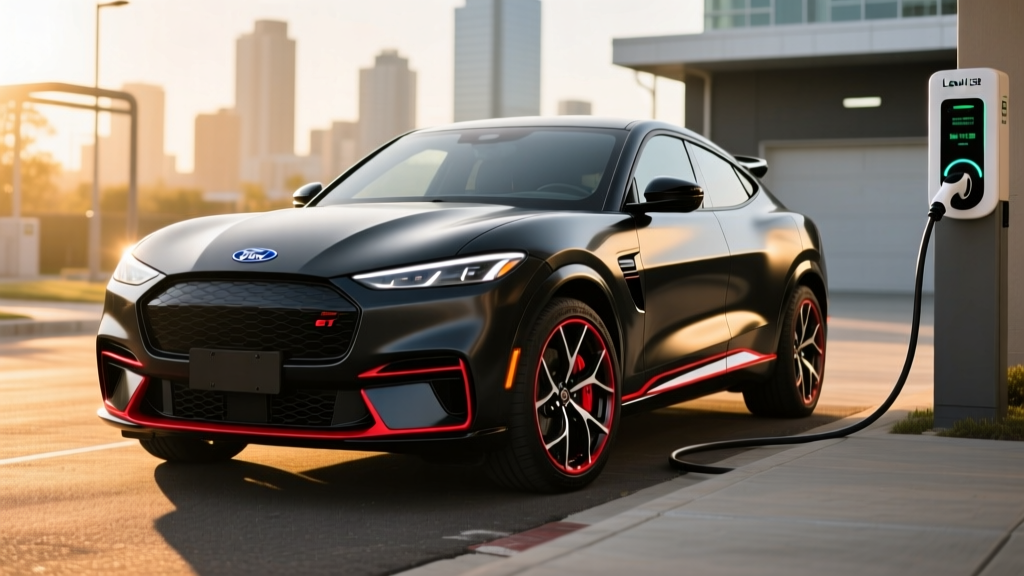
The 2023 Mustang Mach-E GT occupies a specific niche: a performance-oriented electric crossover that borrows the Mustang badge's emotional weight while delivering practical daily-driver credentials. With 480 horsepower (Performance Edition), a 91 kWh usable battery, and EPA-estimated 270 miles of range, it threads the needle between track-day adrenaline and grocery-run usability. But in a segment now crowded with the Tesla Model Y Performance, Hyundai Ioniq 5 N, and BMW iX M60, the Mach-E GT's value proposition hinges on charging speed, real-world range honesty, and whether Ford's BlueCruise driver-assist justifies the premium.
This review covers the 2023 model year Mach-E GT as sold new. For buyers evaluating used examples in 2026 or comparing against current inventory, these specs remain the definitive baseline.
Range, Battery & Real-World Efficiency
| Spec | GT (Standard) | GT Performance Edition |
|---|---|---|
| EPA Range | 270 miles | 260 miles |
| Battery (usable) | 91 kWh (Extended Range) | 91 kWh (Extended Range) |
| Chemistry | NMC (Nickel Manganese Cobalt) | NMC |
| MPGe (city/hwy/combined) | 90 / 77 / 84 MPGe | 84 / 73 / 79 MPGe |
| kWh per 100 miles | 40 | 42 |
| Drivetrain | Dual-motor AWD | Dual-motor AWD |
The 91 kWh NMC pack is supplied by SK On (formerly SK Innovation) and assembled in the US. NMC chemistry offers higher energy density than LFP, which keeps the pack physically compact under the floor, but it is more sensitive to sustained 100% SoC storage. Ford recommends daily charging to 90% and only charging to 100% before long trips.
Efficiency of 40 kWh/100 mi (GT Standard) trails the Tesla Model Y Long Range (28 kWh/100 mi) but matches the dual-motor Hyundai Ioniq 5. The Mach-E GT's heavier curb weight (~4,900 lbs) and performance-oriented powertrain tuning explain the gap.
Charging Speed: DC Fast, Level 2 & Home Setup
| Charging Level | Power | Speed | Notes |
|---|---|---|---|
| Level 1 (120V) | ~1.4 kW | ~3 miles/hour | Emergency/top-up only |
| Level 2 (240V, 48A) | 10.5 kW | ~25 miles/hour | Full charge in ~9 hours |
| DC Fast Charge (peak) | 150 kW | 10–80% in ~45 min | Tapers hard above 80% |
| DC Fast (sustained avg) | ~100 kW | ~180 miles in 30 min | Real-world road-trip pace |
The Mach-E GT's 150 kW peak DC fast-charge rate was competitive at launch but now trails the Hyundai Ioniq 5 (240 kW via 800V architecture) and the Tesla Model Y (250 kW on V3 Superchargers). The charging curve is the real story: the Mach-E sustains roughly 130–150 kW up to about 55% SoC, then progressively tapers. From 80% to 100%, charging slows to under 40 kW, making the final 20% painfully slow on road trips.
On Level 2, the onboard 10.5 kW charger is a strong point. A home Wall Connector or ChargePoint Home Flex at 48 amps will add roughly 25 miles per hour of charging, meaning an overnight session from 20% to 90% takes about 6 hours. Most owners will rarely need DC fast charging for daily use if home Level 2 is installed.
Home install note: A 60-amp circuit (to deliver 48A continuous) typically requires a 200-amp home electrical panel. Installation costs range from $800–$2,500 depending on panel proximity, conduit runs, and local permitting. Budget for a potential panel upgrade ($1,500–$3,000) on older homes. Always hire a licensed electrician and pull permits.
Performance: 0-60, Horsepower & Driving Dynamics
The GT badge is not merely cosmetic. Ford tunes the dual-motor powertrain for serious acceleration:
- GT (Standard): 480 hp, 600 lb-ft torque, 0–60 mph in 3.8 seconds
- GT Performance Edition: 480 hp, 634 lb-ft torque, 0–60 mph in 3.5 seconds
The Performance Edition adds a MagneRide adaptive damping suspension, performance brake calipers (front Brembo), and a summer tire package. The extra torque (634 vs 600 lb-ft) and chassis tuning make it noticeably more composed during aggressive cornering, though the 4,900+ lb curb weight is always present during direction changes.
Regenerative braking offers three modes (Whisper, Engage, Unbridled) plus a one-pedal driving mode that can bring the car to a complete stop without touching the brake pedal. The one-pedal calibration is among the best in the segment — progressive and predictable, unlike the abrupt regen grab in some competitors.
Drive modes alter throttle mapping, steering weight, and (on Performance Edition) damper firmness. Unbridle Extend mode, designed for track use, unlocks the full 480 hp and adjusts thermal management for sustained high-output driving — a rarity in this price class.
Interior, Cargo & Technology
The Mach-E GT cabin blends Mustang heritage cues (a flat-bottom steering wheel, hexagonal speaker grilles) with a distinctly modern EV layout. The centerpiece is a 15.5-inch vertically oriented touchscreen running Ford's SYNC 4A system with wireless Apple CarPlay and Android Auto.
| Dimension | Measurement |
|---|---|
| Front legroom | 43.3 inches |
| Rear legroom | 38.9 inches |
| Cargo (behind rear seats) | 29.7 cu ft |
| Cargo (rear seats folded) | 59.7 cu ft |
| Frunk (front trunk) | 4.7 cu ft (drainable, with washer) |
Cargo space trails the Tesla Model Y (76 cu ft max) but matches or exceeds the Hyundai Ioniq 5 (53 cu ft). The frunk is small but cleverly designed with a drain plug — useful for tailgating or hauling wet gear.
BlueCruise: Ford's hands-free driver-assist system (SAE Level 2) operates on over 130,000 miles of pre-mapped divided highways in the US and Canada. A driver-facing infrared camera monitors eye and head position; the system will disengage if attention wanders. BlueCruise is not self-driving — the driver remains fully responsible for the vehicle. The 2023 model year included a 90-day free trial; subsequent use requires a subscription (~$75/month or $800/year). Competitors like GM's Super Cruise cover fewer miles but offer comparable hands-free capability, while Tesla's Autopilot requires hands-on-wheel engagement at all times.
Notable tech drawbacks: the Mach-E GT lacks a traditional instrument cluster, relying on a small secondary screen above the steering wheel for speed and range. Some drivers find the all-touch climate controls distracting. The phone-as-a-key system (via the FordPass app) has drawn reliability complaints on owner forums, though Ford has issued OTA updates to improve Bluetooth handshake stability.
Pricing, Tax Credit & Ownership Costs
| Trim | Base MSRP (2023) | Destination | As-Tested Range |
|---|---|---|---|
| GT (Standard) | $59,995 | $1,300 | $61,295–$64,000 |
| GT Performance Edition | $65,995 | $1,300 | $67,295–$72,000 |
- MSRP cap: Vans/SUVs/trucks capped at $80,000 — the Mach-E GT qualifies (classified as SUV).
- Buyer income cap: AGI ≤ $300,000 (married filing jointly), $225,000 (head of household), $150,000 (single).
- Battery sourcing: The 2023 Mach-E's SK On battery met critical-mineral and component requirements for the full $7,500 credit in most configurations.
- Point-of-sale transfer: Beginning January 1, 2024, buyers could transfer the credit to the dealer for an immediate price reduction. For 2023 purchases, the credit was claimed on the federal tax return (IRS Form 8936).
Source: IRS §30D guidelines. Eligibility varies — consult a tax professional.
With the full $7,500 federal credit, the effective price of a GT Standard dropped to roughly $53,795 — competitive with a well-equipped Tesla Model Y Long Range (which lost federal credit eligibility in 2023 due to battery sourcing). State incentives (California's CVRP, Colorado's $5,000 credit, etc.) could stack on top, though availability and income limits vary by jurisdiction.
Five-year ownership cost considerations:
- Charging vs. fuel: At $0.14/kWh (national average home electricity), charging the 91 kWh battery from 10–90% costs ~$10.20, yielding roughly $0.04/mile. A comparable gas performance SUV at 20 MPG and $3.50/gallon costs $0.175/mile — a savings of ~$1,350/year at 10,000 miles/year.
- Insurance: Performance EVs carry higher premiums. Expect $1,800–$2,800/year depending on state, driving record, and coverage level.
- Maintenance: No oil changes, no transmission fluid. Brake pad life extends significantly due to regen braking. Budget for cabin air filters, tire rotation, and eventual tire replacement (performance tires wear faster — $1,200–$1,800 per set).
- Depreciation: The Mach-E GT has experienced steeper-than-average depreciation in the used market, partly due to Ford's aggressive price cuts on new inventory in 2024 and intense segment competition.
Warranty & Battery Longevity
| Coverage | Term |
|---|---|
| Basic (bumper-to-bumper) | 3 years / 36,000 miles |
| Powertrain | 5 years / 60,000 miles |
| High-voltage battery | 8 years / 100,000 miles |
| Battery capacity retention | ≥70% of original capacity during warranty period |
The 8-year/100,000-mile battery warranty is industry-standard (matching Tesla, Hyundai, and most mainstream OEMs). Ford guarantees the pack will retain at least 70% of its original capacity during the warranty term. Independent fleet data suggests NMC packs of this generation lose roughly 8–12% capacity over the first 100,000 miles under normal use patterns — well within the warranty threshold.
For owners concerned about out-of-warranty replacement, a full battery pack replacement for the Mach-E Extended Range has been quoted in the $18,000–$25,000 range (parts + labor), though module-level repair may be possible at lower cost. As of 2026, widespread pack failures remain rare.
How It Stacks Up: Mach-E GT vs. Key Competitors
| Spec | 2023 Mach-E GT Perf. | 2023 Tesla Model Y Perf. | 2023 Ioniq 5 N |
|---|---|---|---|
| EPA Range | 260 mi | 279 mi | 221 mi (est.) |
| 0–60 mph | 3.5 sec | 3.5 sec | 3.25 sec |
| Horsepower | 480 hp | 456 hp | 640 hp (N Grin Boost) |
| Peak DC Charge | 150 kW | 250 kW | 240 kW |
| 10–80% DC Time | ~45 min | ~27 min | ~18 min |
| Cargo (max) | 59.7 cu ft | 76 cu ft | 53 cu ft |
| Base MSRP | $65,995 | $52,990 | $66,100 |
| Federal Credit (2023) | $7,500 | Not eligible | $7,500 |
- You value BlueCruise hands-free highway driving and a traditional dealer service network.
- You prefer a cockpit-style interior with a dedicated driver display over Tesla's minimalist approach.
- Federal tax credit eligibility matters and you meet income/sourcing requirements.
- You want MagneRide adaptive suspension and genuine track-capable thermal management.
- Charging speed and Supercharger network access are top priorities (250 kW peak, ~27 min 10–80%).
- Maximum cargo volume (76 cu ft) and over-the-air update cadence matter.
- You accept hands-on-wheel Autopilot (no hands-free option in 2023).
- You prioritize the fastest charging (800V architecture, ~18 min 10–80%) and the most aggressive track performance (640 hp with N Grin Boost).
- Range (221 mi EPA) is secondary to driving engagement.
Pros & Cons
- 480 hp / 3.5-sec 0–60 delivers genuine sports-car acceleration
- BlueCruise hands-free driving on 130,000+ miles of highway
- 10.5 kW Level 2 onboard charger enables fast home charging
- MagneRide suspension (Performance Ed.) balances comfort and body control
- Federal §30D credit eligible ($7,500 for qualified buyers)
- Drainable frunk, practical cargo space, comfortable rear seats
- 150 kW peak DC charging trails competitors (Ioniq 5: 240 kW, Model Y: 250 kW)
- 10–80% charge time of ~45 min is slow for road trips
- Real-world highway range drops to ~230 mi (cold weather: ~200 mi)
- All-touch climate controls and lack of physical buttons frustrate some drivers
- Steeper depreciation than Tesla or Hyundai rivals
- Phone-as-a-key Bluetooth reliability has been inconsistent
Who Should Buy the 2023 Mustang Mach-E GT?
The Mach-E GT is best suited for the performance-oriented daily driver who wants muscle-car acceleration without fuel costs, values hands-free highway assist, and charges primarily at home. It works well as a two-row family crossover for households with one or two children, though the 38.9 inches of rear legroom is tighter than a Honda CR-V or Toyota RAV4 for tall teenagers.
It is not ideal for frequent long-distance road trippers who prioritize the fastest possible DC charging, or for buyers in areas without reliable Level 2 home charging access. If you regularly drive 300+ miles in a single day, the Mach-E GT's ~45-minute 10–80% charge time and 260-mile real-world range will require more stops and longer dwell times than a Tesla Model Y or Hyundai Ioniq 5.
For used buyers in 2026, the Mach-E GT's depreciation curve creates a compelling value proposition — well-equipped examples can be found in the $38,000–$48,000 range, and the used EV tax credit (§25E, up to $4,000 for vehicles under $25,000 from a dealer) may apply to lower-mileage examples that have depreciated into that bracket.
Frequently Asked Questions
What is the real-world range of the 2023 Mustang Mach-E GT?
The EPA rates the GT Standard at 270 miles and the GT Performance Edition at 260 miles. In real-world highway driving at 70–75 mph, expect 230–245 miles. In cold weather (below 30°F), range can drop to 190–215 miles due to cabin heating demands and reduced battery efficiency. These figures assume 90% SoC departure and 10% arrival — charging to 100% adds range but accelerates battery degradation if done routinely.
How fast does the Mach-E GT charge at home and on the road?
At home on a Level 2 (240V, 48A) charger, the Mach-E GT charges at 10.5 kW, adding about 25 miles per hour — a full 10–90% charge takes roughly 6 hours. On DC fast chargers, it peaks at 150 kW but averages closer to 100 kW over a full session, with a 10–80% time of approximately 45 minutes. This is slower than rivals like the Ioniq 5 (18 min) and Model Y (27 min).
Does the 2023 Mach-E GT qualify for the federal EV tax credit?
Yes — the 2023 Mach-E GT qualified for the full $7,500 federal §30D credit for buyers meeting income limits (AGI ≤ $300K joint, $150K single) and purchasing within the $80,000 SUV MSRP cap. The SK On battery met 2023 critical-mineral and component sourcing requirements. For 2023 purchases, the credit was claimed on the buyer's tax return; point-of-sale transfers became available in 2024. Consult a tax professional to confirm eligibility for your specific situation.
Is the Mach-E GT worth buying over the Tesla Model Y Performance?
It depends on priorities. The Mach-E GT wins on federal tax credit eligibility (Model Y lost it in 2023), hands-free BlueCruise capability, and MagneRide ride quality. The Model Y Performance wins decisively on charging speed (250 kW vs 150 kW), Supercharger network access, cargo volume (76 vs 59.7 cu ft), and over-the-air feature updates. If road-trip charging speed and cargo space matter most, the Model Y is the stronger choice. If you value dealer support, hands-free driving, and tax-credit savings, the Mach-E GT holds its own.
What is the battery warranty, and how much does replacement cost?
Ford covers the high-voltage battery for 8 years or 100,000 miles, guaranteeing at least 70% capacity retention. Real-world degradation data suggests 8–12% loss over the first 100,000 miles under normal use. Out-of-warranty replacement has been quoted at $18,000–$25,000 for a full pack, though module-level repairs may cost less. As of 2026, catastrophic battery failures remain rare across the Mach-E fleet.
Is BlueCruise the same as Tesla's Full Self-Driving?
No. BlueCruise is an SAE Level 2 driver-assist system — the driver must remain attentive and is fully responsible for vehicle operation at all times. It enables hands-free driving only on pre-mapped divided highways (130,000+ miles in the US/Canada), with a driver-monitoring camera enforcing attention. Tesla's FSD (Supervised) is also Level 2 and requires driver engagement. Neither system is "self-driving" in the way Waymo's Level 4 robotaxi operates without a human driver.
Data sources: EPA Fuel Economy, Ford Motor Company 2023 Mach-E specifications, IRS §30D Clean Vehicle Credit.