The 2023 Tesla Model S Plaid occupies a singular position in the electric vehicle market: a four-door sedan that delivers hypercar acceleration while maintaining over 390 miles of EPA-rated range. For buyers cross-shopping the Porsche Taycan Turbo S, Lucid Air Grand Touring, or BMW i7, the Plaid presents a compelling but imperfect proposition. This review breaks down the exact numbers — range, charging curves, ownership costs, and tax credit eligibility — that matter when spending six figures on an EV.
Range and Efficiency: EPA vs. Reality
The 2023 Model S Plaid carries an EPA-estimated range of 396 miles on its standard 19-inch Tempest wheels. Step up to the 21-inch Arachnid wheels, and that figure drops to 359 miles — a 37-mile penalty for aesthetics and marginally sharper handling. Efficiency lands at 120 MPGe combined (28 kWh/100mi) on the 19-inch setup, according to fueleconomy.gov.
- Mixed driving (city/highway): Expect 340–370 miles in moderate temperatures
- Sustained highway (75+ mph): 290–320 miles — aerodynamic drag dominates at speed
- Cold weather (below 32°F): 250–290 miles; battery chemistry and cabin heating reduce usable capacity by 25–35%
- Track use: Irrelevant for range planning — you'll deplete the pack in under 100 miles at sustained high output
The Plaid's tri-motor powertrain prioritizes power delivery over efficiency. Drivers who regularly exceed 80 mph on highway commutes should plan charging stops around 280–300 miles of real-world range to maintain a comfort buffer.
Battery Chemistry and Capacity
Tesla does not publish official battery specifications for the Model S Plaid, but teardown analysis and regulatory filings indicate a usable capacity of approximately 95 kWh (gross capacity estimated at 100 kWh). The pack uses Panasonic-manufactured NMC (nickel manganese cobalt) cells in a structural configuration that contributes to chassis rigidity.
NMC chemistry offers higher energy density than LFP (lithium iron phosphate), which enables the Plaid's combination of range and power. The trade-off: NMC cells are more sensitive to sustained high states of charge. Tesla recommends daily charging to 80–90% for NMC packs, reserving 100% for trips requiring maximum range. This differs from LFP packs (found in the Model 3 RWD), which tolerate regular 100% charges without accelerated degradation.
Thermal management is active and aggressive. The Plaid's heat pump and liquid cooling system precondition the battery during navigation to Superchargers, enabling peak charge rates upon arrival. Without preconditioning — such as at a non-Tesla DC fast charger — expect significantly slower charge curves.
Charging Speed: DC Fast and Home Level 2
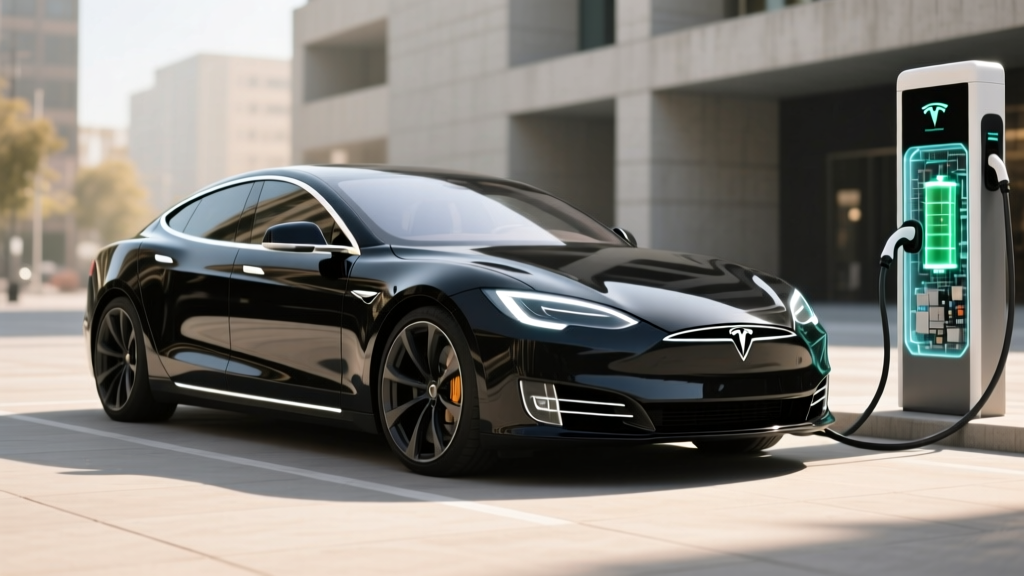
The 2023 Model S Plaid supports a peak DC fast-charge rate of 250 kW on Tesla's V3 Supercharger network. On a properly preconditioned battery, the charge curve looks like this:
| Charge Type | Power/Rate | Time/Miles Added |
|---|---|---|
| DC Fast (V3 Supercharger) | Peak 250 kW | 10–80% in ~27 minutes |
| DC Fast (sustained avg) | ~150–170 kW avg | ~175 miles in 15 minutes |
| Level 2 (Tesla Wall Connector) | 11.5 kW (48A) | ~34 miles per hour |
| Level 2 (generic J1772 w/ adapter) | 7.2–11.5 kW | ~22–34 miles per hour |
| Level 1 (120V household) | ~1.4 kW | ~3–4 miles per hour |
The 10–80% time of 27 minutes is competitive but not class-leading. The Lucid Air Grand Touring charges at up to 300+ kW (when available), and the Porsche Taycan Turbo S can sustain 270 kW on 800V architecture. The Plaid's 400V architecture limits peak charge rate relative to battery size.
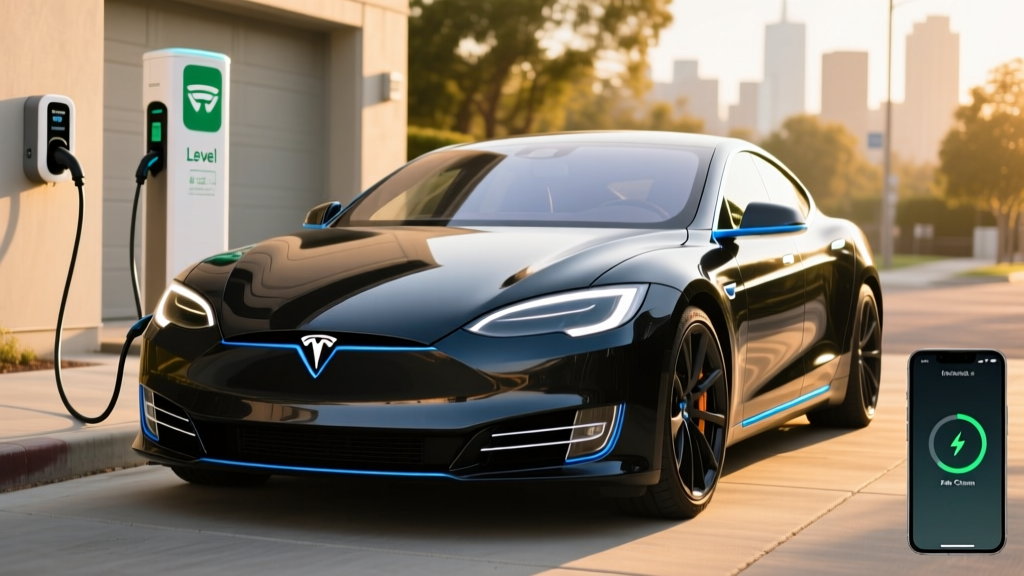
For home charging, Tesla's Wall Connector delivers 11.5 kW on a 60-amp circuit (48 amps continuous). A full charge from 10% to 100% takes approximately 8–9 hours — suitable for overnight replenishment. Installation costs vary widely: expect $500–$1,500 for the electrician work if your panel has capacity, or $2,000–$4,000+ if a panel upgrade to 200A service is required.
Performance: The Numbers That Define Plaid
| Specification | 2023 Model S Plaid |
|---|---|
| Powertrain | Tri-Motor AWD |
| Horsepower | 1,020 hp |
| Torque | 1,050 lb-ft |
| 0–60 mph | 1.99 seconds (with rollout) |
| Top Speed | 200 mph |
| Quarter Mile | 9.23 seconds @ 155 mph |
| Drivetrain | Tri-motor (1 front, 2 rear) |
The 1.99-second 0–60 time requires specific conditions: Drag Strip mode enabled, battery above 90% state of charge, warm tires, and a prepared surface. In normal Sport mode on public roads, expect 2.3–2.5 seconds — still brutally quick and faster than virtually any production car ever sold.
The tri-motor setup uses torque vectoring across the rear axle, providing exceptional corner-exit traction. The carbon-sleeved rotors in the rear motors enable the 200-mph top speed without rotor expansion at high RPM. This is genuine engineering differentiation, not just software-limited output.
Pricing, Tax Credits, and Ownership Costs
The 2023 Model S Plaid launched at a base MSRP of $108,490 (including destination). With common options — such as the $4,500 21-inch Arachnid wheels or $10,000 Full Self-Driving capability — as-tested prices typically landed between $115,000 and $125,000.
| Item | Cost |
|---|---|
| Base MSRP (2023 Model S Plaid) | $108,490 |
| Federal EV Tax Credit (§30D) | $0 — MSRP exceeds $55,000 sedan cap |
| State incentives (varies) | $0–$7,500 depending on jurisdiction |
| Typical as-tested price | $115,000–$125,000 |
Federal tax credit eligibility: The 2023 Model S Plaid does not qualify for the $7,500 federal EV tax credit under IRS §30D rules. The sedan MSRP cap is $55,000, and the Plaid's $108,490 base price far exceeds this threshold. Additionally, buyer income caps ($150,000 single / $300,000 joint for modified AGI) would disqualify many purchasers regardless of vehicle price. Full eligibility rules are available at IRS.gov.
Five-year ownership costs include:
- Electricity: ~$3,200–$4,500 (15,000 miles/year at $0.14–$0.18/kWh national average)
- Insurance: $3,500–$5,500/year depending on driving record and location (Plaid's power output and repair costs drive premiums)
- Maintenance: Minimal — cabin air filter, wiper fluid, tire rotation. Budget $800–$1,200 for tire replacement every 15,000–20,000 miles given the car's weight and torque
- Depreciation: Significant — luxury EVs depreciate 40–55% over five years, and Tesla's frequent price adjustments create used-market volatility
Interior, Cargo, and Daily Usability
The Model S Plaid's interior centers on a 17-inch landscape-oriented touchscreen that controls virtually all vehicle functions. The yoke steering wheel (standard on Plaid) remains polarizing — excellent for visibility of the instrument cluster, awkward for low-speed maneuvering and parking. A round wheel was available as a no-cost option for 2023.
Passenger space is generous for a performance sedan:
- Front legroom: 42.7 inches
- Rear legroom: 35.4 inches
- Cargo (rear trunk): 26.3 cu ft
- Frunk (front trunk): 5.3 cu ft
- Total cargo: 31.6 cu ft (with rear seats up)
The rear seat accommodates adults comfortably on shorter trips, though the sloping roofline limits headroom for passengers over 6 feet. The 60/40 split-folding rear seat enables longer cargo, but the sedan form factor limits utility compared to the Model X or Model Y hatchback designs.
Build quality on 2023 models improved over earlier Model S generations, though panel gap consistency and interior material quality still lag Porsche and Lucid at this price point. The minimalist interior appeals to some buyers and frustrates others — there are no physical buttons for climate, media, or glovebox access.
Driver Assistance and Technology
The Model S Plaid includes Tesla's basic Autopilot as standard: traffic-aware cruise control and autosteer within a single lane. Full Self-Driving (Supervised) capability adds automated lane changes, traffic light/stop sign recognition, and Navigate on Autopilot for highway on-ramp to off-ramp driving.
Tesla's Autopilot and FSD (Supervised) are Level 2 driver-assistance systems. The driver must remain attentive, hands on wheel (or applying torque), and ready to take over immediately. This is not autonomous driving. Level 4 driverless operation (Waymo, Zoox) requires no human supervision — the Model S does not offer this capability.
Notable tech features include:
- Over-the-air updates that add functionality post-purchase
- Sentry Mode dashcam recording when parked
- Dog Mode climate control for pets
- 22-speaker, 960-watt audio system
- HEPA air filtration with Bioweapon Defense Mode
- Gaming-capable infotainment (AMD Ryzen processor)
The infotainment system is responsive and feature-rich, but the lack of Apple CarPlay and Android Auto remains a dealbreaker for some luxury buyers accustomed to phone projection.
Warranty and Long-Term Reliability
Tesla's warranty coverage for the 2023 Model S Plaid:
- Basic vehicle: 4 years / 50,000 miles
- Battery and drive units: 8 years / 150,000 miles (whichever comes first)
- Battery retention: Tesla warrants minimum 70% capacity retention over the warranty period
The 150,000-mile powertrain warranty is competitive with the segment. Real-world battery degradation data for the refreshed Model S (2021+) is still limited given the vehicle's age, but Tesla's NMC packs historically show 10–15% degradation over 100,000 miles when properly maintained (avoiding frequent 100% charges and extreme heat exposure).
Reliability remains a question mark. Tesla's service network is less dense than legacy luxury brands, and Plaid-specific components (tri-motor rear drive unit, carbon-sleeved rotors) may face longer repair timelines if issues arise. Third-party reliability surveys (Consumer Reports, J.D. Power) show Tesla in the middle-to-lower tier for problem-free ownership, though the Model S specifically has fewer data points than the higher-volume Model 3/Y.
Pros, Cons, and Who Should Buy
- Sub-2-second 0–60 capability (with conditions)
- 396-mile EPA range on 19-inch wheels
- Access to Tesla Supercharger network (most reliable DC fast-charging network in North America)
- Spacious sedan with usable rear seat and 31.6 cu ft total cargo
- Continuous OTA updates add features over time
- Tri-motor torque vectoring provides exceptional all-weather traction
- No federal tax credit eligibility (exceeds $55K sedan MSRP cap)
- Yoke steering is polarizing and impractical for some driving scenarios
- No Apple CarPlay or Android Auto
- Insurance premiums significantly higher than comparable sedans
- Build quality and materials lag Porsche/Lucid at this price
- High depreciation risk due to Tesla pricing volatility
- Buy it if: You want the fastest-accelerating production sedan, value Supercharger network access for road trips, and prioritize tech-forward features over traditional luxury materials
- Consider the Lucid Air Grand Touring if: You prioritize interior luxury, 400+ mile range, and 300+ kW charging capability
- Consider the Porsche Taycan Turbo S if: You value build quality, driving dynamics, and 800V fast-charging architecture over maximum range
- Consider the BMW i7 xDrive60 if: You want a more traditional luxury sedan experience with competitive (though not Plaid-level) performance
Frequently Asked Questions
What is the real-world range of the 2023 Model S Plaid?
Expect 340–370 miles in mixed driving at moderate temperatures. Highway driving at 75+ mph reduces this to 290–320 miles. Cold weather (below freezing) can drop range to 250–290 miles depending on conditions and cabin heating use.
Does the 2023 Model S Plaid qualify for the federal EV tax credit?
No. The IRS §30D tax credit has a $55,000 MSRP cap for sedans. The Plaid's $108,490 base price disqualifies it regardless of buyer income or battery sourcing. Some state incentives may still apply — check your local jurisdiction.
How fast does the Model S Plaid charge?
Peak DC fast-charging is 250 kW on Tesla V3 Superchargers, achieving 10–80% in approximately 27 minutes with a preconditioned battery. Home Level 2 charging at 11.5 kW adds about 34 miles per hour, fully replenishing overnight.
Is the Plaid worth buying vs. competitors?
If sub-2-second acceleration and Supercharger access are priorities, the Plaid is unmatched. If luxury materials, build quality, or 800V charging architecture matter more, the Porsche Taycan Turbo S or Lucid Air Grand Touring may be better fits. Test-drive all three before committing.
How long will the Plaid's battery last?
Tesla warrants the battery for 8 years / 150,000 miles with minimum 70% capacity retention. Real-world data suggests NMC packs retain 85–90% capacity at 100,000 miles when properly maintained. Avoid frequent 100% charges and extreme heat exposure to maximize longevity.
Can I daily-drive a 1,020-hp car?
Yes — the Plaid is docile in normal driving modes, with regenerative braking enabling one-pedal operation. The power is accessible but not intrusive unless you floor the accelerator. Insurance costs and tire wear are the primary daily-ownership penalties.