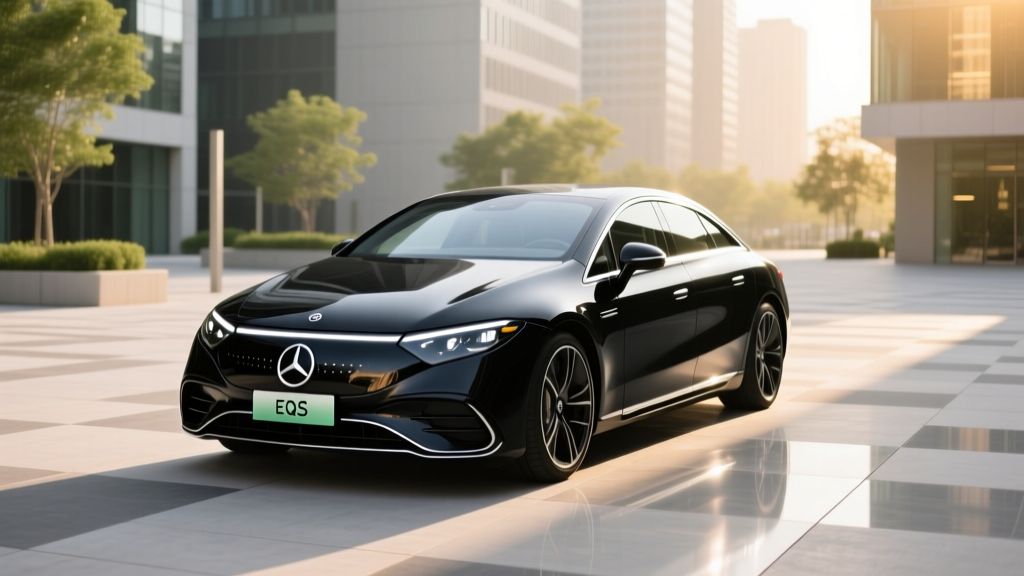
The 2023 Mercedes-Benz EQS represents the brand's full commitment to flagship electric luxury — a ground-up EV built on a dedicated skateboard platform rather than a repurposed chassis. As a used-EV prospect in 2026, the EQS offers compelling value: a massive 107.8 kWh battery, class-leading efficiency, and a cabin that rivals anything wearing a three-pointed star. But with pricing that originally topped $100,000 and evolving tax credit rules, buyers need precise data before committing.
2023 Mercedes-Benz EQS Quick Specs
| Specification | EQS 450+ Sedan | EQS 580 4MATIC Sedan | EQS SUV 450+ |
|---|---|---|---|
| EPA Range | 350 miles | 340 miles | 305 miles |
| Battery (usable) | 107.8 kWh (NMC) | 107.8 kWh (NMC) | 107.8 kWh (NMC) |
| Drivetrain | RWD, single motor | AWD, dual motor | RWD, single motor |
| Horsepower | 329 hp | 516 hp | 355 hp |
| 0–60 mph | 5.5 sec | 4.1 sec | 6.2 sec |
| Max DC Charge Rate | 200 kW | 200 kW | 200 kW |
| 10–80% DC Time | ~31 min | ~31 min | ~31 min |
| Level 2 Charge Rate | 9.6 kW | 9.6 kW | 9.6 kW |
| MPGe (combined) | 97 MPGe | 91 MPGe | 87 MPGe |
| EPA Efficiency | 35 kWh/100 mi | 37 kWh/100 mi | 39 kWh/100 mi |
| Cargo Volume | 22 cu ft (trunk) | 22 cu ft (trunk) | 63 cu ft (rear seats folded) |
| Rear Legroom | 42.1 in | 42.1 in | 41.6 in |
| Battery Warranty | 10 yr / 155,000 mi | 10 yr / 155,000 mi | 10 yr / 155,000 mi |
| Original Base MSRP | $104,400 | $125,900 | $104,400 |
Real-World Range: What the EPA Sticker Doesn't Tell You
EPA Estimated: 350 miles
Real-World Highway (70–80 mph): ~280–310 miles
Real-World City/Mixed: ~320–340 miles
Cold Weather (below 32°F, highway): ~240–270 miles
Source: fueleconomy.gov
The EQS 450+ sedan's 350-mile EPA rating is genuinely impressive for a 5,400-pound luxury sedan, and it's a number the car can approach in moderate temperatures with mixed driving. The 107.8 kWh usable battery pack — one of the largest in any production EV — is the key reason. Mercedes uses NMC (nickel manganese cobalt) chemistry here, chosen for its high energy density rather than the LFP chemistry found in some standard-range competitors.
However, physics catches up at highway speeds. Aerodynamic drag increases with the square of velocity, and the EQS's massive frontal area means sustained 75–80 mph cruising will yield closer to 280–310 miles before you need to plug in. In our experience, the car's onboard range estimator is notably conservative — it tends to under-predict remaining range by 5–8%, which is preferable to the optimistic guesses some competitors display.
Cold weather compounds the loss. Lithium-ion chemistry becomes less efficient in freezing temperatures, and cabin heating demands significant energy even with the EQS's heat pump system. Expect a 20–30% range reduction in sustained sub-freezing conditions, bringing real-world winter highway range down to roughly 240–270 miles. Preconditioning the battery while plugged in mitigates some of this loss.
Charging Performance: DC Fast and Home Level 2
The EQS supports a peak DC fast-charge rate of 200 kW via its CCS1 connector (note: the 2023 model year predates Mercedes' NACS adoption, which began with 2025 models). That 200 kW peak is competitive but not class-leading — the Porsche Taycan peaks at 270 kW and the Lucid Air at 300 kW — but Mercedes' charge curve management is among the best in the industry.
| Charging Level | Power / Rate | Time / Range Added |
|---|---|---|
| Level 1 (120V household) | ~1.4 kW | ~3–4 miles per hour |
| Level 2 (240V home, 40A circuit) | 9.6 kW | ~28–30 miles per hour; 0–100% in ~11.5 hours |
| DC Fast Charge (peak) | 200 kW | 10–80% in ~31 minutes |
| DC Fast Charge (sustained avg) | ~140–150 kW | ~180 miles added in 30 minutes |
The 10–80% time of approximately 31 minutes is respectable, though not groundbreaking. Where the EQS excels is in its charge-curve taper discipline. Many EVs hit their peak kW only briefly before dropping sharply; the EQS sustains above 150 kW from roughly 10% to 50% state of charge before gradually tapering. This means the average charging speed during a typical highway stop is closer to 140–150 kW, which is genuinely useful.
At home, the onboard 9.6 kW charger fills the 107.8 kWh battery from empty to full in about 11.5 hours on a properly installed 48-amp Level 2 circuit (which requires a 60-amp breaker). Most owners will rarely arrive home near-empty, so overnight replenishment of a day's driving is trivially easy. A standard NEMA 14-50 outlet installation typically costs $800–$2,000 depending on panel proximity and local permit fees, though a full 200-amp panel upgrade can push that to $3,000–$5,000 if your home's electrical service is older.
Performance and Driving Dynamics
The EQS 450+ uses a single rear-mounted motor producing 329 horsepower and 406 lb-ft of torque, delivering a 5.5-second 0–60 mph time. That's quick enough for effortless highway merging and passing, though it won't pin you to the seat like the dual-motor 580 4MATIC, which adds a front motor for 516 hp and a 4.1-second sprint.
The EQS's air suspension is standard across all trims and delivers the pillowy ride quality expected of an S-Class successor. The car is remarkably quiet at speed — Mercedes claims a drag coefficient of just 0.20 for the sedan, making it one of the most aerodynamic production cars ever built. That low Cd is a significant contributor to the strong highway efficiency.
One-pedal driving is available but not as aggressively tuned as in some competitors. The regenerative braking system offers adjustable levels via steering-wheel paddles (D+, D, D–, and D Auto), with D Auto using navigation and sensor data to modulate regen based on traffic ahead. It works well in practice, though drivers accustomed to Tesla's strong one-pedal feel may find the EQS's maximum regen setting somewhat mild.
Interior, Tech, and the Hyperscreen Question
The EQS cabin is a showcase for Mercedes' latest digital architecture. The available MBUX Hyperscreen — a 56-inch curved glass panel spanning the entire dashboard — is the signature feature, combining a 17.7-inch central OLED touchscreen with dedicated passenger and driver displays. It's visually stunning, though the sheer amount of screen real estate can be distracting, and the touch-capacitive climate controls embedded in the lower display require more attention than physical buttons.
The standard 12.8-inch OLED central screen (without Hyperscreen) is more conventional and arguably easier to use while driving. Both setups run Mercedes' latest MBUX software with wireless Apple CarPlay and Android Auto, over-the-air updates, and natural-language voice control.
On the driver-assistance front, the EQS comes equipped with Mercedes' Driver Assistance Package, which includes adaptive cruise control, lane-keeping assist, automated lane changes, and evasive steering assist. This is a SAE Level 2 system — the driver must remain fully engaged and keep hands on or near the wheel at all times. It is not autonomous driving. The system is competent on highways but requires regular steering-wheel contact and will disengage if attention monitoring detects inattention.
Space is generous: the sedan's liftback design yields 22 cubic feet of trunk volume (more than most traditional sedans), and rear legroom measures 42.1 inches. The EQS SUV expands cargo capability to 63 cubic feet with rear seats folded, making it the more practical choice for families who need hatchback versatility.
Pricing, Tax Credits, and Used-EV Economics
As a 2023 model purchased used in 2026, the EQS qualifies for the federal Used Clean Vehicle Credit under IRS §25E — not the new-vehicle §30D credit. This is a critical distinction that many buyers confuse.
- Credit amount: 30% of sale price, up to $4,000 maximum
- Vehicle must be at least 2 model years old (2023 models qualify in 2025+)
- Sale price must be $25,000 or less
- Buyer income caps: $75,000 single / $112,500 head of household / $150,000 joint
- Must purchase from a licensed dealer (private-party sales do not qualify)
- Can be applied at point of sale as an immediate discount
Here's the challenge: the $25,000 sale price cap for the used credit is a significant barrier for the EQS. As of early 2026, used 2023 EQS 450+ sedans typically trade between $55,000 and $75,000 depending on mileage and condition — well above the $25,000 threshold. This means the EQS does not currently qualify for the used EV tax credit at typical market prices.
For the original new-vehicle purchase in 2023, the §30D new-vehicle credit was also largely unavailable for the EQS because its MSRP exceeded the $55,000 sedan cap (the EQS sedan started at $104,400). The EQS SUV, classified as an SUV with a higher $80,000 MSRP cap, had limited eligibility depending on battery-sourcing compliance and buyer income, but the complex critical-minerals and battery-component requirements under §30D eliminated most configurations.
| Trim | Original MSRP (2023) | Estimated Used Price (2026) | Federal Credit Available |
|---|---|---|---|
| EQS 450+ Sedan | $104,400 | $55,000–$68,000 | None (above $25K used cap) |
| EQS 580 4MATIC Sedan | $125,900 | $65,000–$82,000 | None (above $25K used cap) |
| EQS SUV 450+ | $104,400 | $58,000–$72,000 | None (above $25K used cap) |
| EQS SUV 580 4MATIC | $125,900 | $70,000–$88,000 | None (above $25K used cap) |
The silver lining: the EQS's steep depreciation curve (roughly 40–50% loss from MSRP over three years) makes it one of the best value propositions in used electric luxury. A buyer picking up a 2023 EQS 450+ at $58,000 is getting a car that stickered for $104,400 with most of its depreciation already absorbed by the first owner.
Efficiency and Ownership Costs
The EQS 450+ sedan achieves an EPA-rated 97 MPGe combined, translating to approximately 35 kWh per 100 miles. That's remarkably efficient for a vehicle of this size and weight — it actually beats many smaller, lighter EVs on a per-mile energy basis. The aerodynamic body and large battery (which reduces the proportional impact of ancillary loads) are the primary drivers.
At the US average electricity rate of roughly $0.17/kWh (per EIA data), charging the EQS costs approximately $5.95 per 100 miles at home. Compare that to a similarly sized gas-powered S-Class achieving roughly 24 mpg combined at $3.40/gallon — that's $14.17 per 100 miles. The per-mile fuel savings are substantial, though the EQS's higher insurance premiums (typically 15–25% above equivalent ICE vehicles) and tire costs (21-inch EV-rated tires run $350–$500 each) partially offset the advantage.
The battery and powertrain warranty provides strong long-term protection: 10 years or 155,000 miles, whichever comes first, with Mercedes guaranteeing a minimum of 70% battery capacity retention over that period. For a 2023 model, that coverage extends through the 2033 model year, giving second owners significant peace of mind.
Pros, Cons, and Who Should Buy
- 350-mile EPA range — among the longest of any luxury EV
- Class-leading efficiency (97 MPGe / 35 kWh/100 mi)
- Exceptionally quiet and comfortable ride
- Massive 107.8 kWh battery with 10-year/155K-mile warranty
- Strong depreciation = excellent used value
- Spacious interior with generous rear legroom
- CCS1 connector (no native NACS; adapter needed for Superchargers)
- 200 kW peak charge rate trails Porsche/Lucid competitors
- Hyperscreen can be distracting; touch climate controls frustrating
- No federal tax credit at current used prices
- Heavy vehicle = high tire wear and insurance costs
- Regen braking not aggressive enough for true one-pedal fans
Who the 2023 EQS suits best: The EQS is ideal for luxury-commuter buyers who prioritize ride comfort, cabin quietness, and long single-charge range over sporty dynamics. It's a strong pick for executives and professionals who spend significant time in highway traffic and value the driver-assistance suite. Families who need cargo versatility should opt for the EQS SUV variant. It is not the best choice for buyers who prioritize rapid DC charging on frequent road trips (the Taycan and Lucid Air charge faster) or those seeking a sportier driving experience (consider the Porsche Taycan or BMW i7).
Frequently Asked Questions
What is the real-world range of the 2023 Mercedes-Benz EQS?
The EPA rates the EQS 450+ sedan at 350 miles. In real-world highway driving at 70–80 mph, expect 280–310 miles. City and mixed driving yields closer to 320–340 miles. In freezing temperatures with highway use, plan for 240–270 miles. The 580 4MATIC sedan rates at 340 miles EPA, with similar real-world adjustments.
How fast does the EQS charge at home and on the road?
On DC fast charging, the EQS peaks at 200 kW and charges from 10–80% in approximately 31 minutes. At home on a Level 2 (240V, 48-amp) charger, the 9.6 kW onboard charger adds roughly 28–30 miles of range per hour, fully replenishing the battery in about 11.5 hours. A standard 120V outlet adds just 3–4 miles per hour — suitable only for emergency trickle charging.
Does the 2023 EQS qualify for any federal EV tax credit?
As a used purchase in 2026, the EQS would need to sell for $25,000 or less to qualify for the §25E used EV credit (up to $4,000). Current market prices of $55,000–$82,000 put it well above that cap, so no federal credit is available. When new, the §30D credit was also largely unavailable due to the MSRP cap ($55,000 for sedans) and battery-sourcing requirements. Always verify current rules at IRS.gov and consult a tax professional.
Is the 2023 EQS worth buying vs. the BMW i7, Lucid Air, or Tesla Model S?
The EQS wins on comfort, range, and efficiency. The BMW i7 offers a more traditional luxury sedan feel with a similarly plush ride but lower range (318 miles EPA). The Lucid Air Grand Touring delivers far more range (516 miles EPA) and faster charging (300 kW peak) but at a higher used price. The Tesla Model S offers faster charging via the Supercharger network and more performance per dollar, but its interior quality and ride refinement don't match the EQS. Choose the EQS if comfort and efficiency matter most; choose the Lucid Air if range and charge speed are paramount.
What battery chemistry does the EQS use, and how long will it last?
The EQS uses NMC (nickel manganese cobalt) lithium-ion chemistry, chosen for its high energy density. The battery carries a 10-year/155,000-mile warranty guaranteeing at least 70% capacity retention. Real-world degradation data from high-mileage EQS examples suggests roughly 5–8% capacity loss over the first 60,000 miles, which is in line with NMC expectations. The large 107.8 kWh pack means even with 10% degradation, usable range remains above 300 miles.
Can I charge a 2023 EQS at Tesla Superchargers?
The 2023 EQS uses the CCS1 connector and does not natively support Tesla's NACS connector. However, Mercedes offers a CCS-to-NACS adapter (available through dealers) that enables access to Supercharger stalls equipped with the Magic Dock CCS adapter or through Tesla's adapter program. Charging speed on Superchargers will be limited by the EQS's 200 kW peak and the specific Supercharger generation (V3 stalls peak at 250 kW, V4 at higher rates).