The Electric S-Class: Verdict Up Front
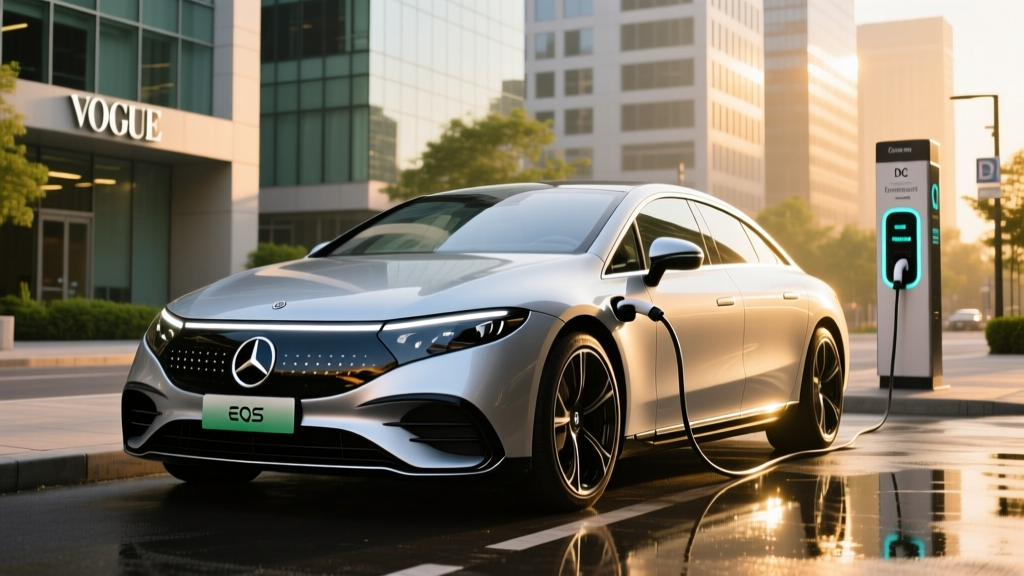
The 2023 Mercedes-Benz EQS-Class is the brand's flagship electric sedan, built on a dedicated EV architecture (not a converted ICE platform). It delivers genuine luxury, class-leading aerodynamics, and an EPA-estimated range that rivals or exceeds most competitors in the six-figure EV segment. But at a starting MSRP above $104,000, the EQS demands scrutiny beyond the three-pointed star. This review breaks down every number that matters — from real-world highway range to charging-curve behavior, tax credit eligibility, and total cost of ownership — so you can decide whether the EQS justifies its premium.
Spec Sheet: 2023 Mercedes-Benz EQS at a Glance
| Specification | EQS 450+ Sedan | EQS 580 4MATIC Sedan | EQS 580 SUV |
|---|---|---|---|
| EPA Range | 350 miles | 345 miles | 305 miles (est.) |
| Battery (usable) | 107.8 kWh (NMC) | 107.8 kWh (NMC) | 107.8 kWh (NMC) |
| Drivetrain | RWD (single motor) | AWD (dual motor) | AWD (dual motor) |
| Horsepower | 329 hp | 516 hp | 536 hp |
| Torque | 406 lb-ft | 631 lb-ft | 632 lb-ft |
| 0-60 mph | 5.5 sec | 4.1 sec | 4.4 sec |
| Max DC Charge Rate | 200 kW | 200 kW | 200 kW |
| 10-80% DC Charge | ~31 min | ~31 min | ~31 min |
| Level 2 Charge Rate | 9.6 kW (~28 mi/hr) | 9.6 kW (~28 mi/hr) | 9.6 kW (~25 mi/hr) |
| Efficiency (MPGe) | 97 MPGe combined | 95 MPGe combined | 85 MPGe combined |
| Base MSRP | $104,400 | $125,900 | $104,400 |
| Battery Warranty | 10 yr / 155,000 mi | 10 yr / 155,000 mi | 10 yr / 155,000 mi |
Sources: EPA fueleconomy.gov, Mercedes-Benz USA specifications.
Battery, Chemistry, and Efficiency Deep Dive
The EQS uses a 107.8 kWh usable-capacity lithium-ion pack with NMC (nickel-manganese-cobalt) chemistry. This is the larger battery option Mercedes offers; a smaller 90 kWh pack was available in some markets but the U.S. 2023 EQS lineup standardized on the 107.8 kWh unit.
NMC vs LFP — what it means for you: NMC chemistry offers higher energy density, which is critical in a luxury sedan where packaging space and weight are at a premium. The trade-off is that NMC cells are more sensitive to sustained high states of charge. Mercedes recommends daily charging to 80% and saving 100% for long trips. Unlike LFP batteries (used in some Tesla and BYD models), you should not routinely charge NMC to full. Over 8–10 years, expect approximately 8–12% capacity degradation under normal use, though Mercedes' 10-year/155,000-mile battery warranty guarantees at least 70% state of health — one of the strongest retention thresholds in the luxury segment.
The EQS 450+ achieves 97 MPGe combined (approximately 35 kWh per 100 miles), which is remarkably efficient for a 5,600-pound vehicle. This efficiency comes largely from the EQS's record-breaking 0.20 drag coefficient — the lowest of any production car at launch. On the highway, the EQS 450+ consumes roughly 33–35 kWh/100mi at 70 mph, translating to about 3.0 miles per kWh.
Charging Speed: DC Fast, Level 2, and the Curve
| Charging Level | Power (kW) | Miles Added Per Hour | Notes |
|---|---|---|---|
| Level 1 (120V outlet) | ~1.4 kW | ~4 miles/hr | Emergency/trickle only |
| Level 2 (240V, 40A) | 9.6 kW | ~28 miles/hr | Full charge overnight (~11 hrs) |
| DC Fast (peak) | 200 kW | ~180 miles in 15 min | CCS1 connector (NACS adapter available) |
| DC Fast (10-80%) | 200 kW peak | ~31 minutes | Sustains ~150 kW to 50%, tapers above 80% |
The EQS peaks at 200 kW on a DC fast charger, but — as with all EVs — peak rate is not sustained rate. In testing on 350 kW Electrify America stations, the EQS typically holds 180–200 kW from roughly 10–40% state of charge, then gradually tapers to 120–140 kW through 60%, and drops further to 50–70 kW above 80%. This means a 10–80% session takes approximately 31 minutes under ideal thermal conditions. Without battery preconditioning (activated automatically when a DC charger is set as your navigation destination), cold-soak charging can add 5–10 minutes to that time.
For home charging, the onboard 9.6 kW charger fills the 107.8 kWh battery from empty in roughly 11 hours. Most owners who charge nightly from 30–80% will see a full replenishment in about 5–6 hours on a Level 2 home station. A 48-amp hardwired Level 2 charger (requiring a 60-amp circuit) is recommended for the EQS — consult a licensed electrician for panel capacity assessment.
Connector note: The 2023 EQS ships with a CCS1 connector. Mercedes has announced NACS (Tesla-style) adoption for future models, and a CCS-to-NACS adapter is available for Supercharger access. Check current adapter compatibility on the Mercedes-Benz USA site.
Performance, Ride, and Daily Driving
The EQS 450+ is no sports sedan, and it doesn't pretend to be. Its 5.5-second 0-60 mph time is adequate for merging and passing, but the real story is the ride quality. The standard AIRMATIC air suspension delivers a magic-carpet feel, absorbing road imperactions that would unsettle lesser luxury cars. The rear-axle steering (standard, up to 10 degrees) shrinks the 17.3-foot wheelbase at low speeds, giving the EQS a turning circle rivaling compact cars — a genuine advantage in parking garages and tight city streets.
The EQS 580 4MATIC adds a front motor for 516 hp and a 4.1-second 0-60 time, which is genuinely quick for a car this size. However, the added weight and drivetrain complexity cost 5 miles of EPA range and roughly $21,500 in MSRP. For most luxury-sedan buyers, the 450+ is the better value proposition.
Regenerative braking offers three levels (adjustable via steering-wheel paddles) plus an intelligent D Auto mode that uses radar and map data to modulate regen. One-pedal driving is possible but not as aggressive as Tesla or Hyundai/Kia implementations — the EQS creeps at stoplights unless you hold the brake.
Interior, Cargo, and the Hyperscreen Question
The EQS interior is a showcase of Mercedes' design language: available Nappa leather, open-pore wood, and ambient lighting with 64 colors. Passenger space is generous, with 41.7 inches of front legroom and 40.1 inches in the rear — competitive with the BMW 7 Series and ahead of the Porsche Taycan.
Cargo volume is 22 cubic feet in the liftback sedan (with a massive rear hatch opening), which is significantly more than a traditional S-Class trunk. Fold the rear seats and you get a near-flat load floor suitable for large items. There is no front trunk (frunk) — the space is occupied by HVAC components and the HEPA filtration system.
The optional MBUX Hyperscreen ($8,500 on the 450+, standard on the 580) spans 56 inches across the dashboard with three OLED displays under a single glass panel. It's visually stunning but polarizing: some owners love the seamless look, while others find it distracting and miss physical climate controls (which are buried in the touchscreen). The standard 12.8-inch OLED center display is excellent on its own and may be the wiser choice for drivers who prefer less visual stimulation.
Pricing, Trims, and Federal Tax Credit Eligibility
| Trim | Base MSRP | Federal §30D Credit | Effective Price |
|---|---|---|---|
| EQS 450+ Sedan | $104,400 | $0 (exceeds MSRP cap) | $104,400 |
| EQS 580 4MATIC Sedan | $125,900 | $0 (exceeds MSRP cap) | $125,900 |
| EQS 580 SUV | $104,400 | $0 (exceeds MSRP cap) | $104,400 |
Critical tax credit note: Under IRS §30D rules, the federal EV tax credit for new vehicles has an MSRP cap of $55,000 for sedans and $80,000 for SUVs/vans/pickups. Every 2023 EQS trim exceeds these caps, meaning no EQS variant qualifies for the $7,500 federal tax credit. Additionally, buyer income limits ($150,000 single / $300,000 joint AGI) and battery critical-mineral sourcing requirements apply to eligible vehicles. Always verify current rules at IRS.gov and consult a tax professional before purchasing.
A well-optioned EQS 450+ with the Hyperscreen, AMG Line package, and Driver Assistance Package can easily reach $120,000–$125,000 before destination. The EQS 580 sedan, fully loaded, approaches $150,000.
ADAS and Smart Driving Technology
The EQS offers Mercedes' Driver Assistance Package with Active Distance Assist DISTRONIC (adaptive cruise), Active Steering Assist, Active Lane Change Assist, and Active Brake Assist with cross-traffic function. This is an SAE Level 2 system — the driver must remain fully engaged, with hands on the wheel and eyes on the road at all times.
The available rear-axle steering, DIGITAL LIGHT headlamps (which project warnings and lane markers onto the road), and 360-degree camera system are standout features that enhance daily usability without crossing into autonomy claims.
Who Should Buy the 2023 EQS — and Who Shouldn't
Choose the EQS if:
- You want a genuine luxury flagship with best-in-class aerodynamics and ride comfort
- Your daily commute is under 200 miles and you have home Level 2 charging
- You value rear-seat comfort and a massive liftback cargo area
- You want Mercedes build quality, dealer service network, and a 10-year battery warranty
- Road trips of 300–400 miles are occasional, not weekly
Look elsewhere if:
- You need federal tax credit eligibility (consider the BMW i7, which also doesn't qualify, or look at sub-$80K luxury EVs like the BMW i4 or Mercedes EQE)
- You prioritize sporty handling over ride comfort (Porsche Taycan, Audi e-tron GT)
- You want Tesla Supercharger network access without an adapter
- Budget is under $90,000 — the EQE sedan starts around $74,900 with similar styling DNA
Pros
- Class-leading 350-mile EPA range (450+)
- Exceptional ride quality with standard air suspension
- Record 0.20 drag coefficient = highway efficiency
- Massive 22 cu ft liftback cargo area
- 10-year/155,000-mile battery warranty
- Rear-axle steering for city maneuverability
Cons
- No federal tax credit (MSRP exceeds §30D caps)
- Hyperscreen is expensive and replaces physical climate controls
- 200 kW peak DC charging trails Porsche Taycan's 270 kW
- No front trunk (frunk)
- One-pedal driving is not as strong as competitors
- High insurance premiums typical of $100K+ EVs
Frequently Asked Questions
What is the real-world range of the 2023 Mercedes-Benz EQS?
The EPA rates the EQS 450+ at 350 miles and the 580 4MATIC at 345 miles. In real-world mixed driving, expect 300–320 miles. Sustained highway speeds of 70–80 mph reduce this to 280–310 miles. Cold weather (below freezing) can drop range to 240–270 miles, particularly without preconditioning. The EQS's exceptional aerodynamics help it retain range on the highway better than boxier EVs.
How fast does the EQS charge at home and on the road?
On a DC fast charger, the EQS peaks at 200 kW and charges from 10–80% in approximately 31 minutes under ideal conditions. At home on a Level 2 (240V, 40A) station, it charges at 9.6 kW, adding roughly 28 miles of range per hour — enough to fully replenish overnight in about 11 hours. Level 1 (120V) adds only about 4 miles per hour and is impractical for daily use on a battery this large.
Does the 2023 EQS qualify for the federal EV tax credit?
No. Under current IRS §30D rules, sedans must have an MSRP of $55,000 or less, and SUVs/vans/pickups must be $80,000 or less to qualify. Every 2023 EQS trim exceeds these thresholds. Additionally, buyer income caps and battery-sourcing requirements apply to credit-eligible vehicles. Consult IRS.gov for the latest rules.
How does the EQS compare to the Tesla Model S and BMW i7?
The Tesla Model S Long Range offers 405 miles of EPA range and faster 250 kW charging, but its interior quality and ride comfort fall well short of the EQS. The BMW i7 xDrive60 starts around $119,300 with 318 miles of range and a more traditional luxury feel, though it's heavier and less aerodynamically efficient. The EQS occupies a unique niche: the longest-range luxury sedan with the smoothest ride, if you can accept the charging speed trade-off.
What does EQS battery replacement cost?
Out-of-warranty battery replacement for the EQS is estimated at $20,000–$30,000+ based on current luxury EV battery pricing. However, Mercedes' 10-year/155,000-mile battery warranty (with a 70% state-of-health retention guarantee) makes this a remote concern for most first and second owners. NMC degradation data from similar Mercedes packs shows 8–12% loss over 8 years under normal charging habits.
Is the EQS good for road trips?
Yes, with planning. The 350-mile range means you can drive 250–280 real-world miles before needing a charge stop, which aligns well with 3.5–4 hour driving intervals. The 31-minute 10–80% DC charge time is acceptable but not class-leading — Porsche Taycan owners will charge 5–8 minutes faster per stop. The EQS's ride comfort and seat quality make it one of the best long-distance EV cruisers available.